Artwork
Untitled
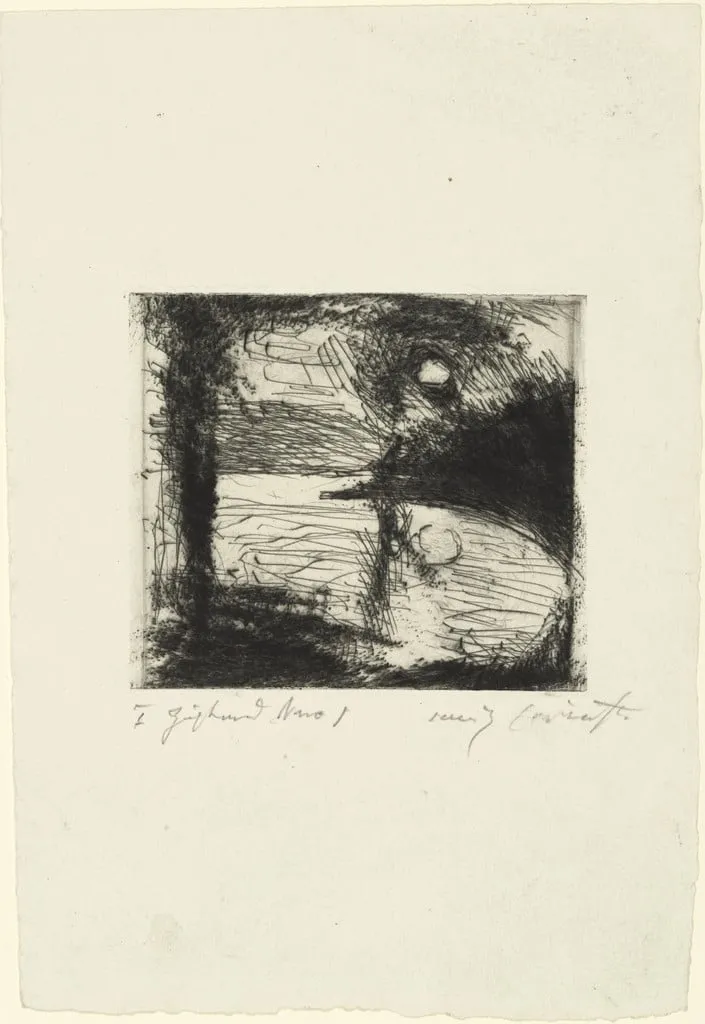
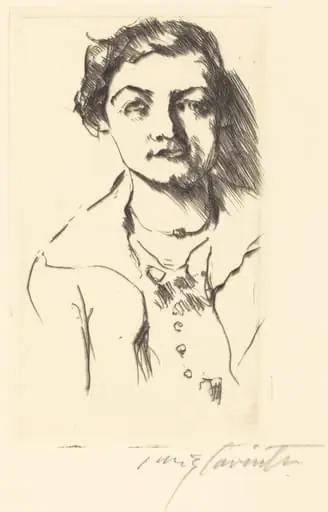
Untitled is an ink print by Lovis Corinth. It dates from 1920 and is held in the collection of the Museum of Modern Art.
About this work
Overview
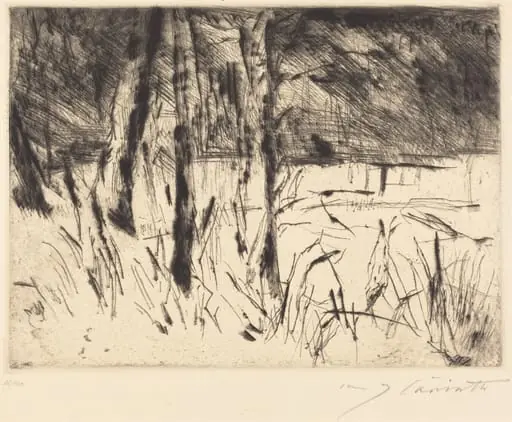
Executed on a metal plate, the work presents a nocturnal woodland scene rendered in stark, densely packed lines that convey a sense of depth and shadow.
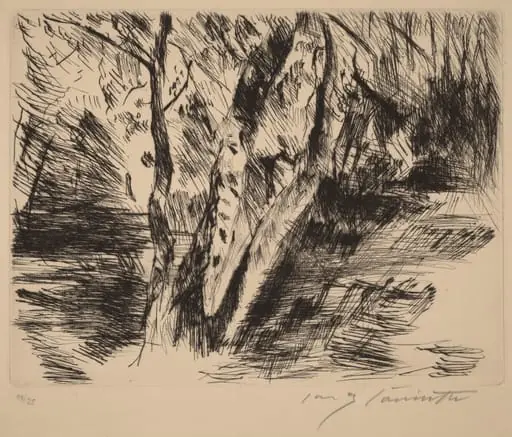
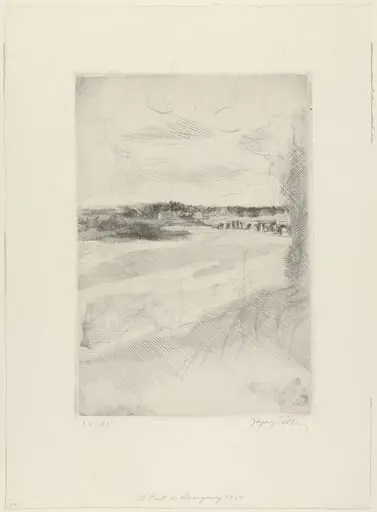
Created in 1920, this untitled drypoint by German painter Lovis Corinth resides in the collection of the Museum of Modern Art. Executed on a metal plate, the work presents a nocturnal woodland scene rendered in stark, densely packed lines that convey a sense of depth and shadow. The artist’s signature appears discreetly in the lower corner, underscoring its status as a finished, though sketch‑like, print.
Subject & Meaning
The image depicts a dense forest at night, with gnarled trunks and intertwined branches that dominate the picture plane. Within the darkness, two circular forms—interpreted as faint moons or perhaps watchful eyes—emit a subtle glow, adding an ambiguous, slightly unsettling atmosphere. The composition invites contemplation of the unknown and the tension between visibility and concealment.
Technique & Style
Employing the drypoint method, Corinth incised the design directly onto a copper plate, producing burr‑laden lines that translate into rich, velvety blacks when printed. The rapid, almost scribbled strokes emphasize texture and movement, while the limited tonal range heightens the work’s dramatic chiaroscuro. This approach aligns with Corinth’s late‑period interest in expressive, gestural drawing.
History & Provenance
The print entered the Museum of Modern Art’s holdings after being acquired in the mid‑20th century, though exact acquisition details remain sparse. Its presence in the museum’s print and drawing department reflects MoMA’s broader commitment to documenting early 20th‑century European printmaking and the evolution of Corinth’s oeuvre beyond his more widely known paintings.
Artist & collection

Artist
Lovis Corinth was a German artist and writer whose mature work as a painter and printmaker realized a synthesis of impressionism and expressionism.