Artwork
Saint George Standing
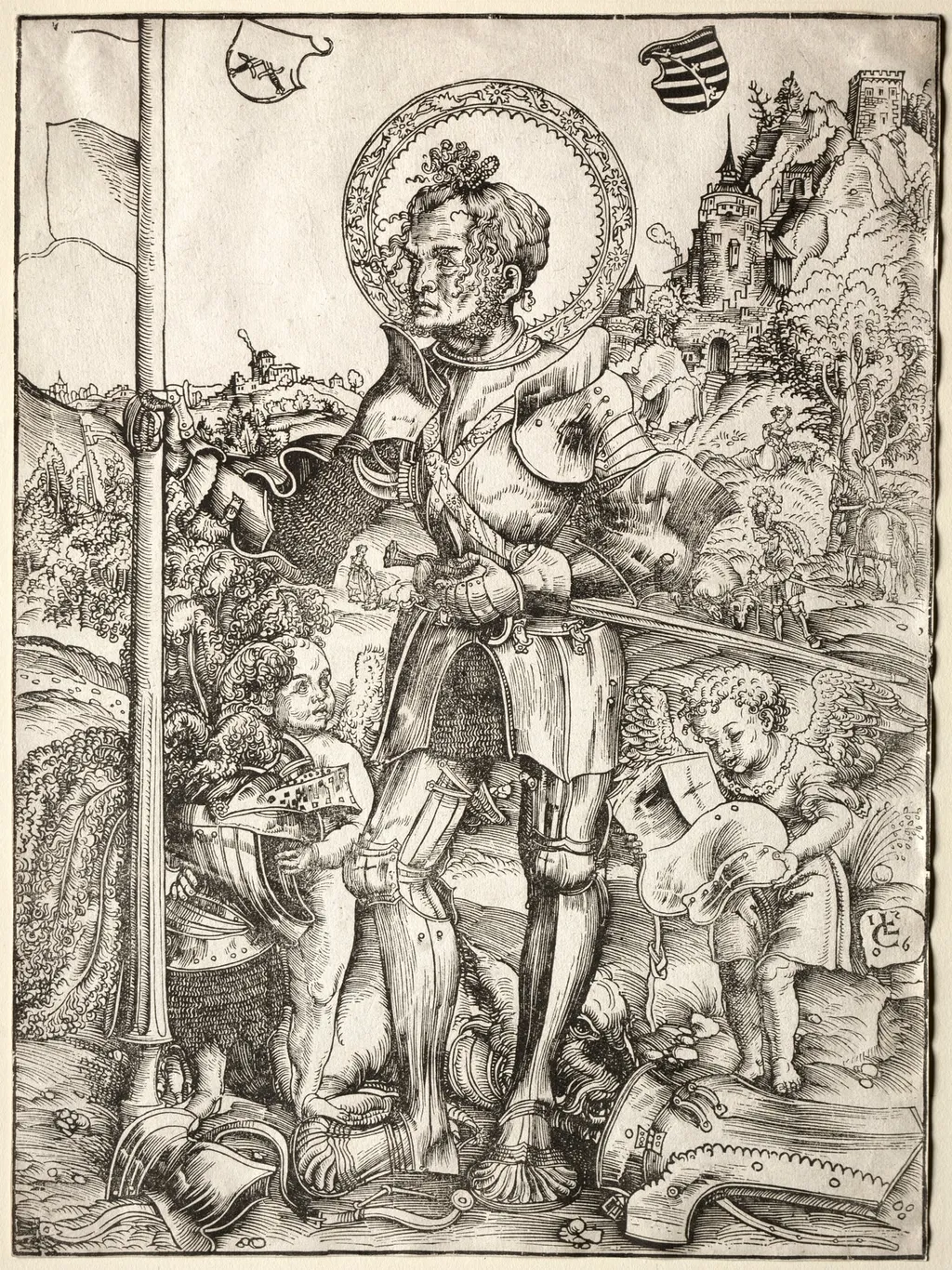
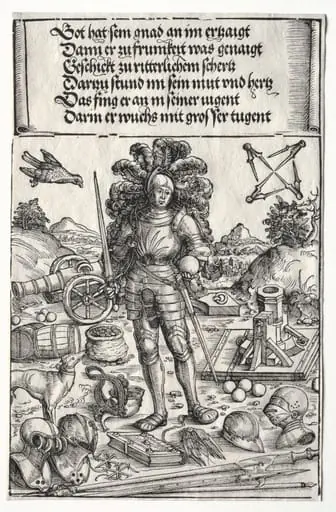
Saint George Standing is a print by the Renaissance artist Lucas Cranach the Elder. It dates from 1506 and is held in the collection of the Cleveland Museum of Art.
About this work
The background landscape is rendered in a more subdued tone, with the castle and flag serving as a subtle backdrop to the main figure.
The painting depicts a man standing in armor, holding a sword in his right hand and a flag in his left. He is surrounded by two cherubs, one playing a harp and the other holding a book. In the background, there is a landscape with a castle and a flag bearing a cross.
The man's armor is intricately detailed, with a decorative border around his helmet. The cherubs are depicted in a playful manner, adding a sense of whimsy to the scene. The background landscape is rendered in a more subdued tone, with the castle and flag serving as a subtle backdrop to the main figure.
This painting is reminiscent of the work of artist Lucas Cranach (German, 1472–1553).
Overview
Created in 1506, this print portrays Saint George as a fully armored knight, sword raised in his right hand and a banner held aloft in his left. Flanking the saint are two cherubic figures—one strumming a harp, the other clutching a book—adding a lighthearted counterpoint to the martial central figure. A distant landscape with a castle and a cross‑topped flag provides a muted backdrop.
Subject & Meaning
The composition follows the traditional iconography of Saint George, the early‑Christian martyr famed for defeating a dragon. Here the emphasis shifts from the combat itself to the saint’s poised readiness, while the cherubs suggest divine approval and the triumph of faith through music and learning, symbolised by the harp and the book.
Technique & Style
Executed in the precise line work characteristic of early 16th‑century German printmaking, the piece displays Cranach’s attention to ornamental detail, especially in the intricate armor and the decorative border framing the helmet. The figures are rendered with a blend of crisp contours and softer tonal washes, creating a contrast between the vivid foreground and the subdued, atmospheric background.
History & Provenance
Attributed to Lucas Cranach the Elder, a leading painter and printmaker of the German Renaissance who served the Electors of Saxony, the work entered the Cleveland Museum of Art’s collection in the 20th century. Its acquisition reflects the museum’s focus on expanding its representation of Northern Renaissance graphic arts.
Context
Cranach produced this image during a period of intense religious reform and patronage in Saxony, where his workshop supplied both courtly portraits and devotional prints. The inclusion of cherubs and the serene landscape aligns with contemporary trends that blended sacred narrative with courtly elegance, catering to both private devotion and elite display.
Artist & collection
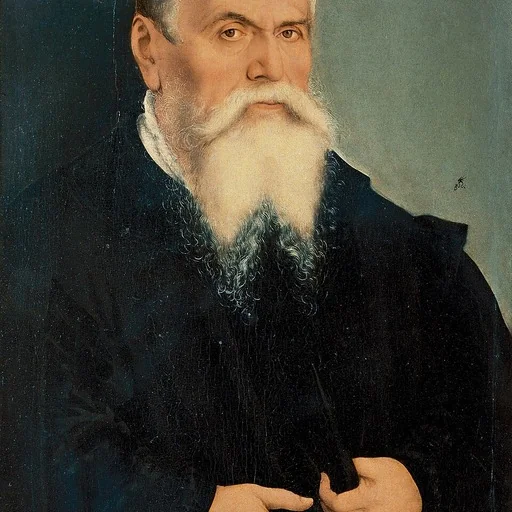
Artist
Lucas Cranach the Elder was a German Renaissance painter and printmaker in woodcut and engraving.