Artwork
The Prince at the Bird-Catching
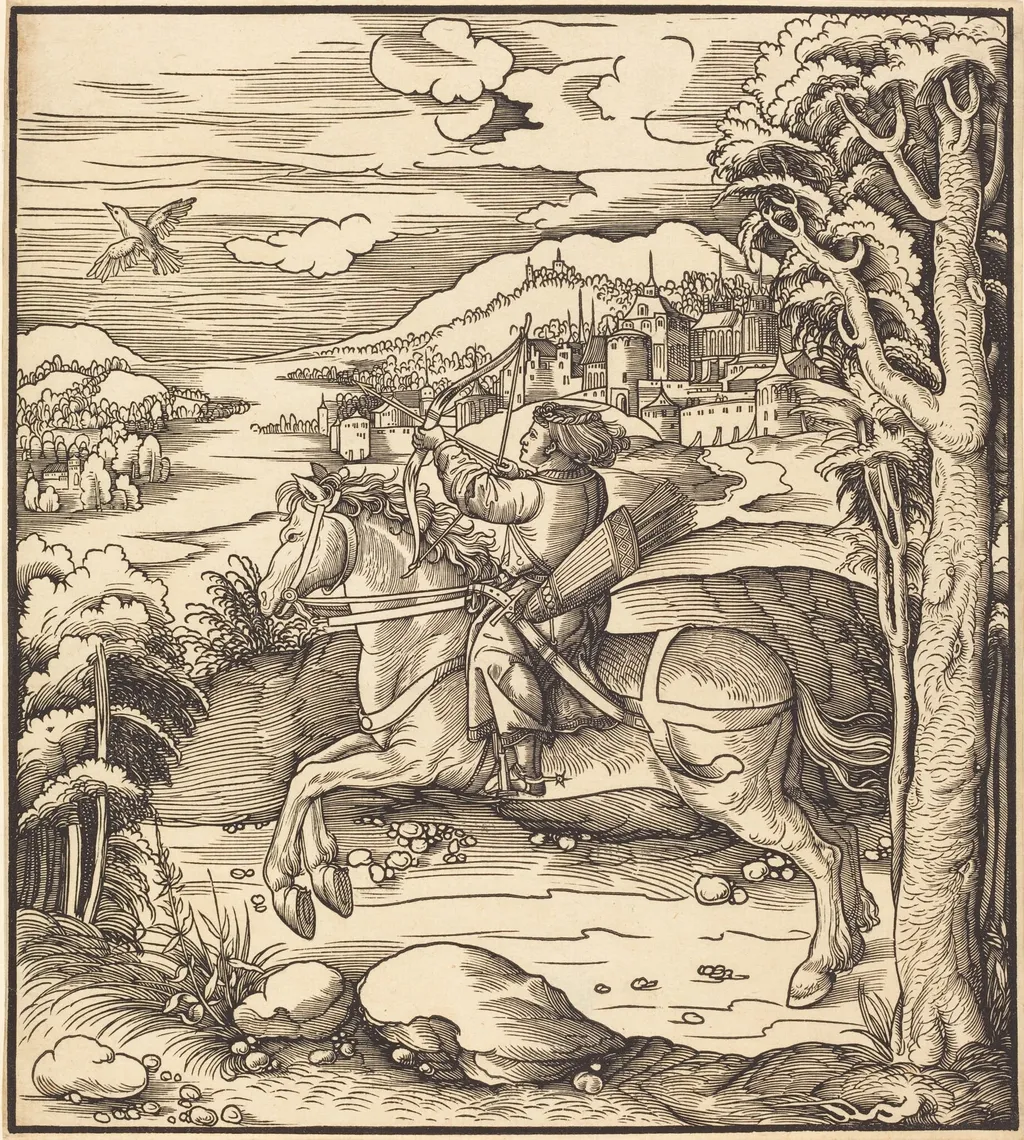
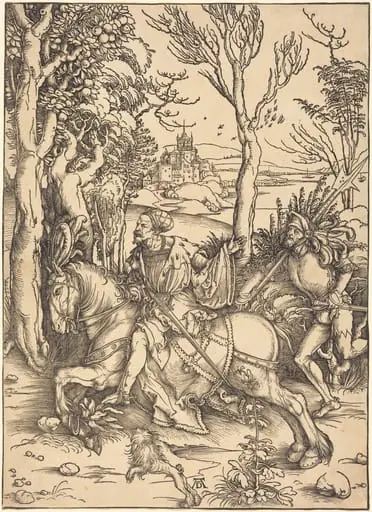
The Prince at the Bird-Catching is an ink print by the Renaissance artist Leonhard Beck. It dates from 1515 and is held in the collection of the National Gallery of Art.
About this work
Overview
Beck, based in Augsburg, was part of a vibrant regional printmaking scene.
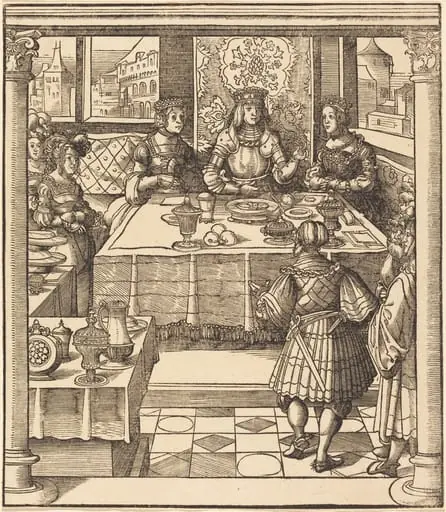
Created in 1515 by Leonhard Beck, this woodcut is a single-color print made by carving an image into a wooden block, inking the raised surfaces, and pressing it onto paper. Beck, based in Augsburg, was part of a vibrant regional printmaking scene. The work belongs to a broader tradition of imperial commissions under Maximilian I, where woodcuts served both decorative and propagandistic ends, blending artistic skill with political messaging.
Subject & Meaning
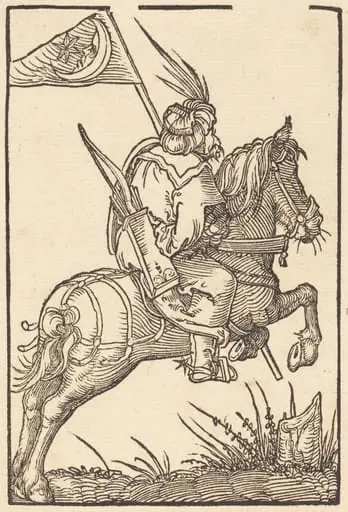
The scene depicts a nobleman on horseback, wielding a long pole with a looped end, presumably used to catch birds—a pastime associated with aristocratic leisure. Behind him, a modest town perches on a hill, framed by trees and a winding river. The imagery suggests a moment of controlled recreation, subtly reinforcing the prince’s status through the setting and activity, without overt symbolism or narrative drama.
Technique & Style
Beck employed traditional woodcut methods, carving lines into the woodblock to create contrast between inked and uninked areas. Cross-hatching and parallel lines model form and texture, generating depth without color. The composition is restrained, with clear outlines and minimal detail, typical of Augsburg’s print culture. The technique prioritizes clarity and reproducibility, suited for mass distribution among elite audiences.
History & Provenance
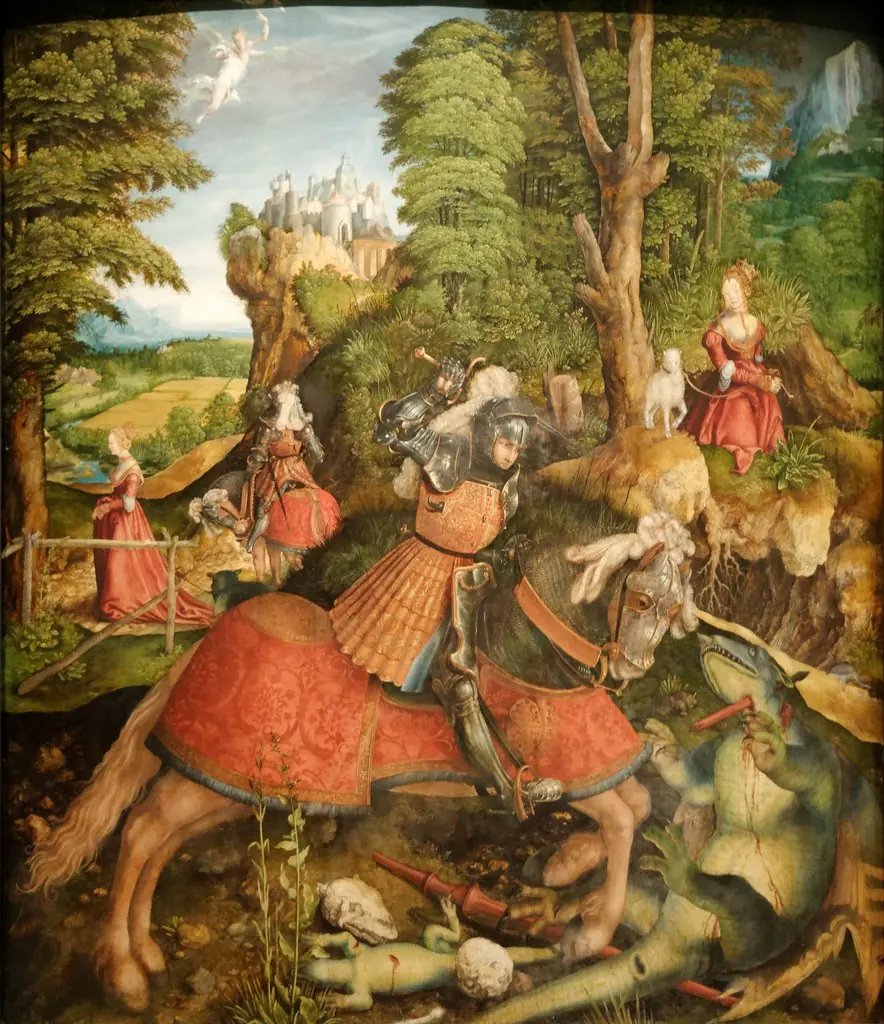
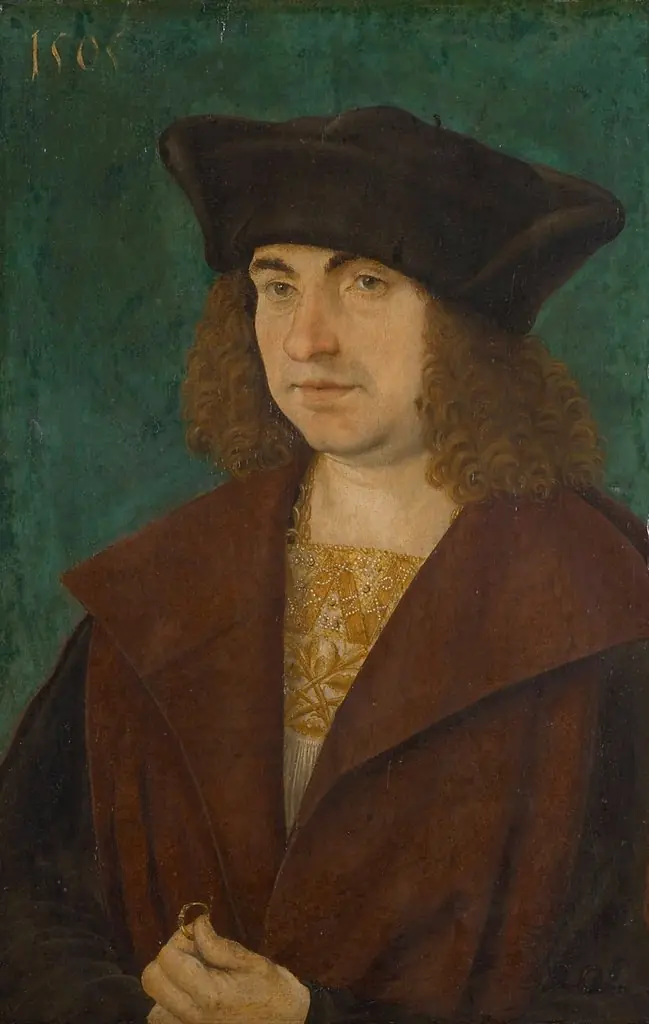
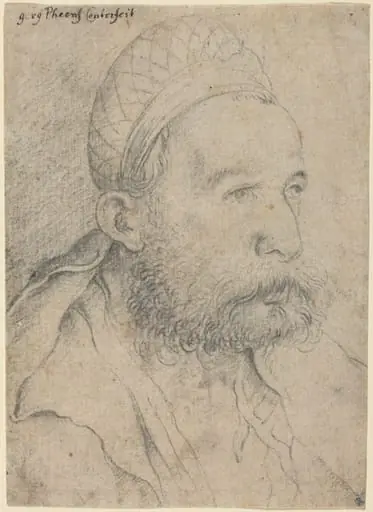
Leonhard Beck, son of miniaturist Georg Beck, trained in his father’s workshop and later collaborated with Hans Holbein the Elder. His involvement in Emperor Maximilian I’s artistic circle placed him among printers producing illustrated books and propaganda. This woodcut likely originated as part of a larger series commissioned by the imperial court, though its exact original context remains undocumented in surviving records.
Context
Early 16th-century Augsburg was a hub for printmaking, where artists like Beck worked closely with publishers and patrons to produce images for both religious and secular use. The imperial court favored woodcuts for their affordability and wide reach. This work reflects how noble leisure was visually codified in print, aligning with broader trends in Northern European art that valued detailed observation and social hierarchy.
Legacy
Beck’s woodcuts, including this one, contributed to the standardization of narrative imagery in print. Though not widely known today, his work influenced regional printmakers and helped shape the visual language of aristocratic life in early modern Germany. His technical precision and integration into imperial projects mark him as a significant, if understudied, figure in the history of Renaissance printmaking.
Artist & collection
Artist
Leonhard Beck (c. 1480 – 1542) was a painter and woodcuts designer in Augsburg, Germany. He was the son of Georg Beck, a miniaturist who was active in Augsburg c. 1490–1512/15. Leonhard collaborated with his father on…