Artwork
The Ecstasy of St. Mary Magdalene
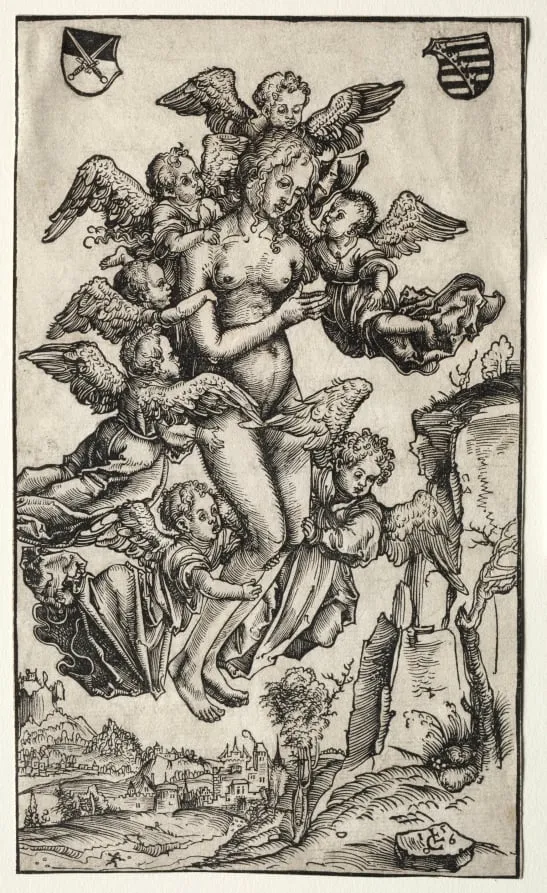
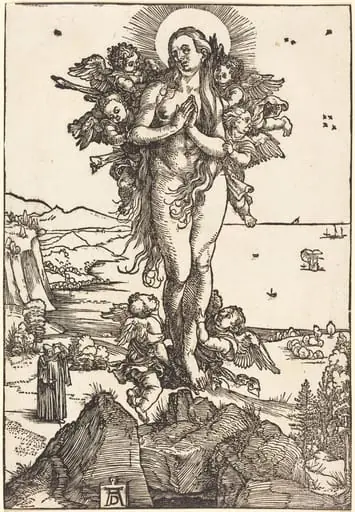
The Ecstasy of St. Mary Magdalene is a print by the Renaissance artist Lucas Cranach the Elder. It dates from 1506 and is held in the collection of the Cleveland Museum of Art. This print depicts Saint Mary Magdalene lifted by angels in a moment of divine ecstasy.
About this work
You can learn more about this style by looking at the work of artist: Lucas Cranach (German, 1472–1553).
You see a woman raised by angels, surrounded by a heavenly glow.
She's dressed in simple clothes, but her body is portrayed like a classical goddess.
The artist gave her this form to show her divine beauty, which is an interesting choice.
This painting is from a time when artists were looking back to classical ideals for inspiration.
They often used these ideals to depict religious figures in a new way.
You can learn more about this style by looking at the work of artist: Lucas Cranach (German, 1472–1553).
Overview
This print depicts Saint Mary Magdalene lifted by angels in a moment of divine ecstasy. Rendered in the early 16th century, it reflects the Renaissance revival of classical aesthetics within religious imagery. The figure is shown in mid-air, enveloped in a luminous aura, suggesting a spiritual ascent. The composition draws on ancient ideals of form to convey sacred transcendence rather than earthly realism.
Subject & Meaning
The scene references medieval accounts of Mary Magdalene’s solitary life in the wilderness, during which she was said to be lifted seven times daily by angels to hear celestial music. Her transformation from sinner to saint is visualized not through penitence but through radiant elevation. The angels’ gentle support and her serene expression emphasize divine favor, not earthly suffering.
Technique & Style
The artist employs clean lines and idealized proportions reminiscent of classical sculpture, particularly in the figure’s elongated limbs and balanced posture. The body is rendered with smooth contours, echoing Venusian forms, while the background remains sparse, focusing attention on the central figure. Delicate shading enhances the sense of weightlessness, reinforcing the ethereal nature of the moment.
History & Provenance
Attributed to Lucas Cranach the Elder, the print likely dates to the 1520s, a period when he was actively engaged in religious subjects alongside his Reformation-era patrons. As a German artist working in Wittenberg, Cranach adapted classical motifs to Protestant devotional needs. The print circulated among educated audiences, reflecting a broader trend of merging humanist aesthetics with biblical narratives.
Context
During the Renaissance, artists across Europe reinterpreted religious figures through the lens of classical antiquity, seeking harmony and idealized beauty as expressions of divine order. Cranach’s depiction aligns with this movement, even as Protestant reformers questioned traditional iconography. The choice to portray Magdalene as a goddess-like figure reveals a tension between spiritual purity and aesthetic tradition.
Legacy
This print exemplifies how Renaissance artists negotiated religious meaning with classical form, influencing later depictions of saints in Northern European art. While later generations moved toward greater naturalism or emotional intensity, Cranach’s synthesis of pagan beauty and Christian mysticism remained a distinctive approach, preserving a unique visual language for sacred ecstasy.
Artist & collection
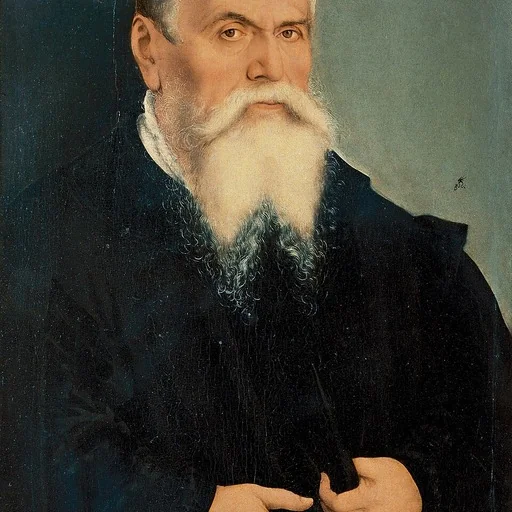
Artist
Lucas Cranach the Elder was a German Renaissance painter and printmaker in woodcut and engraving.