Artwork
Rudolf III., Elector, son of Wenzeslaus, died 1419
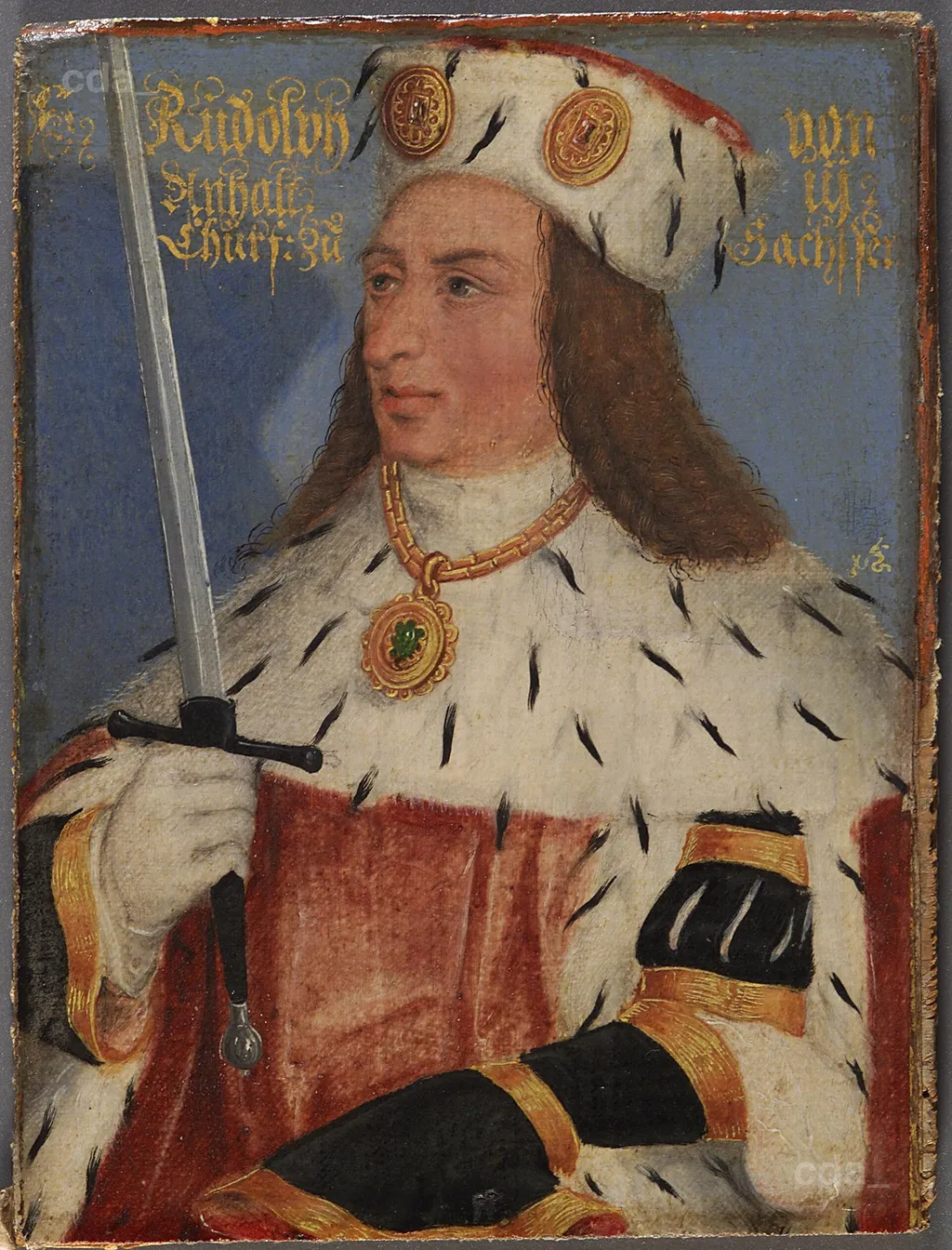
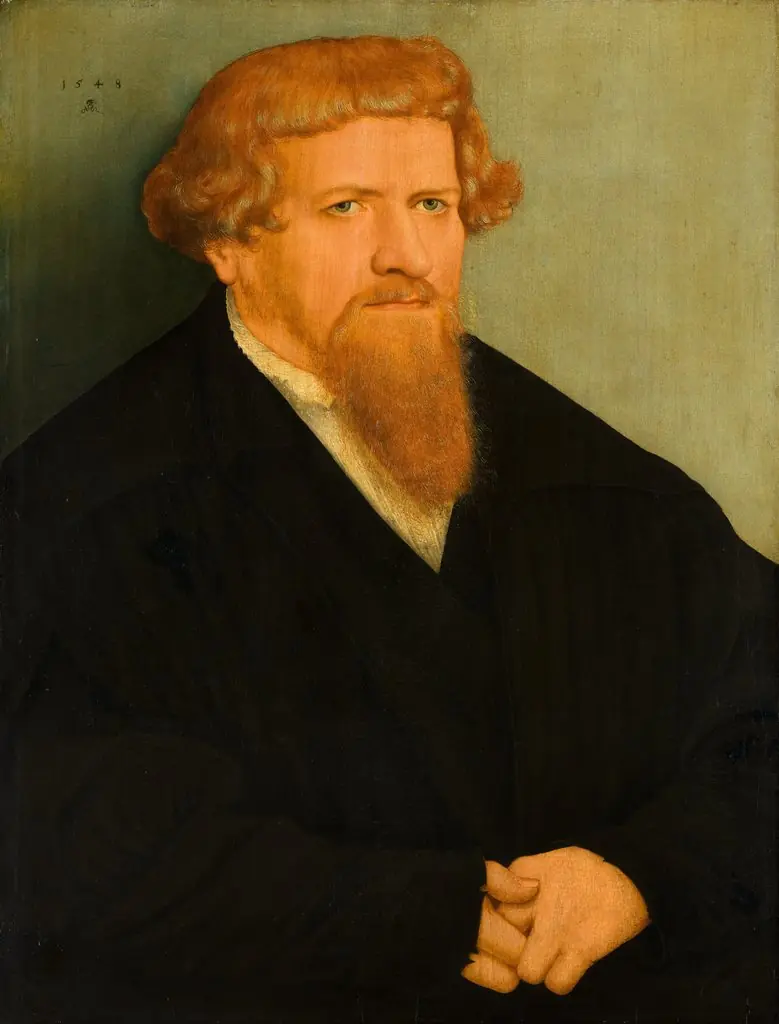
Rudolf III., Elector, son of Wenzeslaus, died 1419 is an unspecified painting by the Northern Renaissance artist Lucas Cranach the Younger. It is held in the collection of the Kunsthistorisches Museum.
About this work
Overview
Though created long after Rudolf’s lifetime, the work reflects the Cranach workshop’s enduring tradition of producing formal portraits for noble patrons.
Painted in 1590 by Lucas Cranach the Younger, this portrait commemorates Rudolf III, Elector of Saxony, who died nearly two centuries earlier in 1419. Though created long after Rudolf’s lifetime, the work reflects the Cranach workshop’s enduring tradition of producing formal portraits for noble patrons. It belongs to the Kunsthistorisches Museum’s collection and exemplifies late 16th-century German portraiture rooted in earlier Renaissance conventions.
Subject & Meaning
Rudolf III is depicted as a nobleman of high rank, identified by his title 'Elector'—a designation reserved for princes with the right to choose the Holy Roman Emperor. His attire and regalia emphasize status: a fur-lined robe, ornate hat, and gold chain signify both wealth and political authority. The stillness of his gaze and the formal pose convey dignity and permanence, aligning with the function of such portraits as symbols of lineage and power.
Technique & Style
Cranach the Younger employed precise brushwork to render the textures of fur, silk, and metal with clarity, characteristic of the Cranach workshop’s attention to material detail. The palette is restrained, dominated by dark tones accented by gold and red, enhancing the subject’s solemnity. Facial features are rendered with subtle modeling, avoiding idealization in favor of a restrained realism that prioritizes identification over emotional expression.
History & Provenance
The portrait was painted in 1590, long after Rudolf III’s death, likely commissioned to reinforce the continuity of the Saxon electoral line. It was produced in the Cranach studio, which maintained a steady output of ancestral portraits for noble families. The work entered the Kunsthistorisches Museum’s collection in Vienna, where it remains part of a broader assemblage of Habsburg-sponsored historical imagery.
Context
In late 16th-century Germany, portraits of deceased rulers were often commissioned to legitimize contemporary dynastic claims. The Cranach workshop, long associated with Saxon nobility, continued this practice even after the deaths of its founders. Rudolf’s image, though anachronistic in timing, served to visually anchor the Wettin family’s historical authority during a period of religious and political upheaval.
Legacy
This portrait stands as an example of how Renaissance workshops preserved historical memory through art, blending factual representation with symbolic tradition. Though not a contemporary likeness, it reflects the enduring influence of the Cranach style and the importance of visual lineage in early modern European courts. Its preservation underscores the role of museums in safeguarding such dynastic narratives.
Artist & collection
Artist
Lucas Cranach the Younger (German: Lucas Cranach der Jüngere, IPA: ; 4 October 1515 – 25 January 1586) was a German Renaissance painter and portraitist, the son of Lucas Cranach the Elder and brother of Hans Cranach.

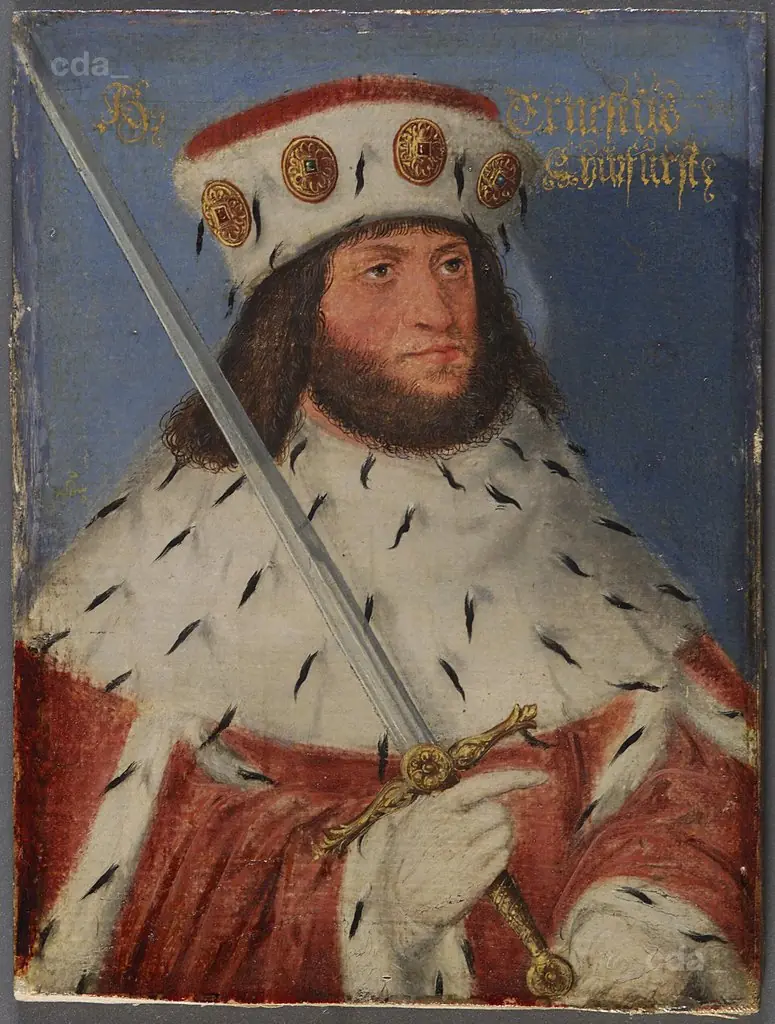 Ernst, son of Friedrich II., died 1486
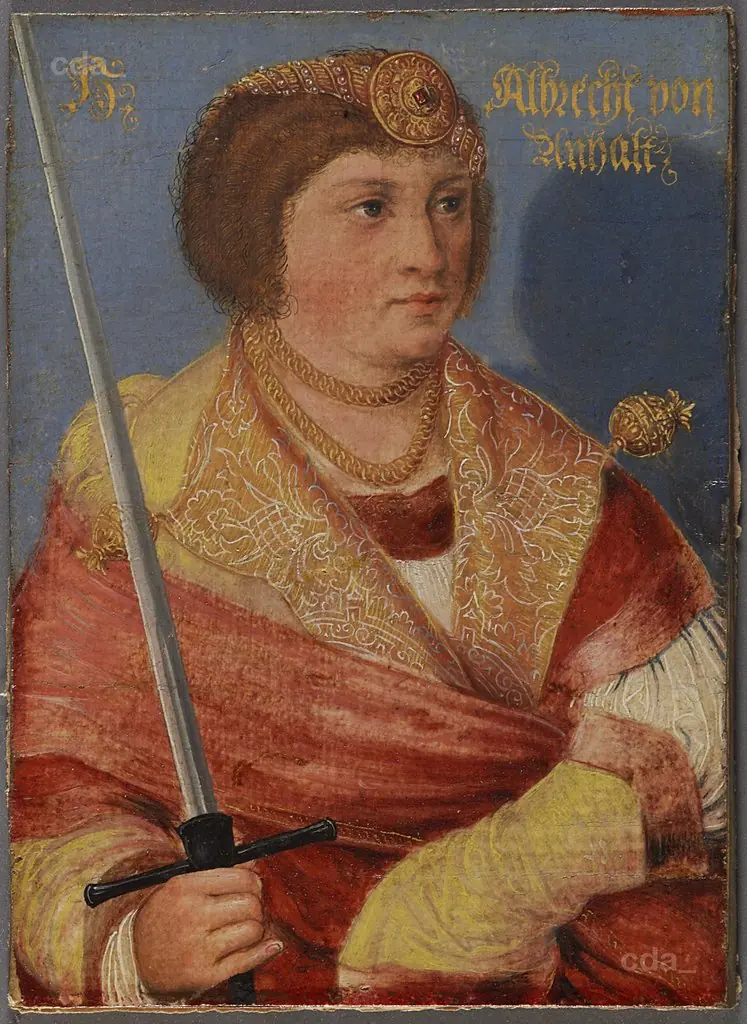 Albrecht III., Elector, son of Wenzeslaus, died 1422
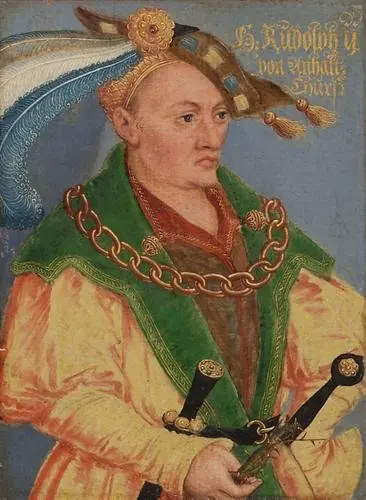 Rudolf II., Duke, son of Rudolf I., died 1370
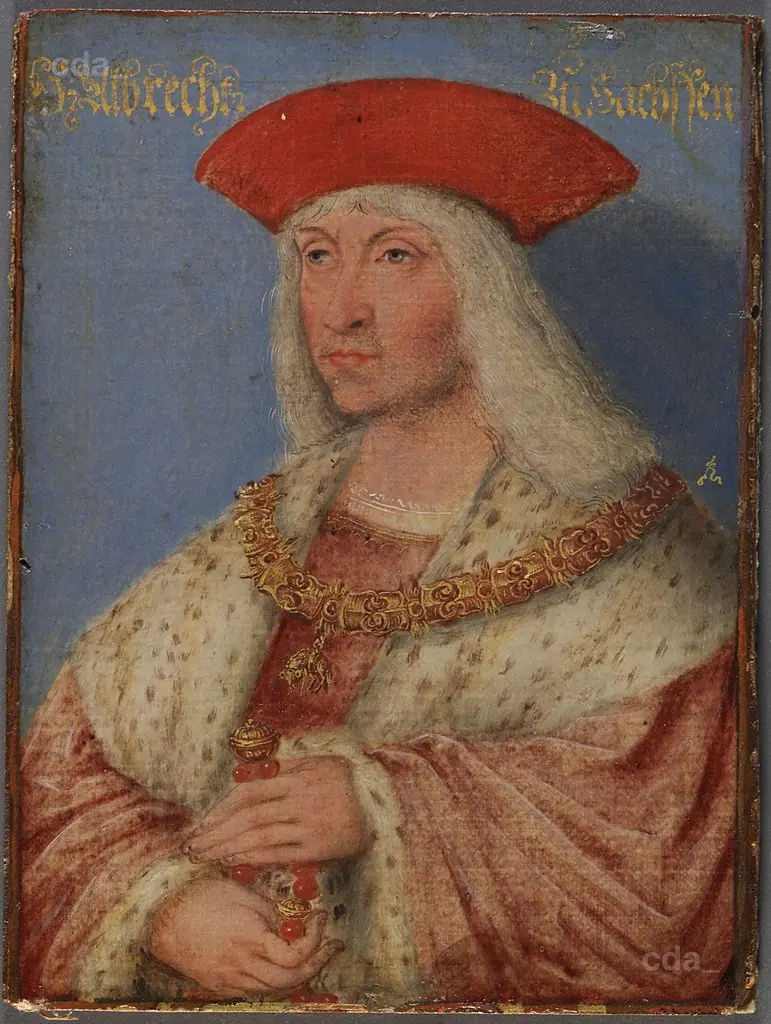 Albrecht the Bold, son of Friedrich II., died 1500
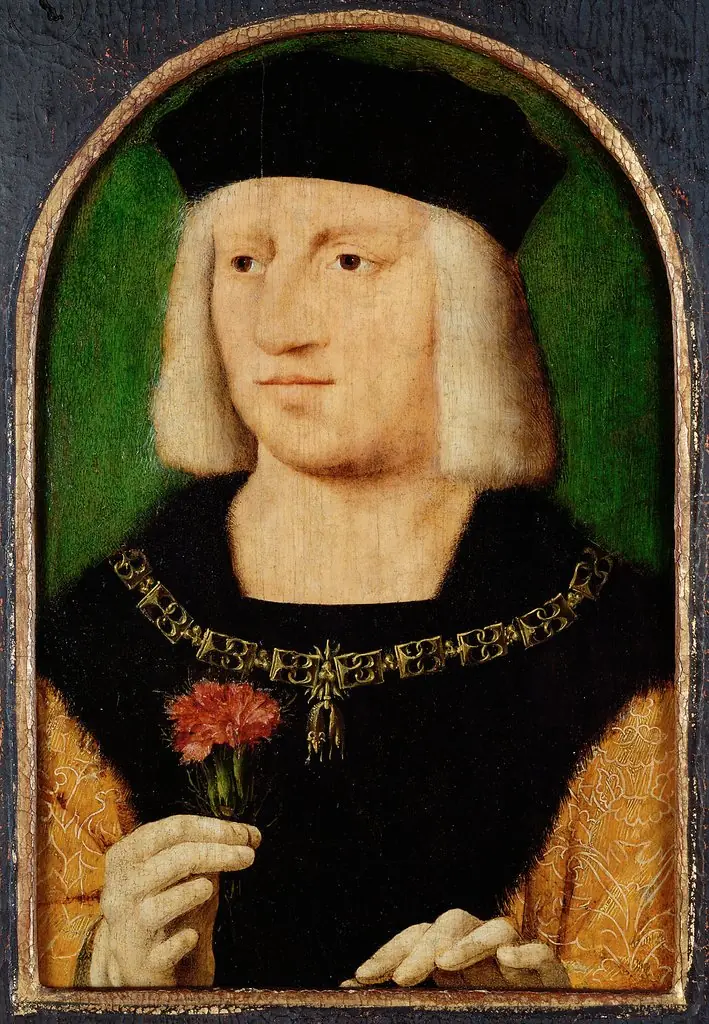 Emperor Maximilian I. (1459-1519)
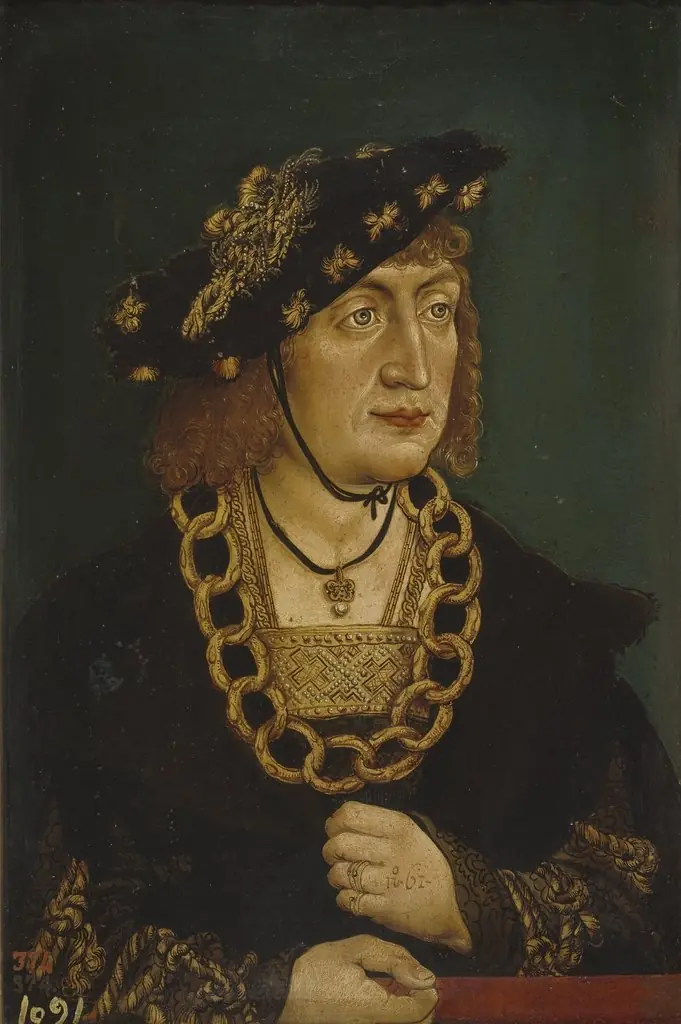 Frederick III
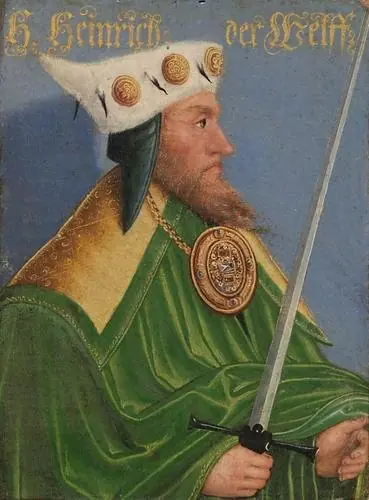 Duke Heinrich the Proud (son of Duke Heinrich the black of Bavaria), died 1139