Artwork
David Playing the Harp before Saul
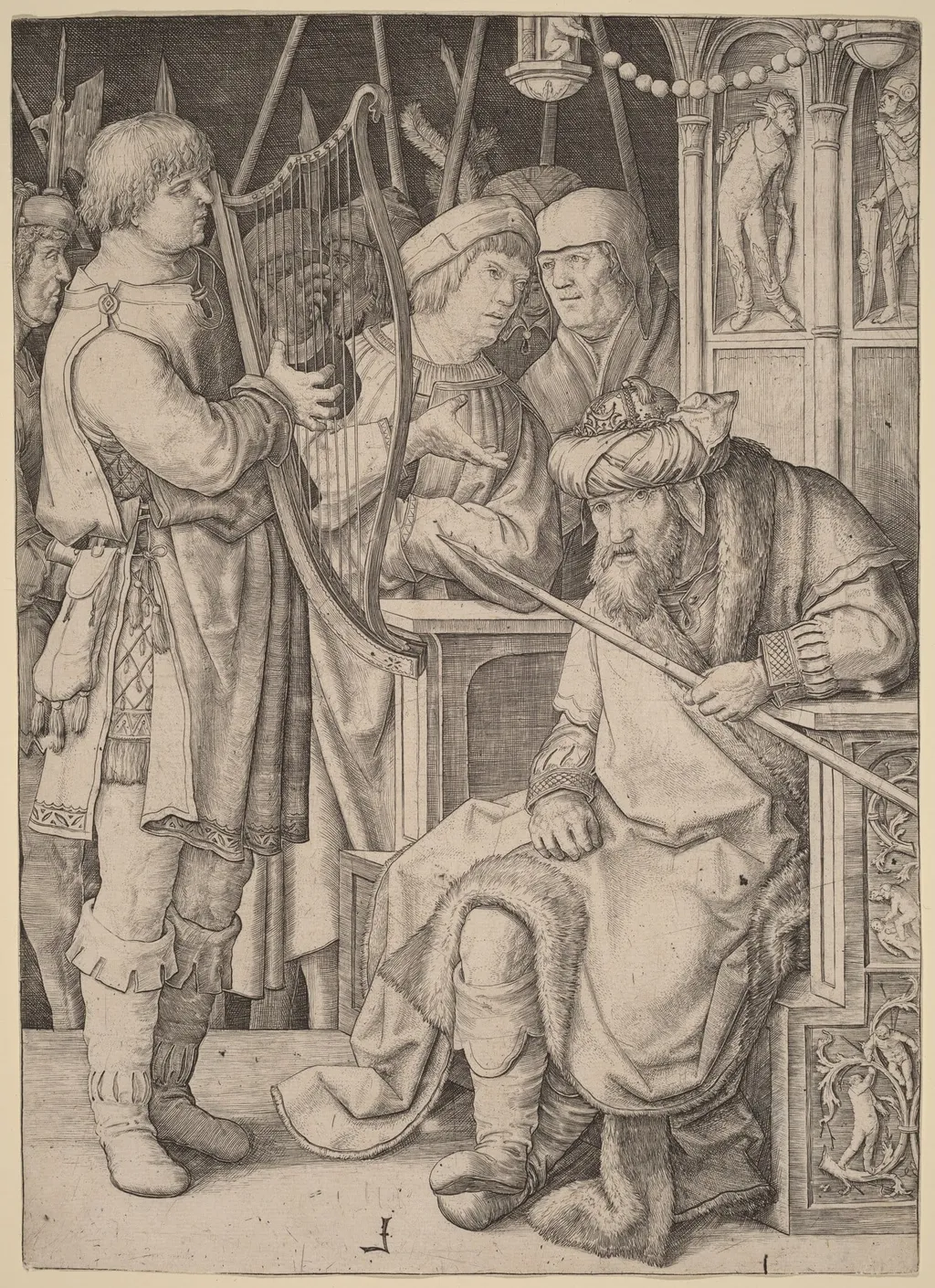
David Playing the Harp before Saul is an ink print by the Renaissance artist Lucas van Leyden. It dates from 1508 and is held in the collection of the National Gallery of Art.
About this work
Overview
As one of the earliest Dutch artists to achieve prominence in printmaking, van Leyden used fine, controlled lines to render complex scenes with clarity.
Created around 1508 by Lucas van Leyden, this engraving captures a moment from the biblical story of David and Saul. As one of the earliest Dutch artists to achieve prominence in printmaking, van Leyden used fine, controlled lines to render complex scenes with clarity. The work exemplifies his technical precision and his interest in translating narrative subjects into intimate, detailed compositions suitable for private contemplation.
Subject & Meaning
The scene illustrates 1 Samuel 16:23, where David, a young shepherd, calms the troubled King Saul through music. David’s focused demeanor and the king’s absorbed posture convey a quiet psychological tension. The act of music as solace is rendered not as spectacle but as a solemn, personal exchange. The setting reinforces the gravity of the moment, framing it within a space of royal authority and spiritual resonance.
Technique & Style
Van Leyden employed fine, incised lines to model form and texture with remarkable subtlety. The intricate patterns of the architectural backdrop, the folds of fabric, and the delicate rendering of the harp strings demonstrate his mastery of engraving. His use of cross-hatching creates depth without heavy shading, allowing light to define volume. The composition is tightly controlled, directing attention to the interaction between the two central figures.
History & Provenance
Produced during the early years of van Leyden’s career, this engraving was part of a broader trend in the Northern Renaissance of using prints to disseminate religious and moral narratives. Though no early ownership records are widely documented, the work circulated among collectors and clergy, reflecting its appeal as both devotional imagery and a showcase of technical virtuosity in printmaking.
Context
In early 16th-century Netherlands, engraving emerged as a respected medium for artistic expression beyond painting. Van Leyden’s work aligned with humanist interests in biblical storytelling and psychological nuance. His prints responded to a growing literate audience seeking visual interpretations of scripture, bridging devotional practice with emerging artistic standards of realism and emotional depth.
Legacy
Van Leyden’s engraving helped establish printmaking as a serious artistic discipline in Northern Europe. His ability to convey narrative complexity through line influenced later engravers and contributed to the evolution of secular and religious imagery in print. Though less known today than his contemporaries, his technical innovations remain a reference point in the history of early modern graphic arts.
Artist & collection

Artist
Lucas van Leyden (1494 – 8 August 1533), was a Dutch painter and printmaker in engraving and woodcut. Lucas van Leyden was among the first Dutch exponents of genre painting and was a very accomplished engraver.

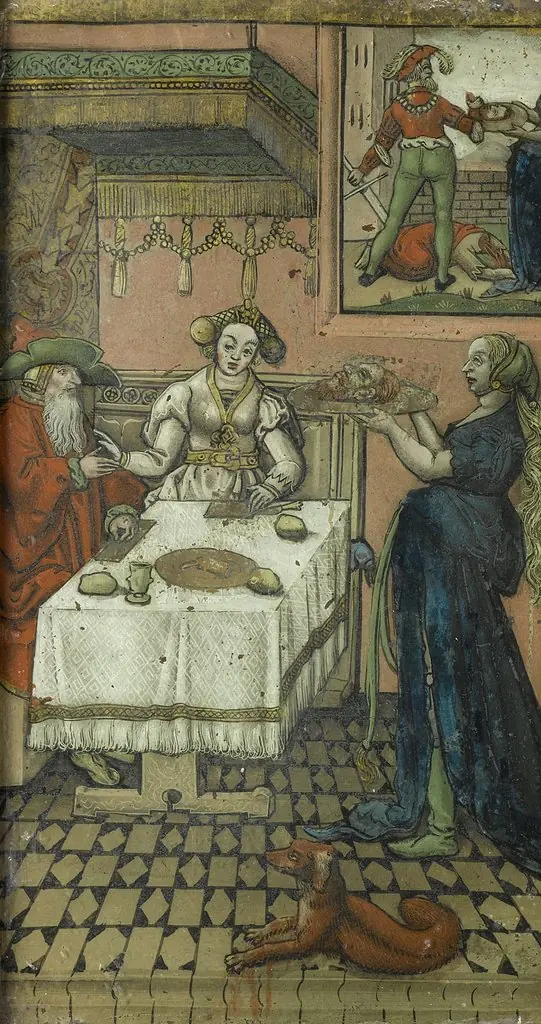 Salome with the head of St John the Baptist
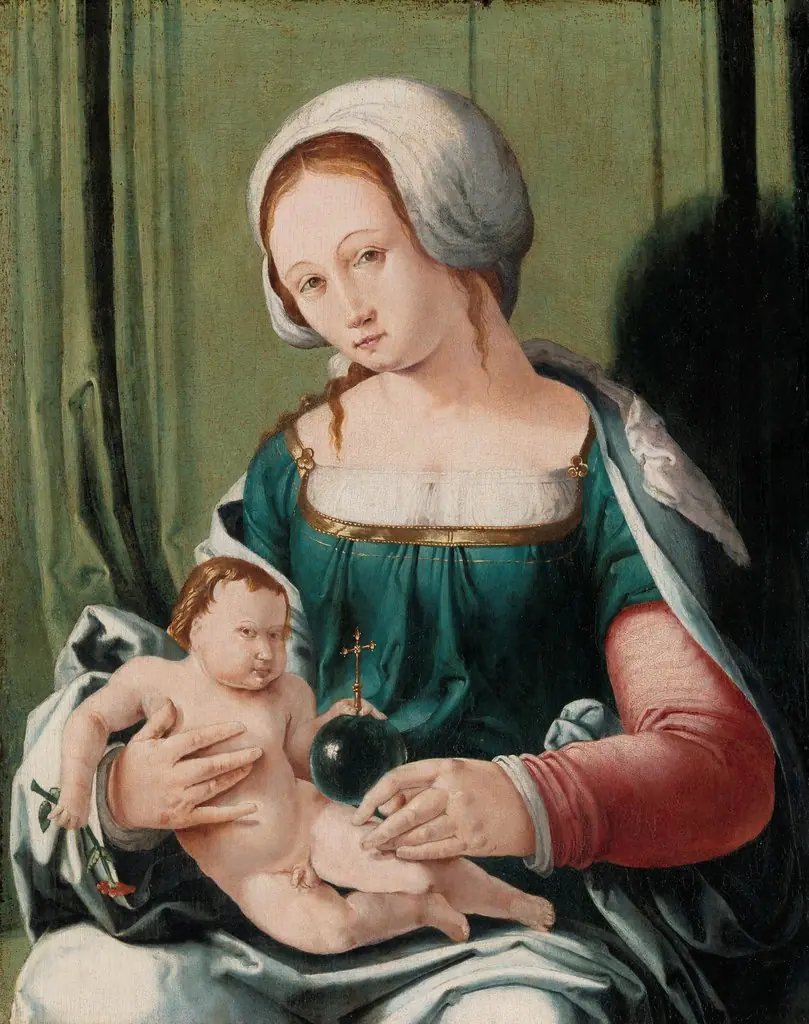 The Virgin and Child
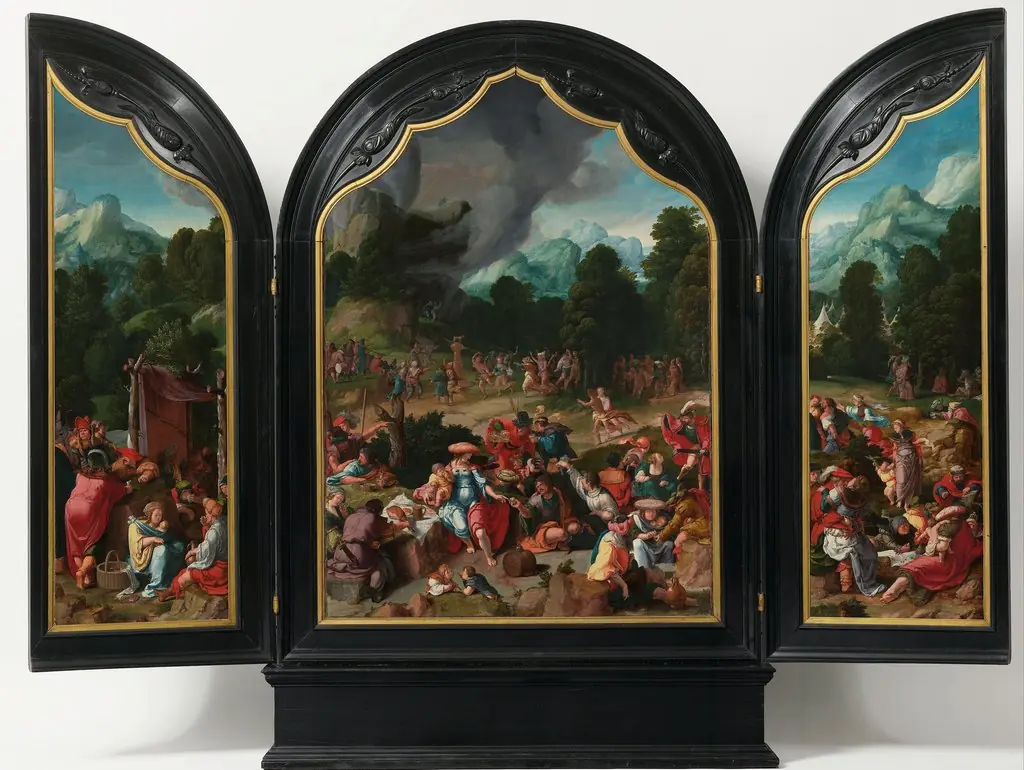 Worship of the Golden Calf
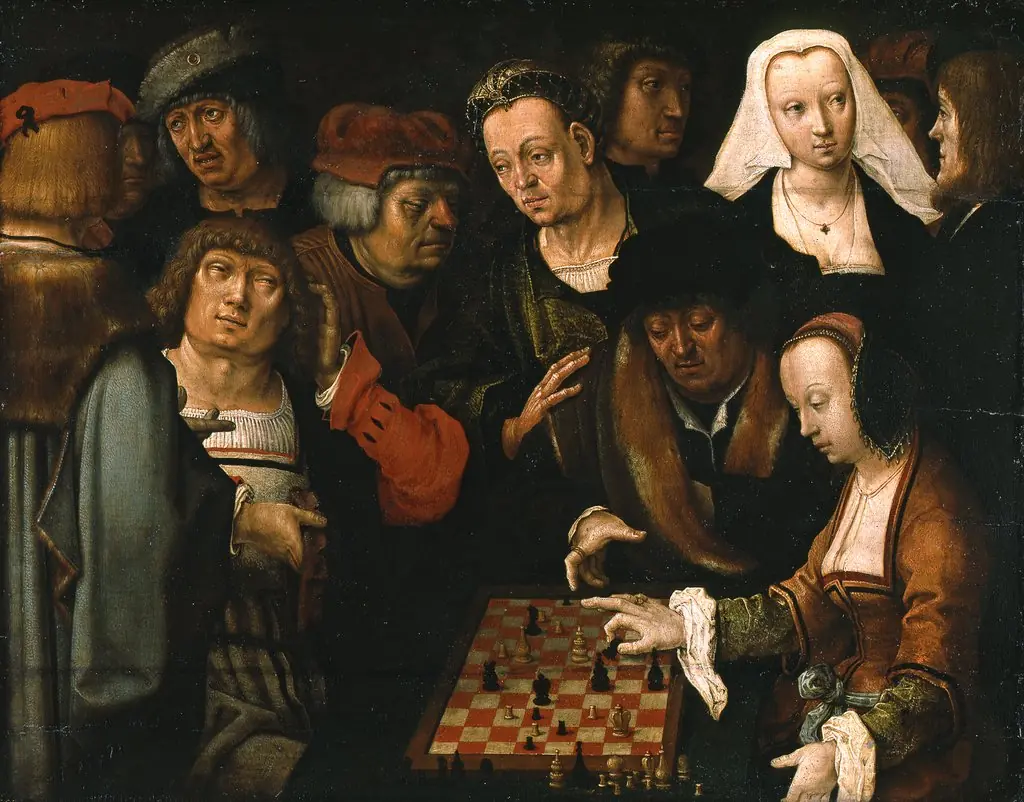 A Game of Chess
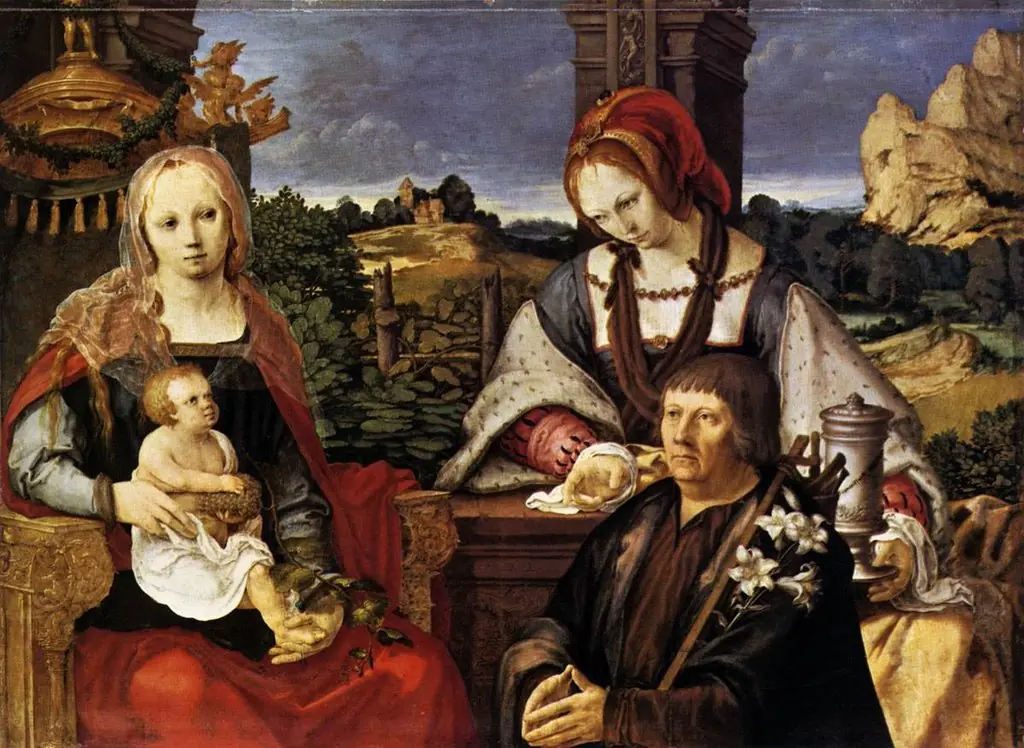 Mary with Child, St. Maria Magdalena and founder (separate outside, Inv. No. 7713)
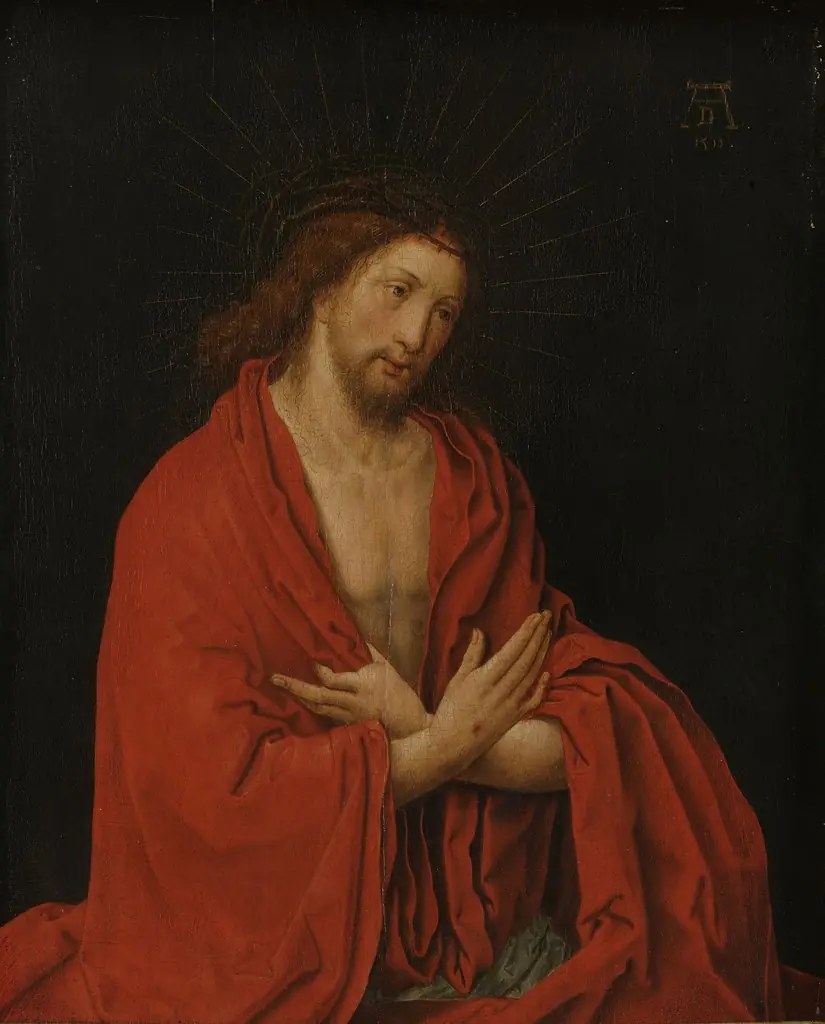 Inner left wing of a diptych with Christ as the Man of Sorrows
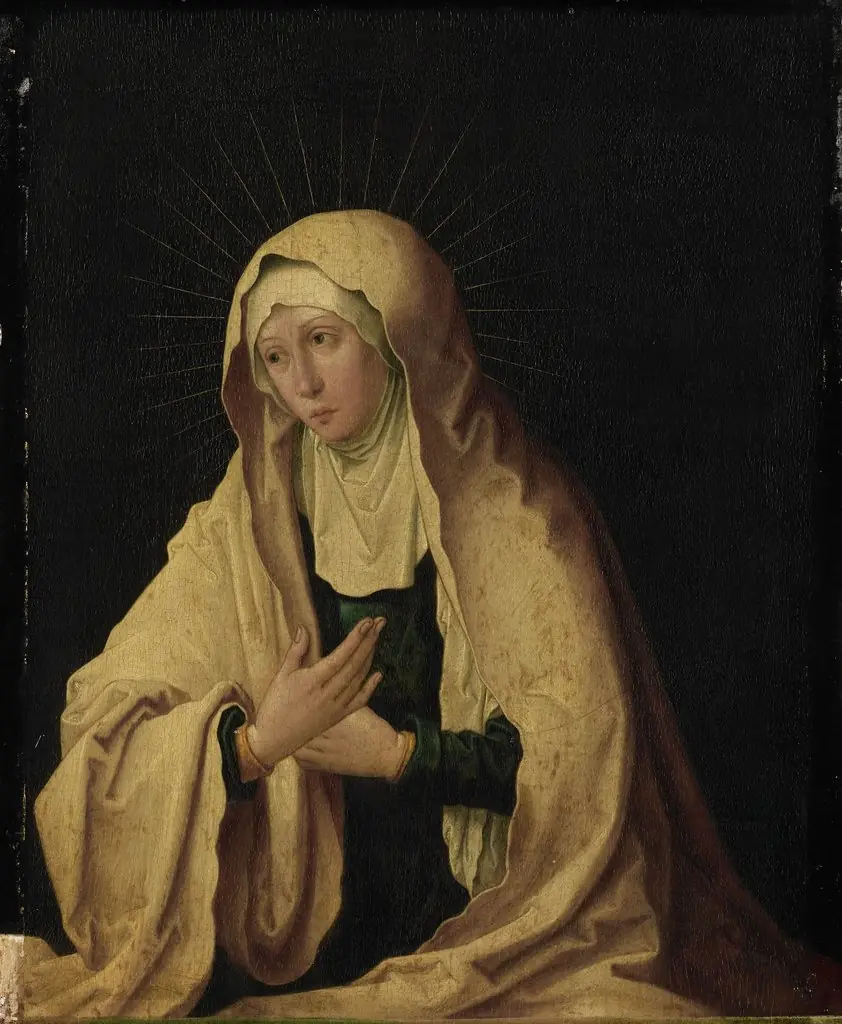 Inner right wing of a diptych with the Virgin as Mater Dolorosa
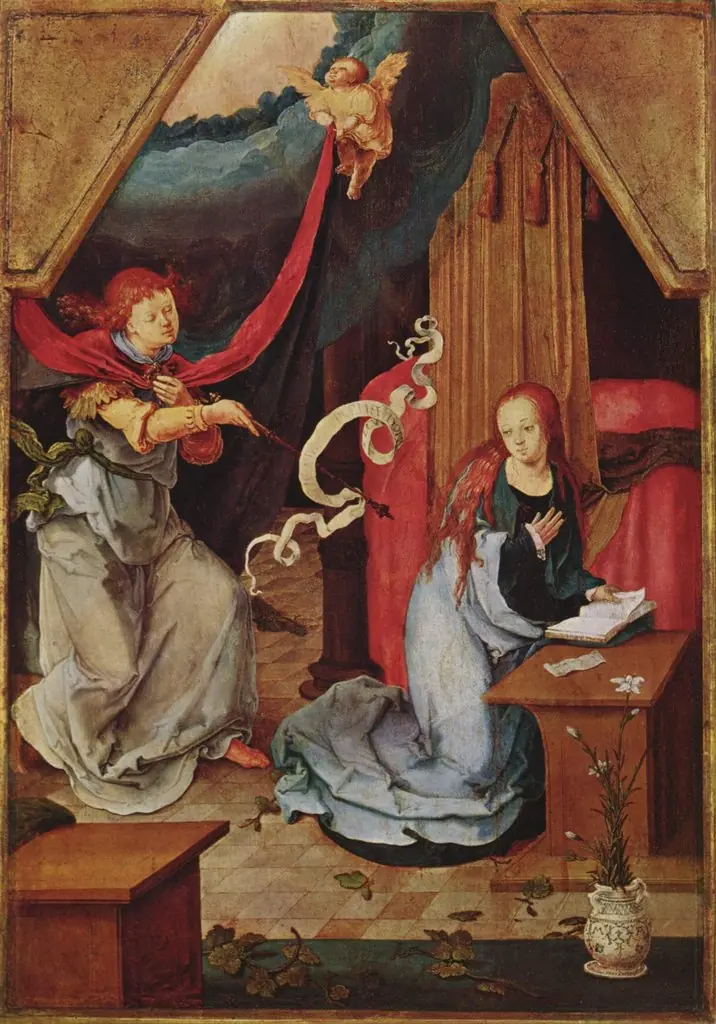 Annunciation
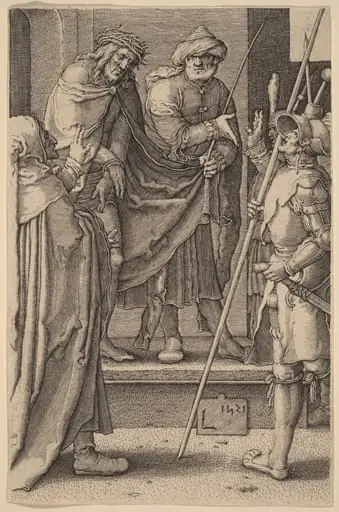 Ecce Homo
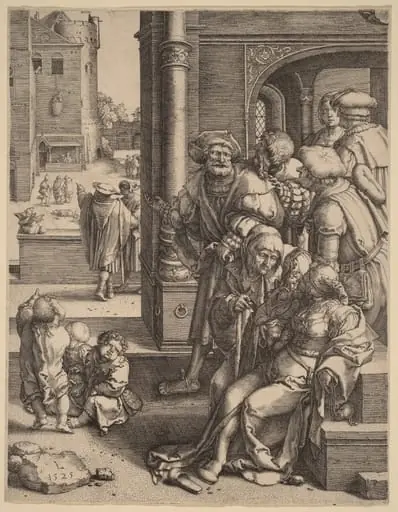 The Poet Virgil Suspended in a Basket
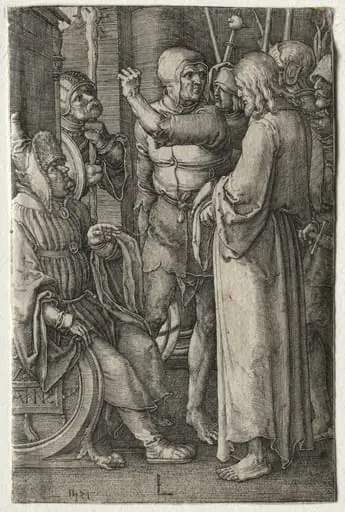 The Passion: Christ Before the High Priest
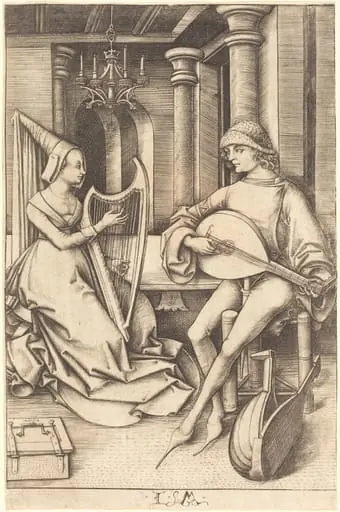 The Lute Player and the Harpist
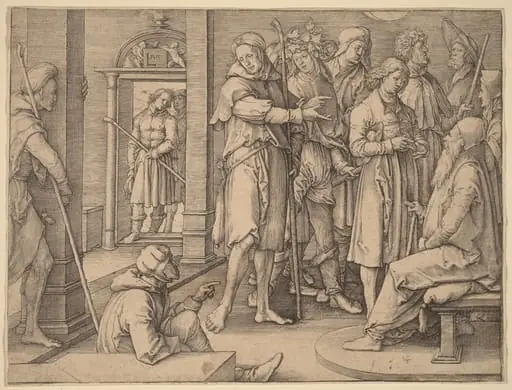 Joseph Interprets His Dream to Jacob
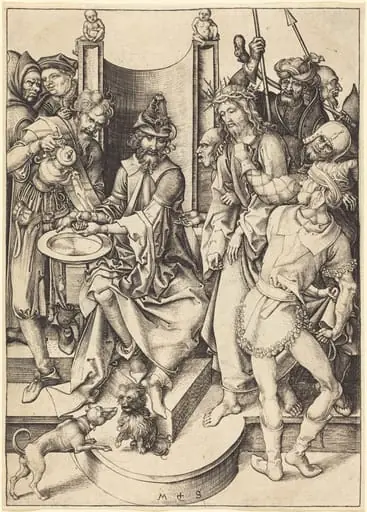 Christ before Pilate
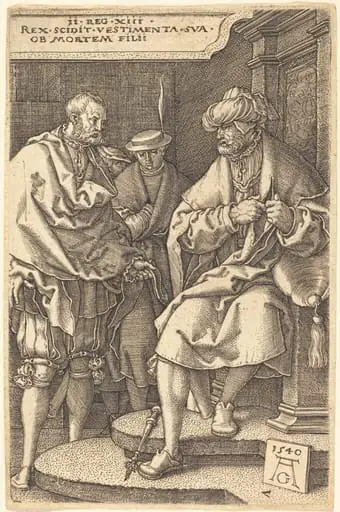 David Casting Off His Robes at the News of the Death of His Son
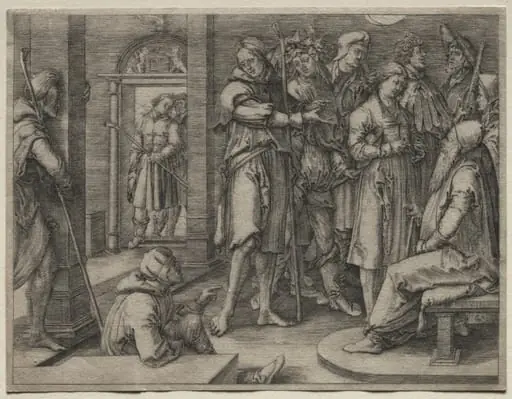 The Story of Joseph: Joseph Interprets his Dream to Jacob
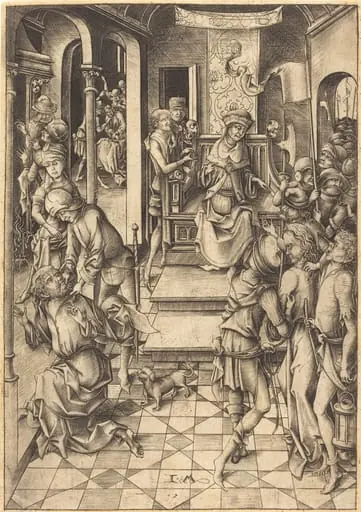 Christ before Annas