Artwork
Joshua, David, Judas Maccabees
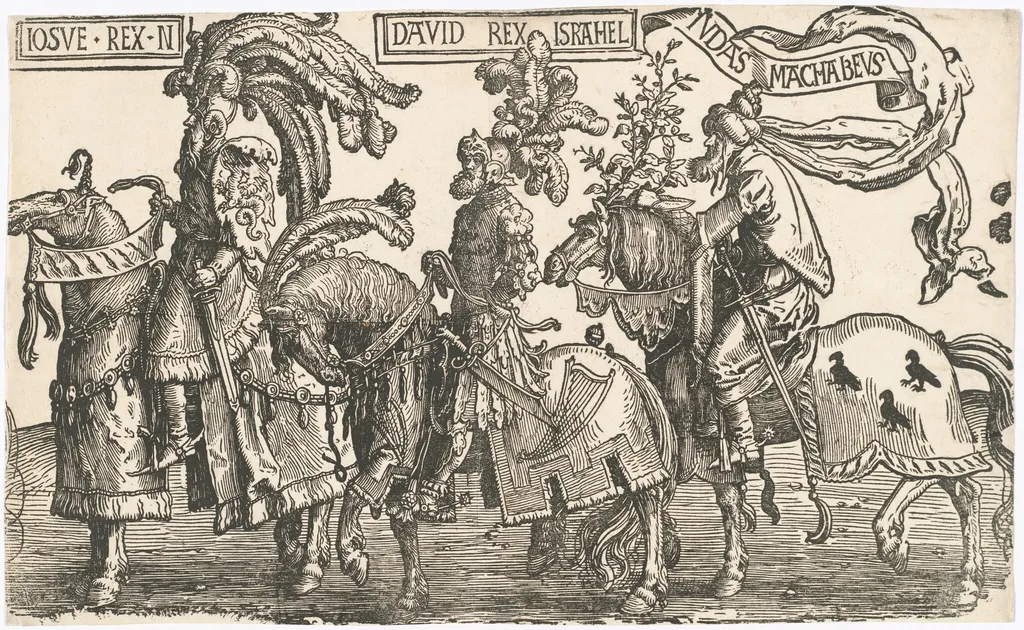
Joshua, David, Judas Maccabees is an ink print by the Renaissance artist Lucas van Leyden. It dates from 1516 and is held in the collection of the National Gallery of Art.
About this work
Overview
Joshua, David, Judas Maccabees is a 1516 woodcut by Lucas van Leyden, a prominent Northern Renaissance artist. This intricate print showcases the artist's technical skill in capturing detailed, expressive scenes.
Subject & Meaning
The work depicts three biblical figures on horseback—Joshua, David, and Judas Maccabees—each identified by Latin banners. The unconventional grouping of these figures in a single, bustling scene invites interpretation of their collective significance.
Technique & Style
Characteristic of van Leyden's style, the woodcut features meticulous details, including textures, shields, weapons, and background elements. The dense composition highlights his mastery of conveying complexity in a small format.
History & Provenance
Created in 1516, the woodcut exemplifies van Leyden's early dominance in Dutch printmaking, particularly in woodcuts and engravings. Born in Leiden in 1494, he was a leading figure in Dutch genre painting and printmaking.
Context
The piece reflects the Northern Renaissance's emphasis on detailed, expressive artworks. The use of woodcut, a popular medium at the time, allowed for widespread dissemination of the image.
Legacy
Joshua, David, Judas Maccabees contributes to van Leyden's legacy as a technical innovator in printmaking. The work's style and technique have influenced subsequent generations of printmakers and remain a subject of study in the history of Dutch art.
Artist & collection

Artist
Lucas van Leyden (1494 – 8 August 1533), was a Dutch painter and printmaker in engraving and woodcut. Lucas van Leyden was among the first Dutch exponents of genre painting and was a very accomplished engraver.

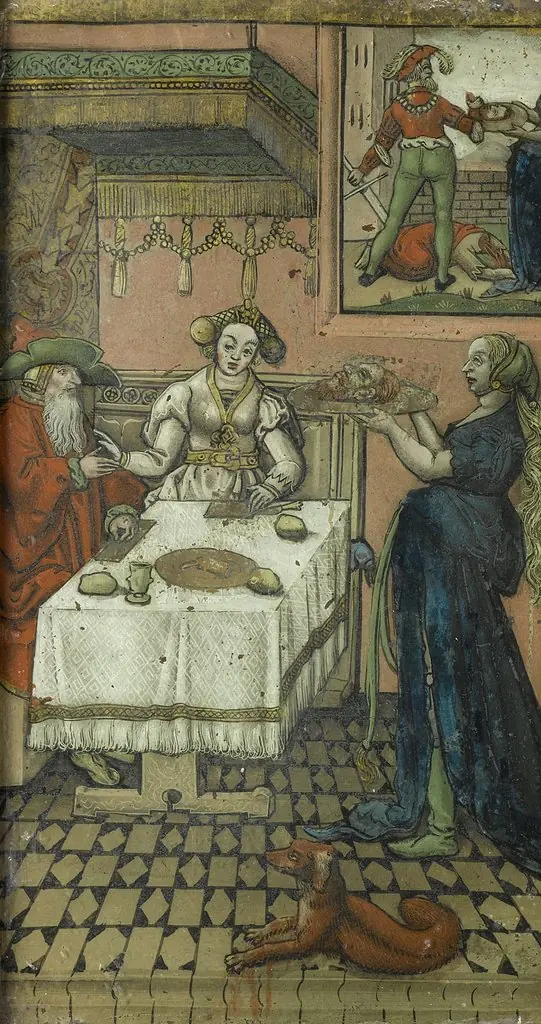 Salome with the head of St John the Baptist
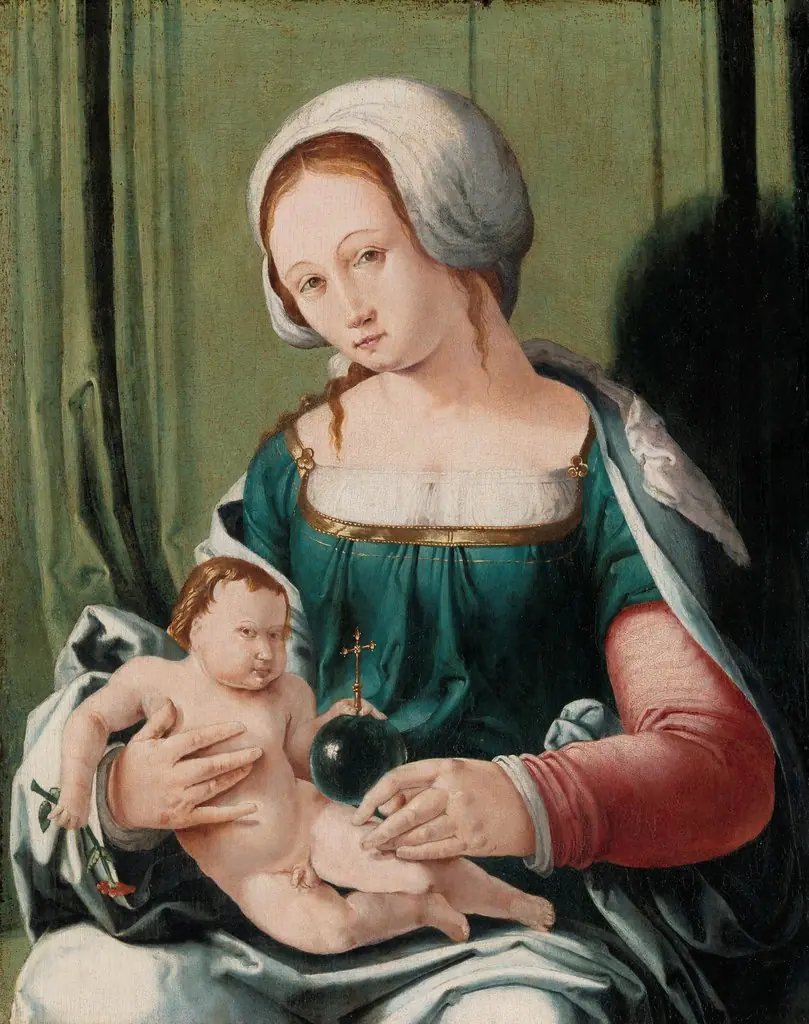 The Virgin and Child
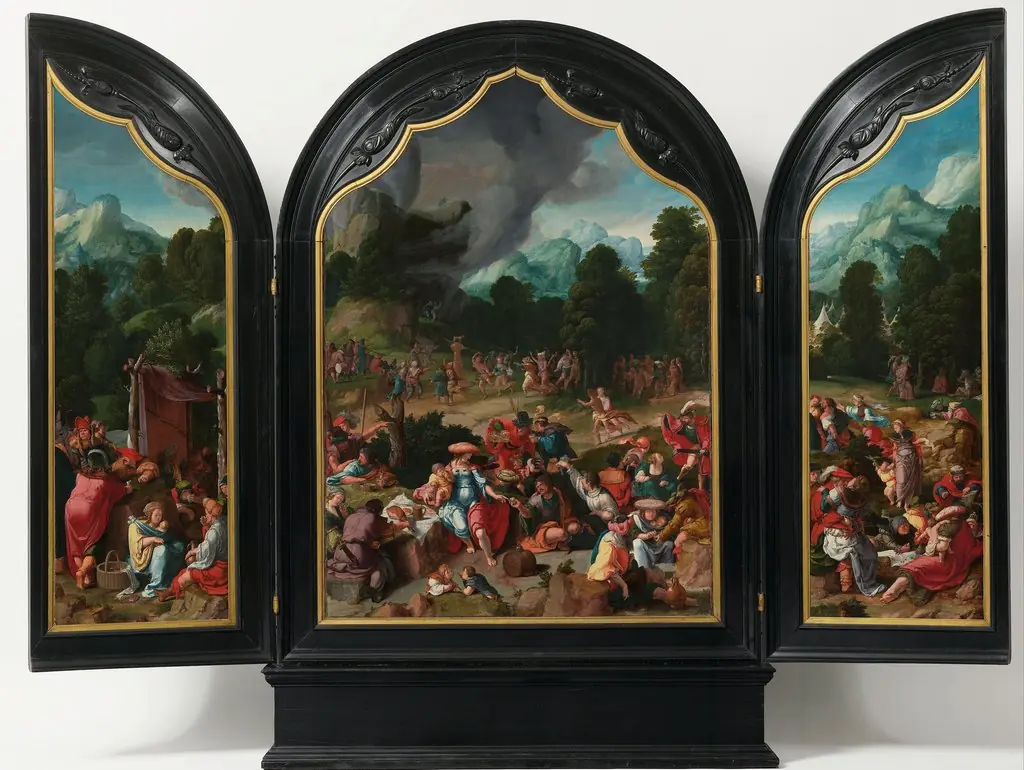 Worship of the Golden Calf
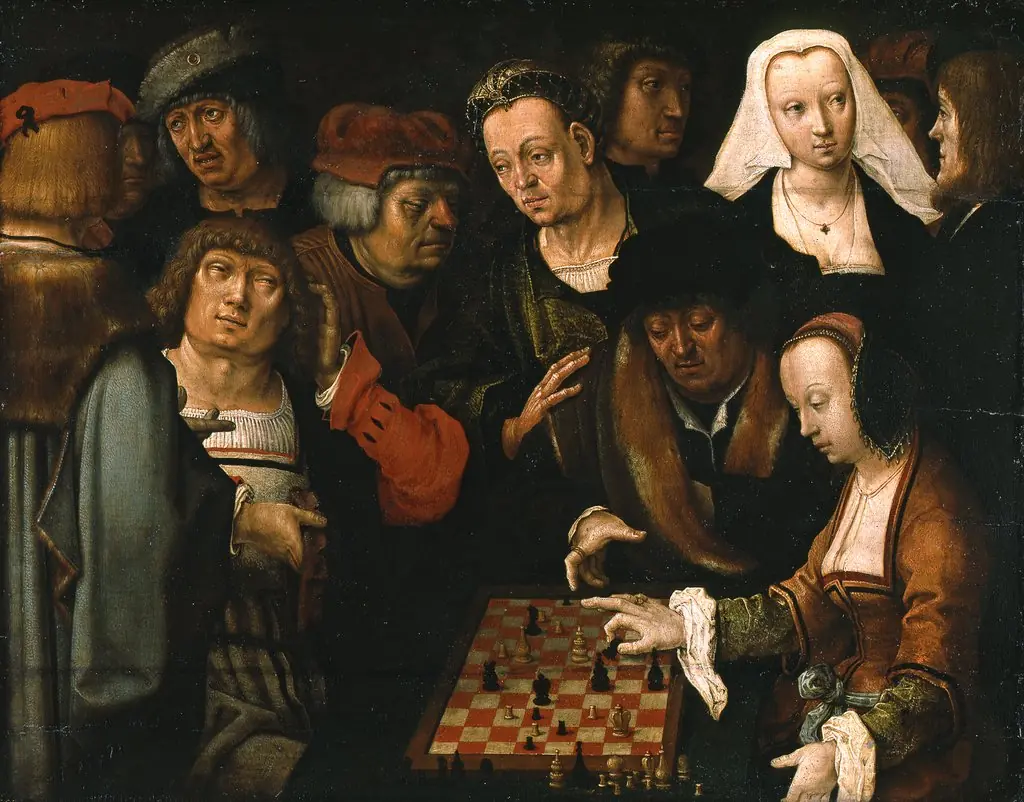 A Game of Chess
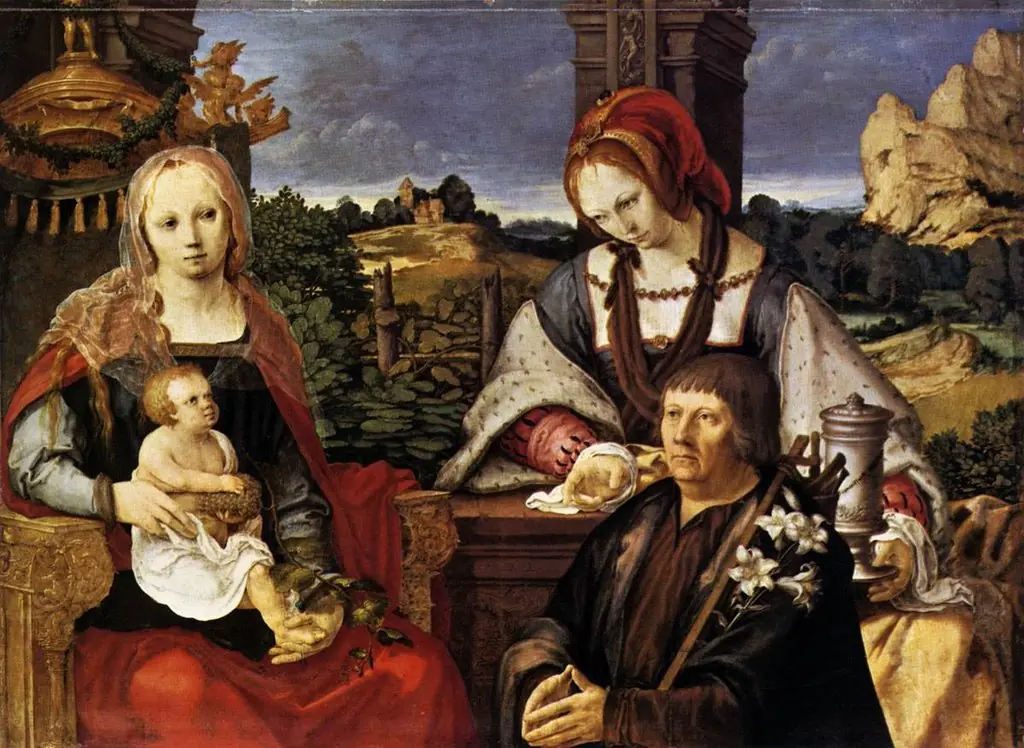 Mary with Child, St. Maria Magdalena and founder (separate outside, Inv. No. 7713)
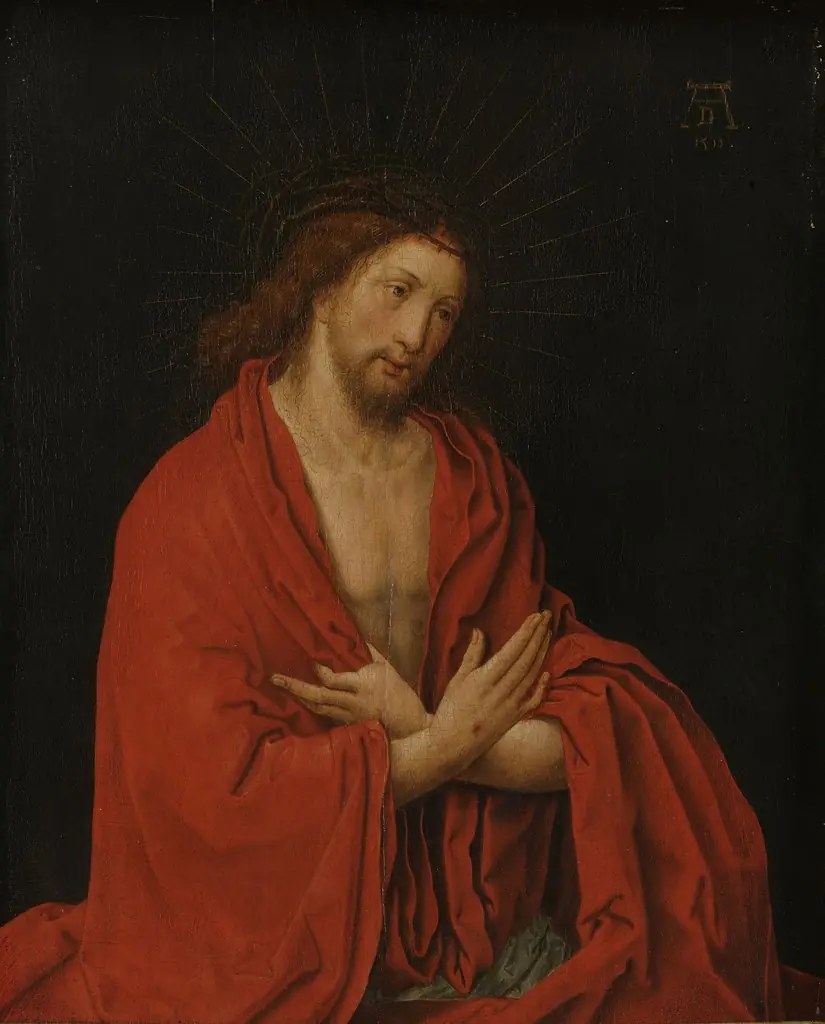 Inner left wing of a diptych with Christ as the Man of Sorrows
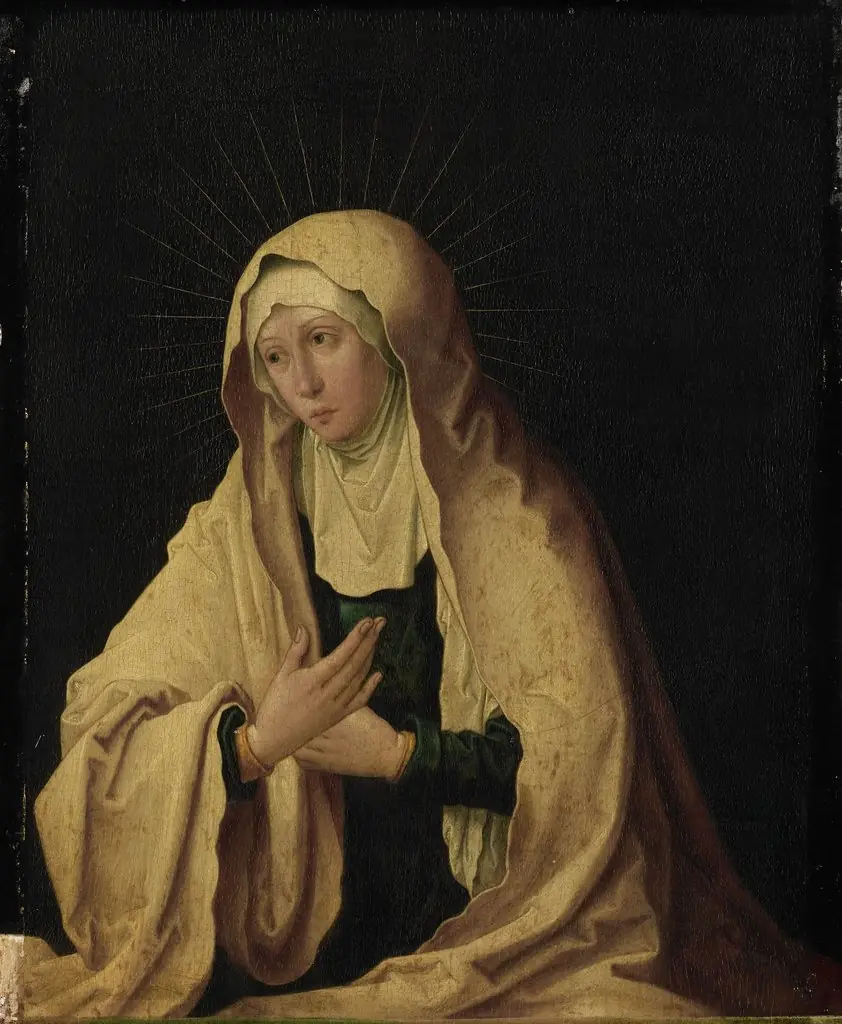 Inner right wing of a diptych with the Virgin as Mater Dolorosa
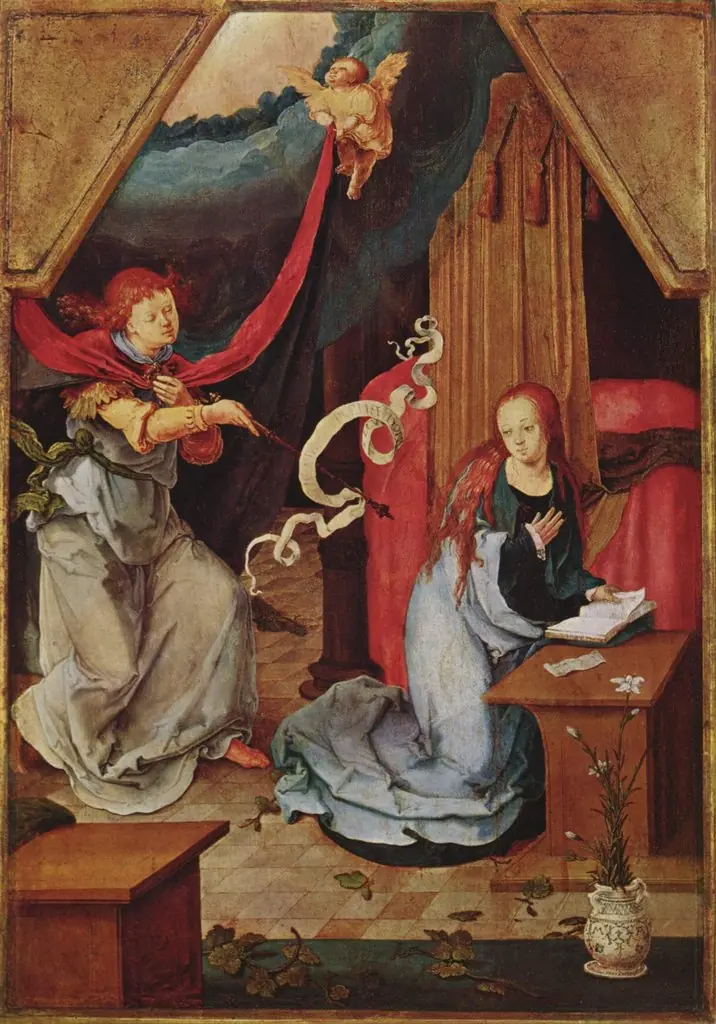 Annunciation
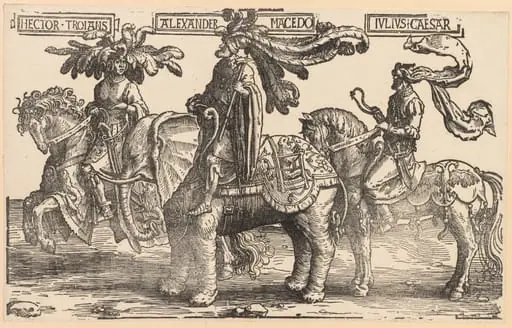 The Nine Heroes
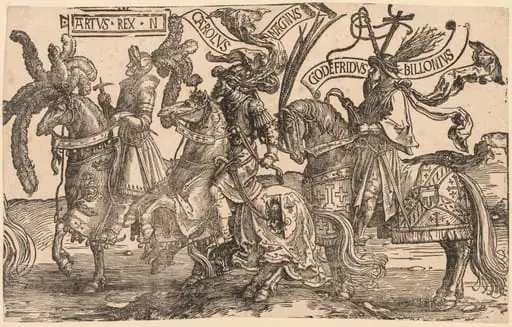 The Nine Heroes: Arthur, Charles the Great (Charlemagne), Godfrey of Bouillon
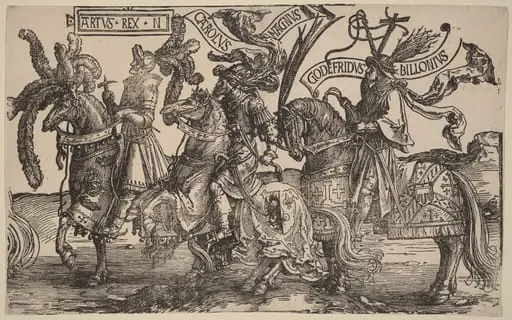 Arthur, Charles the Great (Charlemagne), Godfry of Bouillon
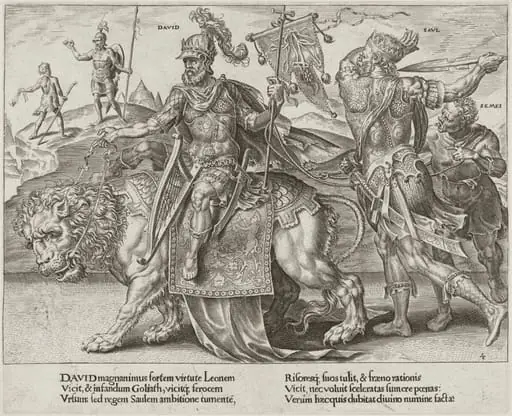 The Triumph of David
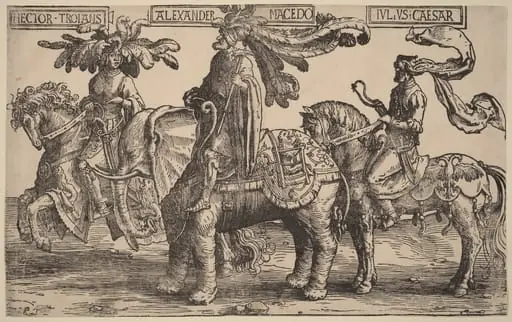 Hector of Troy, Alexander of Macedon, Julius Caesar
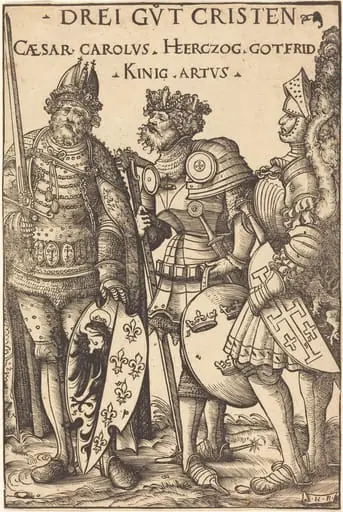 Charlemagne, Arthur and Godfrey
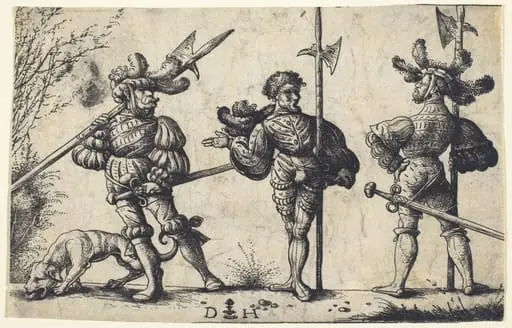 Three German Soldiers Armed with Halberds
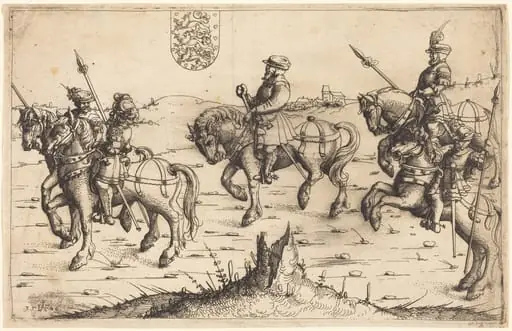 Herberstein's Journey to Denmark
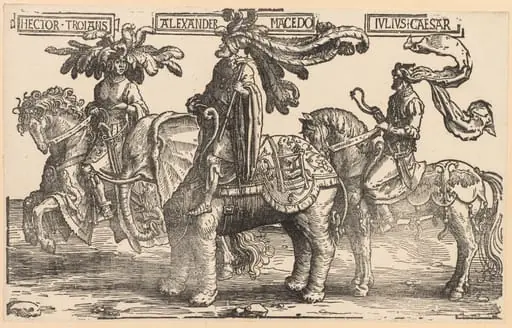 The Nine Heroes: Hector of Troy, Alexander of Macedon, Julius Caesar
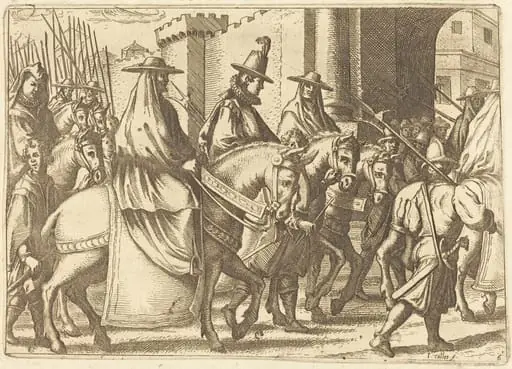 Entry into Ferrara