Artwork
The Triumph of David
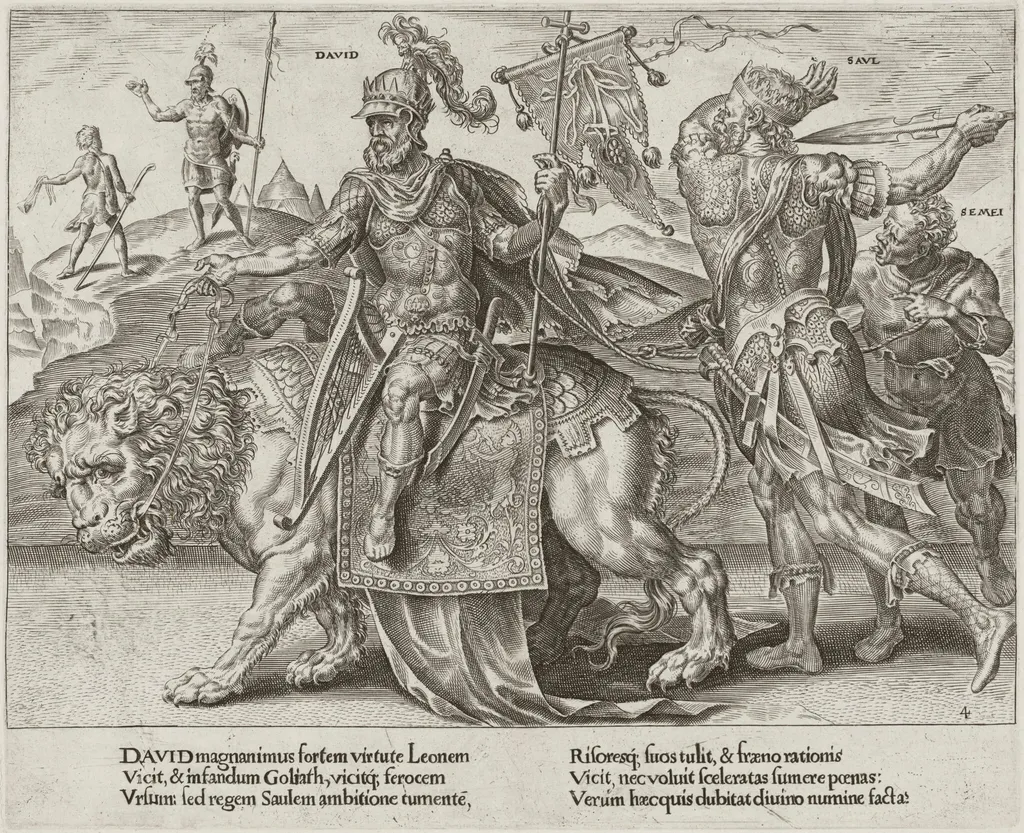
The Triumph of David is an ink print by the Renaissance artist Dirck Volckertz Coornhert. It dates from 1559 and is held in the collection of the National Gallery of Art.
About this work
Overview
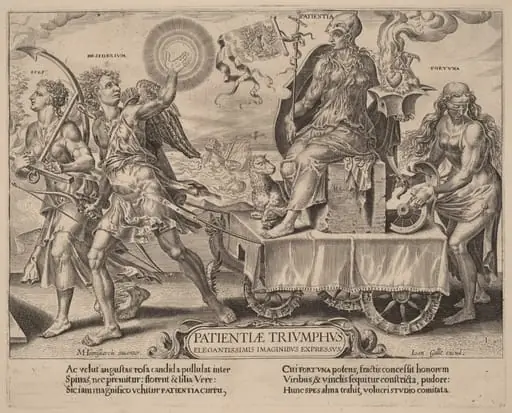
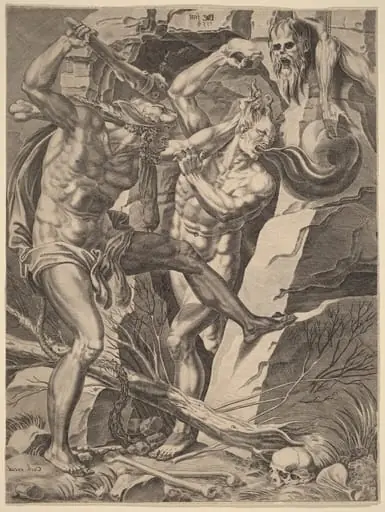
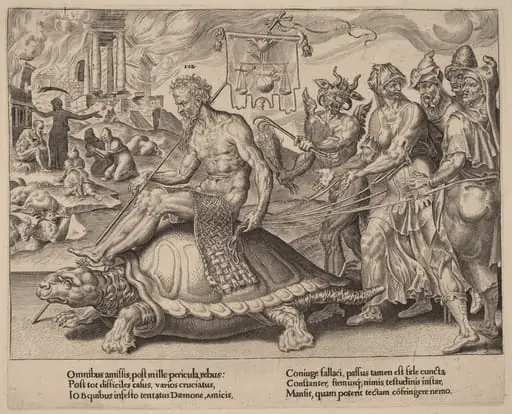
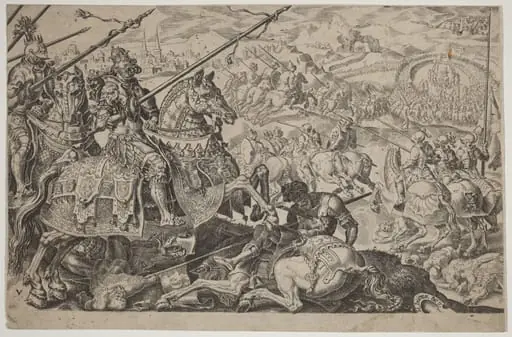
Created in 1559 by Dirck Volckertz Coornhert, this print combines engraving and etching on laid paper to depict a moment of triumph. The composition centers on a crowned figure standing over a fallen giant, surrounded by scattered figures in motion. The dense lines and contrasting tones convey tension and movement, characteristic of Northern Renaissance printmaking techniques of the period.
Subject & Meaning
The lion and shield with a cross reinforce themes of righteous power, while the chaotic crowd around the fallen giant underscores the collapse of opposition.
The scene illustrates David’s victory over Goliath, drawn from biblical narrative but rendered with political overtones. The king’s regalia—sword, scepter, and crown—elevate David beyond a mere shepherd, suggesting divine sanction of authority. The lion and shield with a cross reinforce themes of righteous power, while the chaotic crowd around the fallen giant underscores the collapse of opposition.
Technique & Style
Coornhert used fine engraving for precise contours and etching for atmospheric depth, layering cross-hatching to build shadow and texture. The composition is crowded, with figures overlapping and lines converging toward the central figure. The roughness of the lines and the stark light-dark contrasts enhance the drama, reflecting the expressive potential of printmaking in mid-16th-century Northern Europe.
History & Provenance
The print was produced in the Netherlands during a time of religious and political upheaval. Coornhert, a humanist and moral philosopher, often infused his art with ethical messages. While specific early ownership records are sparse, the work circulated among educated elites who valued prints as vehicles for moral and political commentary.
Context
Created during the Dutch Revolt, the image resonated with contemporary anxieties about tyranny and divine justice. Biblical stories were frequently reinterpreted as allegories for resistance against oppressive rule. Coornhert’s choice of David as a symbol aligned with reformist ideals, positioning the victor not as a conqueror but as a divinely chosen restorer of order.
Legacy
Though not widely reproduced today, the print exemplifies how Northern Renaissance artists used biblical themes to engage with civic and moral questions. Coornhert’s integration of philosophical intent into visual form influenced later printmakers who sought to merge narrative clarity with symbolic depth, contributing to the tradition of didactic imagery in early modern Europe.
Artist & collection