Artwork
Three German Soldiers Armed with Halberds
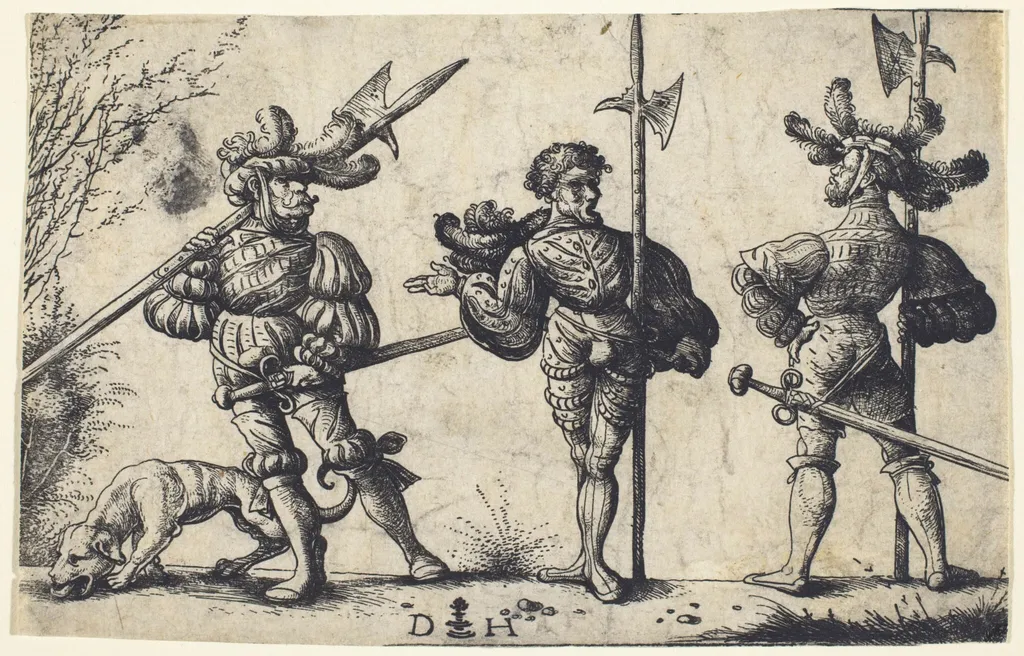
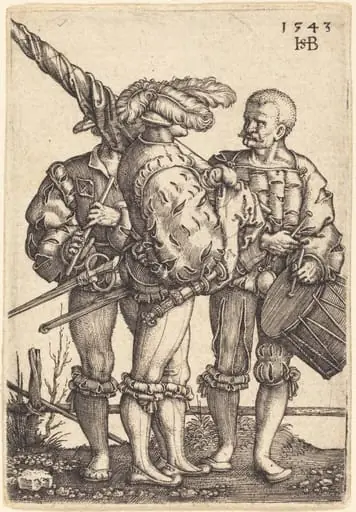
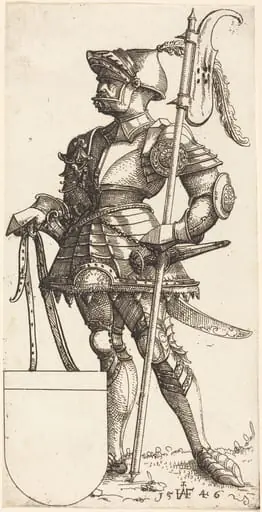
Three German Soldiers Armed with Halberds is an ink print by the Renaissance artist Daniel Hopfer. It dates from 1510 and is held in the collection of the National Gallery of Art. Created circa 1510, this iron etching on laid paper presents three heavily armored figures each bearing a halberd.
About this work
Overview
Created circa 1510, this iron etching on laid paper presents three heavily armored figures each bearing a halberd. The composition includes a dog on a leash, a flag, and a figure gesturing as if speaking, set against a sparse landscape of trees and distant banners.
Subject & Meaning
The print illustrates a martial scene typical of early Renaissance interest in military subjects. The presence of the halberds, armor, and heraldic flags underscores themes of warfare and civic pride, while the dog and gesturing figure add narrative detail that suggests a ceremonial or instructional moment.
Technique & Style
Daniel Hopfer employed iron plates for this work, a material linked to his family’s armor‑making background, rather than the copper later favored by printmakers. The etched lines render the gleam of metal, the intricate buckles, and the texture of the surrounding foliage, reflecting the precise, linear style characteristic of early 16th‑century German prints.
History & Provenance
Hopfer, active between roughly 1470 and 1536, is recognized as a pioneer of etching in Northern Europe. His output combined both etching and woodcut, and this piece exemplifies his early adoption of iron as a matrix. The print’s survival on laid paper attests to the durability of his technique, though specific ownership records for this particular impression are not documented.
Artist & collection

Artist
Daniel Hopfer (c. 1470 – 1536) was a German artist who is widely believed to have been the first to use etching in printmaking, at the end of the 15th century. He also worked in woodcut. Although his etchings were…

 Interior of the Church of Saint Maria Magdalena with the Parable of the Offering of the Widow
 Emperor Charles V
 Emperor Charles V
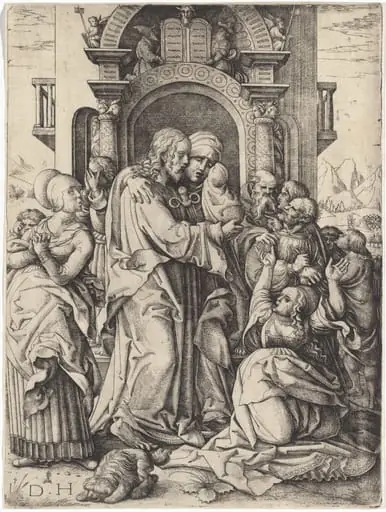 The Virgin Mary Taking Leave of Christ
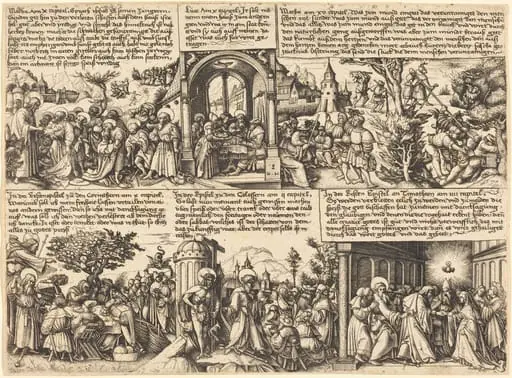 Jesus Christ Giving the Mission to the Apostles and Other New Testament Scenes
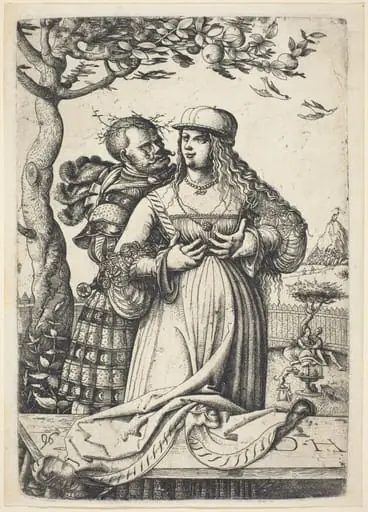 Soldier Embracing a Woman
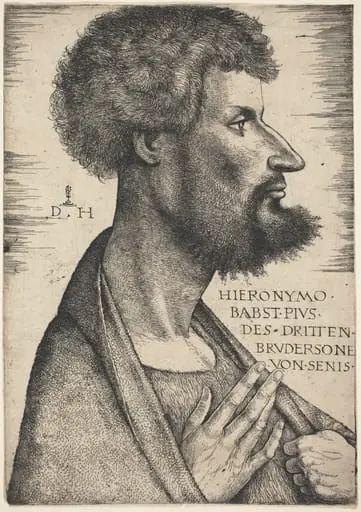 Girolamo da Siena
 The Virgin and Child with Saint Anne by a Portal