Artwork
Landscape with a Rural Festival
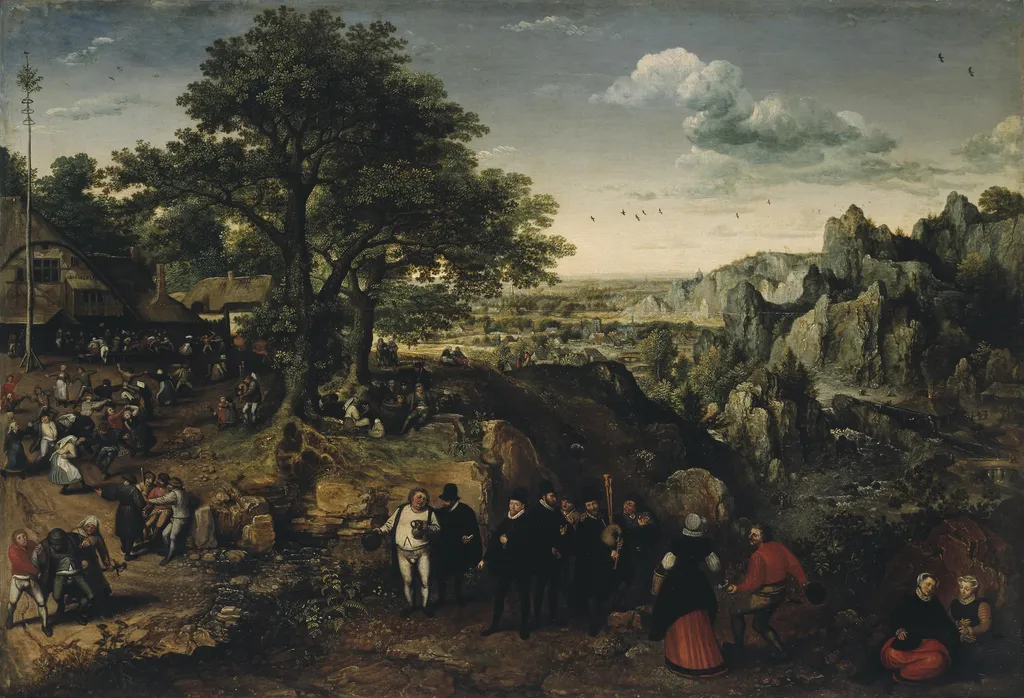
Landscape with a Rural Festival is an oil painting by the Northern Renaissance artist Lucas van Valckenborch. It dates from 1596 and is held in the collection of the Hermitage Museum.
About this work
Overview
Van Valckenborch, a Flemish artist active during the late Northern Renaissance, captured a moment of communal gathering with attention to naturalistic detail.
Painted in 1596 by Lucas van Valckenborch, this oil on canvas depicts a rural celebration set in an open landscape. Van Valckenborch, a Flemish artist active during the late Northern Renaissance, captured a moment of communal gathering with attention to naturalistic detail. The work reflects his shift from courtly employment in the Low Countries to life in Central Europe, where religious tensions influenced his relocation. It now resides in the State Hermitage Museum’s collection.
Subject & Meaning
The scene portrays a village festival, with figures engaged in music, conversation, and quiet contemplation. Central figures in refined attire suggest local elites or officials, while others in simpler garments represent common participants. A woman kneeling near a rock may signal a moment of personal reflection amid the bustle. The composition avoids overt symbolism, instead presenting daily life as a dignified, observable reality—emphasizing social cohesion rather than ritual or myth.
Technique & Style
Van Valckenborch employed subtle chiaroscuro to model forms and guide the viewer’s eye through the crowded scene. Light falls selectively on faces and fabrics, enhancing depth without dramatic contrast. The landscape is rendered with careful attention to atmospheric perspective—distant hills fade into soft blues, while foreground details remain crisp. Clothing textures and natural elements like trees and water are observed with precision, reflecting the Northern Renaissance tradition of meticulous realism.
History & Provenance
Created during van Valckenborch’s later years, the painting likely dates from his time in Germany after leaving the Habsburg court due to religious persecution. His move from Leuven to Vienna and then to Frankfurt reflects broader patterns of Protestant migration in the late 16th century. The work entered the Hermitage collection in the 18th or 19th century, possibly through imperial acquisitions or diplomatic exchanges, though its exact path before that remains undocumented.
Context
In the late 1500s, Flemish artists increasingly turned to landscape and genre scenes as religious iconography declined under Protestant influence. Van Valckenborch’s work aligns with a growing interest in secular, everyday life, influenced by earlier Netherlandish painters like Bruegel. His depictions of rural festivals served not as idealized idylls but as grounded records of social behavior, reflecting both local customs and the artist’s own displacement.
Legacy
Van Valckenborch’s *Landscape with a Rural Festival* exemplifies the transition from religious to secular themes in Northern European art. While not widely known today, his detailed, atmospheric landscapes influenced later genre painters in the Low Countries and Germany. The painting remains a quiet testament to the observation of ordinary life during a time of religious upheaval, preserving a moment of communal rhythm now lost to history.
Own this work as a print
Artist & collection
Artist
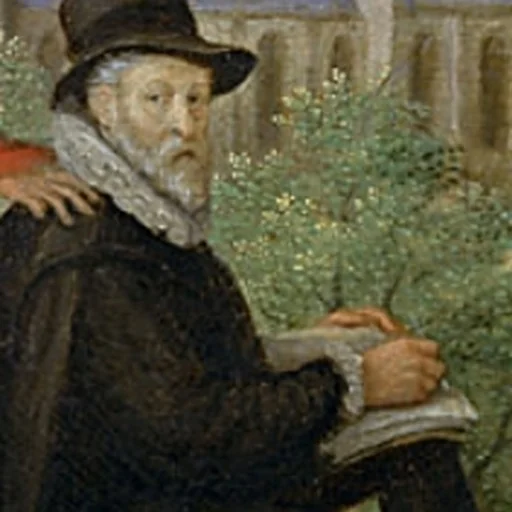
Lucas van Valckenborch or Lucas van Valckenborch the Elder (c. 1535 in Leuven – 2 February 1597 in Frankfurt am Main) was a Flemish painter, mainly known for his landscapes. He also made contributions to portrait…

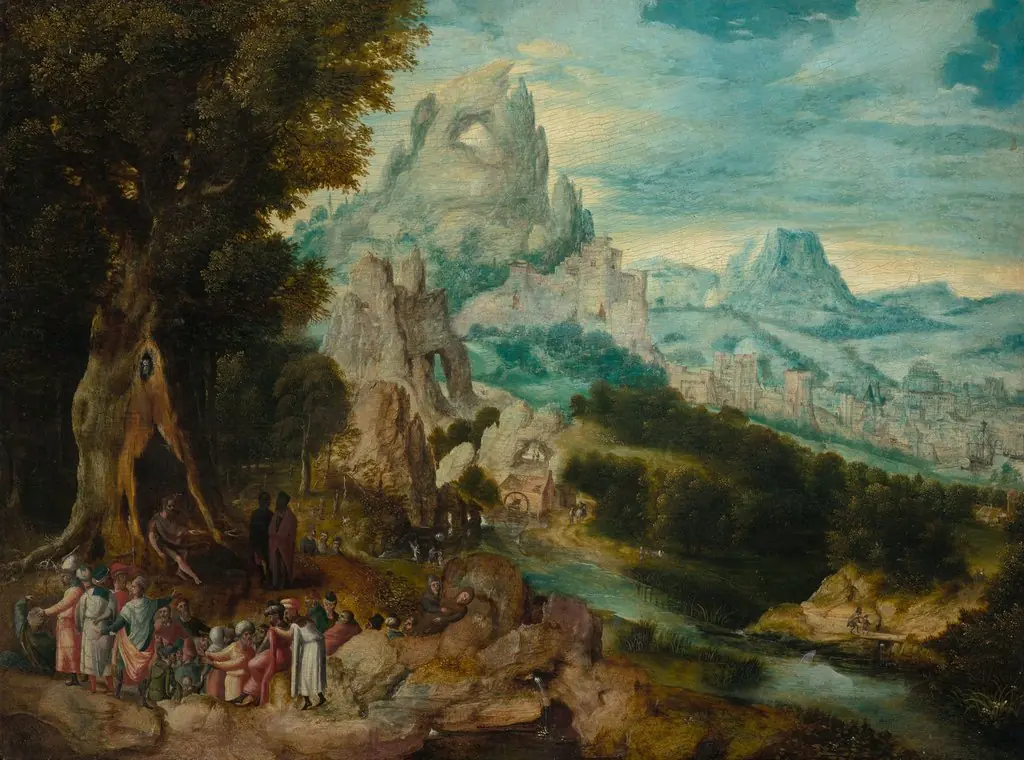 Landschaft mit der Predigt Johannes d. Täufers
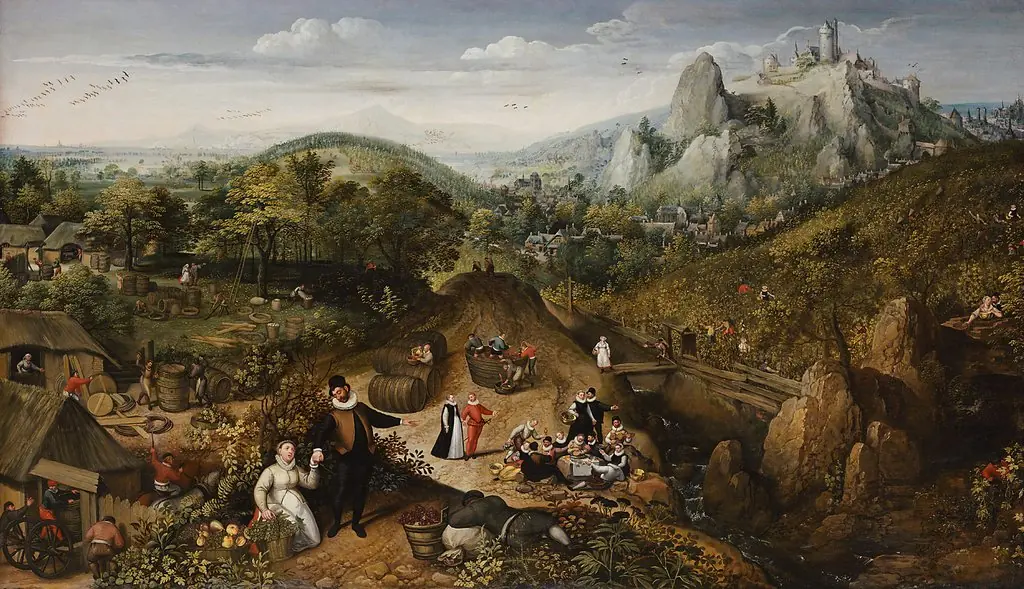 Autumn landscape (October)
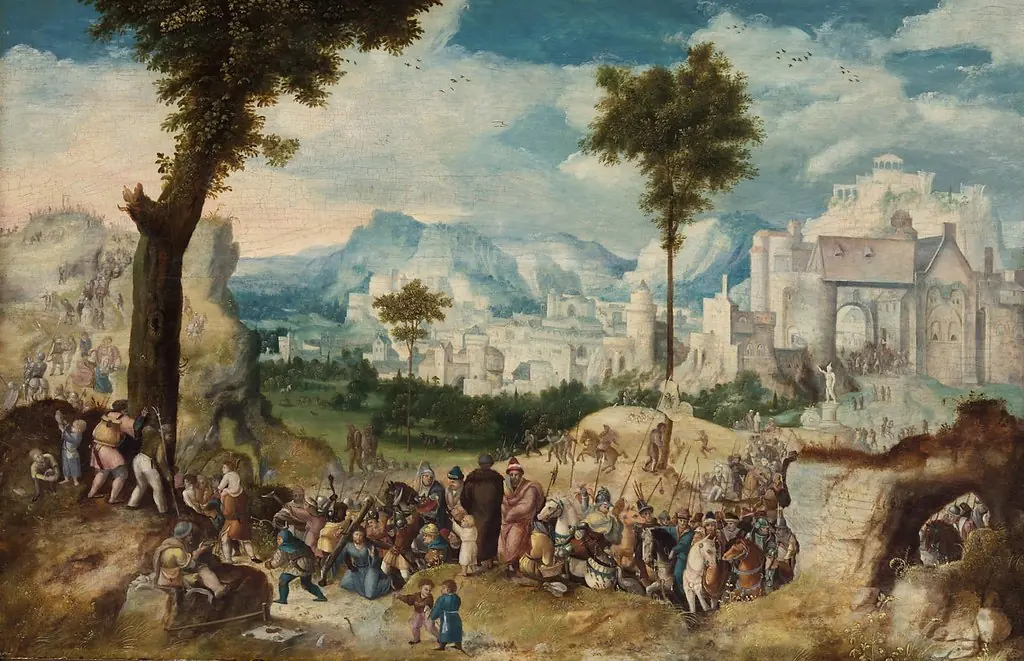 Kreuztragung Christi
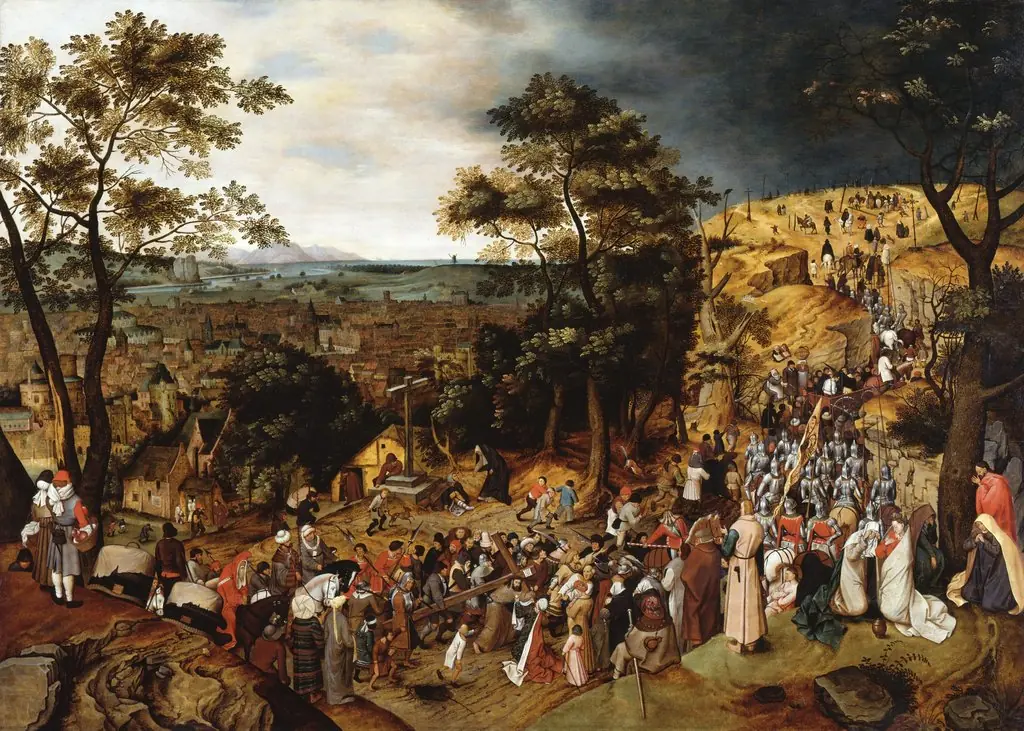 The Way to Calvary
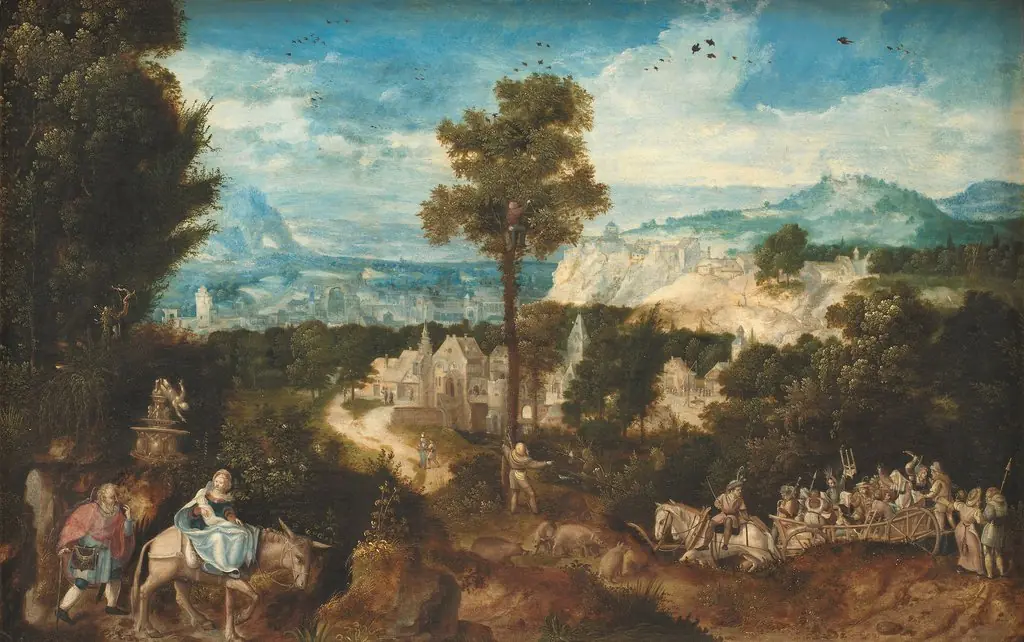 Landscape with the Flight into Egypt
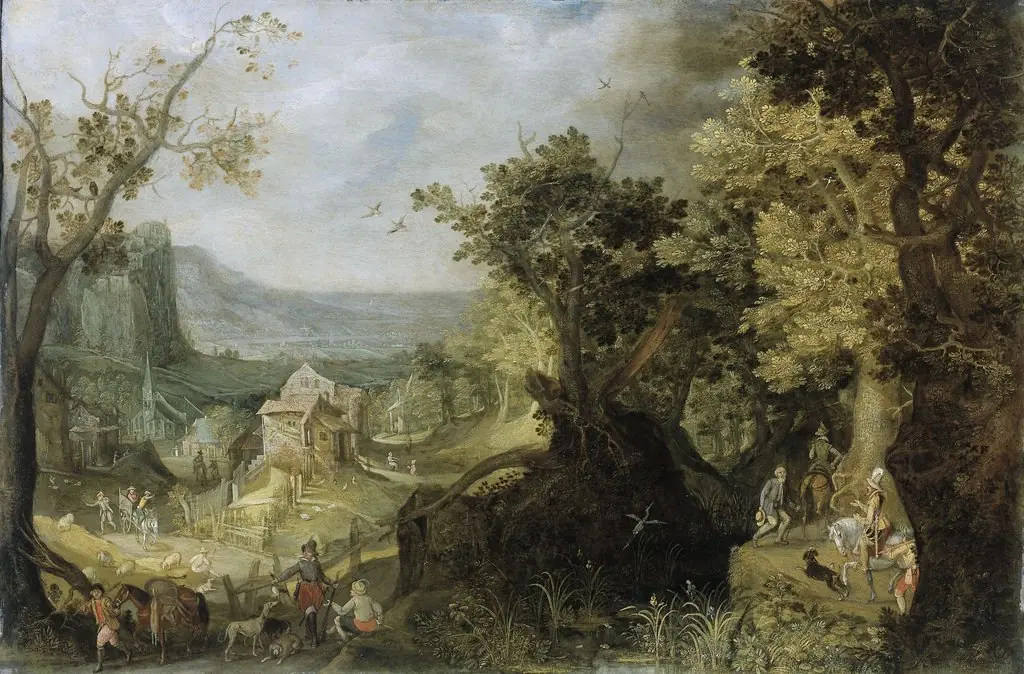 Wooded Landscape
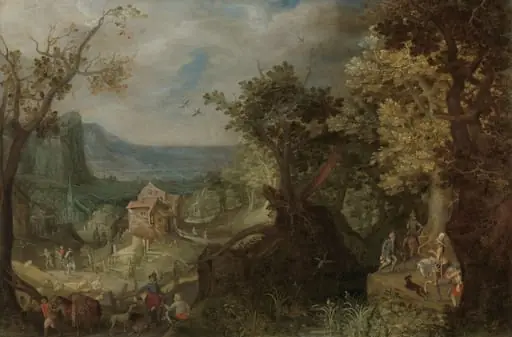 Hunter and Horsemen on a Wooded Road, with a Village in a Valley beyond
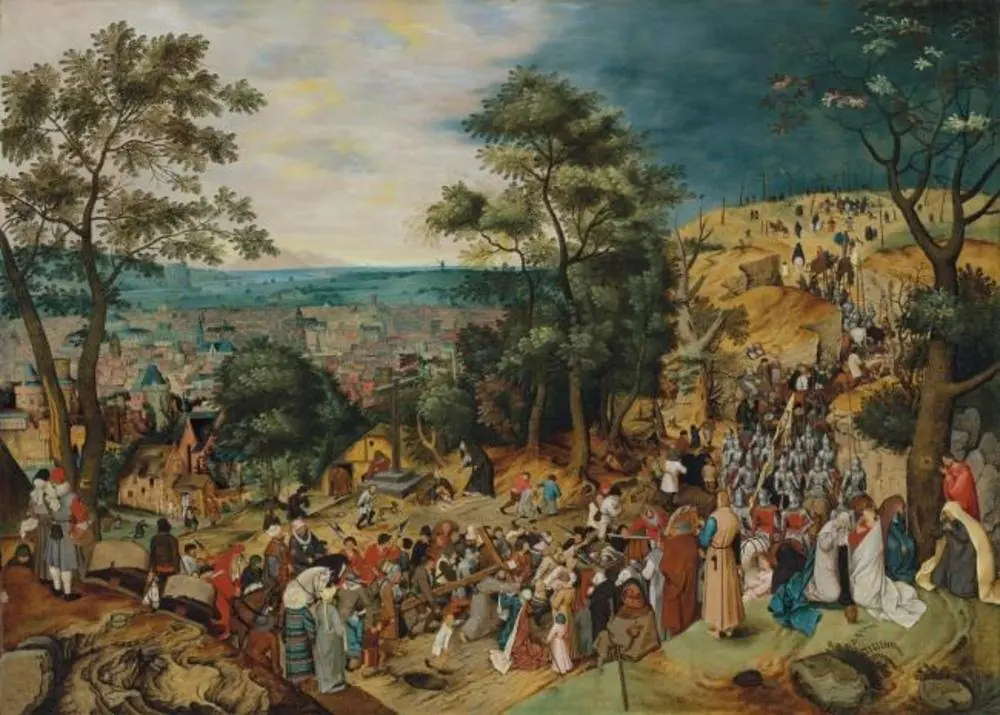 Christ carrying the cross
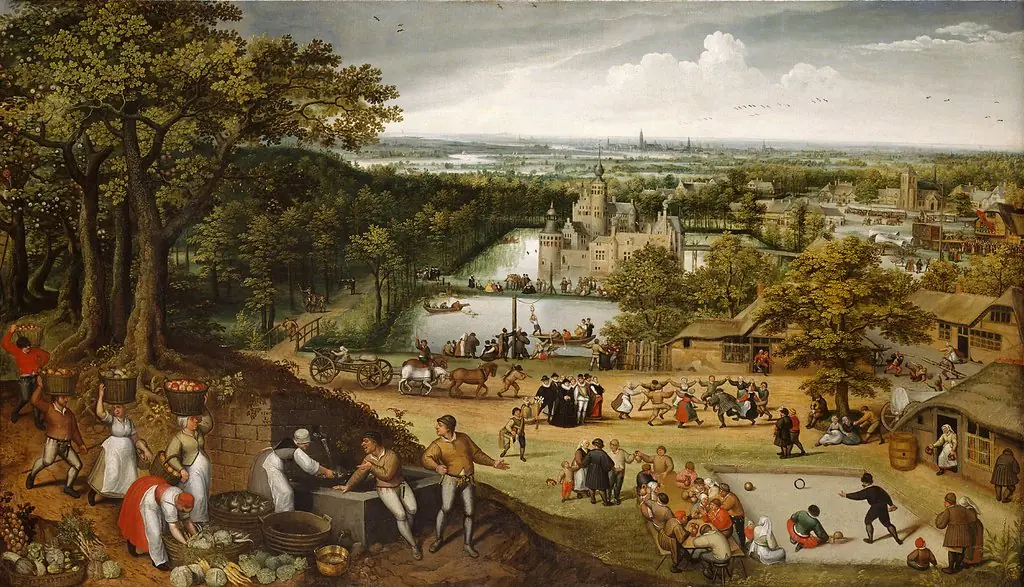 Herbstlandschaft (September)
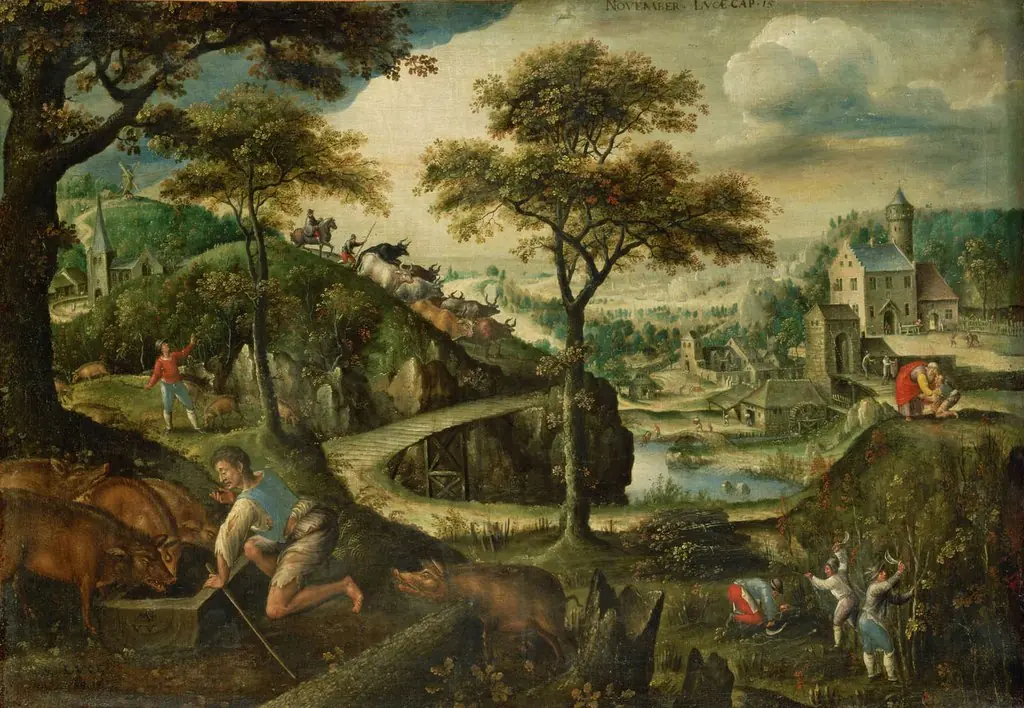 Parable of the prodigal son (November)
 The Bearing of the Cross
 Gebirgslandschaft mit Reisenden