Artwork
The emperor walking in the woods near Neugebäude Palace
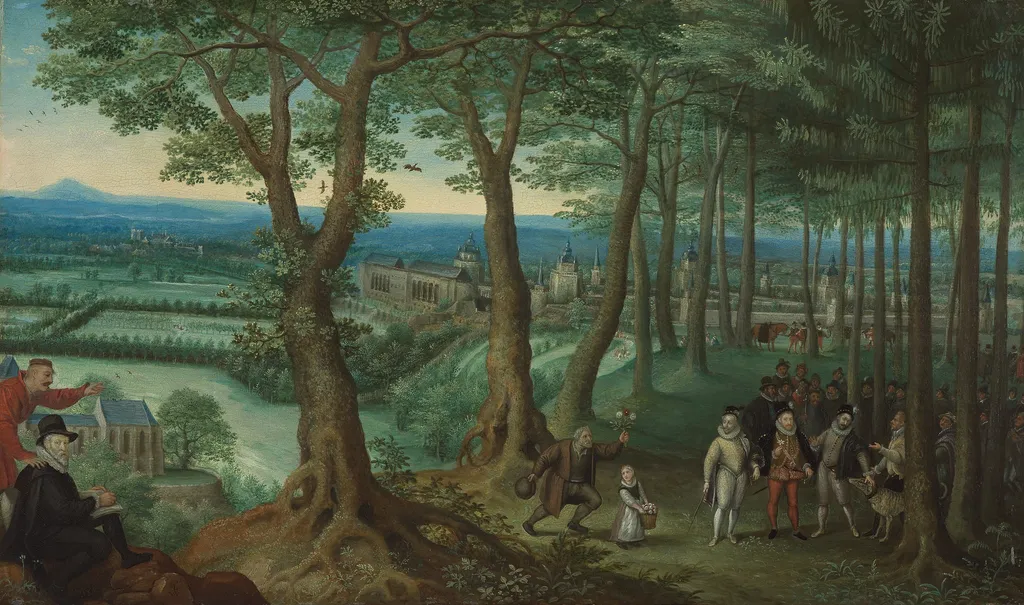
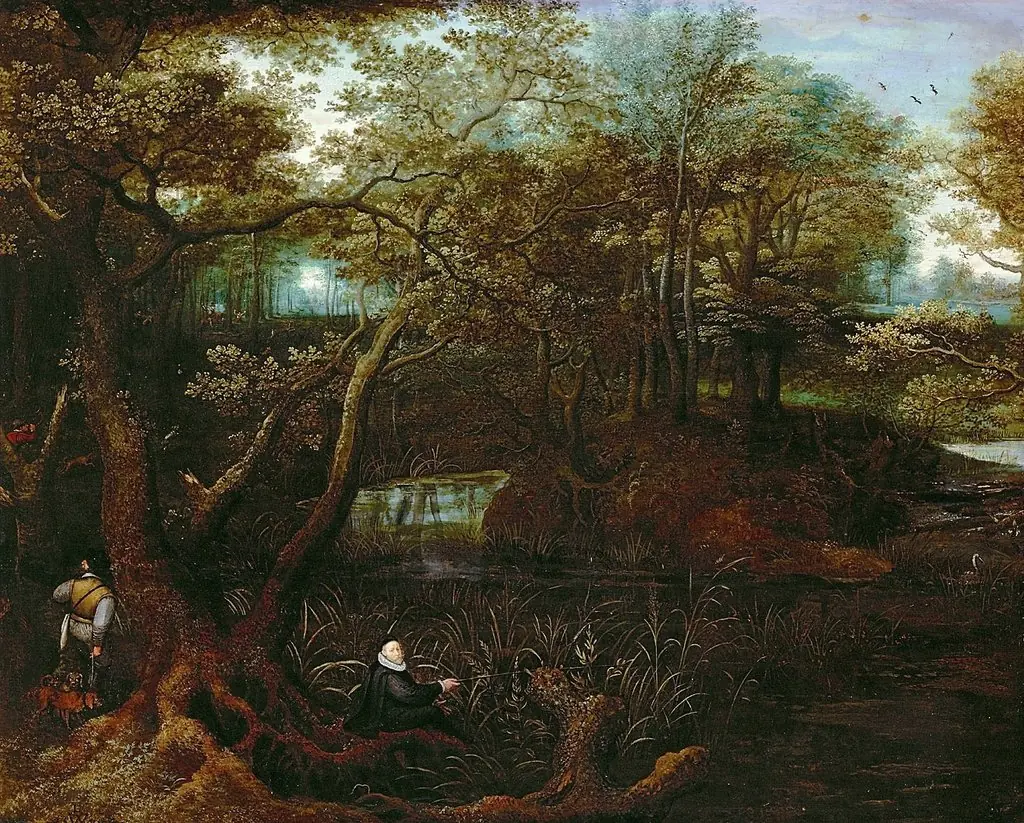
The emperor walking in the woods near Neugebäude Palace is an oil painting by the Dutch Golden Age artist Lucas van Valckenborch. It dates from 1597 and is held in the collection of the Kunsthistorisches Museum.
About this work
Overview
Created during the artist’s later years in Austria, the work reflects his transition from Flemish court circles to Central European patronage.
Painted in 1597 on copper, this landscape by Lucas van Valckenborch captures a quiet stroll near Neugebäude Palace. Created during the artist’s later years in Austria, the work reflects his transition from Flemish court circles to Central European patronage. The small scale and meticulous detail are characteristic of his technique, blending observation with a sense of stillness. Though rooted in the Dutch Golden Age tradition, the painting carries the refined sensibility of imperial court art.
Subject & Meaning
The scene depicts a group of aristocrats strolling through a wooded landscape at twilight. Dressed in elaborate attire, they move with deliberate calm—some conversing, one reading, another gesturing toward the trees. A woman carries flowers, suggesting a leisurely outing. The distant castle and rising smoke hint at the presence of power, yet the focus remains on the intimate, unhurried interaction among the figures. The painting evokes a moment of private repose rather than public ceremony.
Technique & Style
Van Valckenborch employed fine brushwork on a copper support to achieve sharp detail and luminous depth. The composition uses layered foliage to frame the scene, guiding the eye toward the castle across the river. Soft, diffused light filters through the canopy, creating subtle contrasts without dramatic shadows. Every element—from the bend of the river to the smoke curling from the tower—is rendered with precision, reflecting a preference for quiet realism over theatricality.
History & Provenance
Created after Van Valckenborch left Brussels and settled in Austria under Archduke Matthias’s patronage, the painting likely served as a personal or courtly record of the Neugebäude grounds. Its copper support and intimate scale suggest it was not a public commission but perhaps a keepsake or decorative piece for a private collection. The work remained in Central European circles, its early ownership undocumented but consistent with the artist’s known movements.
Context
In late 16th-century Central Europe, landscape painting was gaining status as a vehicle for both natural observation and aristocratic identity. Van Valckenborch’s work aligns with a trend among court artists to depict serene, idealized nature as a backdrop to noble leisure. Unlike Dutch genre scenes, this painting avoids narrative drama, instead emphasizing atmosphere and the dignity of quiet movement within a cultivated environment.
Legacy
Though not widely known outside specialist circles, Van Valckenborch’s detailed woodland scenes influenced later Central European landscape traditions. His use of copper allowed for enduring clarity, preserving fine textures that later artists emulated. This painting exemplifies a quiet, observational approach to nature that diverged from grander historical or religious themes, contributing to the broader acceptance of landscape as a subject worthy of sustained attention.
Own this work as a print
Artist & collection
Artist
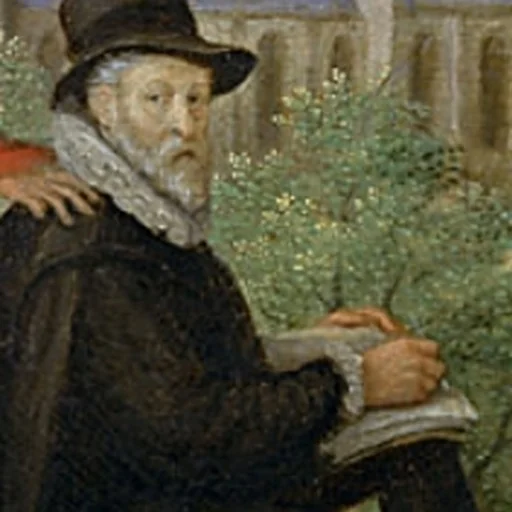
Lucas van Valckenborch or Lucas van Valckenborch the Elder (c. 1535 in Leuven – 2 February 1597 in Frankfurt am Main) was a Flemish painter, mainly known for his landscapes. He also made contributions to portrait…

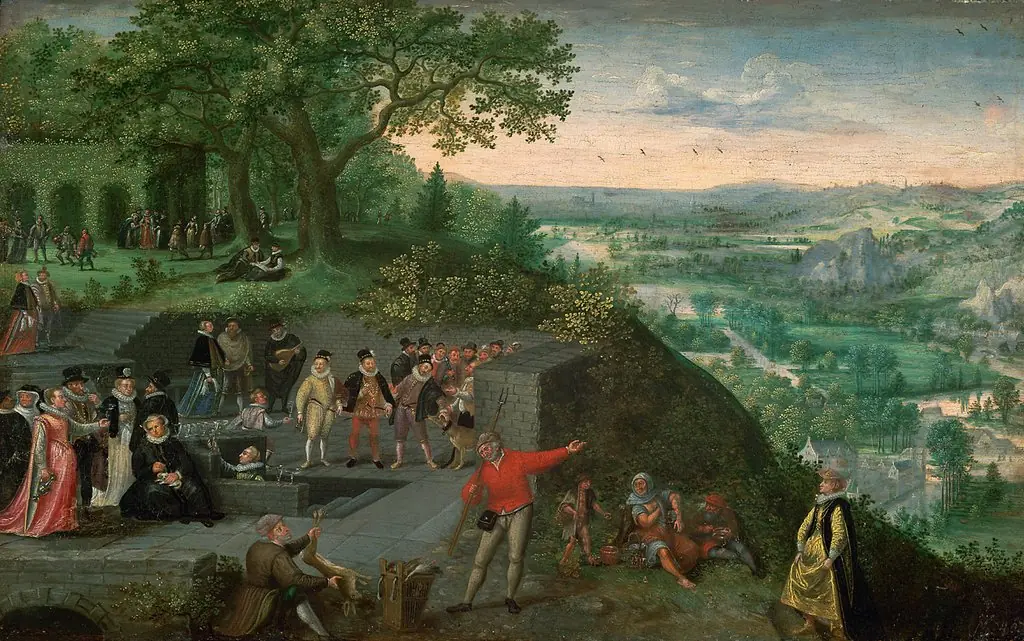 Kaiser Rudolf II. bei einer Trinkkur
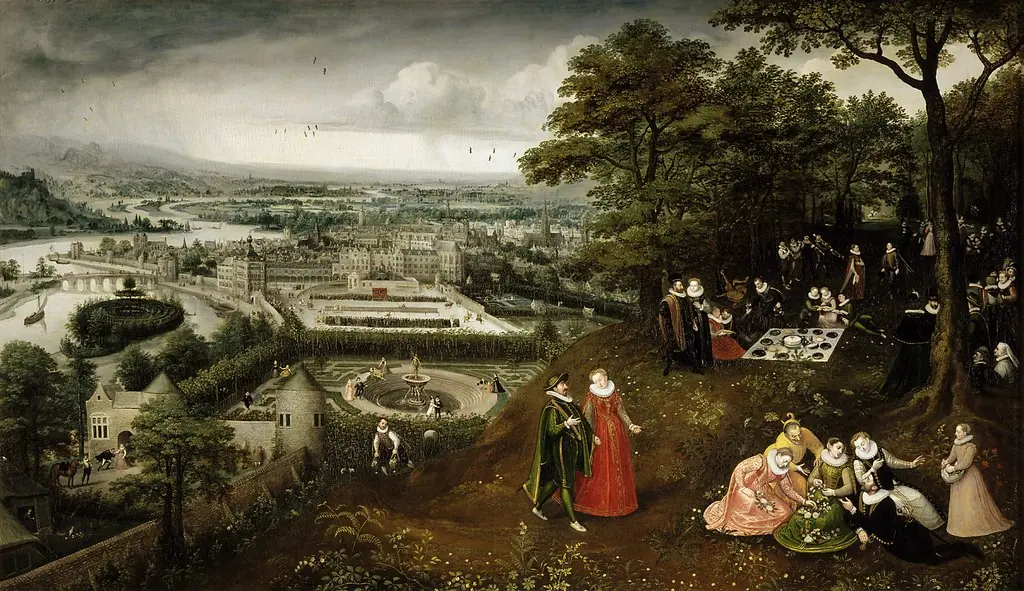 Spring Landscape (Representation of the month of May)
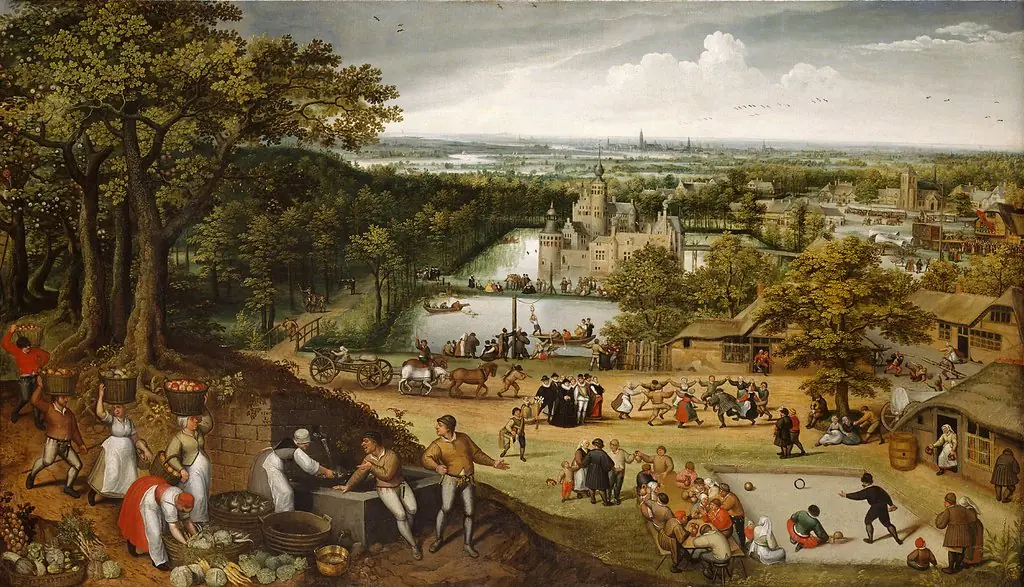 Herbstlandschaft (September)
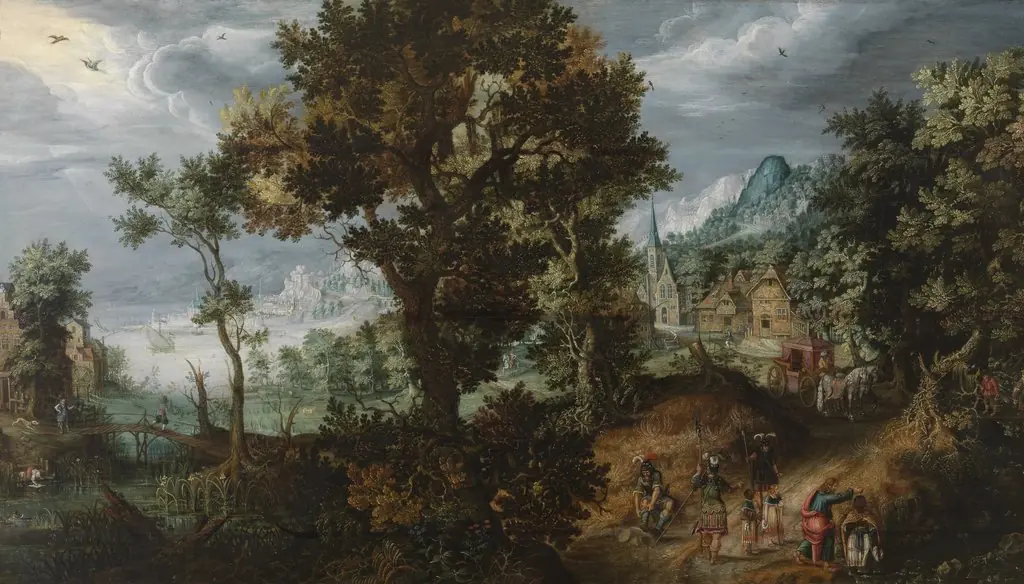 The Baptism of the Moorish Chamberlain
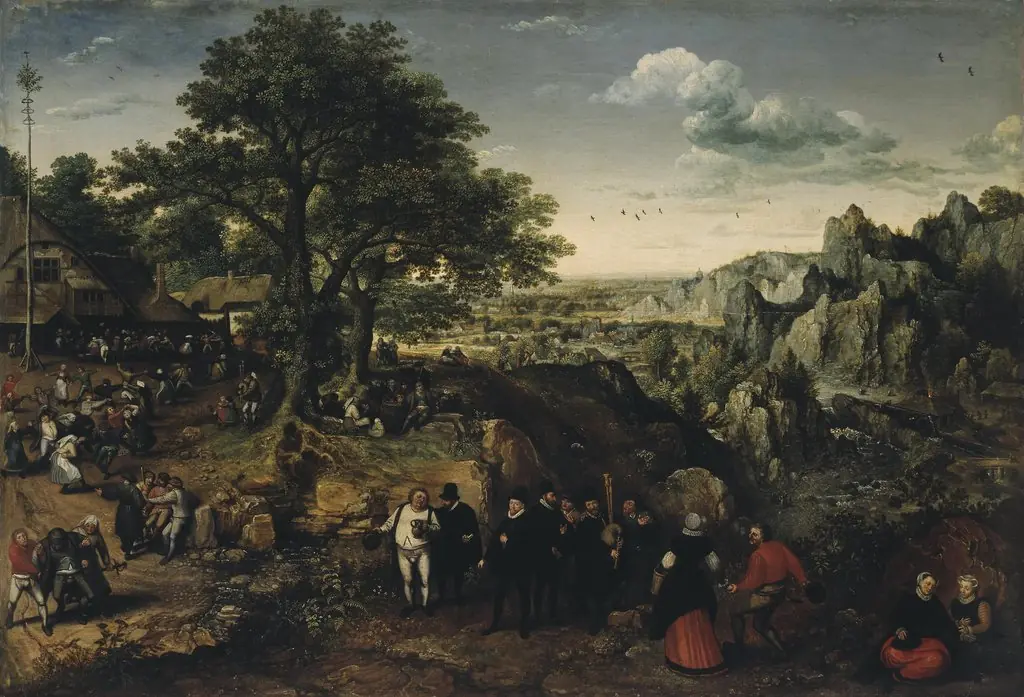 Landscape with a Rural Festival
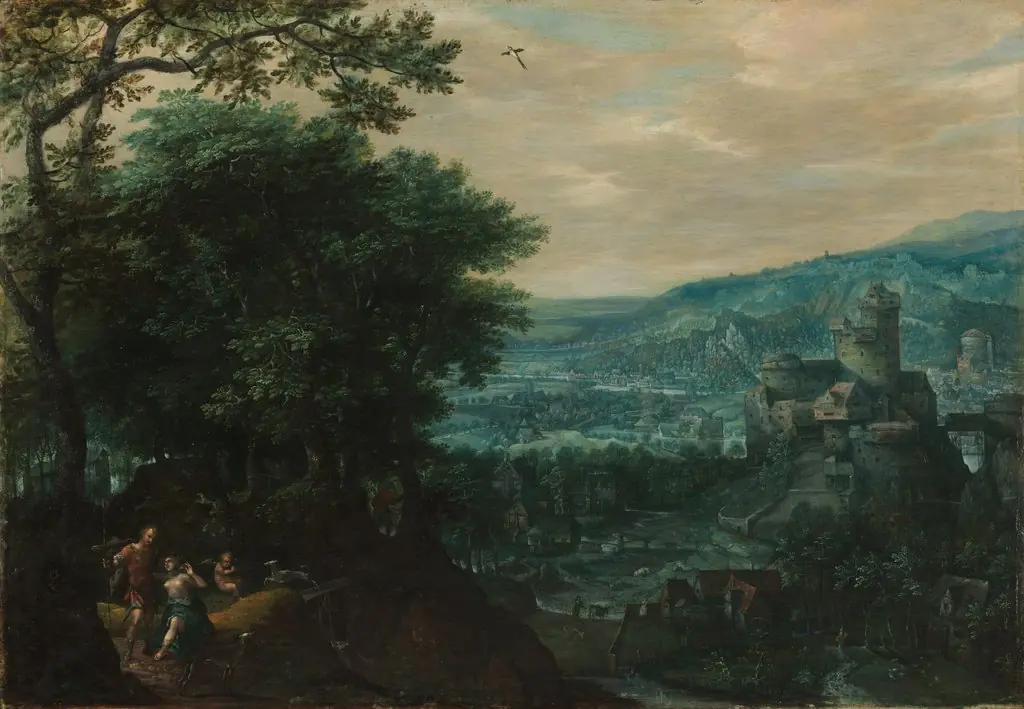 Landscape with Venus and Adonis
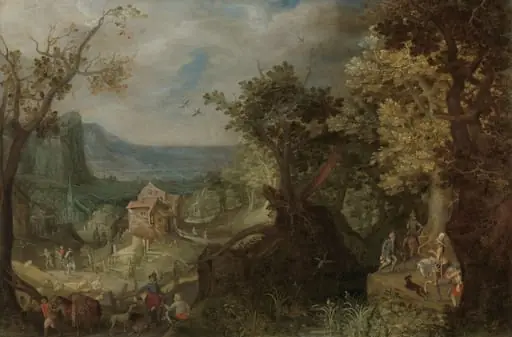 Hunter and Horsemen on a Wooded Road, with a Village in a Valley beyond
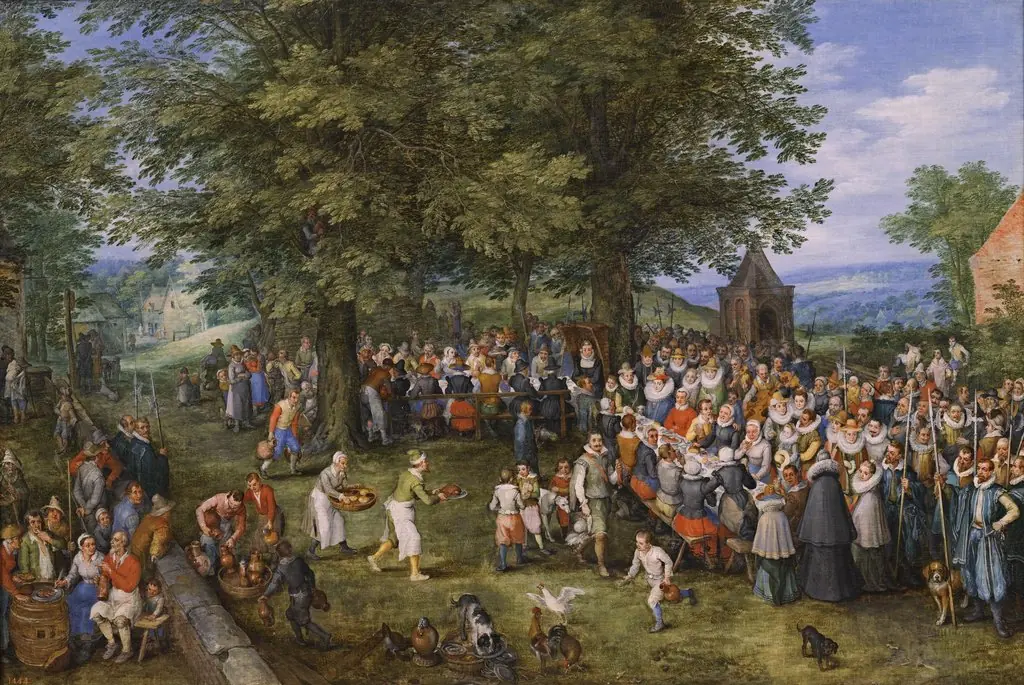 Wedding Banquet with the Archduke Albert and the Archduchess Isabel Clara Eugenia
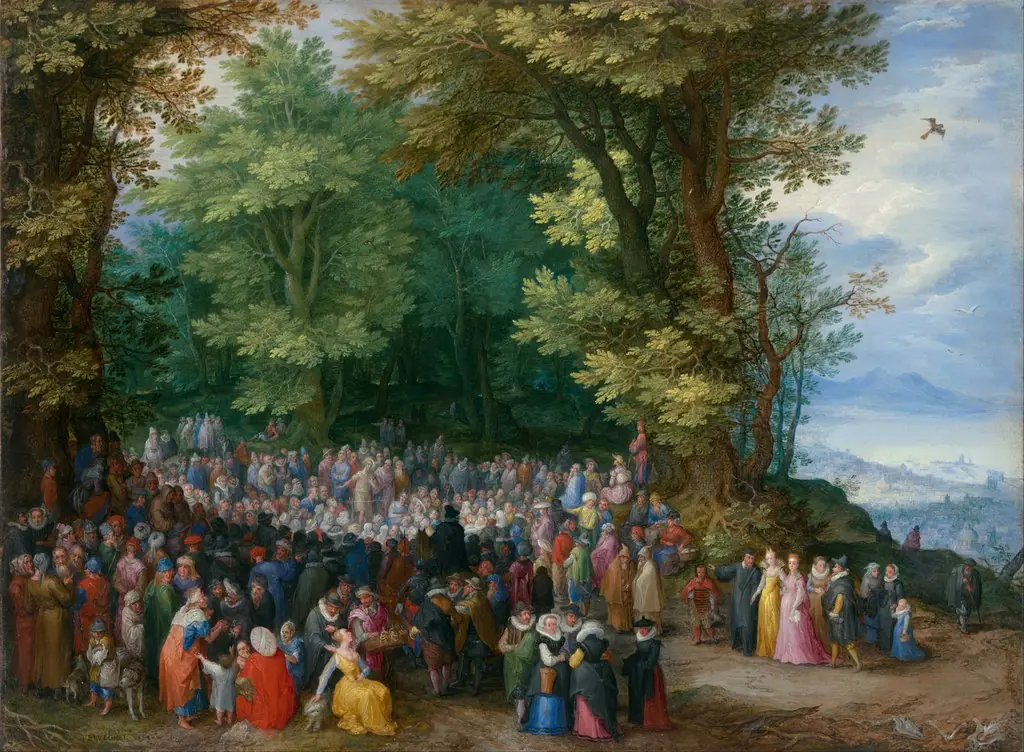 The Sermon on the Mount
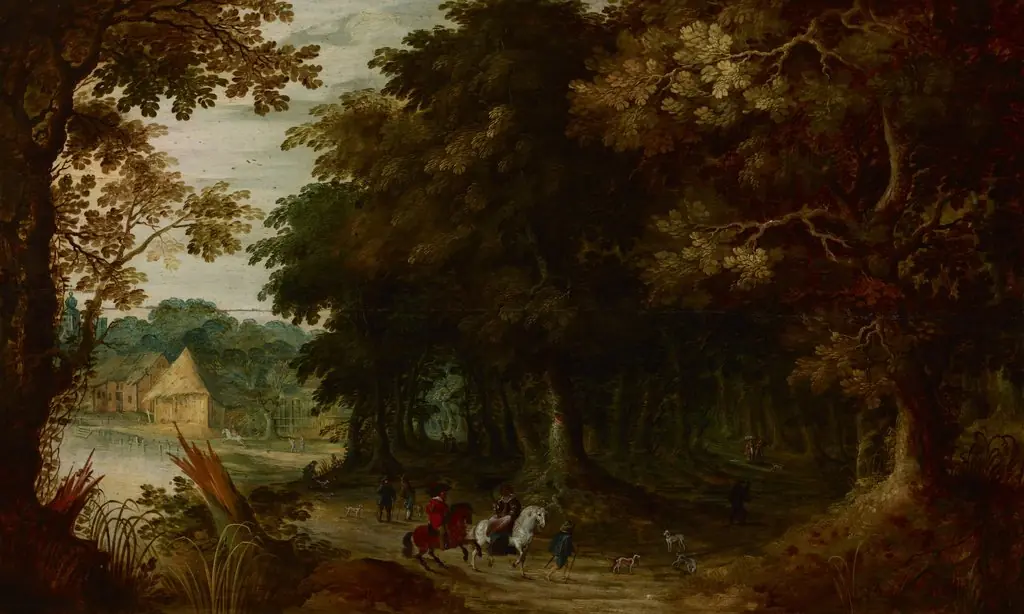 Landscape – Walk through a Forest
 Landscape with The Flight into Egypt
 Autumn landscape (October)