Artwork
The shipwreck
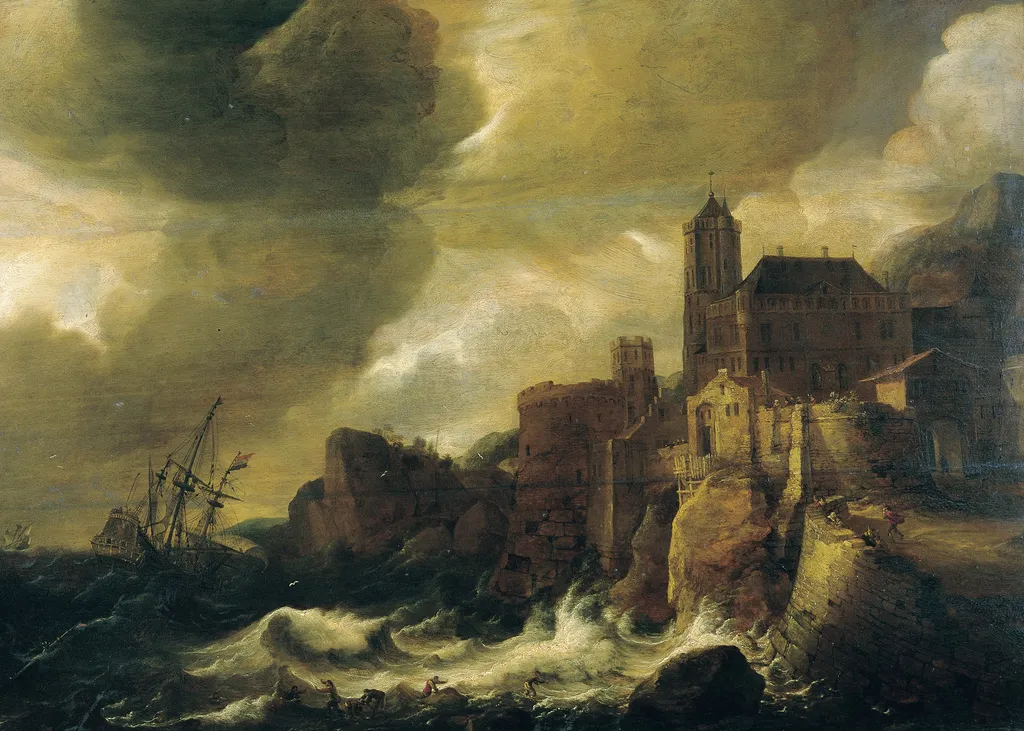
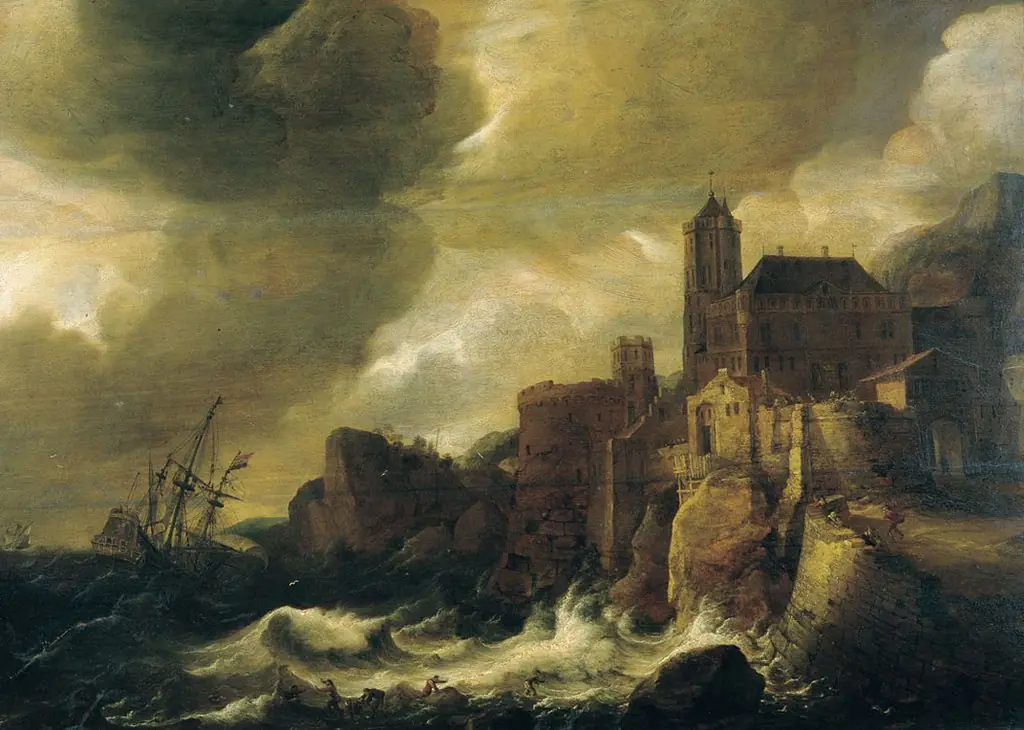
The shipwreck is an unspecified painting by the Dutch Golden Age artist Ludolf Bakhuizen. It dates from 1679 and is held in the collection of the National Museum of Fine Arts, Argentina.
About this work
Overview
The work exemplifies his specialization in dramatic oceanic disasters, rendered with precise observation and emotional intensity.
Painted around 1679, *The Shipwreck* is a maritime scene by Ludolf Bakhuizen, a German-born artist who became the foremost Dutch painter of seascapes after the van de Velde family moved to England. The work exemplifies his specialization in dramatic oceanic disasters, rendered with precise observation and emotional intensity. It resides today in the National Museum of Fine Arts in Buenos Aires, a rare example of his oeuvre outside Europe.
Subject & Meaning
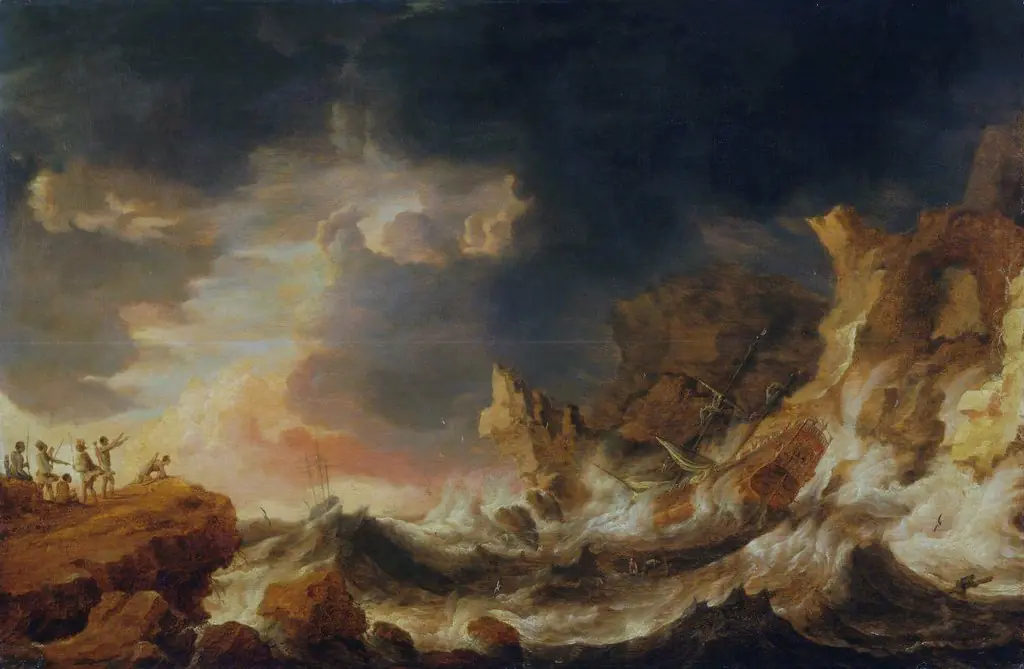
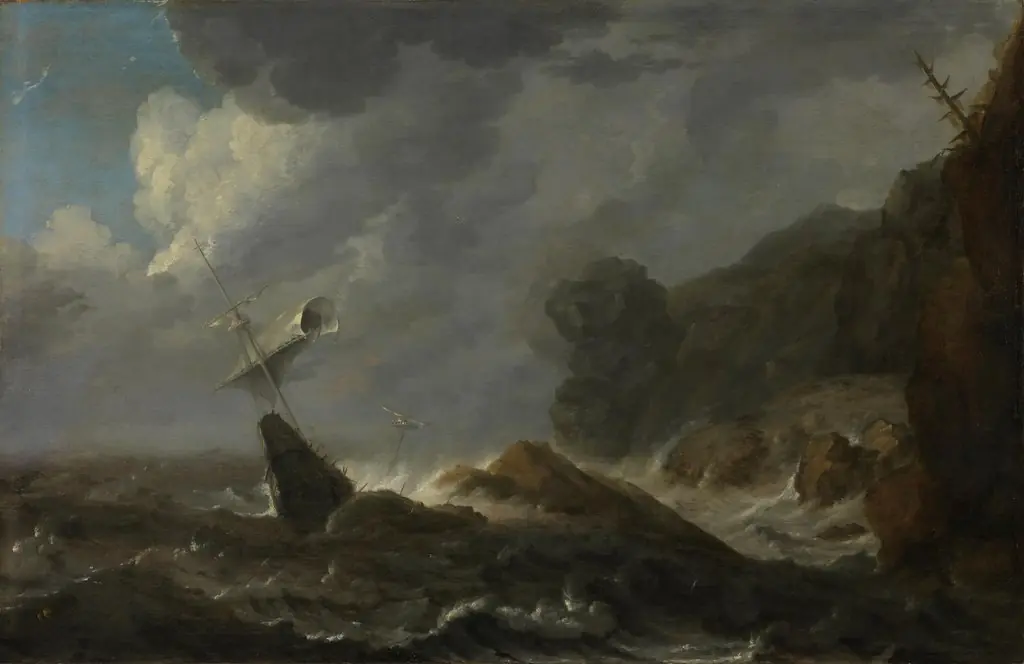
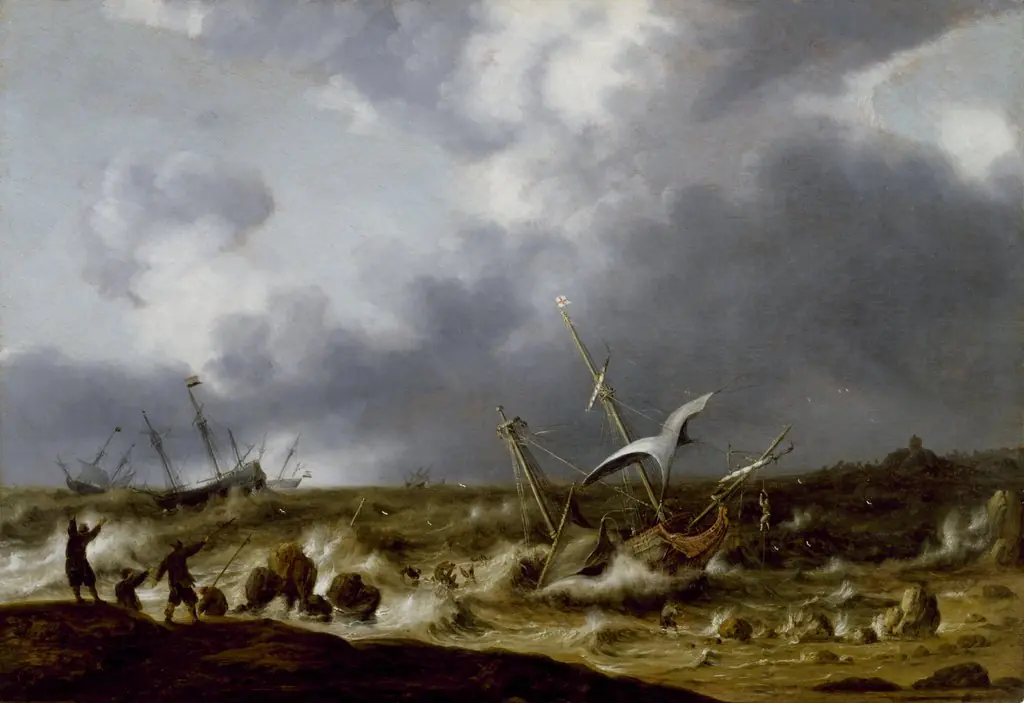
The painting portrays a vessel breaking apart against jagged rocks amid a storm-lashed sea. Figures cling to wreckage or struggle in the water, their helplessness underscored by the indifference of the natural forces. In the distance, a castle perches on a cliff, its stillness contrasting with the chaos below. This juxtaposition suggests human fragility against enduring structures, a common theme in Dutch maritime art of the period.
Technique & Style
Bakhuizen employs strong chiaroscuro to define the crashing waves and swirling debris, enhancing the scene’s tension. His brushwork captures the texture of foam, wet wood, and rain-slicked rock with meticulous detail. The dark, overcast sky and turbulent sea are rendered in layered grays and deep blues, while the castle’s silhouette offers a muted counterpoint. His technique prioritizes atmospheric realism over idealized composition.
History & Provenance
Created after Bakhuizen’s rise to prominence in the Dutch Republic, the painting reflects his established reputation in the late 1670s. It remained in European collections until the 20th century, when it entered the National Museum of Fine Arts in Buenos Aires. Its journey reflects the broader dispersal of Dutch Golden Age works beyond their origin, though its specific provenance prior to its arrival in Argentina remains poorly documented.
Context
During the Dutch Golden Age, maritime themes dominated painting due to the Republic’s reliance on seafaring trade and naval power. Shipwrecks, though tragic, were popular subjects, serving as both spectacle and moral reminder of nature’s power. Bakhuizen’s focus on such scenes aligned with public fascination and the growing market for realistic seascapes among wealthy merchants and civic patrons.
Legacy
Bakhuizen’s detailed, emotionally charged seascapes influenced later marine painters in the Netherlands and beyond. While less celebrated today than his contemporaries, his work remains a vital record of 17th-century maritime life and artistic response to natural disaster. *The Shipwreck* stands as a testament to his technical command and his ability to convey the perilous relationship between humans and the sea.
Own this work as a print
Artist & collection
Artist
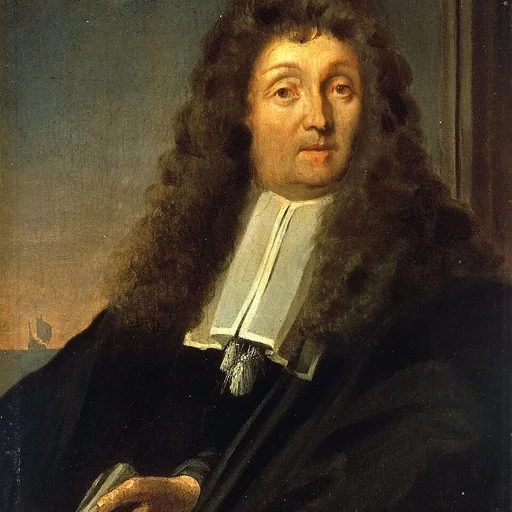
Ludolf Bakhuizen (28 December 1630 or 1632 – 7 November 1708) was a German-born Dutch painter, draughtsman, calligrapher and printmaker.

Museum
National Museum of Fine Arts, Argentina
Continue through works from the same source collection.
 An artist in his studio, painting the portrait of a lady
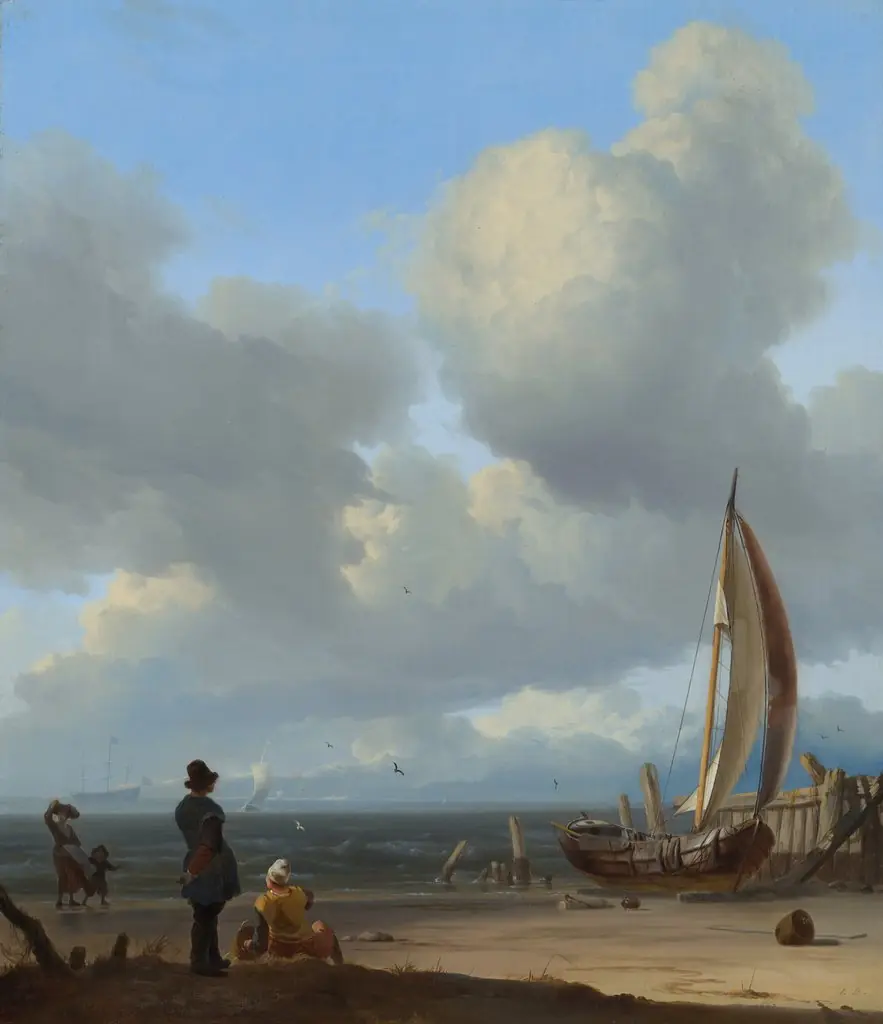 An extensive seascape with figures by a boat on a shore near Huisduinen
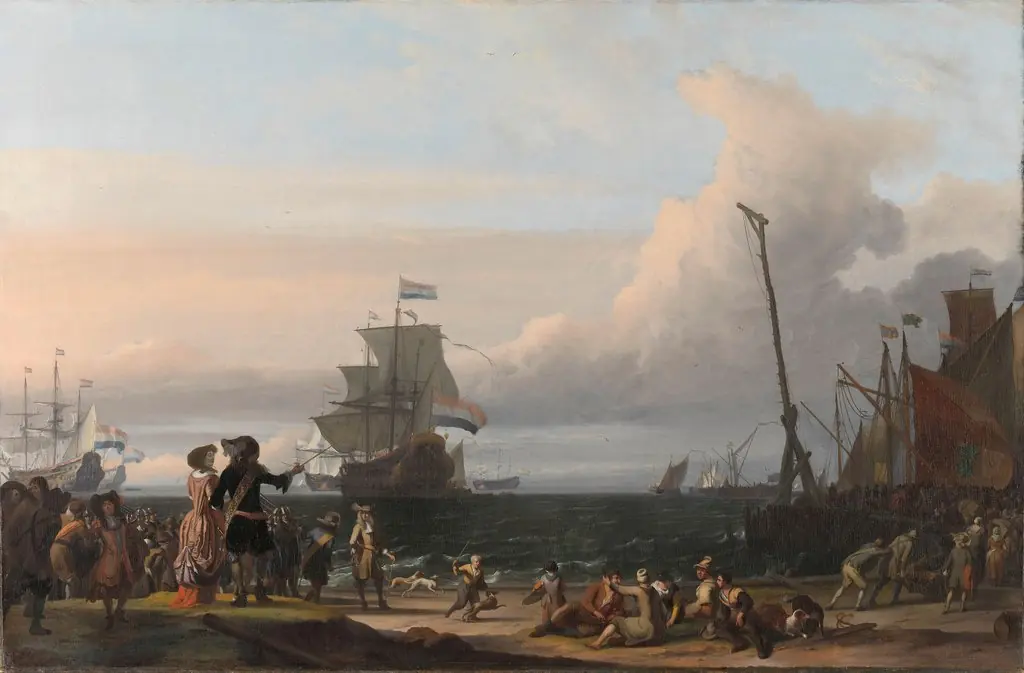 Dutch ships in the roads of Texel; in the middle the 'Gouden Leeuw,' the flagship of Cornelis Tromp
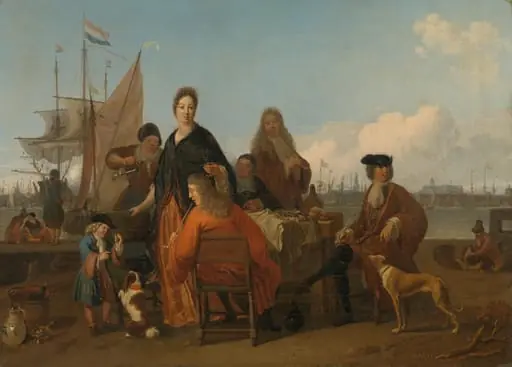 The Bakhuysen and de Hooghe Families dining at the Mosselsteiger (Mussel Pier) on the Y, Amsterdam
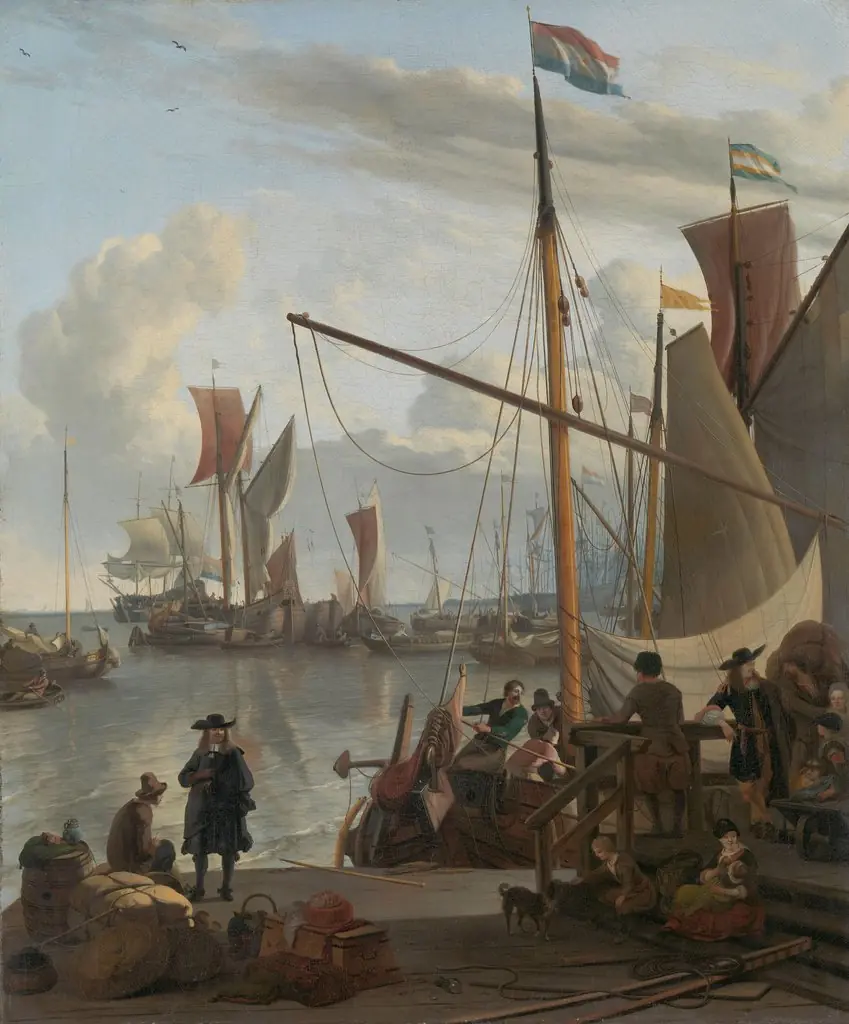 The Y at Amsterdam, seen from the Mosselsteiger (mussel pier)
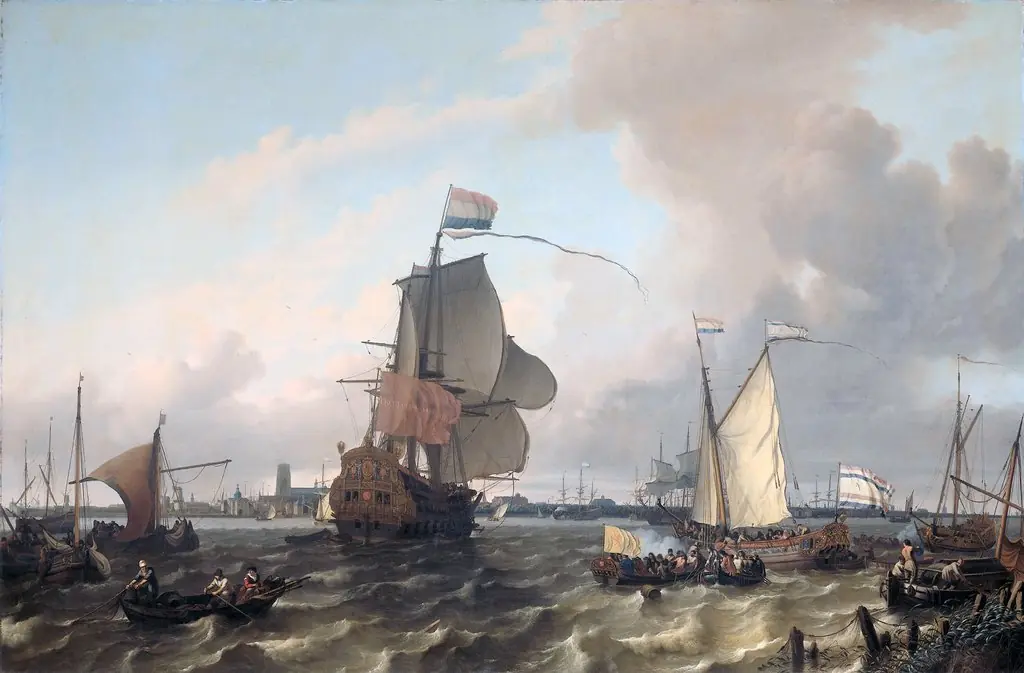 The Man-of-War Brielle on the River Maas off Rotterdam
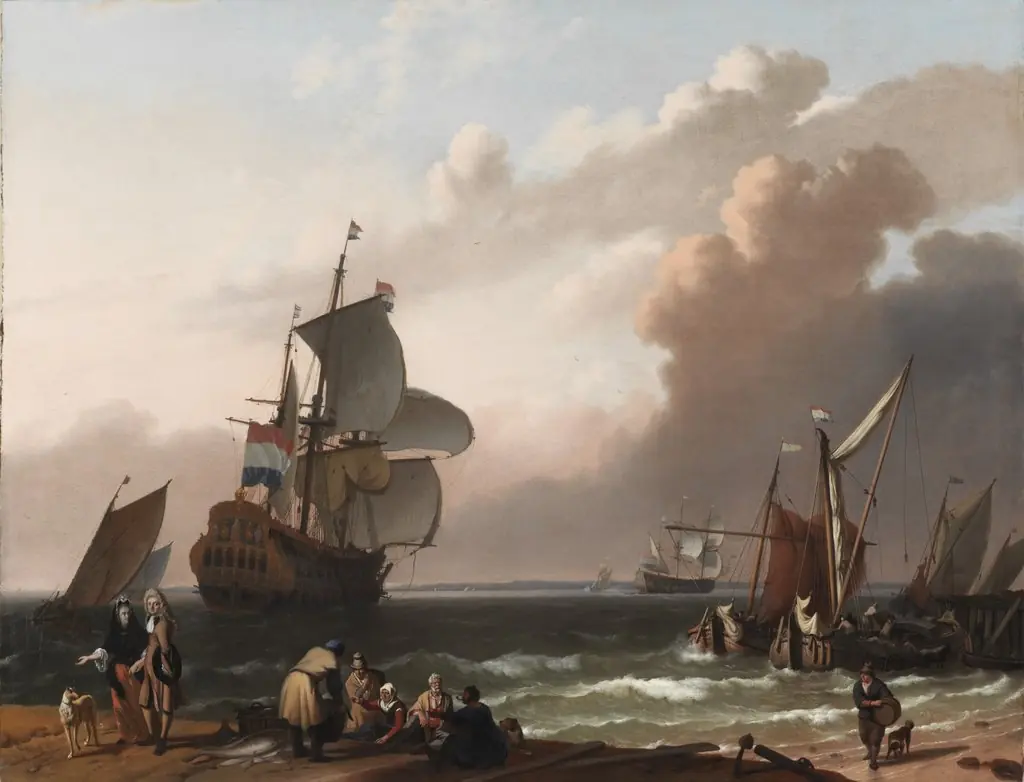 Warship and Dutch Sailboats near the Shore
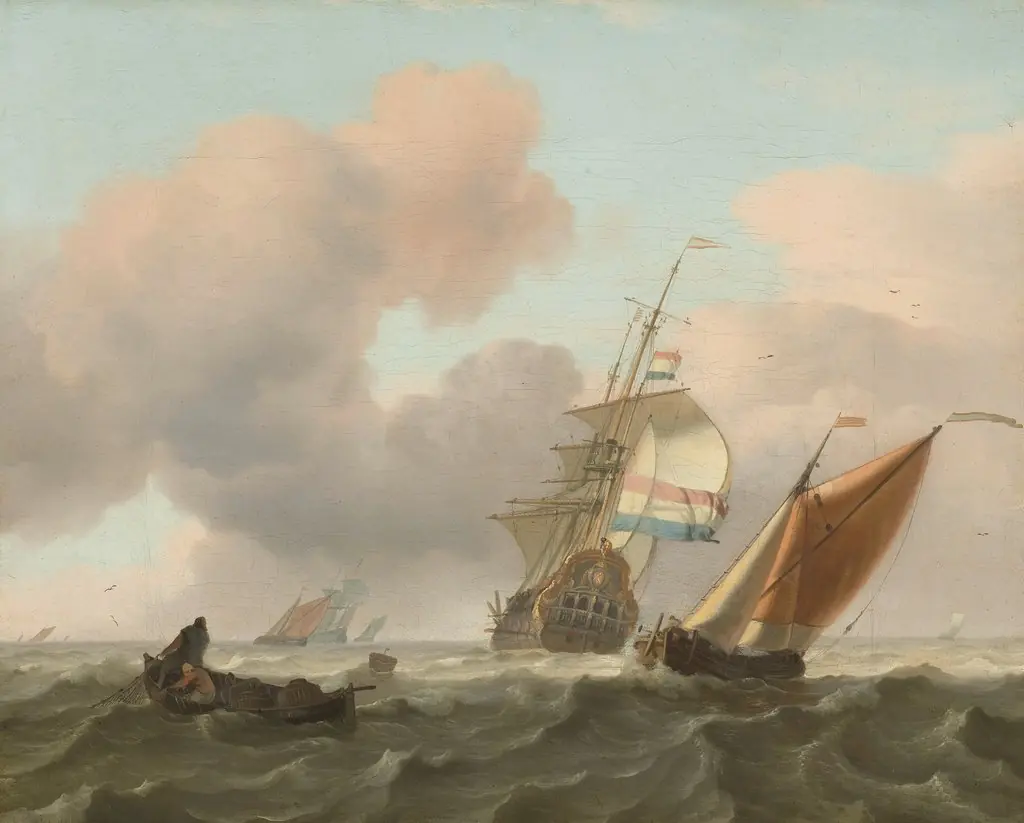 Rough sea with Ships