Artwork
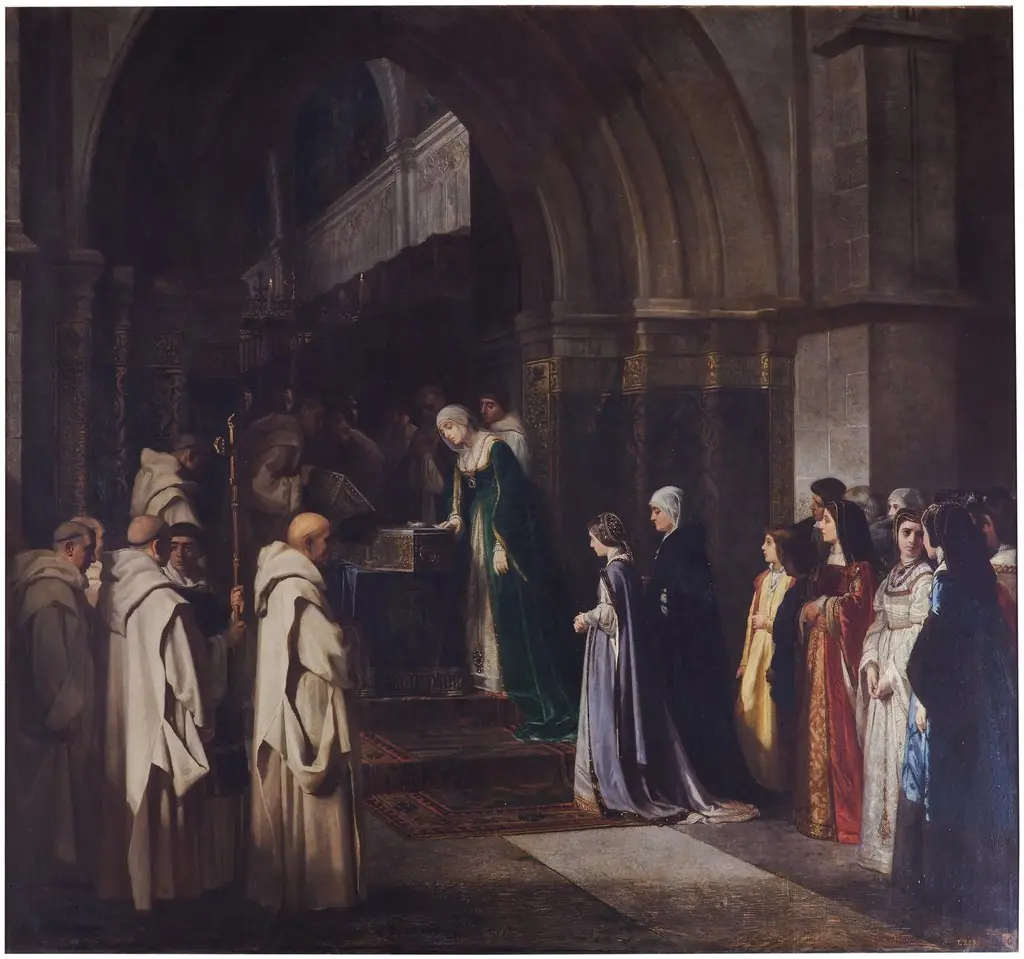
Vittore Pisani receives Holy Communion before taking command of an expedition against the Genoese
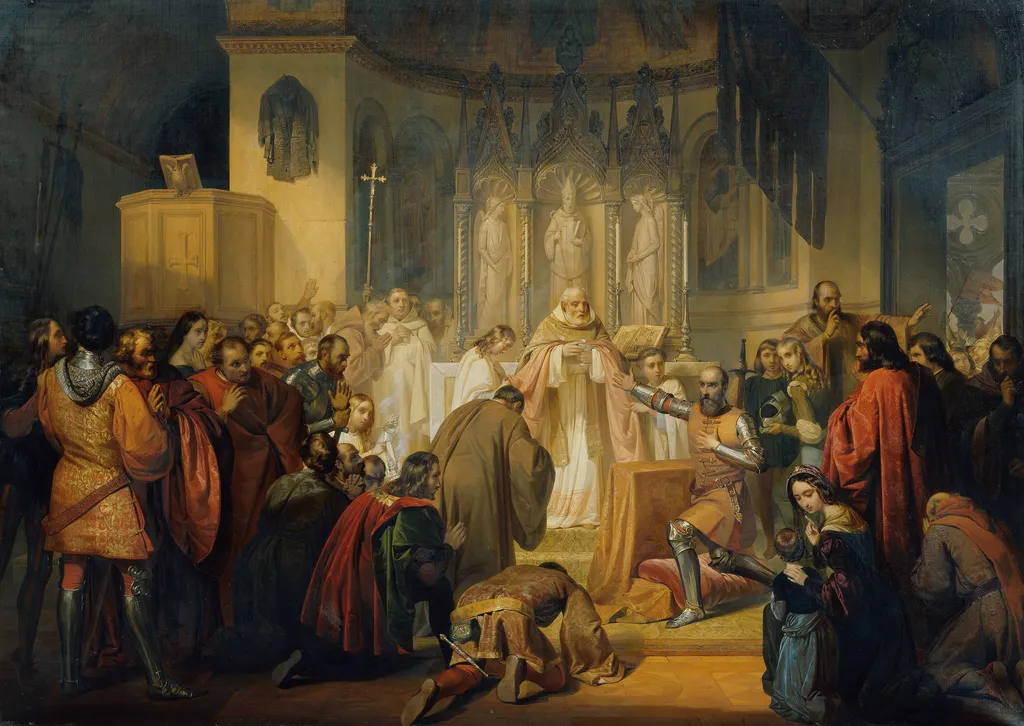
Vittore Pisani receives Holy Communion before taking command of an expedition against the Genoese is an oil painting by Ludovico Lipparini. It dates from 1852 and is held in the collection of the Kunsthistorisches Museum.
About this work
Overview
The painting resides in the Kunsthistorisches Museum in Vienna, where it is preserved as a record of 19th-century historical and religious imagery.
Painted in 1852 by Ludovico Lipparini, this oil work captures a moment of spiritual preparation before military action. It portrays Vittore Pisani, a Venetian commander, receiving communion in a church interior. The scene is rendered with careful attention to ritual and atmosphere, emphasizing the intersection of faith and duty. The painting resides in the Kunsthistorisches Museum in Vienna, where it is preserved as a record of 19th-century historical and religious imagery.
Subject & Meaning
The painting illustrates Vittore Pisani’s act of receiving the Eucharist prior to leading a naval campaign against Genoa. This moment underscores the belief that divine blessing sanctified military endeavors. The presence of clergy and armored attendants reinforces the fusion of sacred and martial authority. The composition positions Pisani as both warrior and penitent, suggesting that his leadership is grounded in spiritual conviction rather than mere ambition.
Technique & Style
Lipparini employs chiaroscuro to model forms and direct attention toward Pisani, who is illuminated against the dim church interior. The warm hues of the stone architecture contrast with the cool metallic tones of the armor, enhancing the tension between the sacred and the martial. Brushwork is precise yet restrained, favoring clarity over flourish. The lighting creates a sense of spatial depth and emotional gravity, aligning with academic traditions of historical painting.
History & Provenance
Commissioned in the mid-19th century, the painting reflects Venice’s lingering cultural identity amid political change. Though Venice had lost its independence, historical narratives of its maritime past remained potent. The work entered the Kunsthistorisches Museum’s collection in Vienna, likely through imperial acquisition or donation, where it was preserved as part of a broader effort to document European historical traditions.
Context
Created during a period of rising nationalism across Europe, the painting taps into revived interest in medieval and Renaissance Venetian heroism. While the actual historical event may be loosely remembered, its depiction served to reinforce ideals of piety and leadership. Such imagery resonated in Habsburg territories, where historical allegory was often used to legitimize authority and moral order in times of political uncertainty.
Legacy
Though not widely exhibited outside institutional circles, the painting remains a representative example of 19th-century academic history painting in Italy. It illustrates how religious ritual was visually employed to elevate secular leadership. Its preservation in Vienna highlights the transnational circulation of historical narratives within the Austro-Hungarian Empire, where Venetian heritage was selectively curated as part of a broader cultural archive.
Own this work as a print
Artist & collection


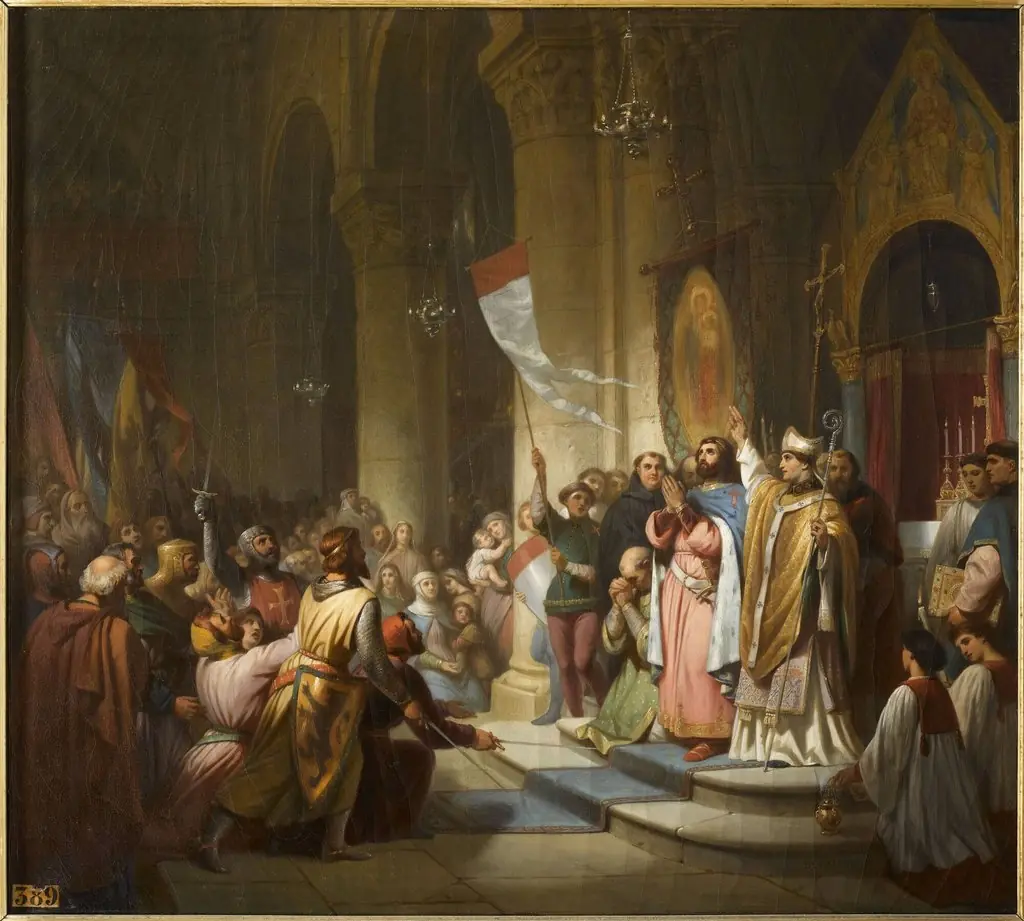 Election of Boniface of Montferrat as leader of the Fourth Crusade.
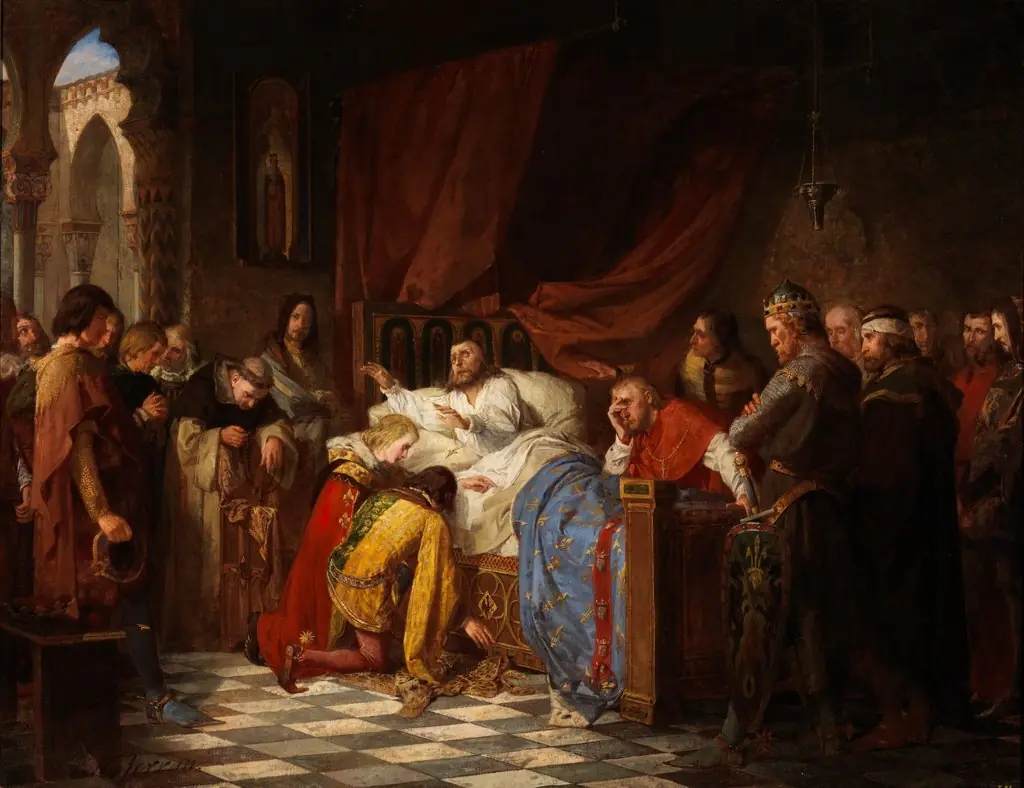 Felipe III de Francia moribundo bendiciendo a sus hijos
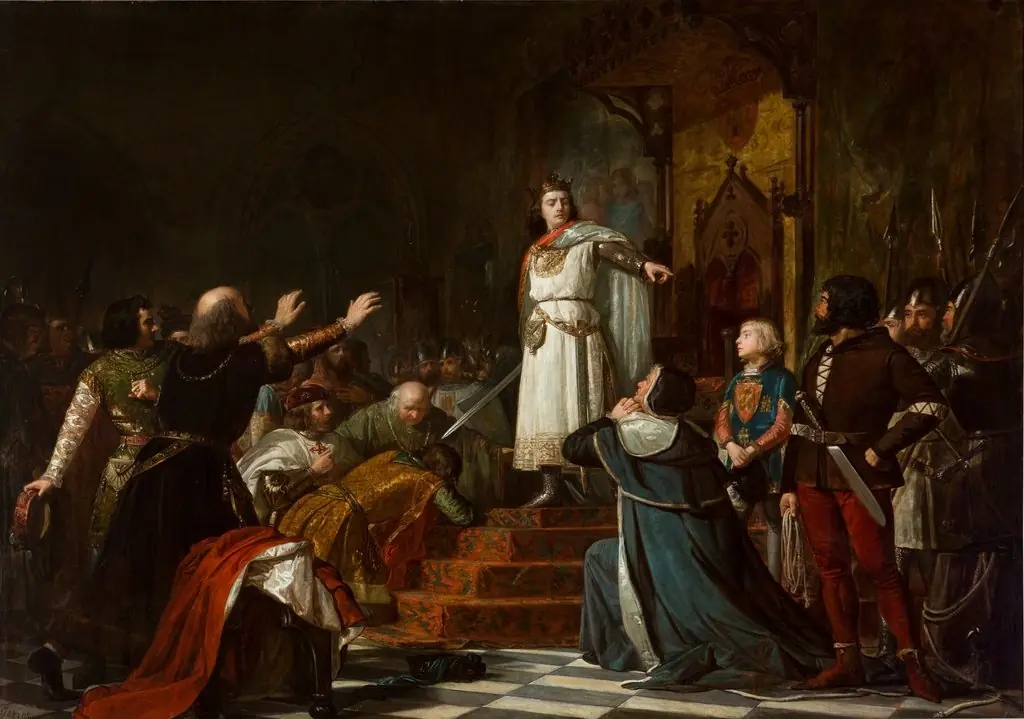 Episodio del reinado de don Enrique III de Castilla llamado el Doliente cuando al día siguiente de haber tenido que empeñar su gabán para comer corrige el orgullo y desmanes de los señores y ricoshomes de Castilla
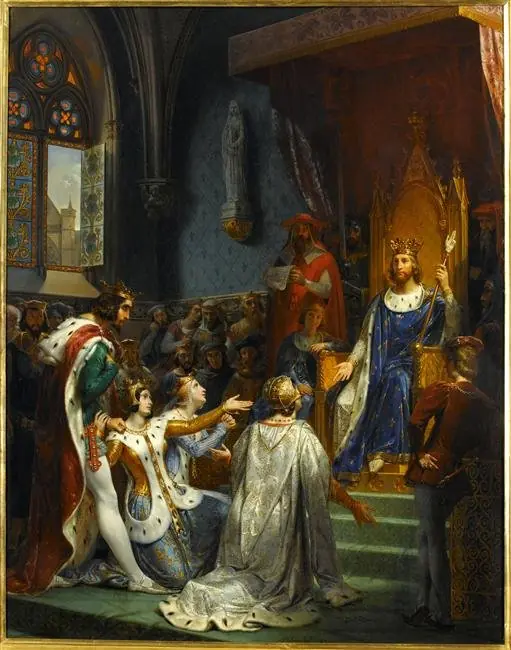 John II receives the submission of Charles II of Navarre
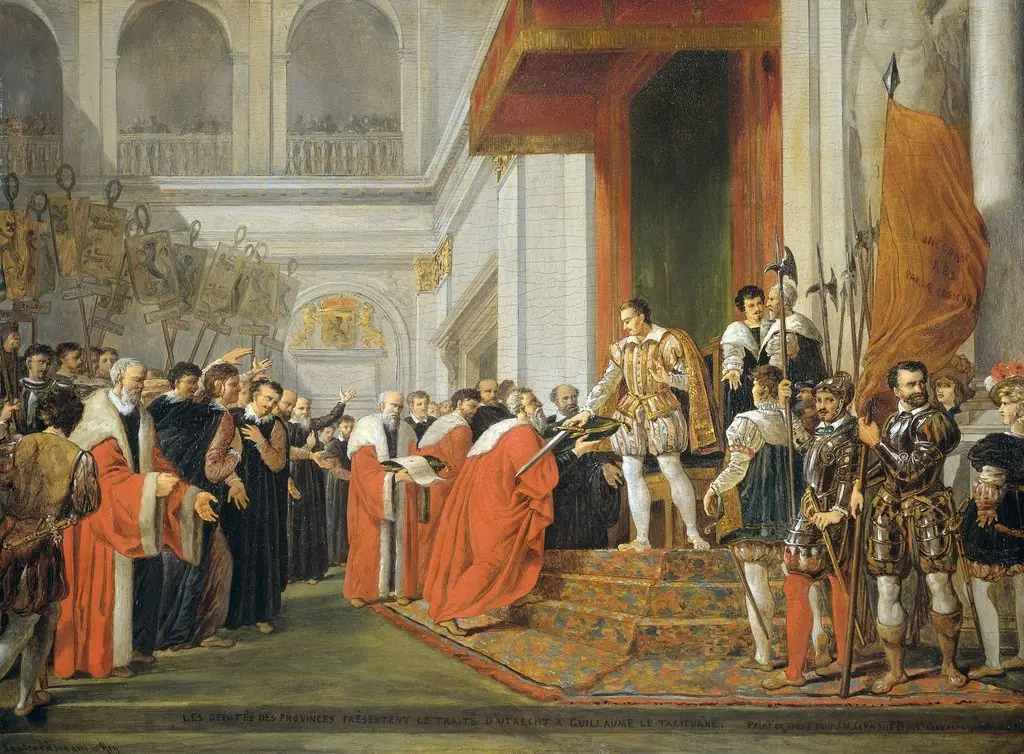 The Union of Utrecht
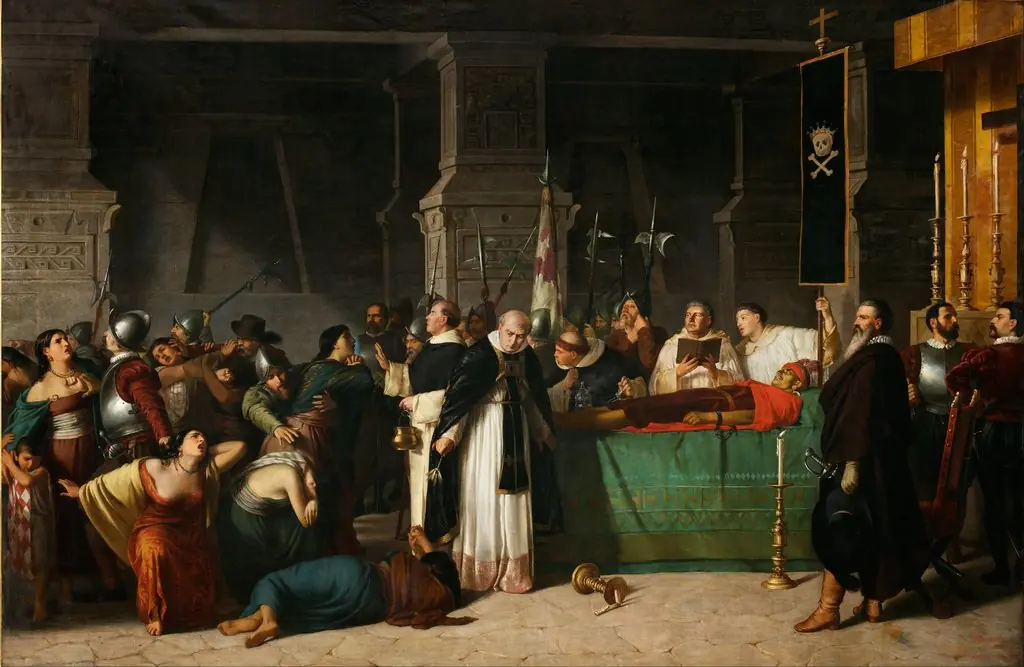 The Funerals of Inca Atahualpa
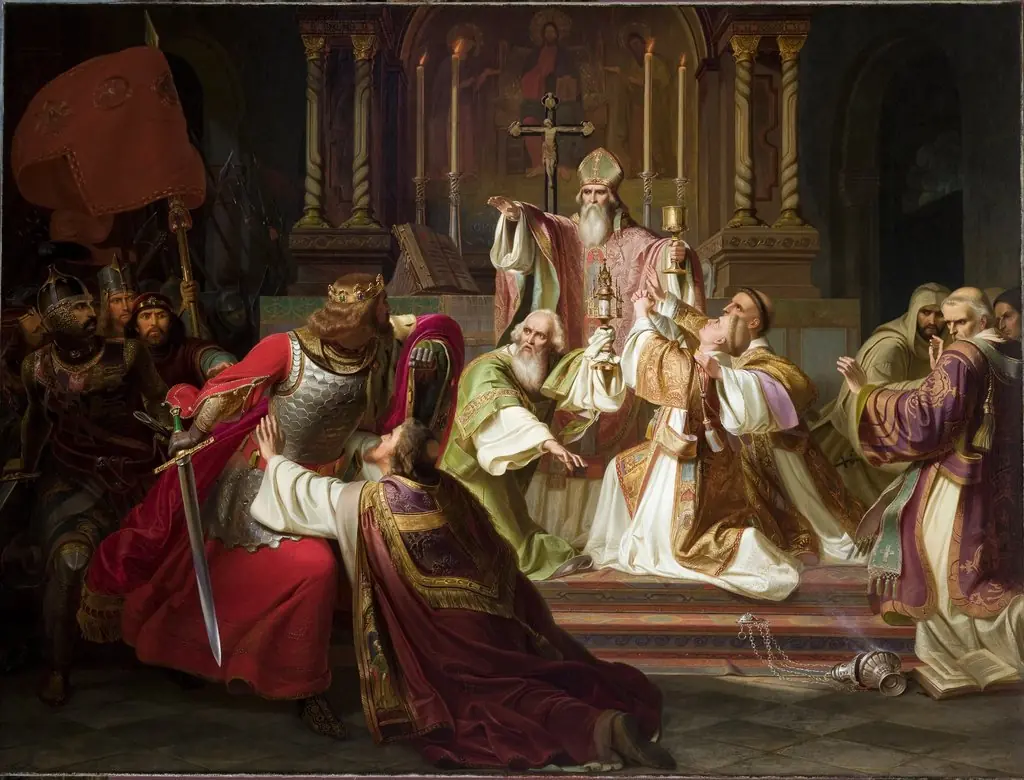 Bishop Stanisław Szczepanowski Putting a Curse on King Bolesław Śmiały
 The Baptism of Vajk
 Nikita Pustosvyat. Debate about faith
 The Wedding of Jacoba of Bavaria, Countess of Holland, and Jan IV, Duke of Brabant, 10 March 1418
 Der Doge Francesco Foscari schickt seinen Sohn Giacomo in die Verbannung ("I due Foscari")
 Doña Isabel la Católica en la cartuja de Miraflores