Artwork
Sommerlandschaft
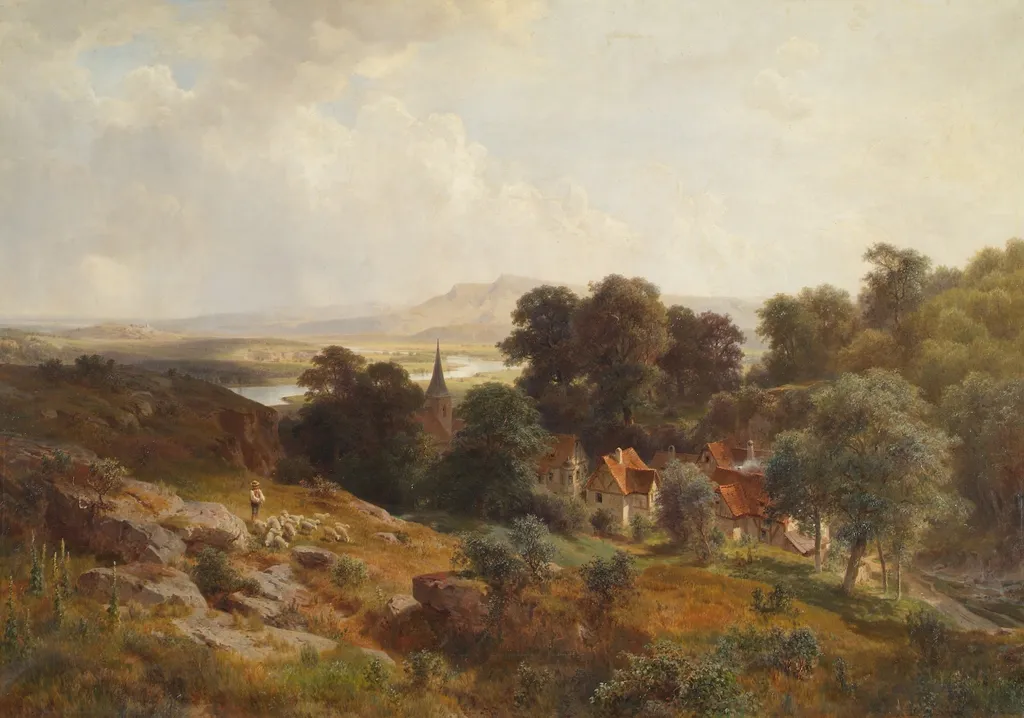
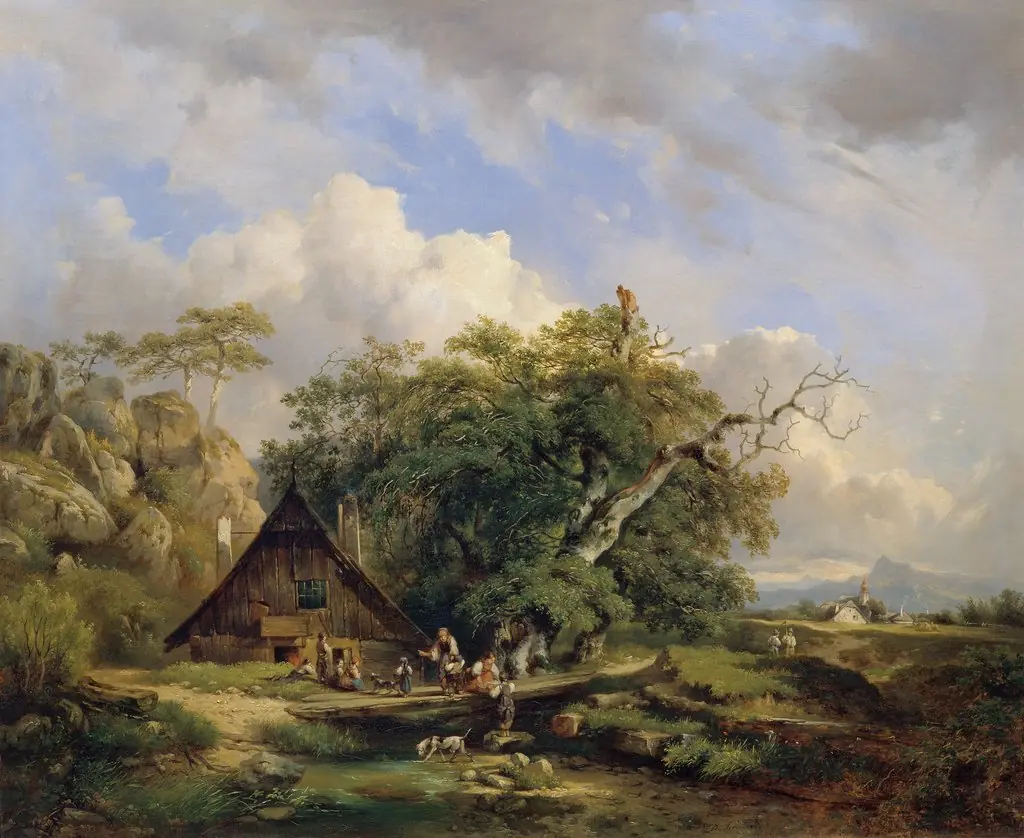
Sommerlandschaft is an oil painting by Ludwig Halauska. It dates from 1869 and is held in the collection of the Kunsthistorisches Museum.
About this work
Overview
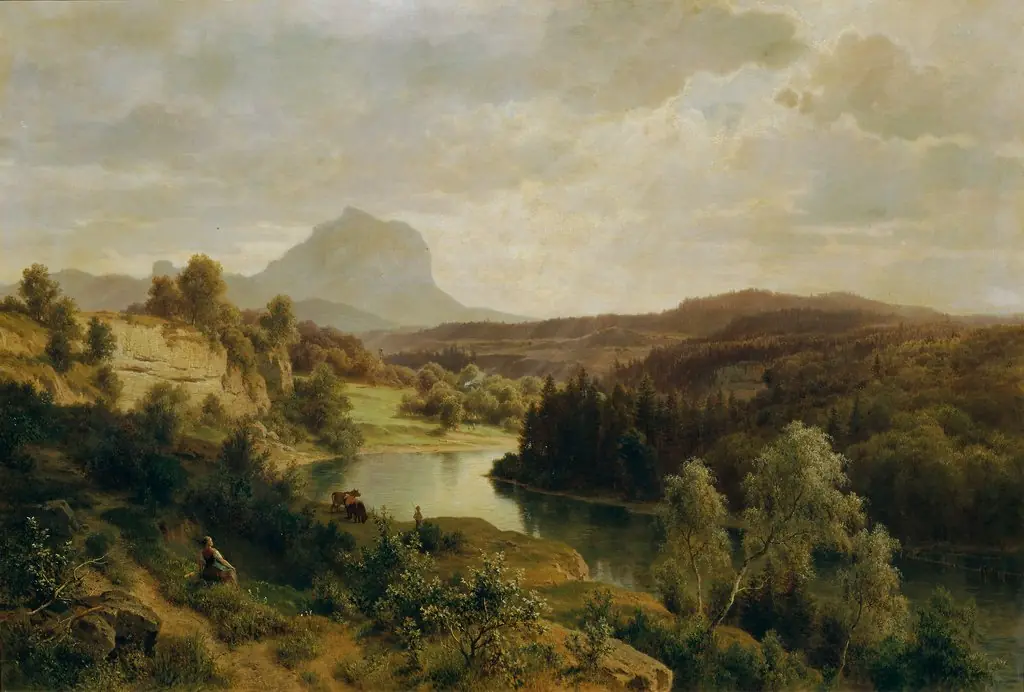
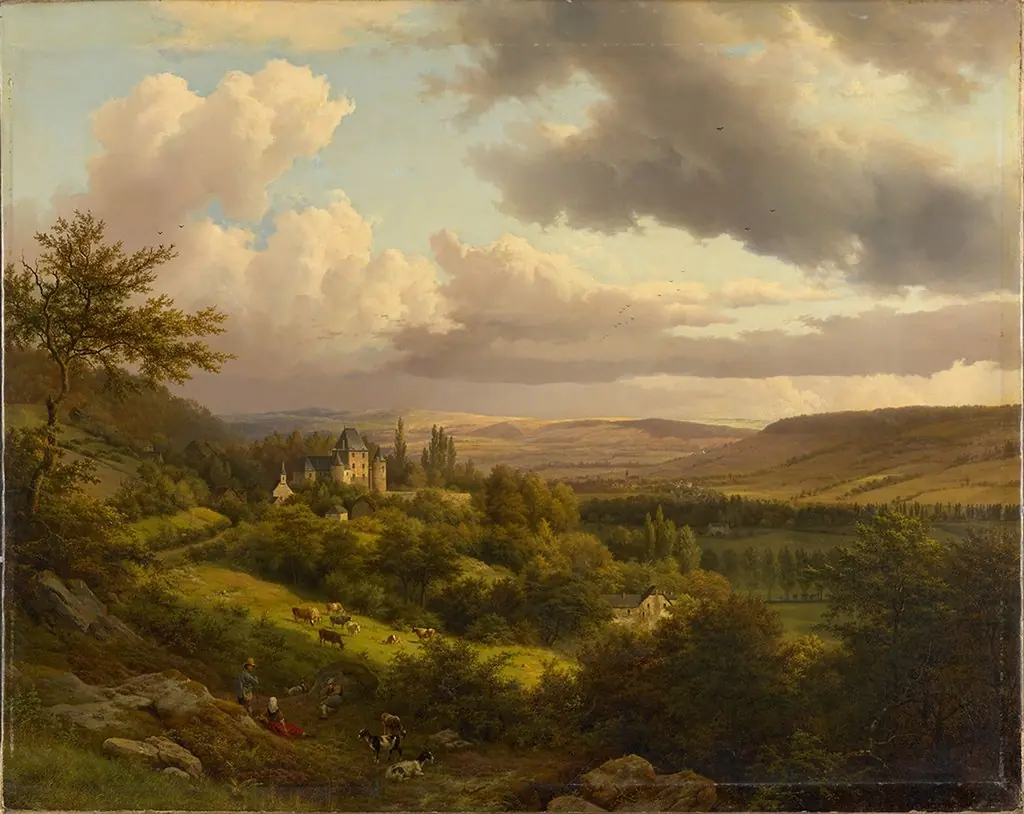
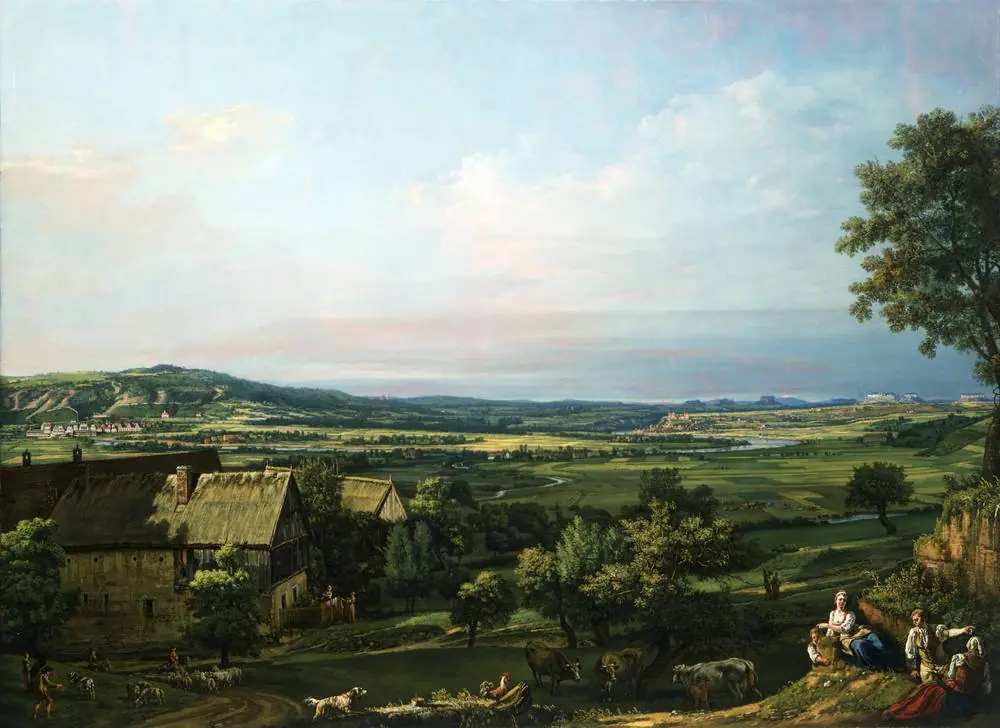
Ludwig Halauska’s 1869 oil painting, titled Sommerlandschaft, presents a quiet rural scene. A small village is tucked among gently rolling hills and trees, while a shepherd watches over his flock from a rocky ledge. In the distance a church steeple punctuates the horizon, and the whole composition is illuminated by warm, golden sunlight.
Subject & Meaning
The work captures an idyllic summer day, emphasizing the harmonious relationship between human activity and the natural environment. The shepherd and his animals suggest a pastoral lifestyle, while the distant church hints at the presence of community and tradition. The tranquil atmosphere invites contemplation of the simple pleasures of countryside life.
Technique & Style
Executed in oil, the painting displays a textured surface where brushstrokes remain discernible, lending depth to foliage and terrain. Halauska employs layered glazing to achieve luminous, golden tones that enhance the sense of light. The handling of clouds and sky demonstrates a careful modulation of color, contributing to the overall calm mood.
History & Provenance
Created in 1869, Sommerlandschaft entered the collection of the Kunsthistorisches Museum in Vienna, where it remains on display. The museum’s acquisition reflects the institution’s interest in 19th‑century Central European landscape painting and provides a representative example of Halauska’s oeuvre.
Own this work as a print
Artist & collection