Artwork
Mensaje de Carlos I al cardenal Cisneros (1517)
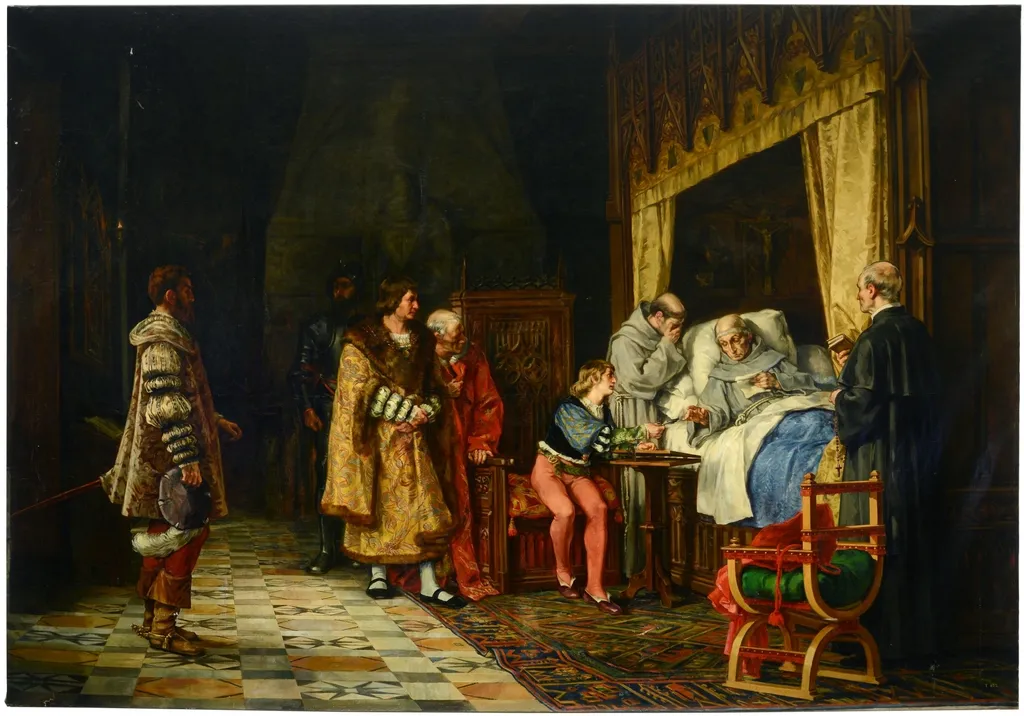
Mensaje de Carlos I al cardenal Cisneros (1517) is an oil painting by the Impressionist artist Ricardo Villodas y de la Torre. It dates from 1889 and is held in the collection of the Museo del Prado.
About this work
Overview
Though set in the early 16th century, the painting is a 19th-century historical reconstruction, not a contemporary record.
Painted in 1889 by Spanish artist Ricardo Villodas y de la Torre, this oil-on-canvas work portrays a moment from 1517 involving Emperor Charles I and Cardinal Cisneros. Though set in the early 16th century, the painting is a 19th-century historical reconstruction, not a contemporary record. It resides in the Museo del Prado’s collection, reflecting the period’s interest in reimagining pivotal moments of Spanish imperial history through a romanticized lens.
Subject & Meaning
The scene captures the final hours of Cardinal Cisneros, who lay dying in 1517 as Charles I arrived in Spain to assume the throne. The composition centers on the cardinal’s bedside, where clergy and courtiers gather in quiet vigil. Charles I, though not visibly present in the bedchamber, is symbolically invoked through the presence of his emissaries. The painting conveys the transition of power and the solemnity surrounding the death of a key architect of Spanish unity.
Technique & Style
Villodas employed a subdued palette and controlled chiaroscuro to evoke the hushed atmosphere of the death chamber. Light filters through a high, curtained window, casting soft gradients across tiled floors and rich fabrics. The figures are rendered with careful attention to texture—velvet robes, linen sheets, and wooden furniture—while maintaining a restrained, almost theatrical realism. Brushwork is smooth, avoiding overt impressionist looseness, favoring clarity over atmospheric blur.
History & Provenance
Commissioned during a wave of national historical revival in late 19th-century Spain, the painting was completed in 1889 and entered the Museo del Prado’s collection soon after. It reflects the era’s fascination with legitimizing contemporary identity through visual narratives of monarchy and church. No earlier versions or preparatory sketches are widely documented, suggesting it was conceived as a standalone historical statement rather than part of a series.
Context
The painting emerged amid Spain’s efforts to reassert its imperial legacy after colonial losses and internal instability. Cisneros, as regent and reformer, symbolized moral authority and institutional continuity. By depicting his deathbed as Charles I’s arrival loomed, Villodas framed the moment as a transfer of sacred duty—from church to crown—resonating with audiences seeking stability in a changing Spain.
Legacy
While not widely exhibited outside Spain, the work remains a representative example of 19th-century Spanish historical painting. It illustrates how artists of the period used religious and royal imagery to mediate collective memory. Its preservation in the Prado underscores its role as a cultural artifact, valued more for its historical framing than its artistic innovation.
Own this work as a print
Artist & collection
Artist
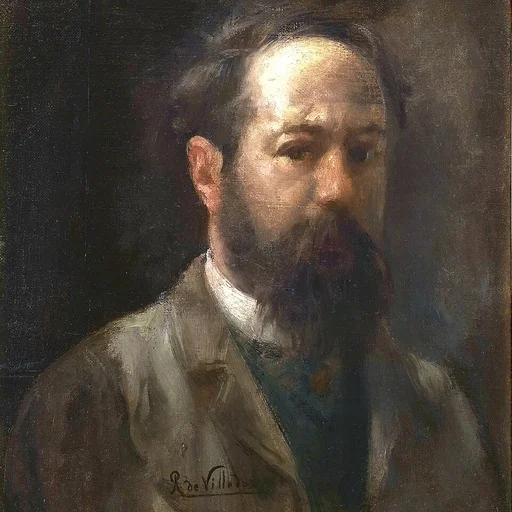
Ricardo Villodas y de la Torre
Ricardo Villodas y de la Torre (23 February 1846, Madrid – 6 August 1904, Soria) was a Spanish painter best known for his classical and historical scenes.

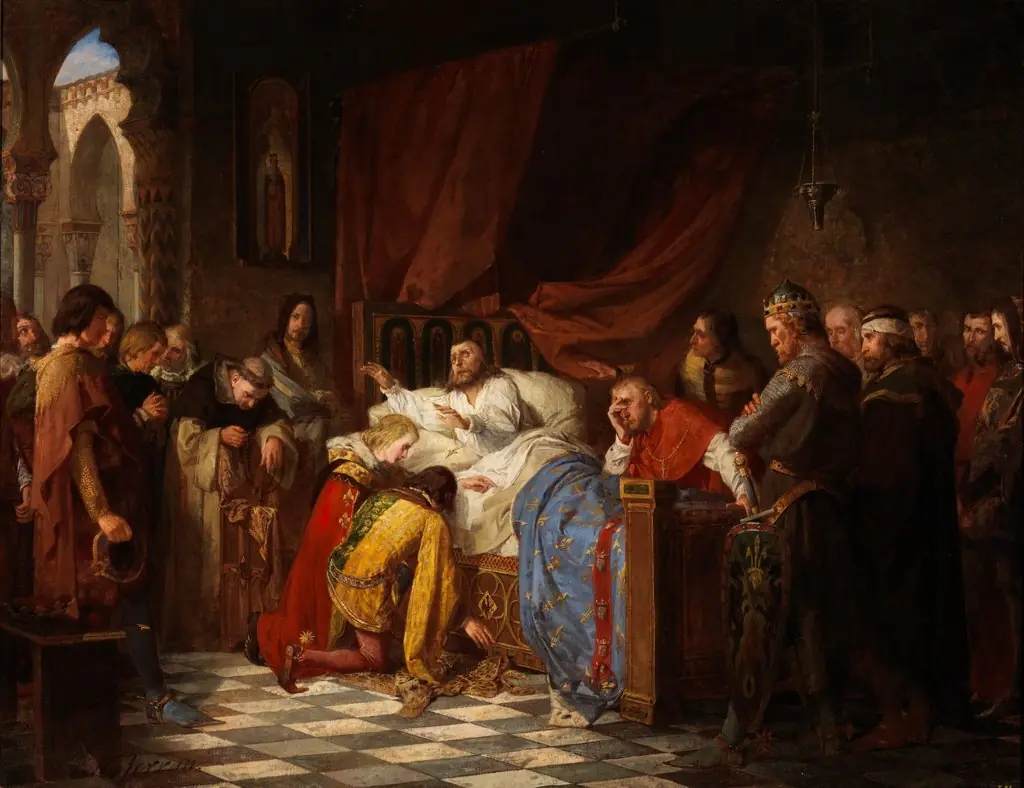 Felipe III de Francia moribundo bendiciendo a sus hijos
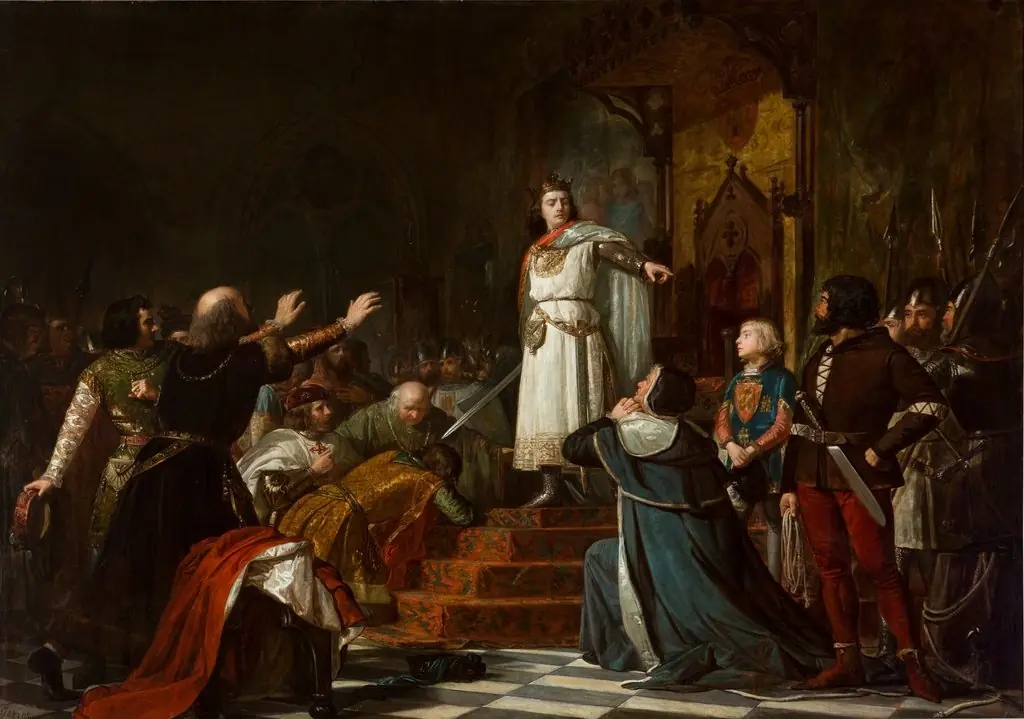 Episodio del reinado de don Enrique III de Castilla llamado el Doliente cuando al día siguiente de haber tenido que empeñar su gabán para comer corrige el orgullo y desmanes de los señores y ricoshomes de Castilla
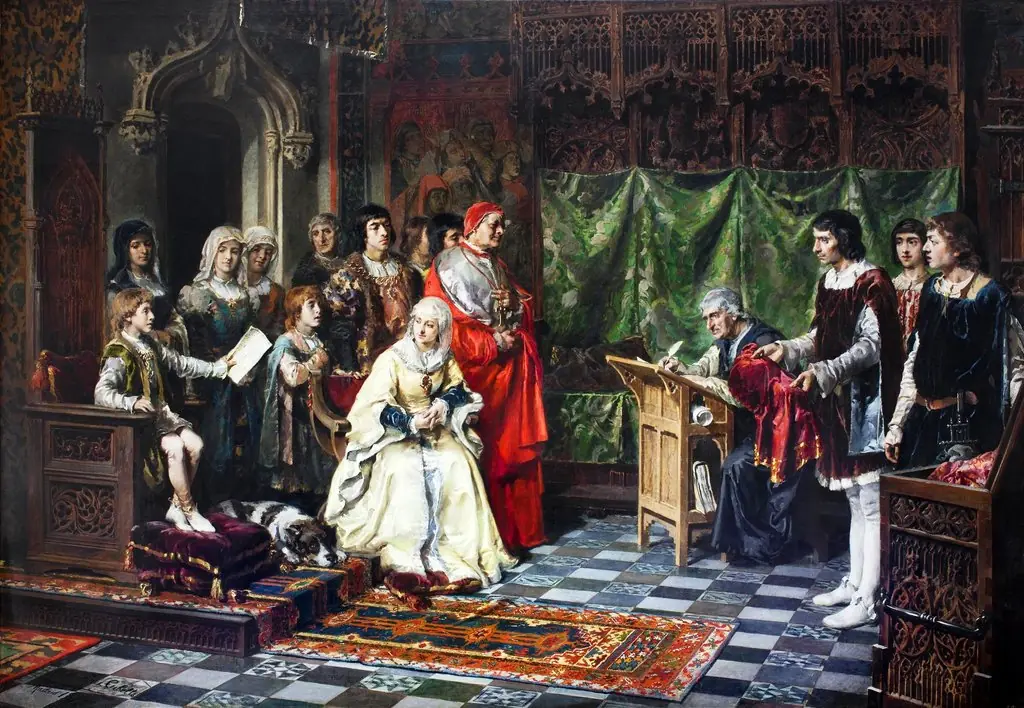 Educación del príncipe don Juan
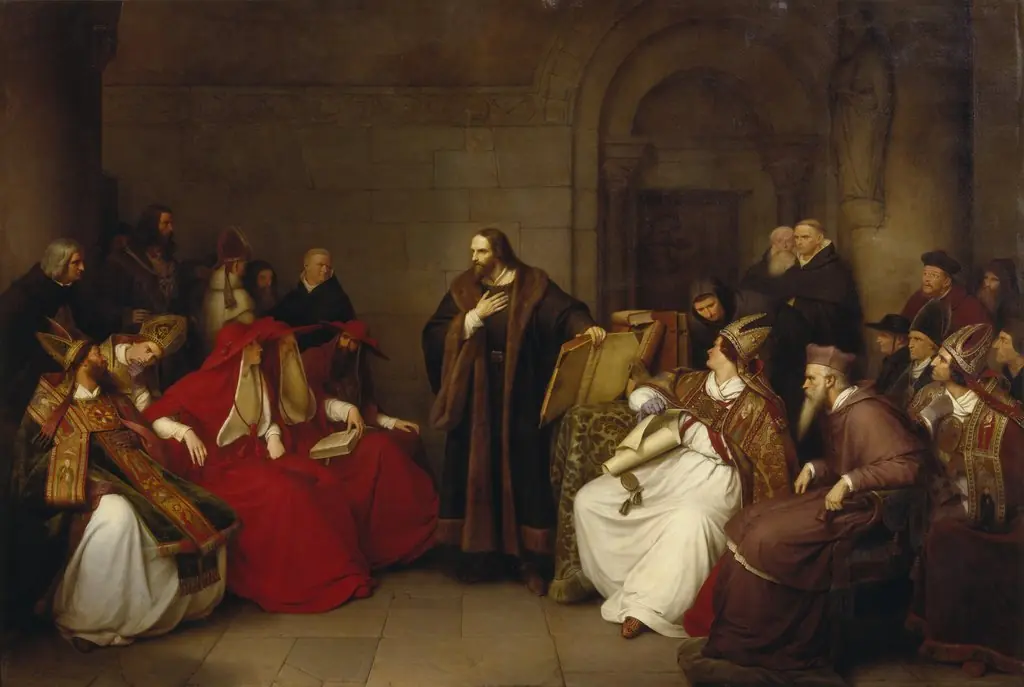 Jan Hus at Constance
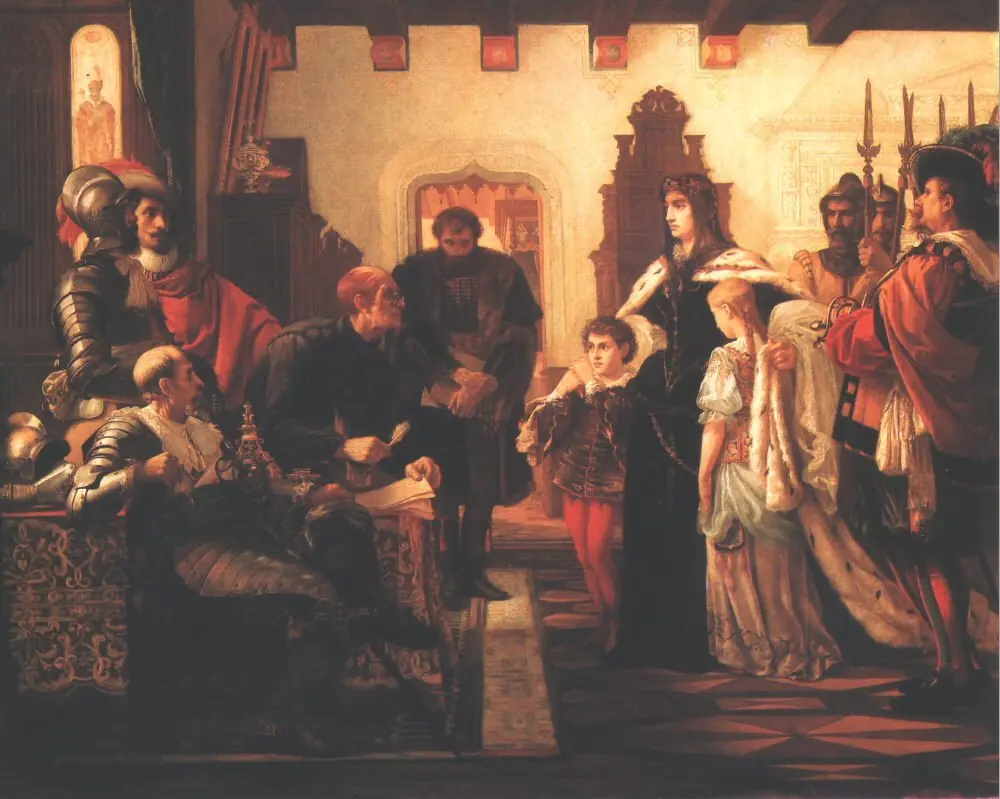 Ilona Zrínyi before the Investigating Judge
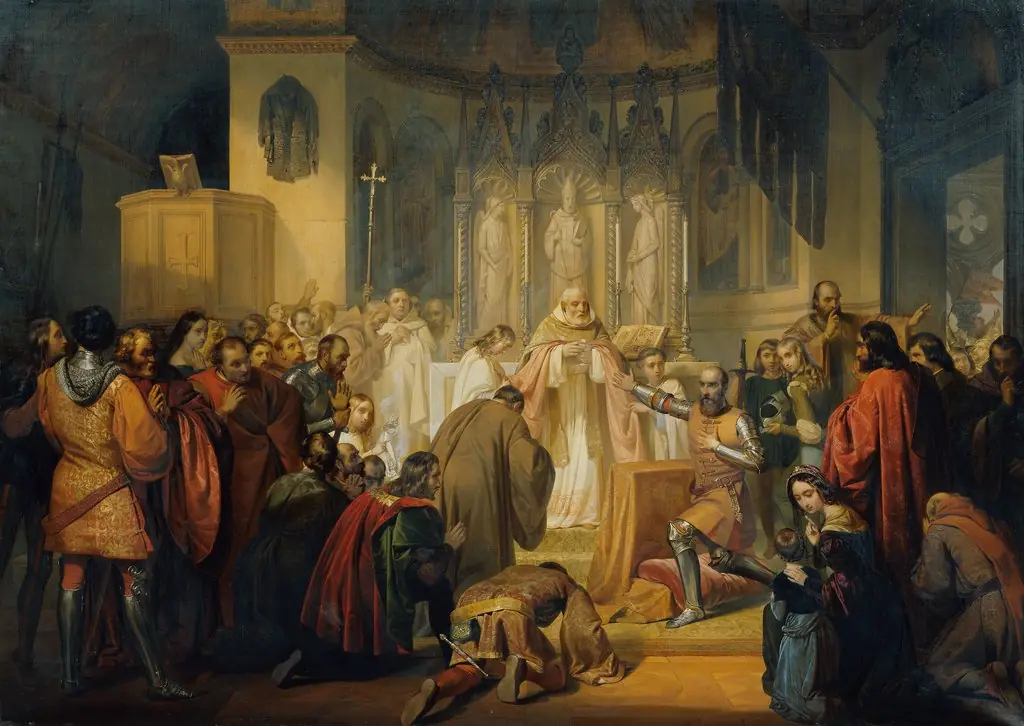 Vittore Pisani receives Holy Communion before taking command of an expedition against the Genoese
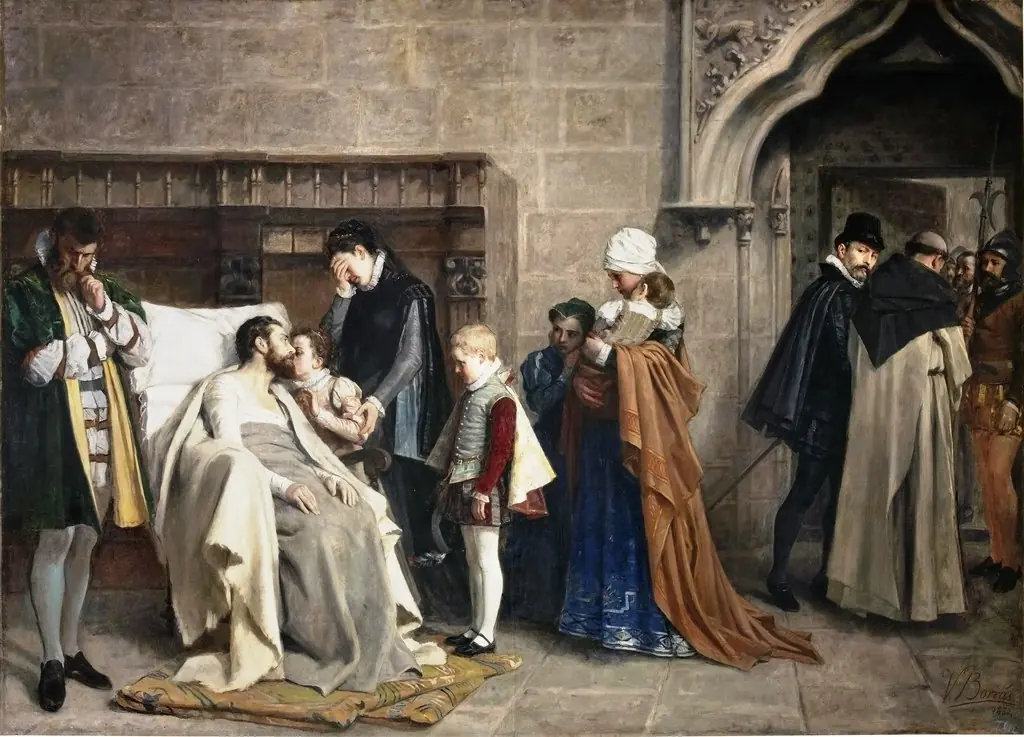 Antonio Pérez recibiendo a su familia después del tormento
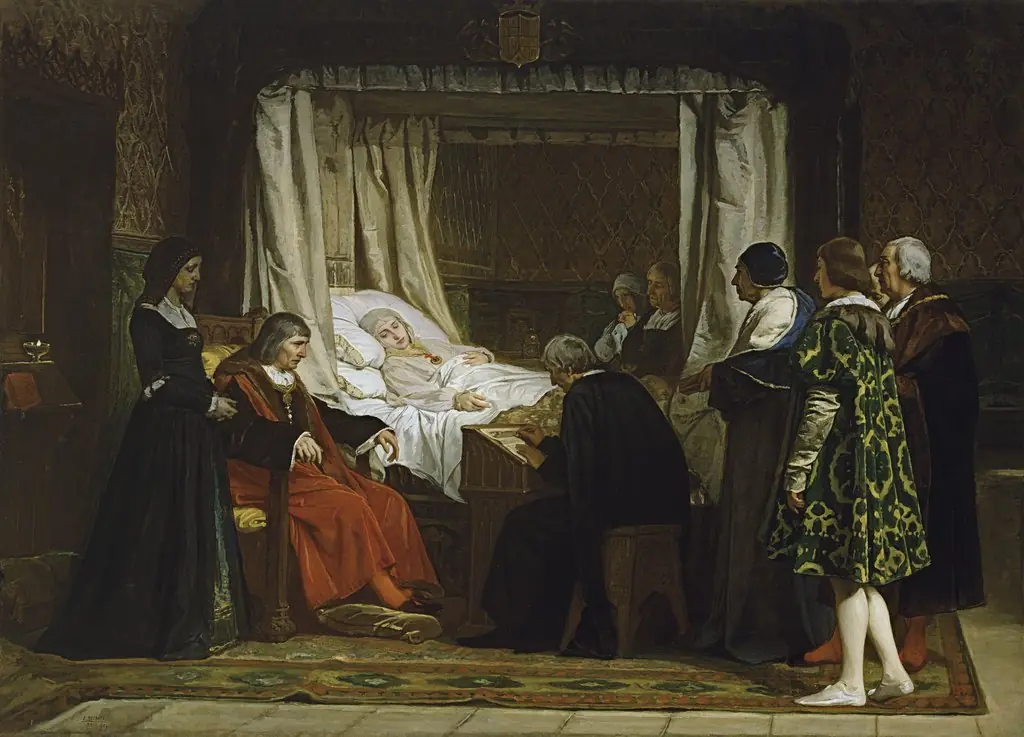 Queen Isabel la Católica dictating her last will and testament
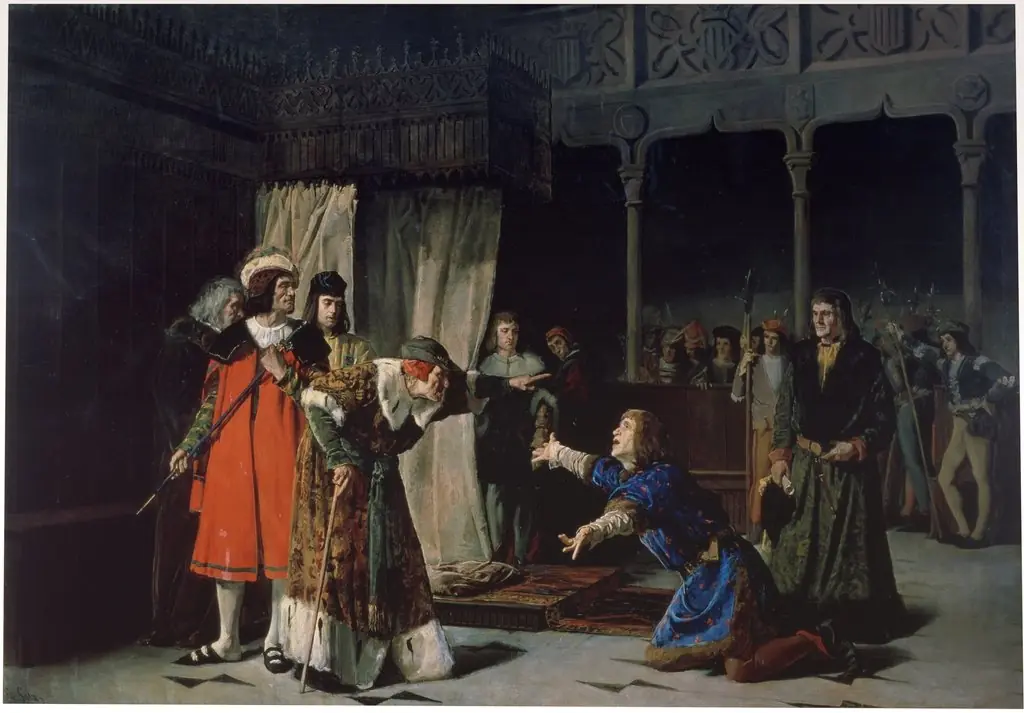 La prisión del príncipe de Viana
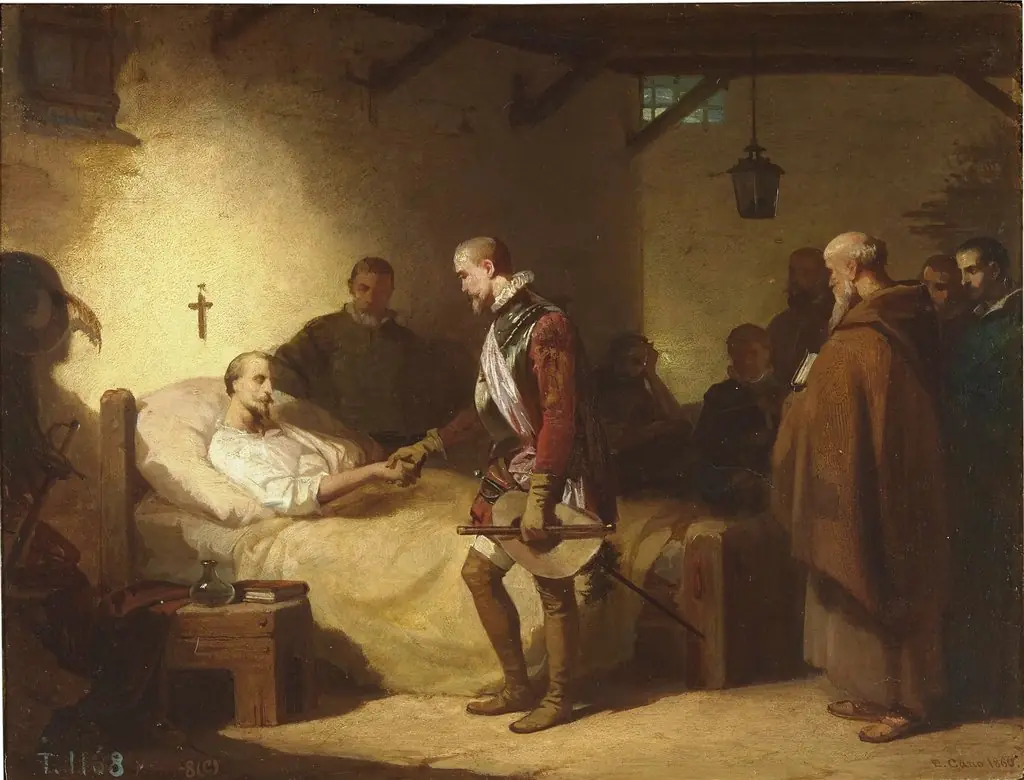 Cervantes y don Juan de Austria
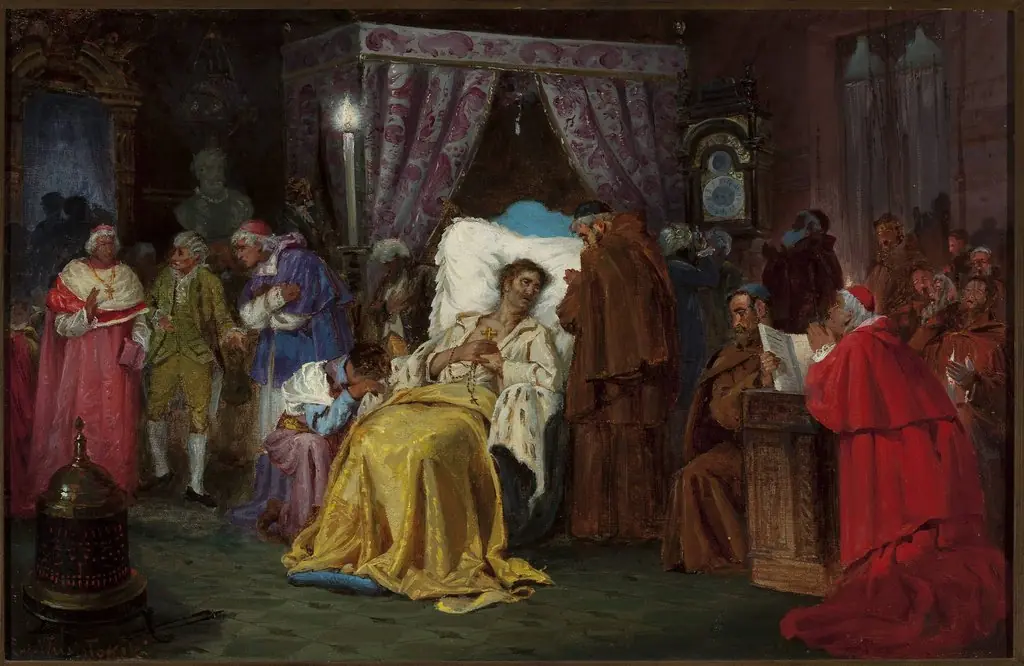 Aleksander Sobieski on his deathbed in Rome in 1714
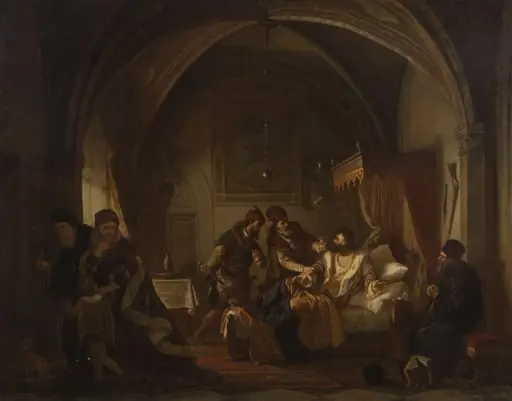 Moartea lui Alexandru Lăpușneanu