Artwork
The Death of Leonardo da Vinci in the Arms of François I
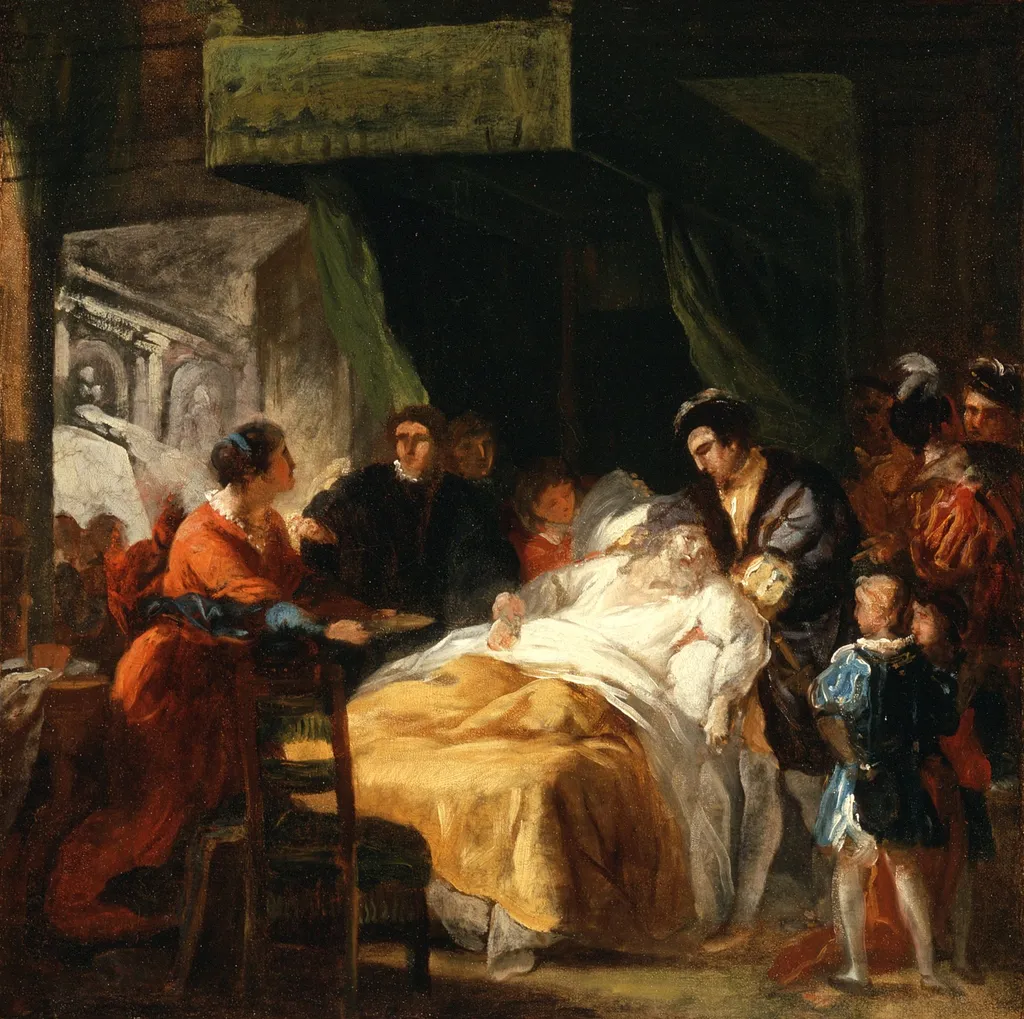
The Death of Leonardo da Vinci in the Arms of François I is an oil painting by the Rococo painting artist François-Guillaume Ménageot. It dates from 1791 and is held in the collection of the Los Angeles County Museum of Art. François‑Guillaume Ménageot’s 1791 oil painting portrays the dying Leonardo da Vinci embraced by King François I.
About this work
Overview
François‑Guillaume Ménageot’s 1791 oil painting portrays the dying Leonardo da Vinci embraced by King François I. The composition centers on the frail, pallid figure on a modest bed, surrounded by courtiers whose dark garments and concerned faces heighten the mournful tone. A dimly lit interior and a looming stone structure in the background frame the intimate yet historically charged tableau.
Subject & Meaning
The work visualizes a legendary moment in which the French monarch, an avid patron of the arts, cradles the great Renaissance master during his final hours. By emphasizing Leonardo’s vulnerability and the king’s compassionate gesture, Ménageot underscores themes of artistic reverence, the transmission of cultural legacy, and the personal bond between patron and creator.
Technique & Style
Ménageot employs a restrained palette of muted whites, deep blacks, and earth tones, allowing chiaroscuro to model the figures and focus attention on Leonardo’s illuminated form. The brushwork balances Rococo’s decorative sensibility with a more sober, narrative-driven approach, using subtle gradations of light to convey depth and emotional intensity within the confined space.
History & Provenance
Created in the late eighteenth century, the painting entered the collection of the Los Angeles County Museum of Art, where it remains on view. Its provenance traces back to private French collections before crossing the Atlantic in the early twentieth century, reflecting the growing American interest in European historical genre paintings.
Context
Ménageot, a former pupil of François Boucher and later director of the French Academy in Rome, worked during a period when French art was transitioning from Rococo exuberance to neoclassical restraint. This piece reflects that shift, merging ornate composition with a solemn historical narrative that resonated with Enlightenment ideals of honoring intellectual achievement.
Own this work as a print
Artist & collection
Artist
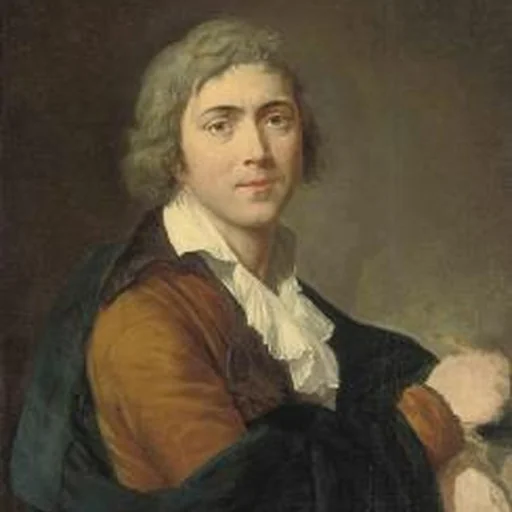
François-Guillaume Ménageot (1744–1816) was a French painter of religious and French historical scenes.

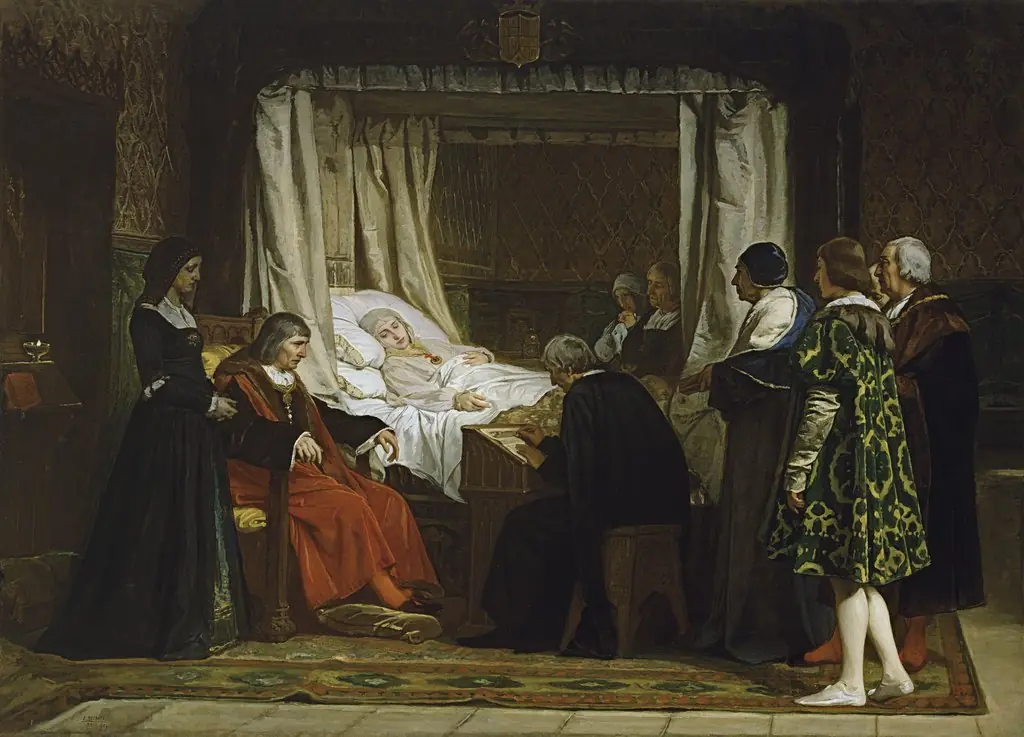 Queen Isabel la Católica dictating her last will and testament
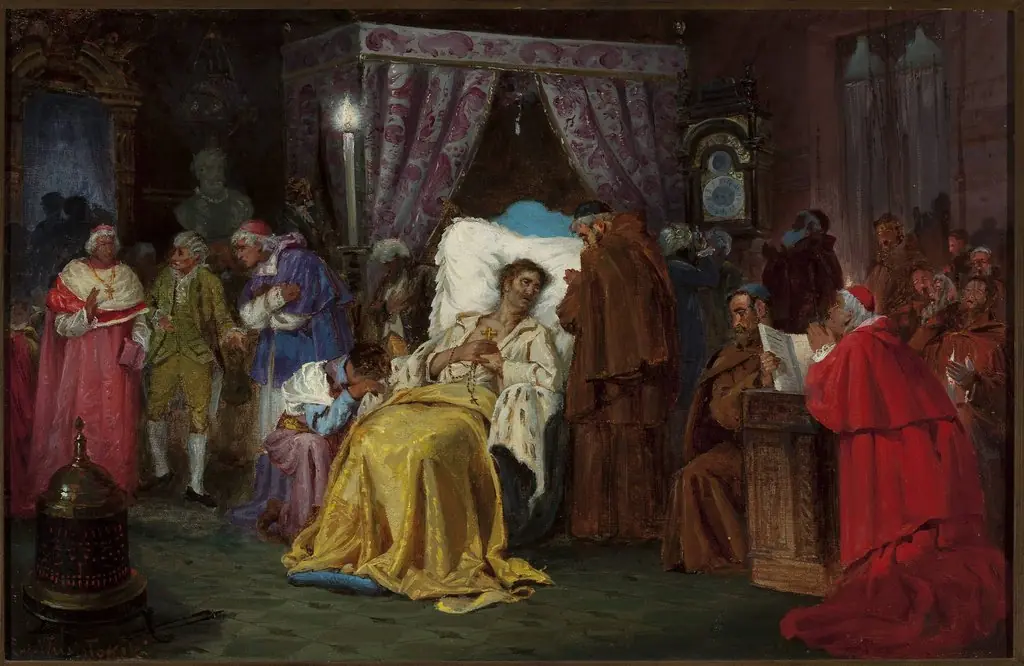 Aleksander Sobieski on his deathbed in Rome in 1714
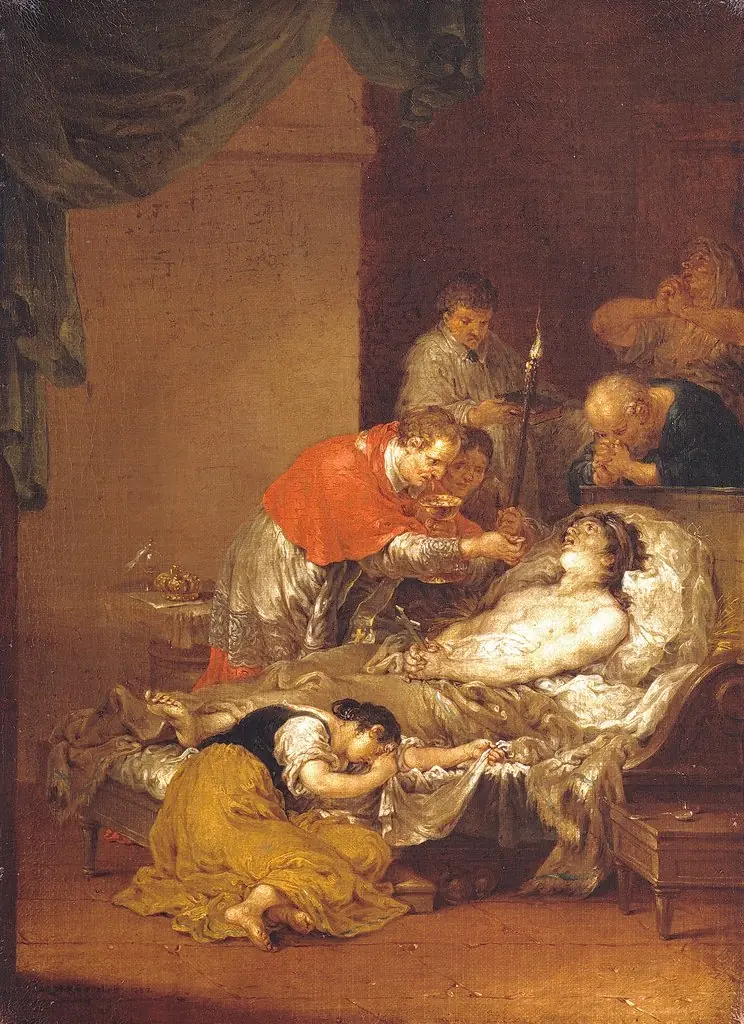 Saint Borromeo hands Supper to a person suffering from the plague
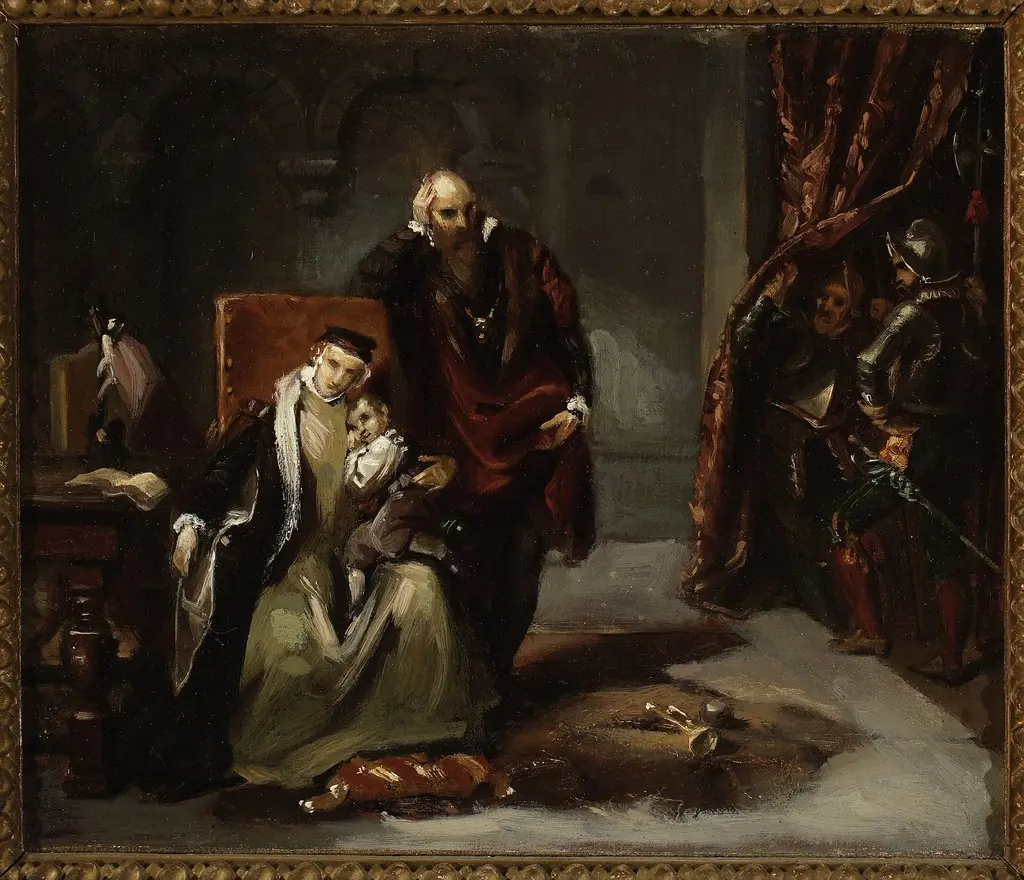 Catherine Jagiellon with her son Sigismund imprisoned in the Gripshom Castle (sketch)
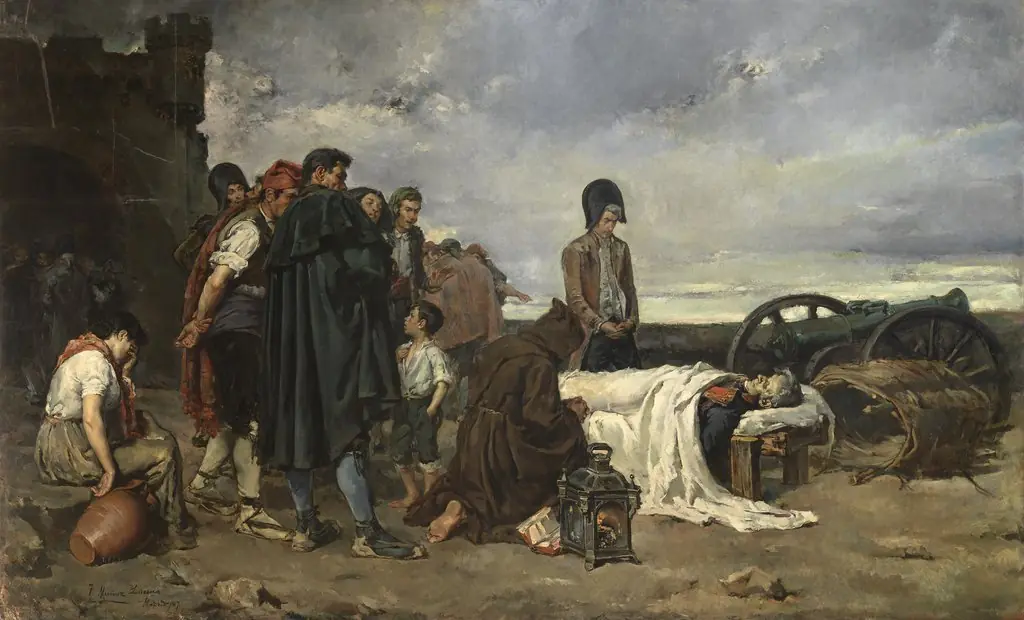 El cadáver de Álvarez de Castro
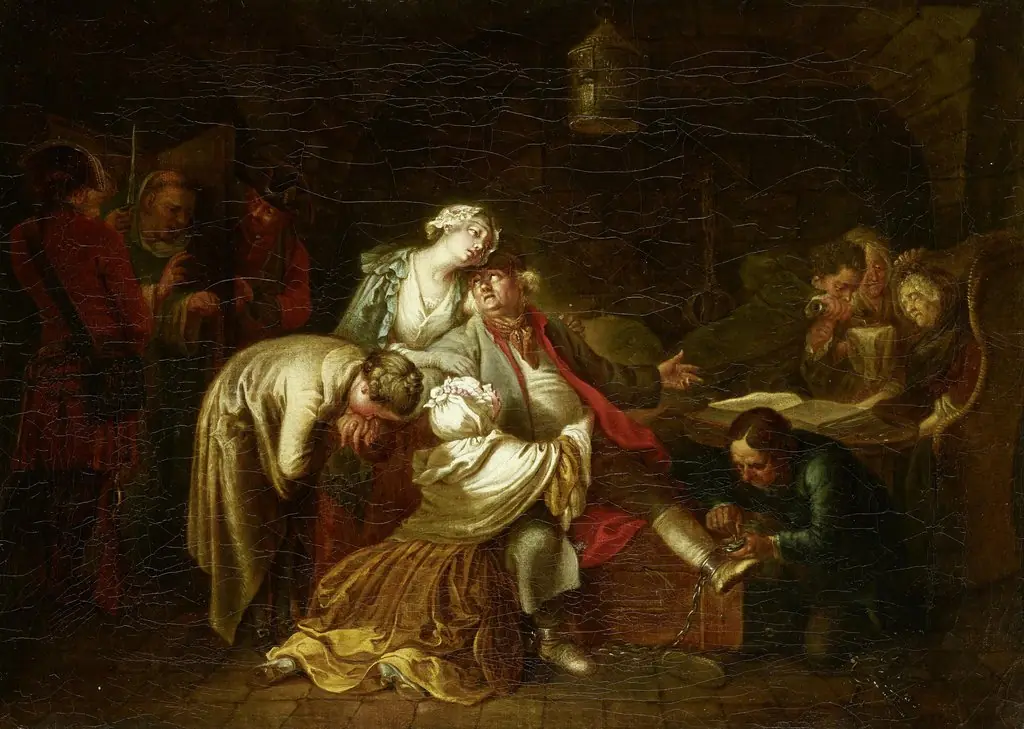 Jean Calas' Farewell to his Family
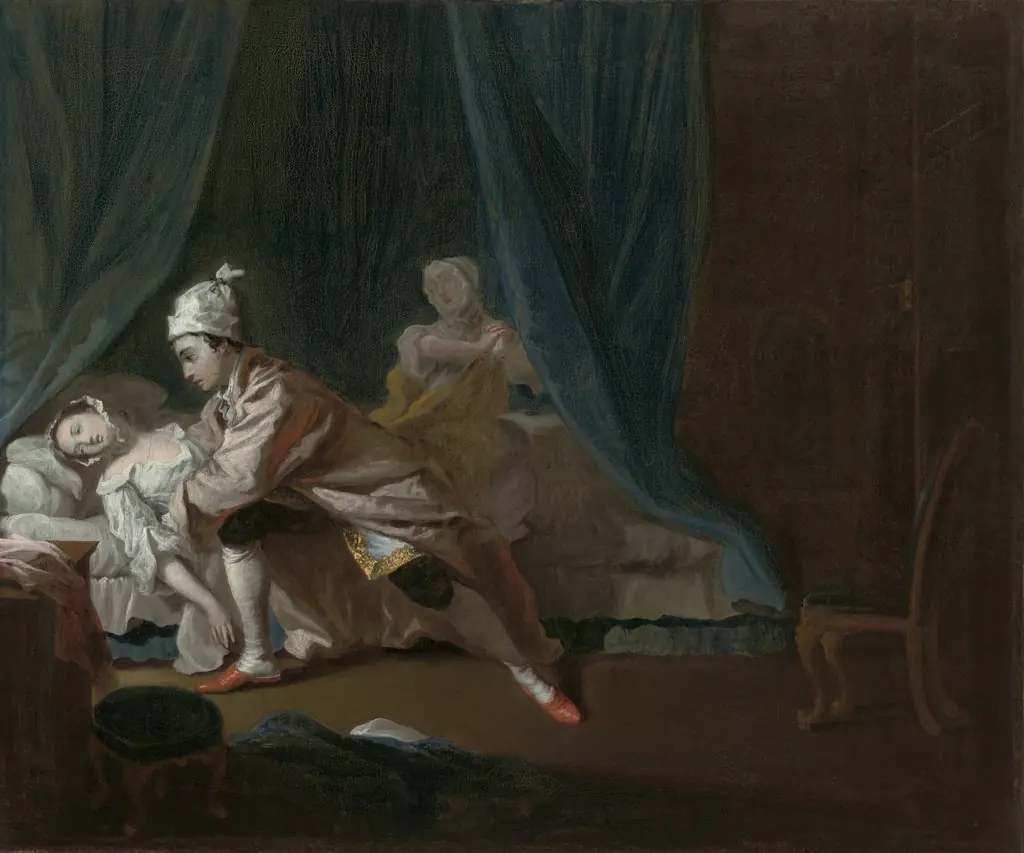 Pamela fainting
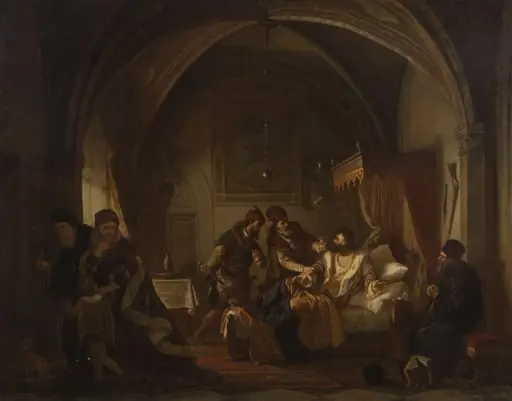 Moartea lui Alexandru Lăpușneanu
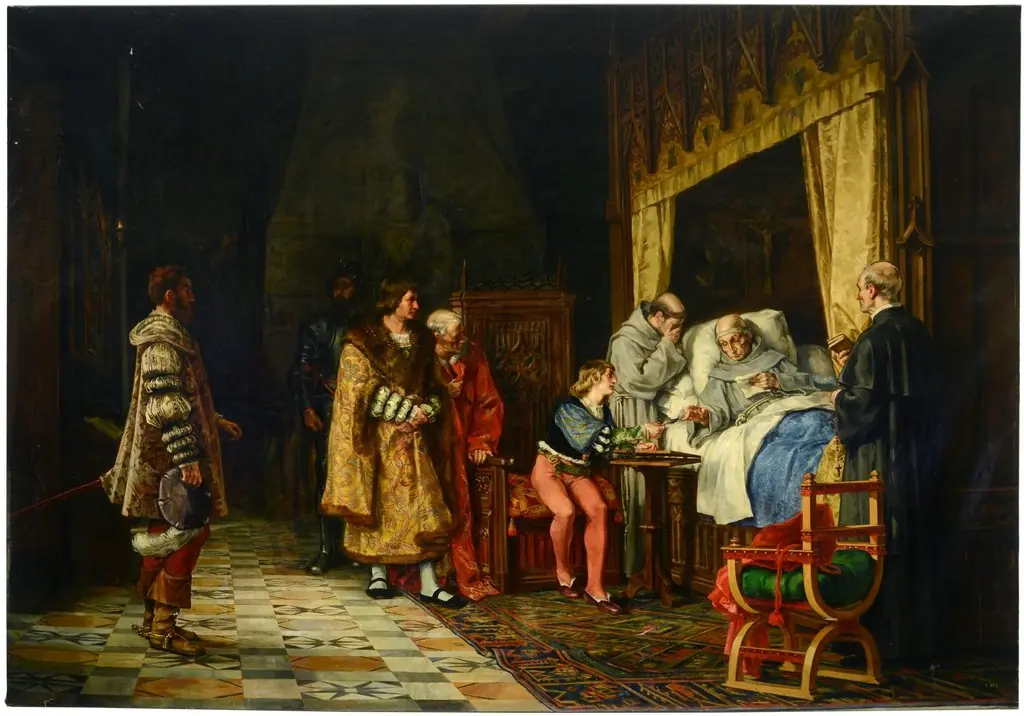 Mensaje de Carlos I al cardenal Cisneros (1517)
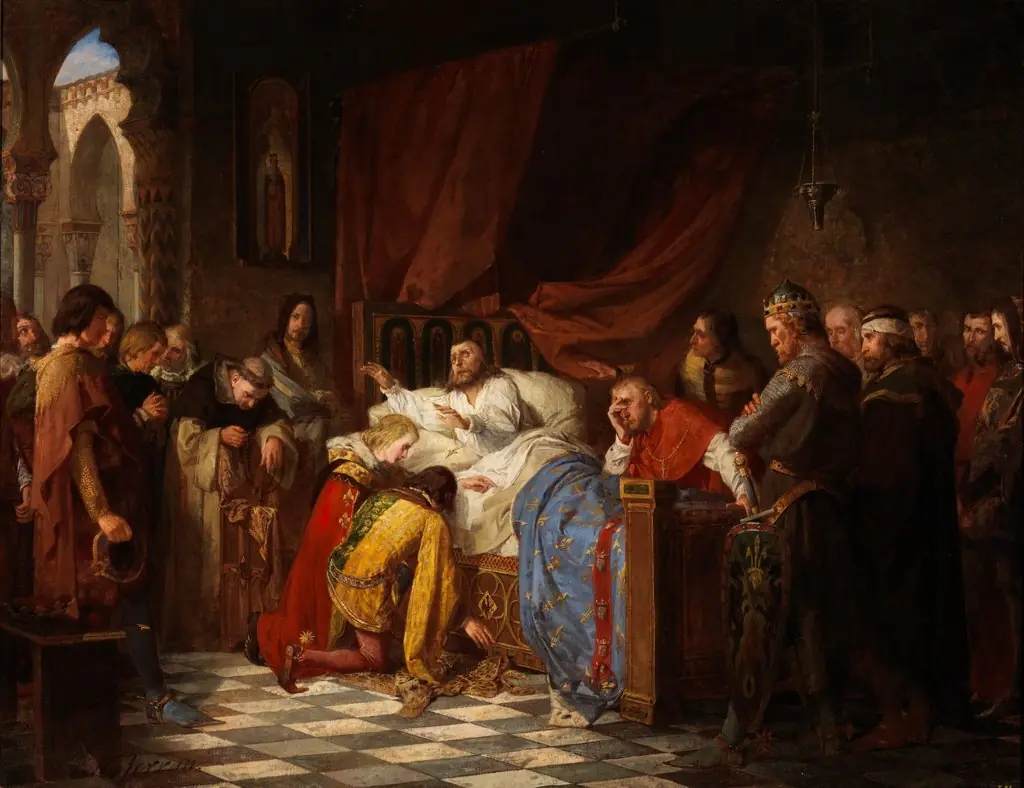 Felipe III de Francia moribundo bendiciendo a sus hijos
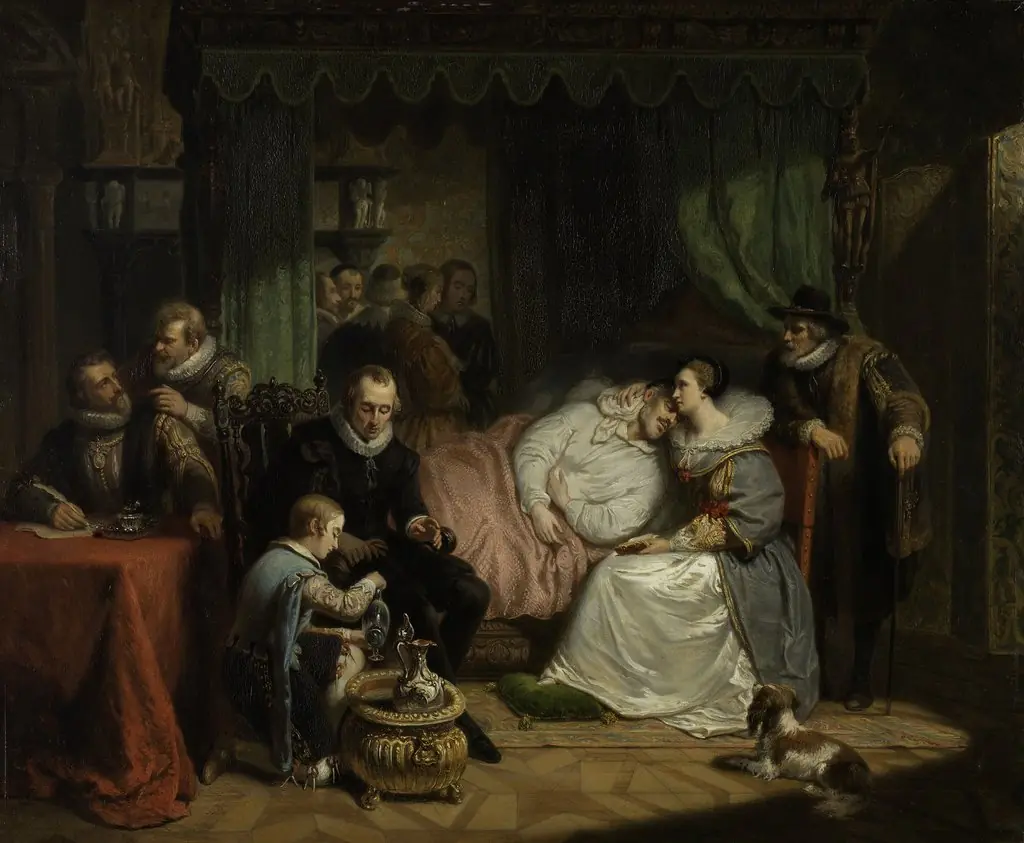 Prince William I after the failed Assassination Attempt by Jean Jaurequi in 1582, Nursed by Charlotte de Bourbon
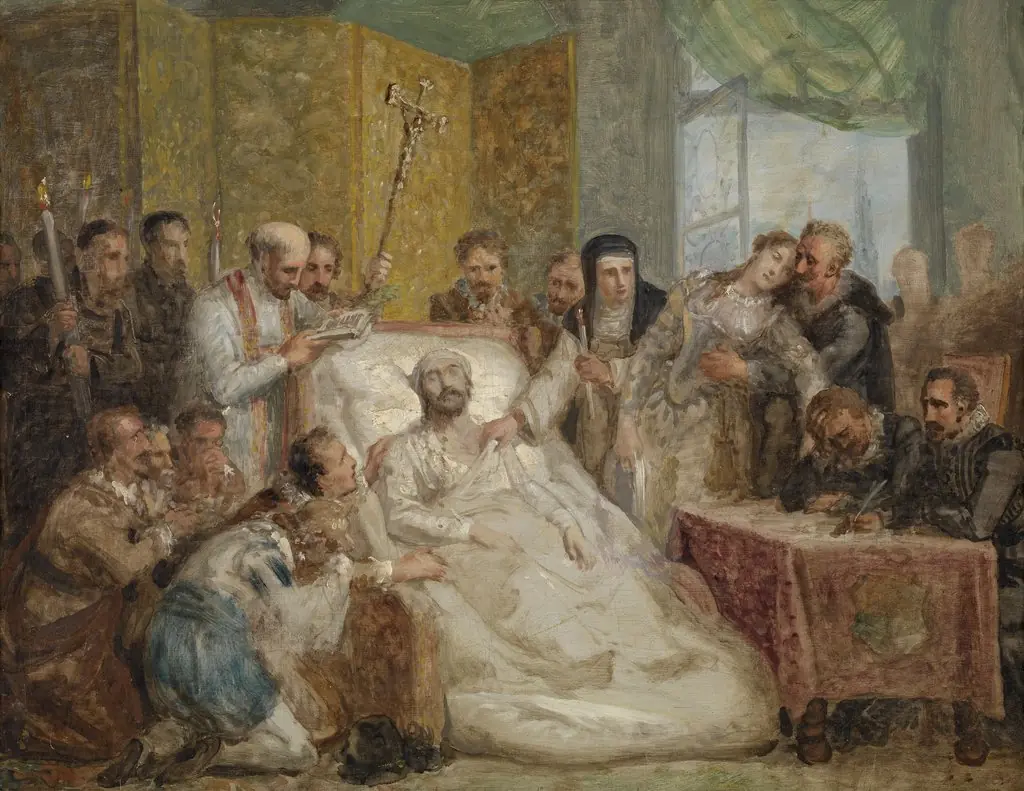 The Death of Peter Paul Rubens