Artwork
Untitled
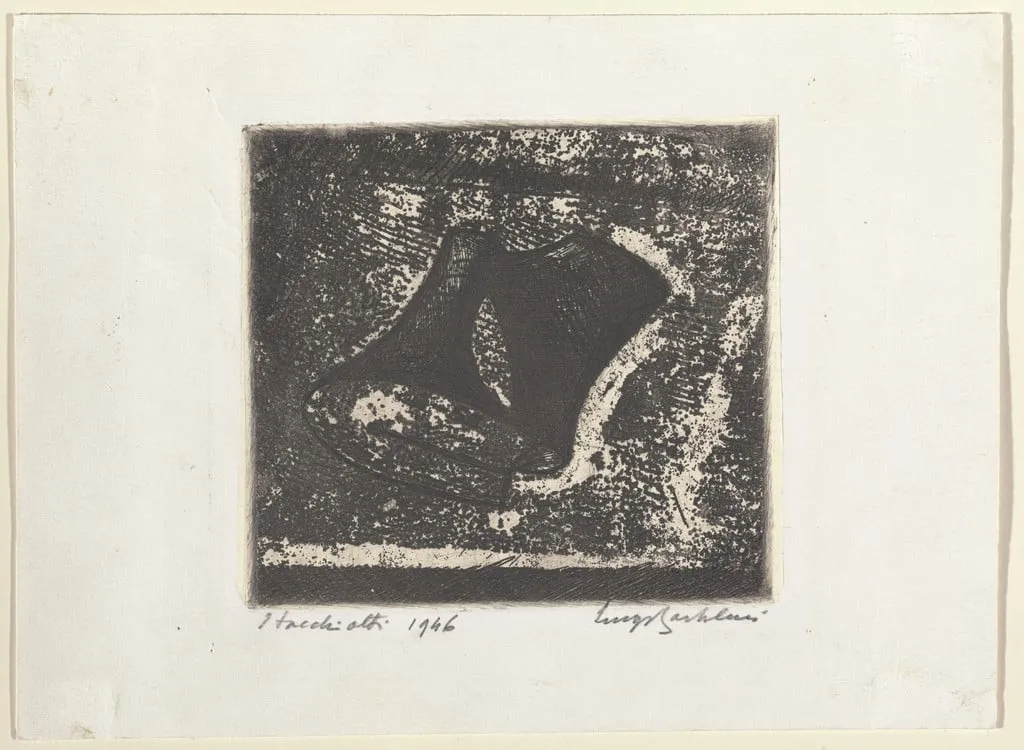
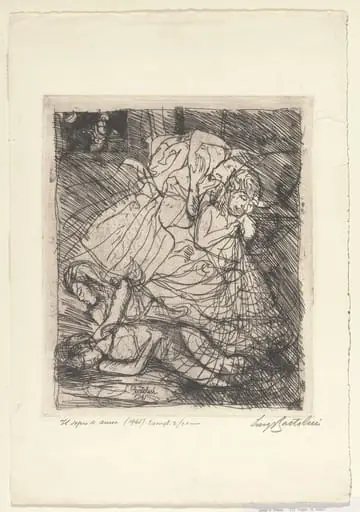
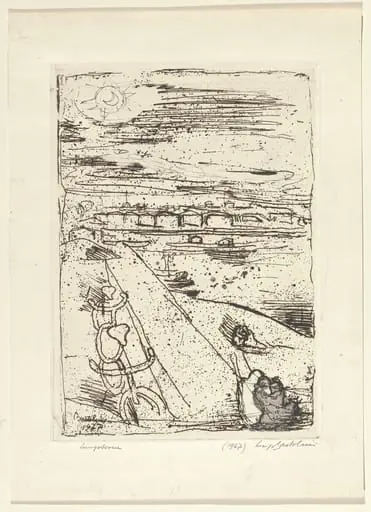
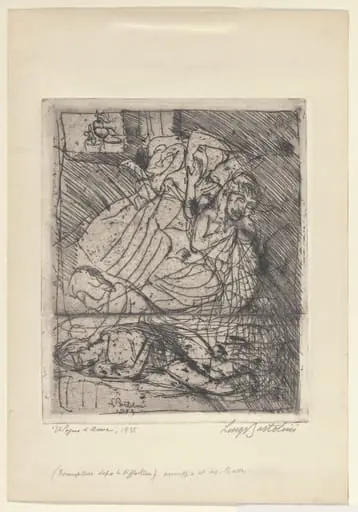
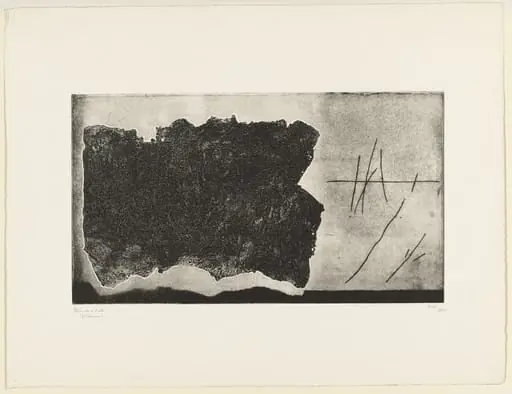
Untitled is an ink print by Luigi Bartolini. It dates from 1946 and is held in the collection of the Museum of Modern Art.
About this work
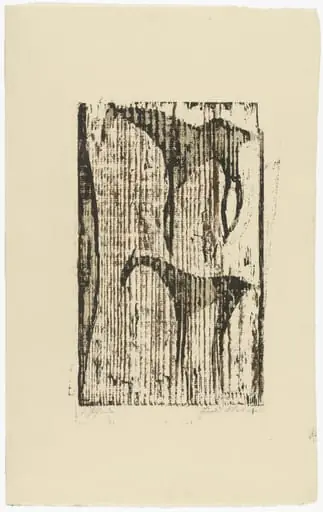
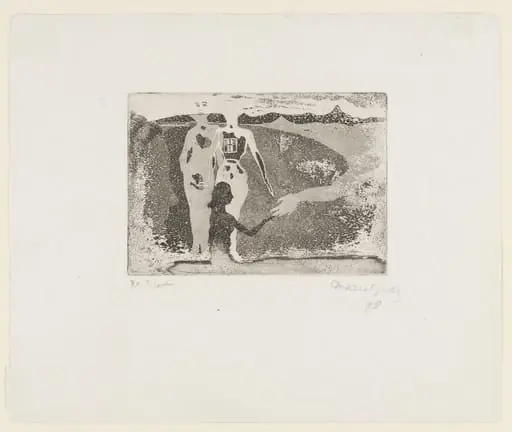
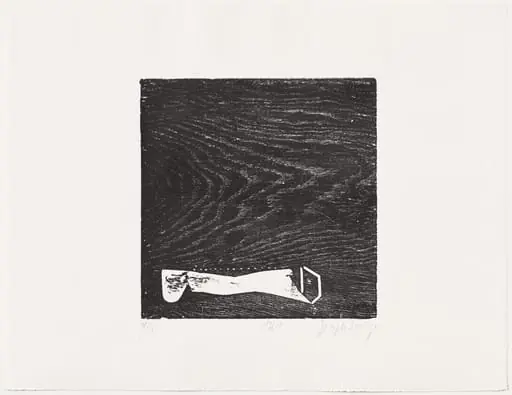
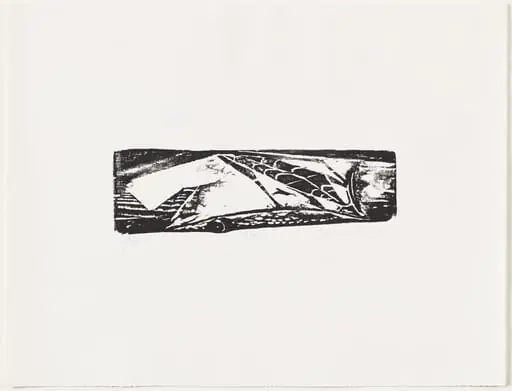
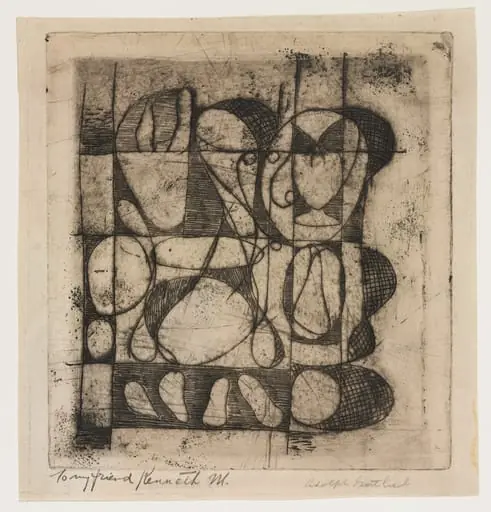
This print shows a dark, swirling shape in the center against a rough, textured background.
This print shows a dark, swirling shape in the center against a rough, textured background. The lines are uneven, almost like scratches, with some lighter spots breaking through. The edges feel messy, not clean or precise.
The artist signed it in the corner, and the year "1946" is written below the image. It’s made using a printmaking method that leaves marks like these.
Want to know more? Try looking up etching.
Overview
Created in 1946, this untitled etching by Luigi Bartolini is one of several graphic works he produced during the postwar period. Though primarily recognized for his literary output, Bartolini maintained a parallel practice in printmaking. The piece is held in the collection of The Museum of Modern Art and reflects his engagement with the visual arts beyond writing. His signature and the date are inscribed directly on the plate, affirming its authorship and temporal context.
Subject & Meaning
The composition resists clear narrative identification. A dense, abstract form dominates the center, surrounded by agitated, irregular lines that suggest movement or erosion rather than representation. The lack of figurative elements invites interpretation as an emotional or psychological state, possibly reflecting the uncertainty of Italy’s postwar climate. The work avoids symbolism, instead conveying mood through texture and gesture.
Technique & Style
Bartolini employed traditional etching methods, using acid to bite lines into a metal plate. The resulting print reveals uneven, scratch-like marks and areas of uneven ink distribution, emphasizing tactile immediacy over refinement. The rough texture and deliberate irregularity of the lines distinguish this work from more polished graphic traditions, aligning it with expressive, postwar printmaking practices that valued rawness over precision.
History & Provenance
The etching was made in 1946, shortly after the end of World War II, during a period when Bartolini was actively involved in both literary and visual arts. It entered the collection of The Museum of Modern Art at some point after its creation, likely through acquisition or donation. Its inclusion in a major institution underscores its recognition within mid-century printmaking circles, though it remains less documented than his literary works.
Context
Bartolini’s engagement with printmaking coincided with a broader European revival of graphic arts after the war, as artists sought accessible, personal modes of expression. His participation in the 1948 Olympic art competition—where visual art was still an official category—places him within a generation of multidisciplinary creators navigating cultural reconstruction. This etching reflects a quiet, introspective response to a fractured society.
Legacy
While Bartolini’s literary legacy endures, his graphic works remain relatively understudied. This etching exemplifies his willingness to explore non-literary forms of expression, contributing to a quieter but significant strand of postwar Italian printmaking. Its presence in MoMA’s collection ensures its preservation, offering a tangible link between his writing and visual practice, though it has not entered mainstream art historical discourse.
Artist & collection
Artist
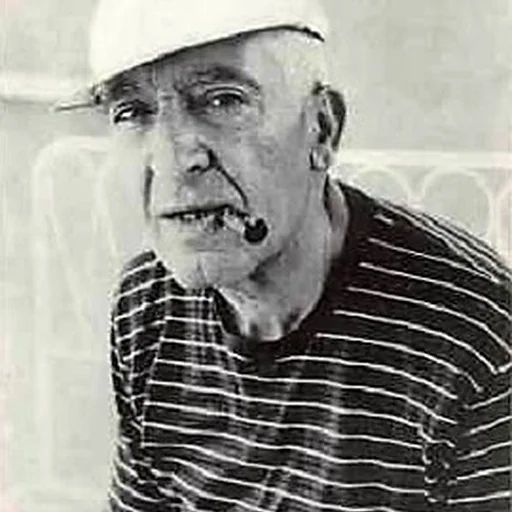
Luigi Bartolini (8 February 1892 – 16 May 1963) was an Italian painter, writer, and poet.