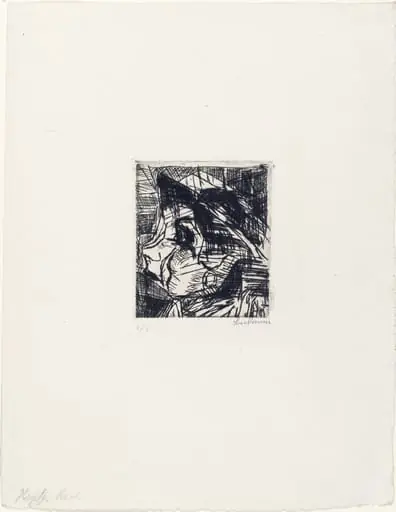
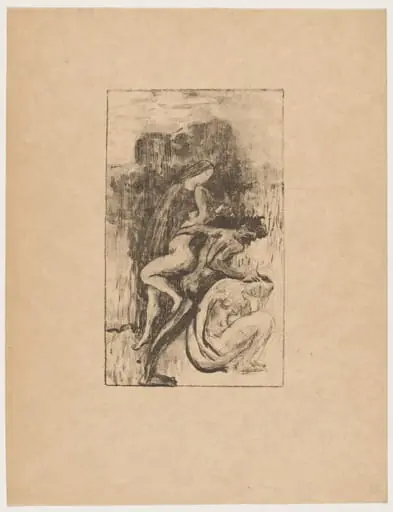
Artwork
Untitled
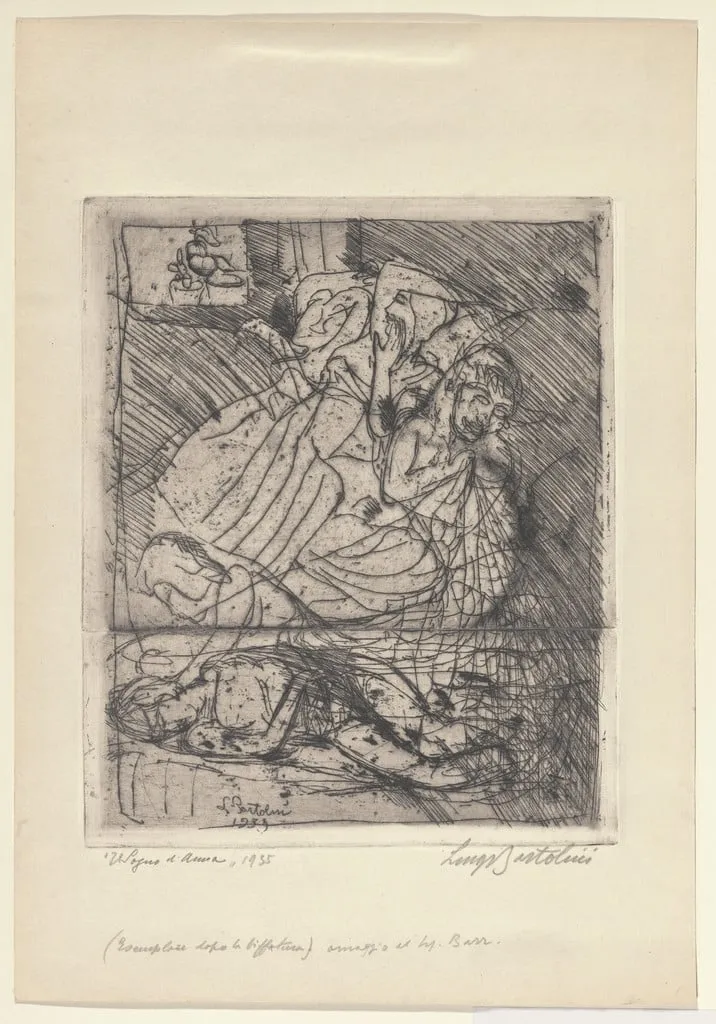
Untitled is an ink print by Luigi Bartolini. It dates from 1935 and is held in the collection of the Museum of Modern Art.
About this work
Overview
Bartolini, an Italian artist active in the early 20th century, worked across literature and visual art.
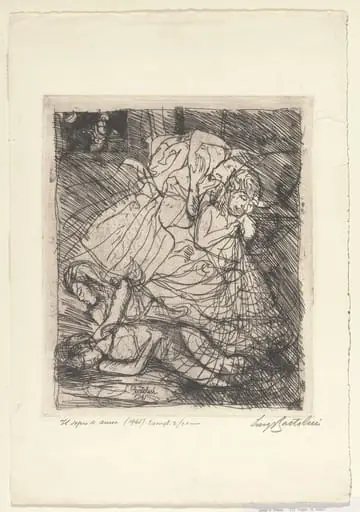
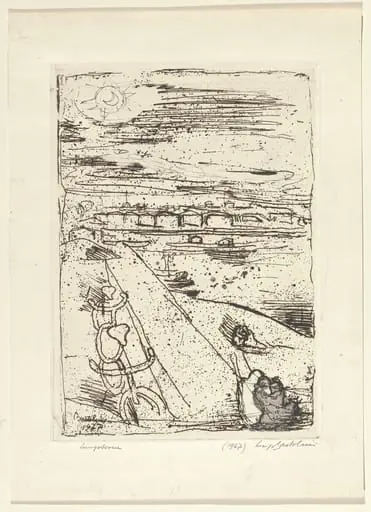
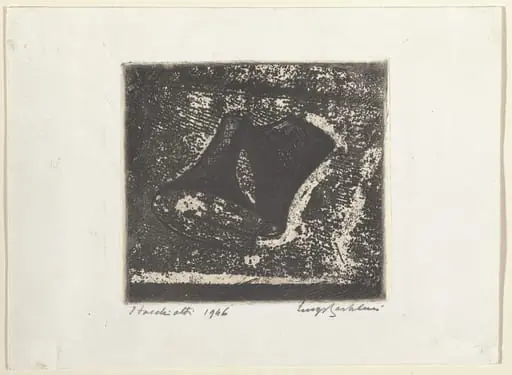
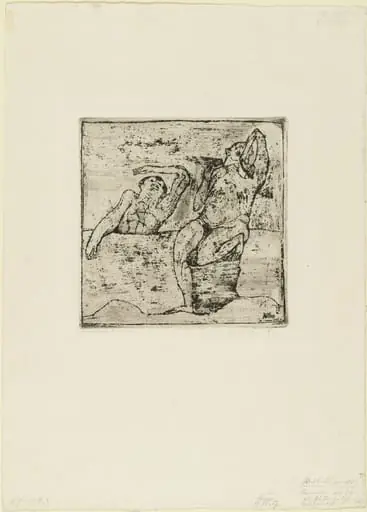
Created in 1935, this etching by Luigi Bartolini is part of The Museum of Modern Art’s collection. Bartolini, an Italian artist active in the early 20th century, worked across literature and visual art. Though best known for his writing, including the novel that inspired the film *Bicycle Thieves*, he produced a body of graphic work characterized by expressive line and emotional intensity. This print exemplifies his engagement with printmaking as a medium for psychological expression.
Subject & Meaning
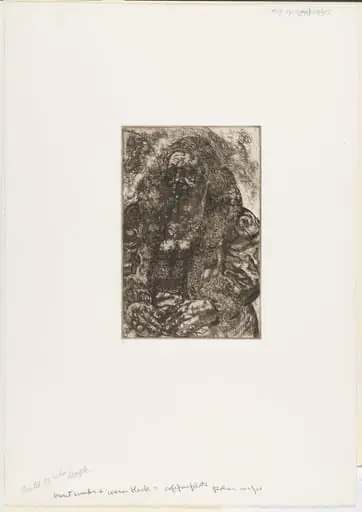
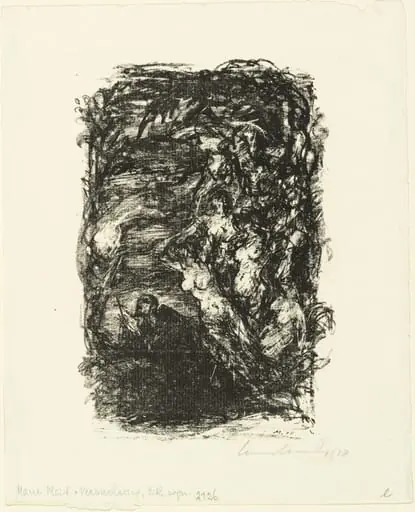
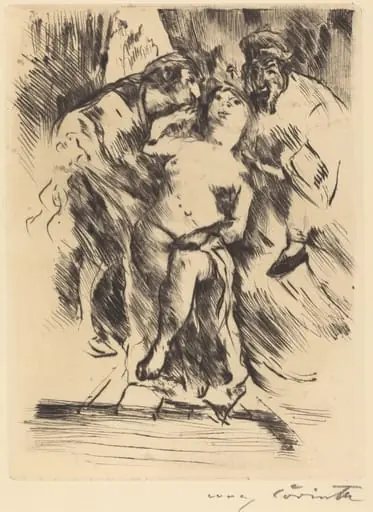
The composition depicts three figures locked in a disordered tangle, their bodies contorted and overlapping. One kneels sharply, while the others sprawl on the ground, limbs entwined. Their faces are indistinct, suggesting anguish or collapse rather than individual identity. The chaotic grouping evokes physical struggle or emotional distress, possibly reflecting the tensions of interwar Italy. The absence of clear narrative invites interpretation rooted in mood rather than story.
Technique & Style
Bartolini employed traditional etching methods, using acid to bite lines into a metal plate, allowing ink to pool in the grooves and create dense, textured marks. The surface is dominated by aggressive, slashing strokes that suggest motion or turbulence. The figures are rendered with sharp, angular contours, contrasting with the blurred, smudged quality of their faces. This combination of precision and chaos underscores the emotional volatility of the scene.
History & Provenance
The etching was made in 1935 during a period when Bartolini was actively involved in both literary and visual circles in Italy. It entered The Museum of Modern Art’s collection at some point after its creation, likely through acquisition or donation. While specific details of its early ownership are not widely documented, its inclusion in MoMA’s holdings signals recognition of its significance within the broader context of 20th-century graphic art.
Context
In the mid-1930s, Italy was under Fascist rule, and many artists responded to political pressure through abstract or emotionally charged work. Bartolini, though not overtly political, used his art to convey inner turmoil. His etchings often diverged from official aesthetic norms, favoring raw expression over idealized form. This work aligns with a broader European trend of using printmaking to explore psychological states during a time of social instability.
Legacy
Bartolini’s graphic work, though less known than his literary output, contributed to the revival of expressive printmaking in mid-century Italy. His use of etching to convey psychological depth influenced later generations of artists interested in the emotional potential of line and texture. While not widely exhibited, this etching remains a quiet but potent example of how printmaking could serve as a vehicle for personal and existential expression beyond mainstream narratives.
Artist & collection
Artist
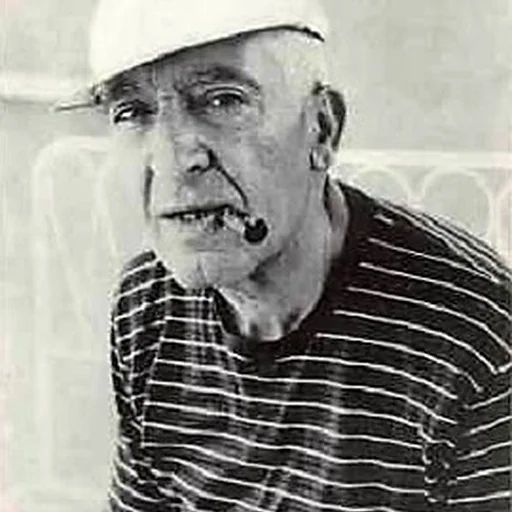
Luigi Bartolini (8 February 1892 – 16 May 1963) was an Italian painter, writer, and poet.