Artwork
The Virgin and Child
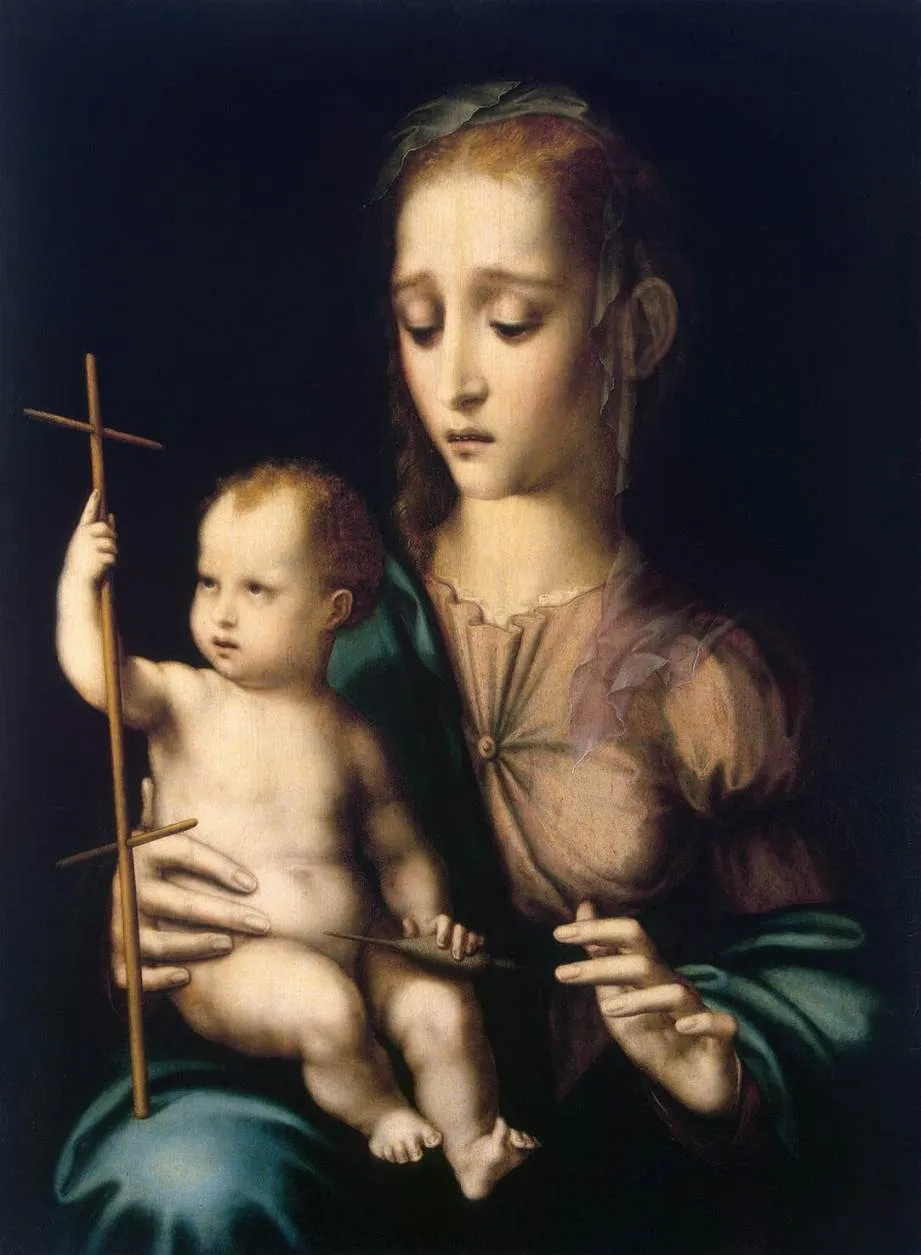
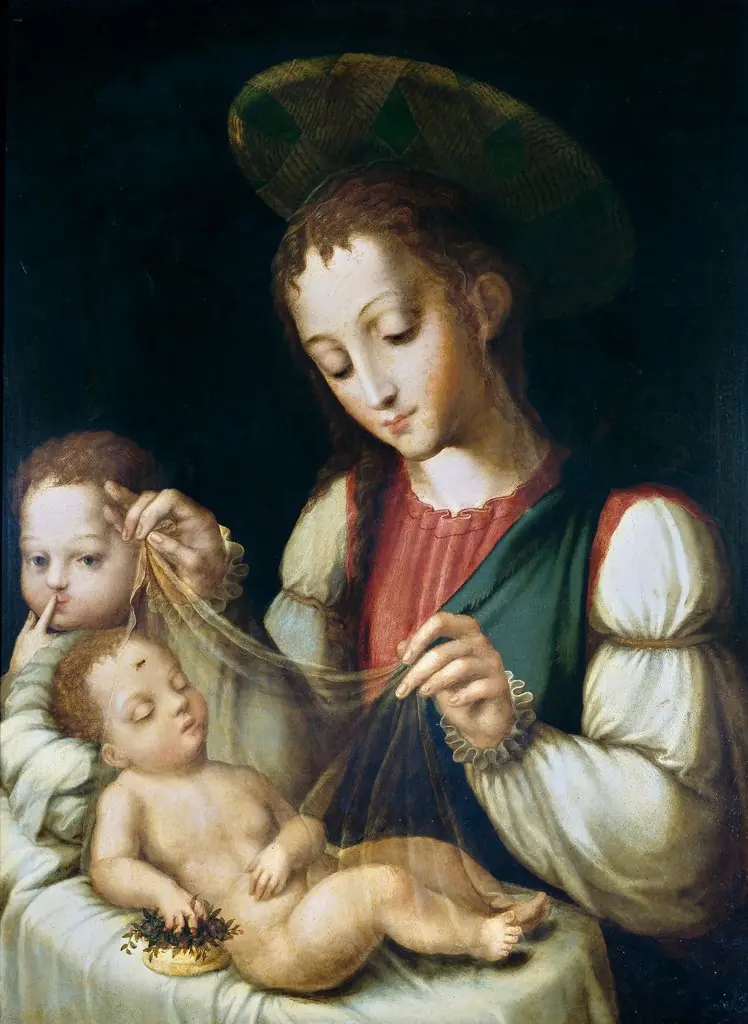
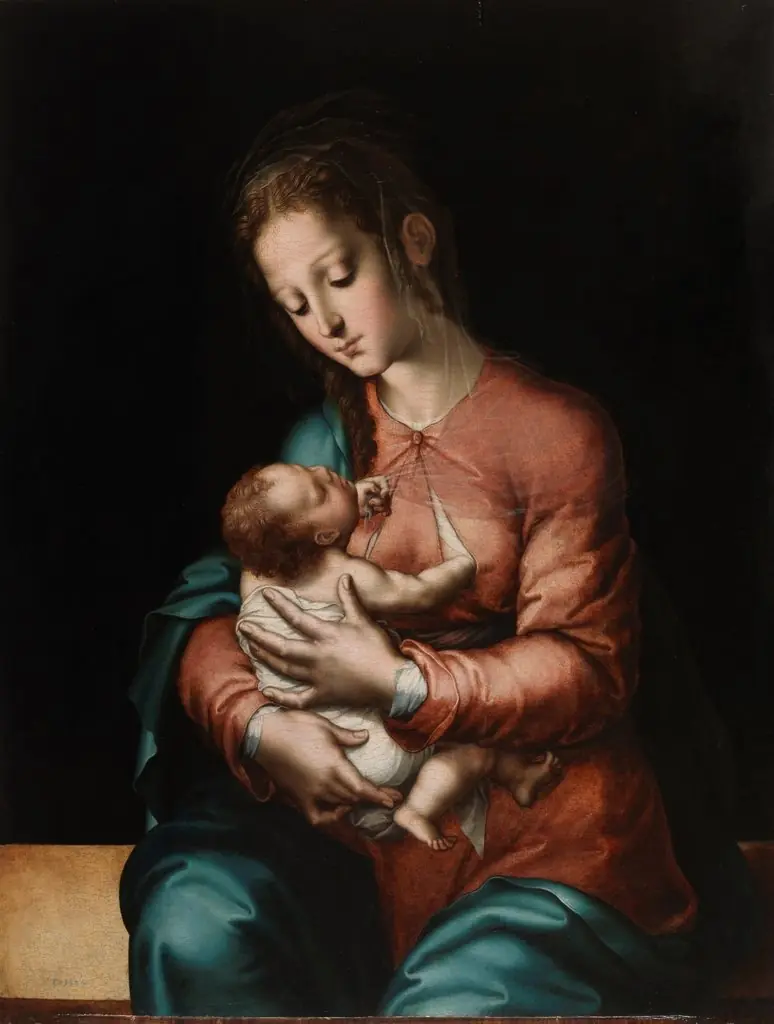
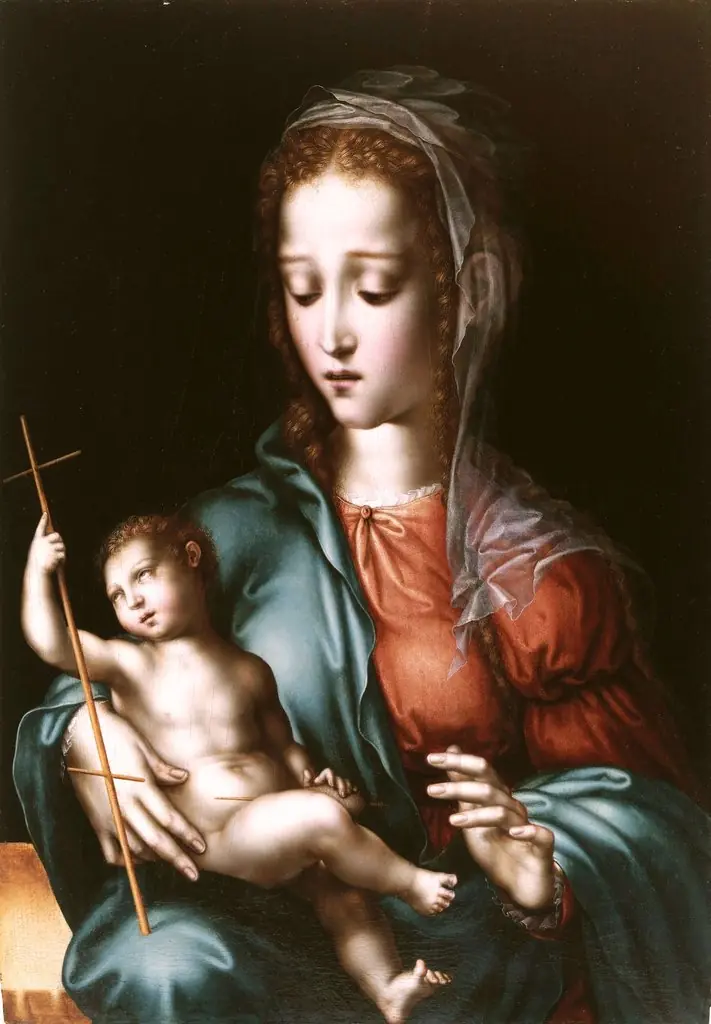
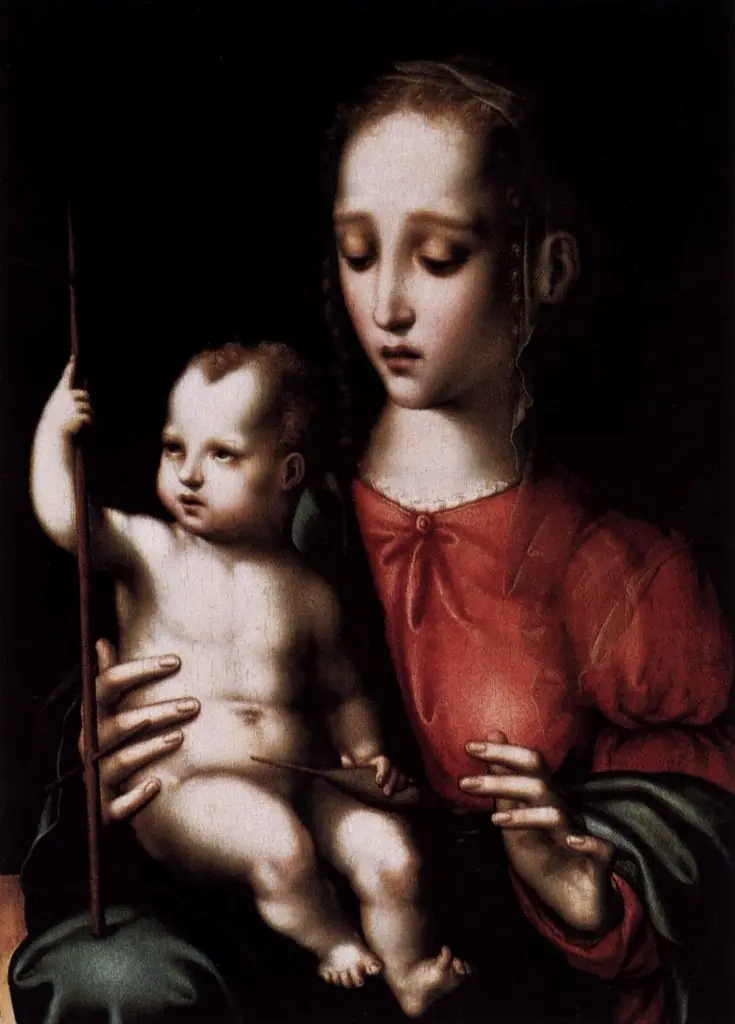
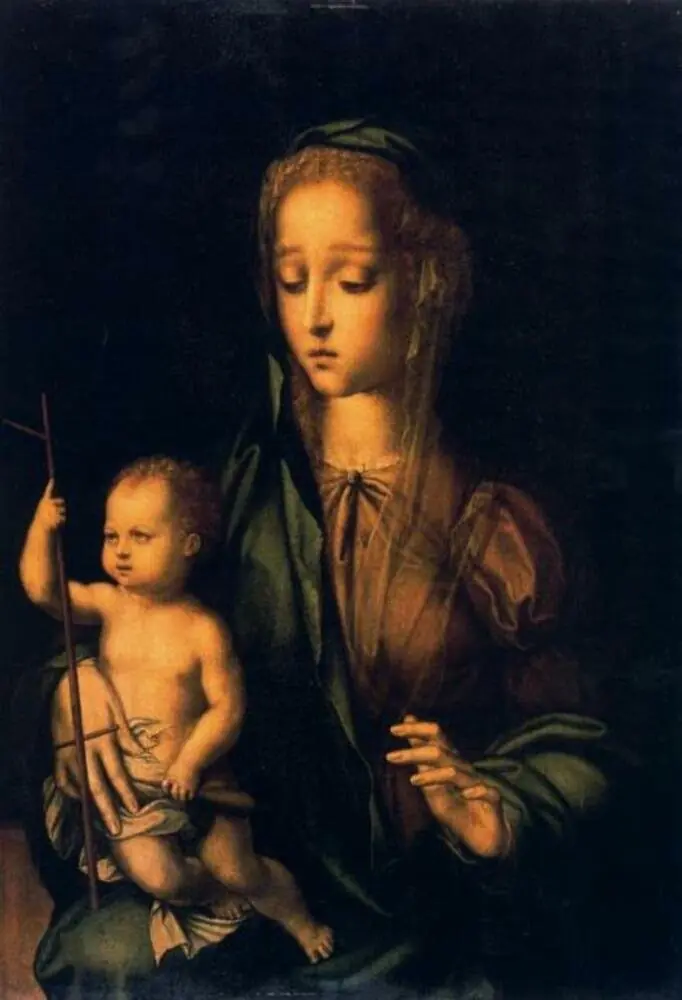
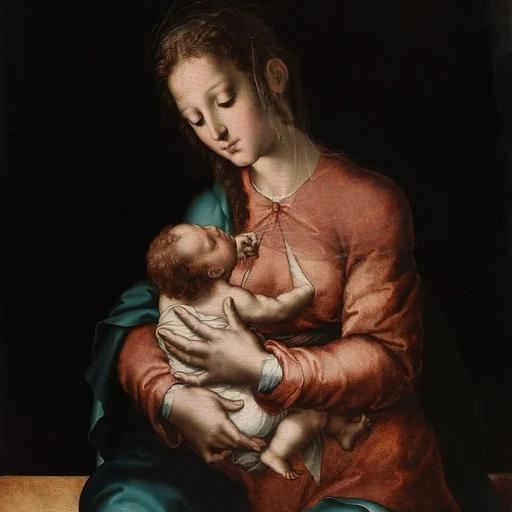
The Virgin and Child is an oil painting by the Mannerist artist Luis de Morales. It dates from 1570 and is held in the collection of the Hermitage Museum.
About this work
Overview
Created in 1570, this oil painting presents a tender encounter between a mother and child, rendered in the mannerist idiom of late Renaissance Spain. The composition centers on a serene woman cradling an infant who reaches toward a modest wooden cross she holds aloft, set against a deep, shadowed backdrop that isolates the figures.
Subject & Meaning
The work portrays the Virgin Mary with the Christ Child, emphasizing both maternal intimacy and the nascent awareness of the child's future sacrifice. The child's curious gesture toward the cross underscores the theological theme of redemption, while Mary's calm demeanor conveys a contemplative acceptance of her role within Christian narrative.
Technique & Style
Employing chiaroscuro, the artist models the figures with subtle gradations of light and dark, giving the skin a luminous quality and the drapery a palpable weight. The delicate folds of the garments and the cool green‑blue trim of Mary's robe reveal a refined handling of color, while the overall composition reflects mannerist elongation and elegant poses.
History & Provenance
The painting is attributed to Luis de Morales, a Spanish painter often called "El Divino" for the devotional intensity of his oeuvre. Influenced by Raphael and the Lombard circle of Leonardo, Morales integrated Italianate ideals into his Spanish practice. The canvas now belongs to the State Hermitage Museum, where it forms part of the institution’s collection of 16th‑century religious art.
Artist & collection
Artist
Luis de Morales (1509 – 9 May 1586) was a Spanish painter active during the Spanish Renaissance in the 16th century.