Artwork
Still Life with Breams, Oranges, Garlic, Condiments, and Kitchen Utensils
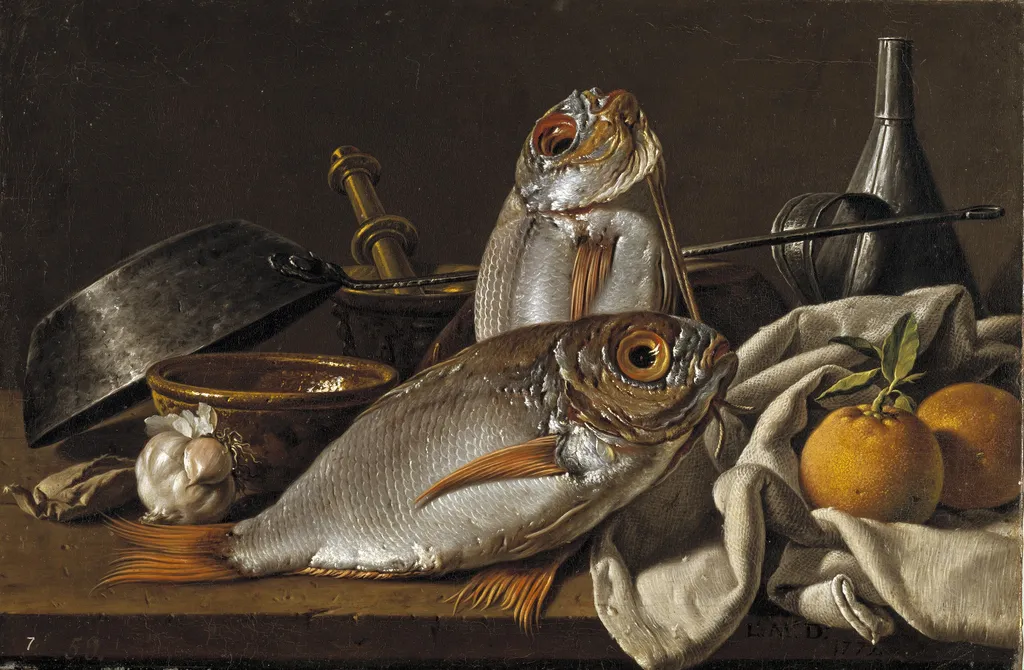
Still Life with Breams, Oranges, Garlic, Condiments, and Kitchen Utensils is an oil painting by the Rococo painting artist Luis Egidio Meléndez. It dates from 1772 and is held in the collection of the Museo del Prado.
About this work
Overview
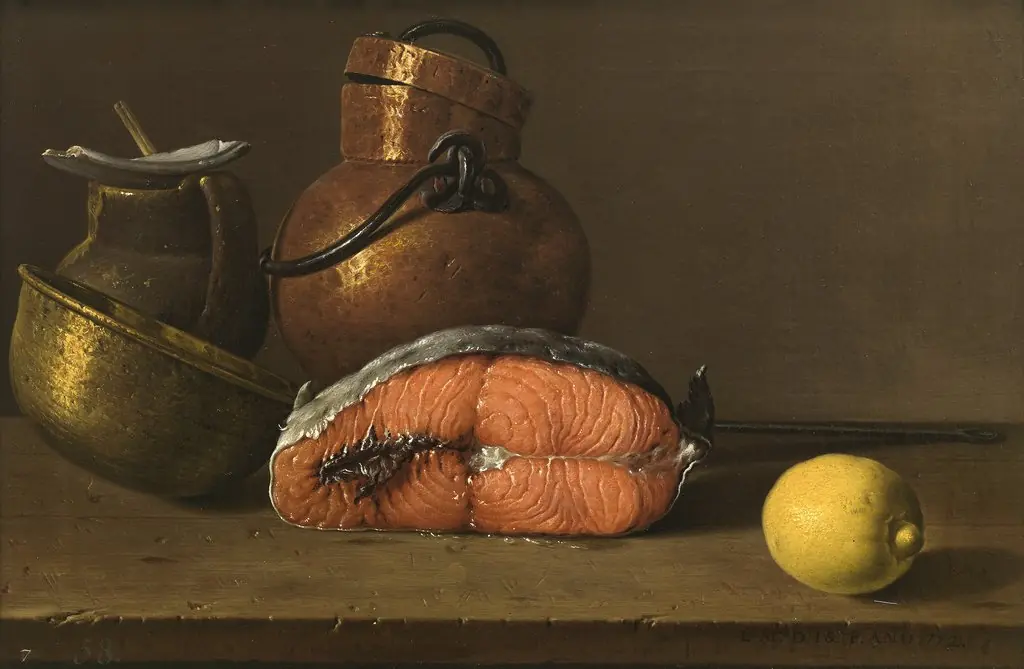
Luis Egidio Meléndez’s 1772 oil painting, *Still Life with Breams, Oranges, Garlic, Condiments, and Kitchen Utensils*, presents a carefully arranged group of kitchen objects on a dark surface. The composition centers on two glistening bream, bright oranges, and cloves of garlic, accompanied by a metal pitcher, a bowl and a cloth. The work is part of the Prado Museum’s collection in Madrid.
Subject & Meaning
The tableau gathers ordinary culinary items—a traditional lebrillo earthenware basin, fresh fish, fruit, and kitchen tools—to celebrate the material culture of 18th‑century Spain. By rendering these modest objects with meticulous detail, Meléndez elevates everyday sustenance to a subject worthy of artistic contemplation, reflecting a quiet reverence for domestic abundance.
Technique & Style
Meléndez employs a restrained Rococo sensibility, using oil to achieve a luminous surface that captures the wet sheen of the fish scales and the glossy skins of the oranges. A strong chiaroscuro contrast between the dark tabletop and the illuminated objects enhances volume and texture, while subtle brushwork conveys the tactile qualities of metal, ceramic, and fabric.
History & Provenance
Created during a period when still‑life painting was often considered a lesser genre, the work survived in private collections before entering the Museo del Prado. Its acquisition by the national museum underscores a later reevaluation of Meléndez’s skill and the significance of Spanish still‑life in the broader European art narrative.
Context
Meléndez worked in the late Baroque and early Rococo era, a time when Spanish art was shifting toward greater naturalism. His focus on precise light effects and material fidelity aligns with contemporary interests in scientific observation, while the inclusion of a lebrillo—a familiar household vessel—anchors the painting firmly in Spanish cultural practice.
Own this work as a print
Artist & collection
Artist
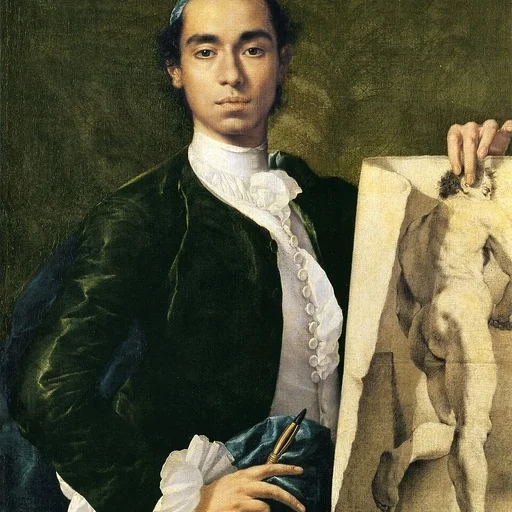
Luis Egidio Meléndez (1716–1780) was a Spanish painter. Though he received little acclaim during his lifetime and died in poverty, Meléndez is recognized as one of the greatest Spanish still-life painters of the 18th…

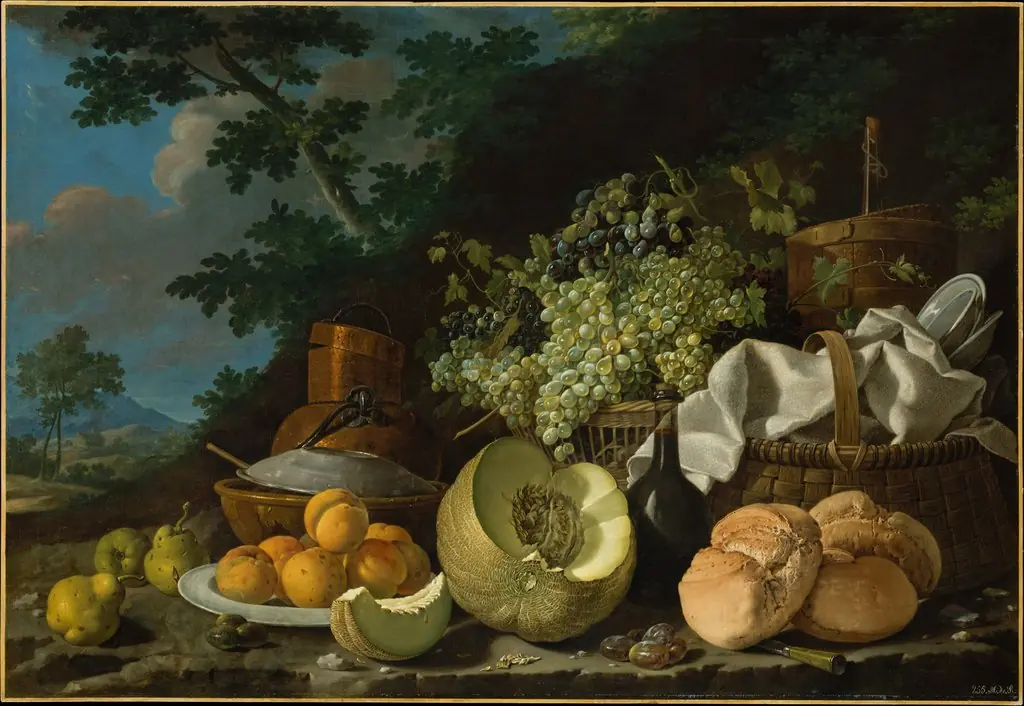 The Afternoon Meal (La Merienda)
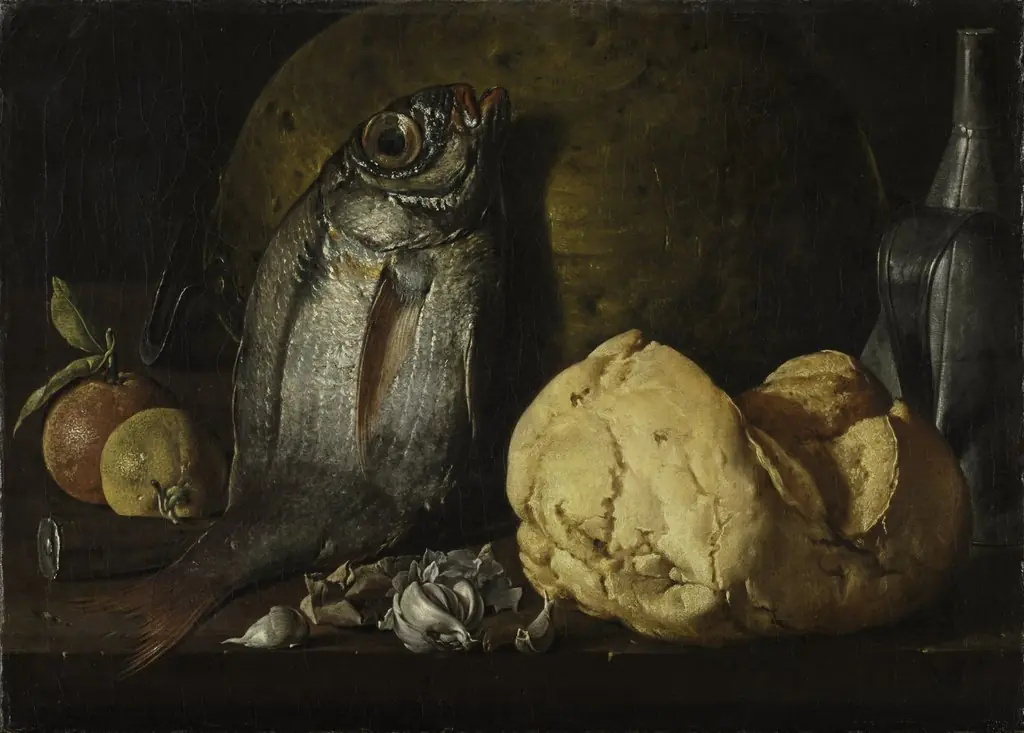 Still Life with Fish, Bread, and Kettle
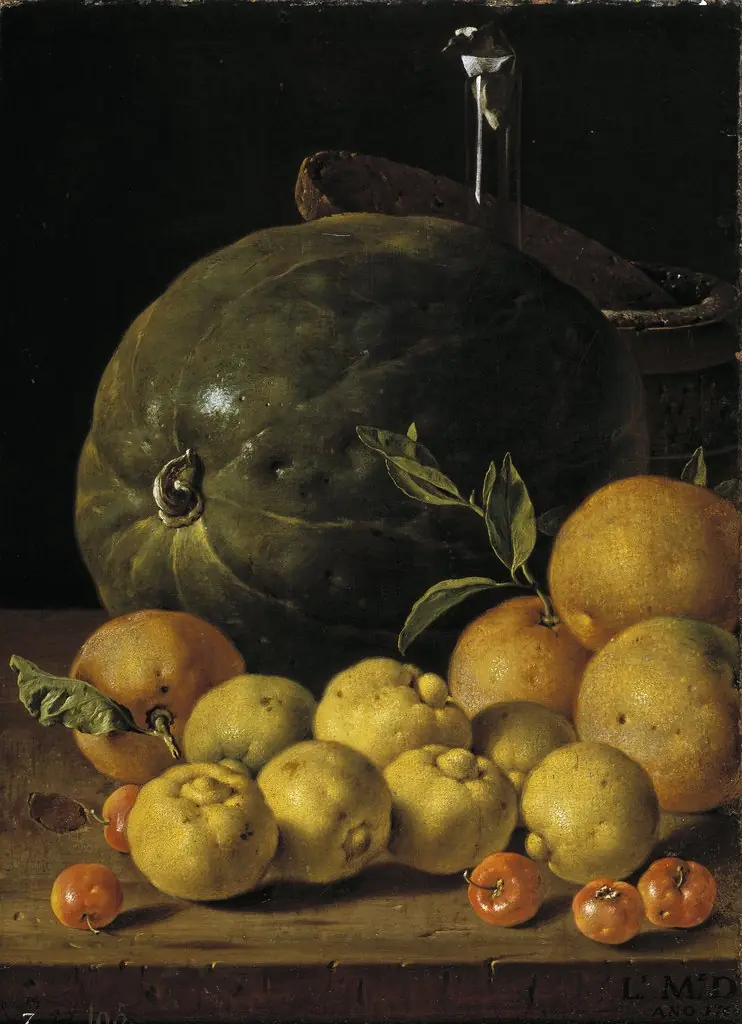 Still Life with Limes Oranges Haw Berries and Watermelon
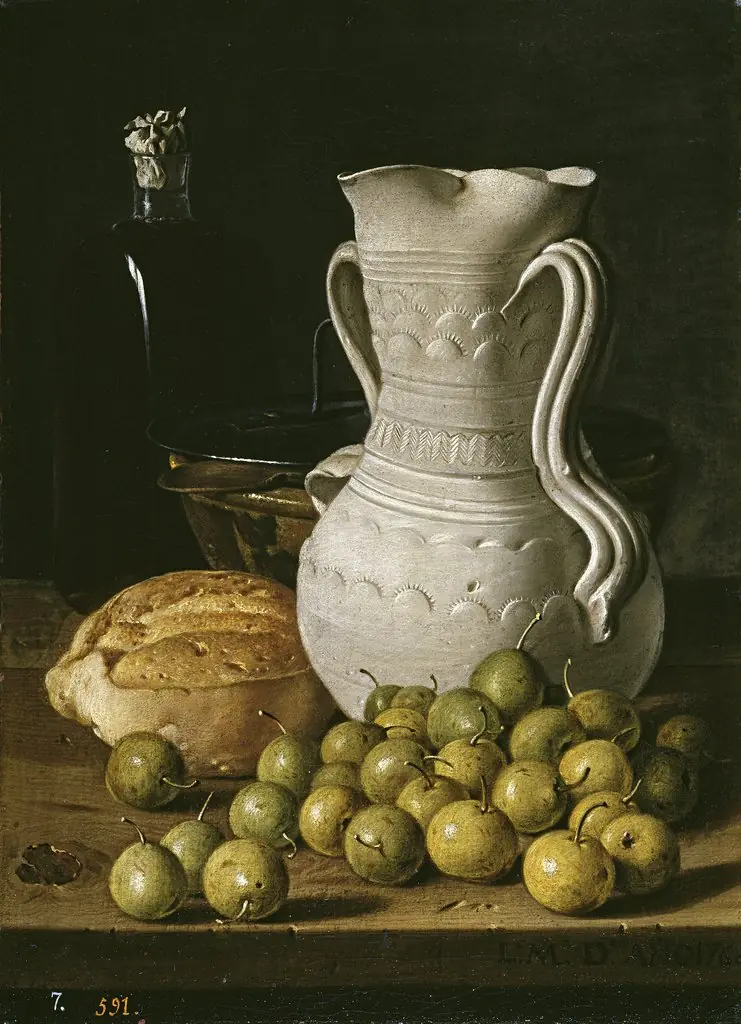 Still Life with Small Pears Bread Flask Bowl and Dry Leaves
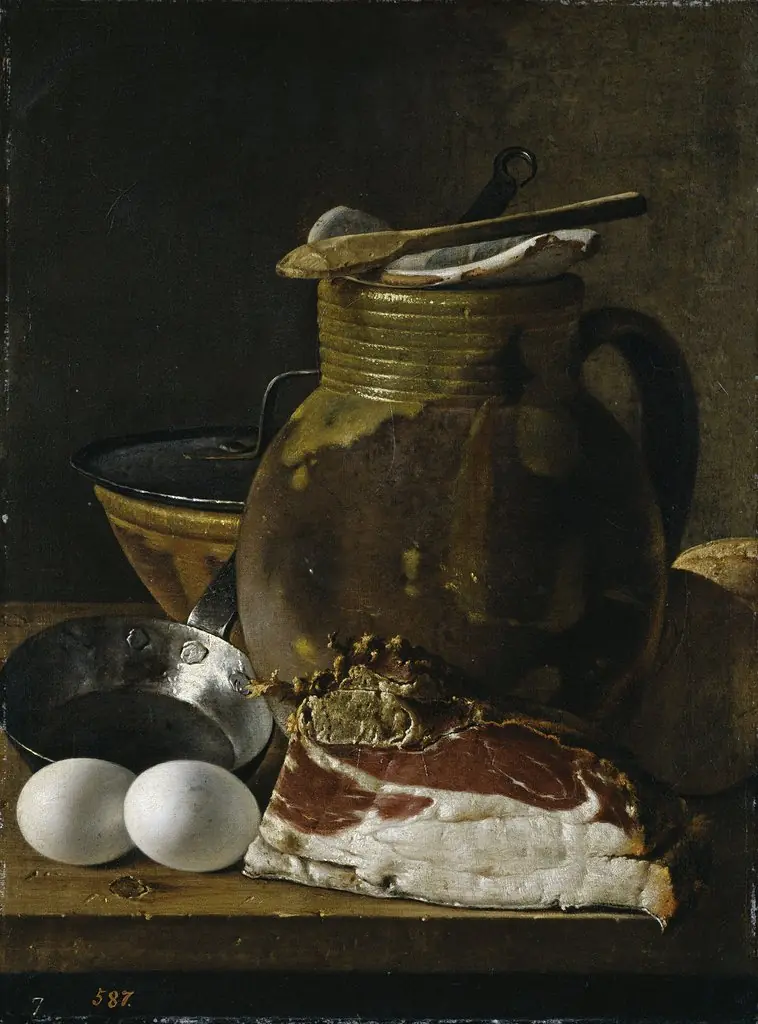 Still Life with Ham Eggs and Vessels
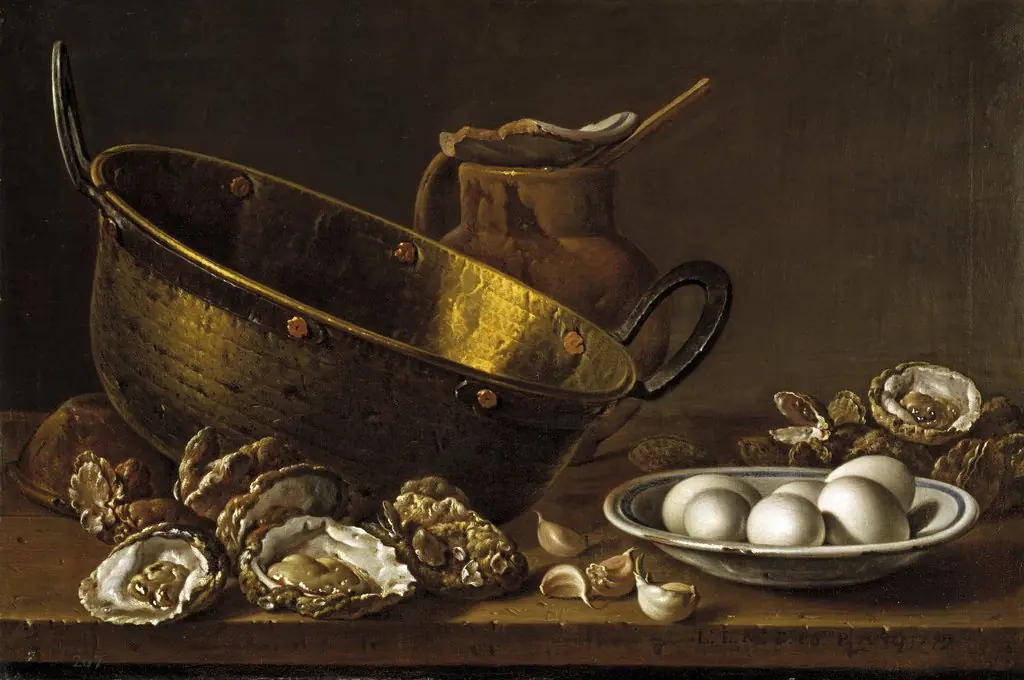 Still Life with Oysters Garlic Eggs Pot and Pan
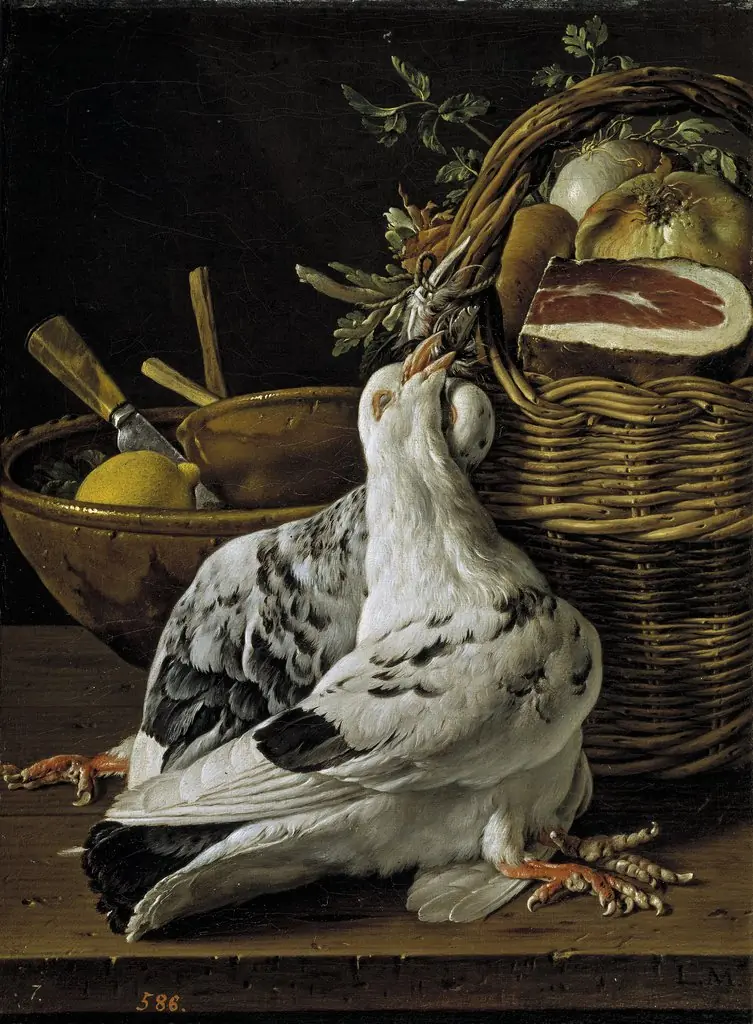 Bodegón con pichones cesta de comida y cuencos
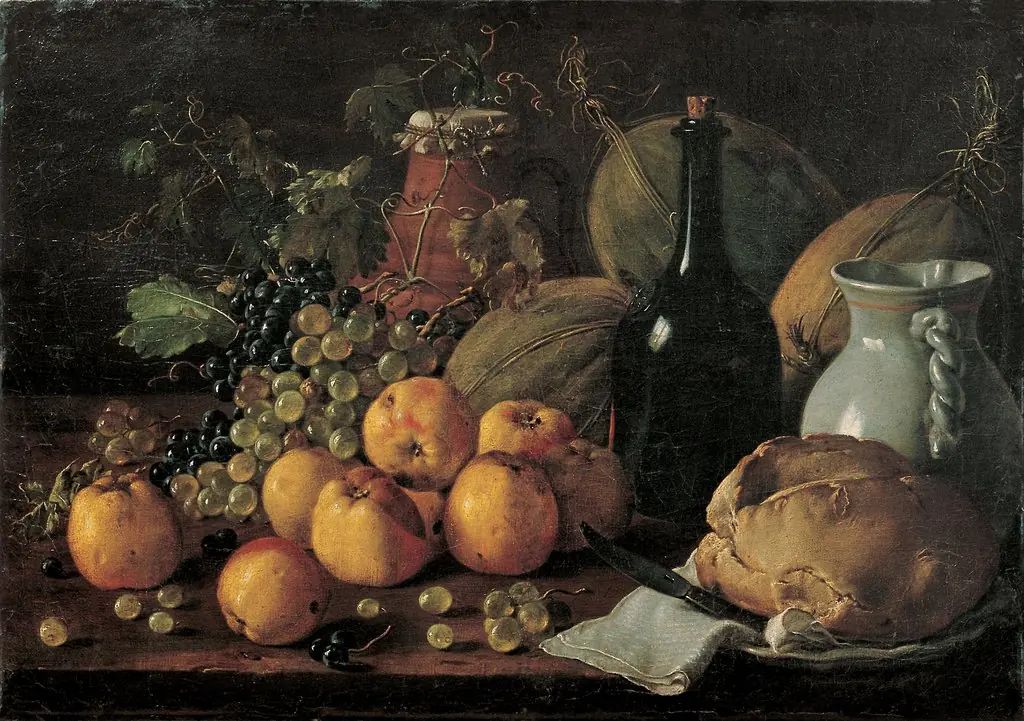 Still Life with Apples, Grapes, Melons, Bread, Jug and Bottle