Artwork
Woodchester Mills
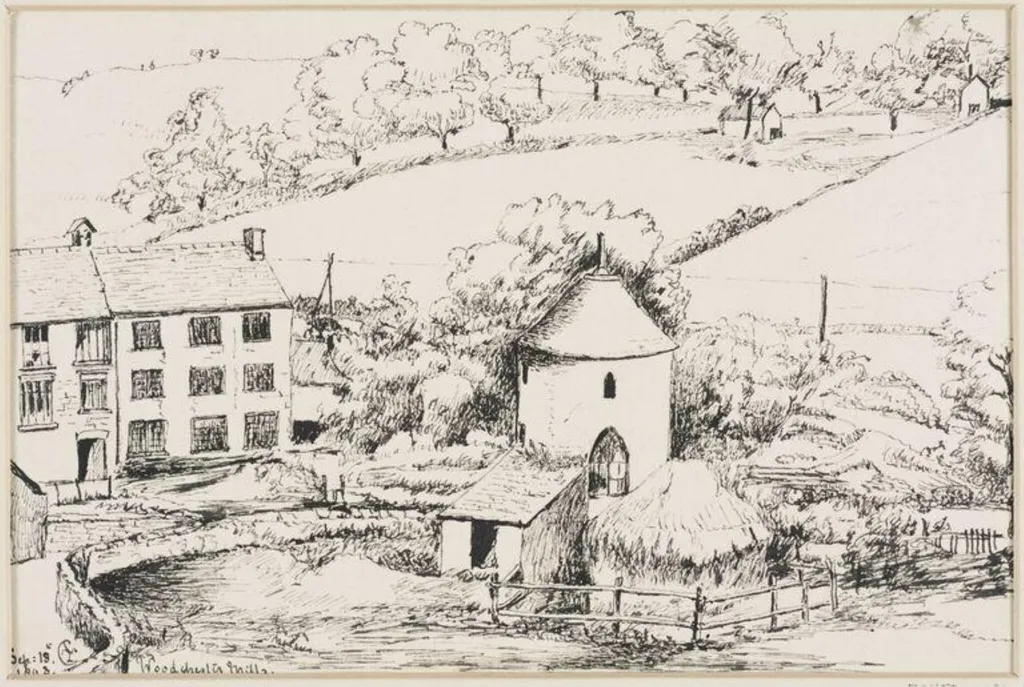
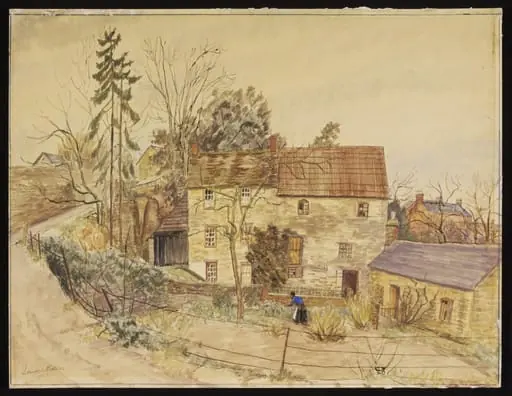
Woodchester Mills is a drawing by the Impressionist artist M. E. Cole. It dates from 1893 and is held in the collection of the Victoria and Albert Museum. Created in 1893, this pen and ink drawing by M.
About this work
Overview
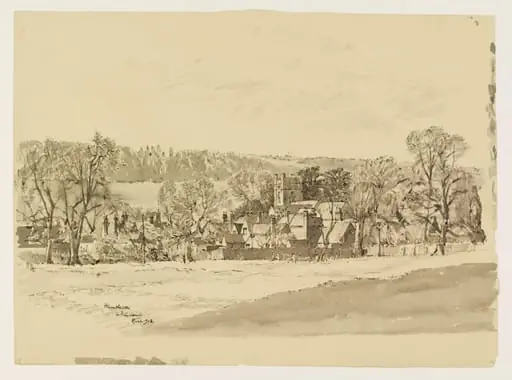
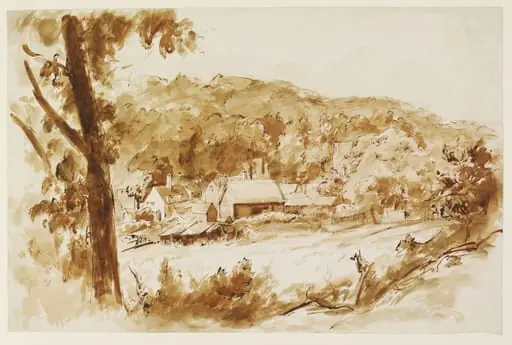
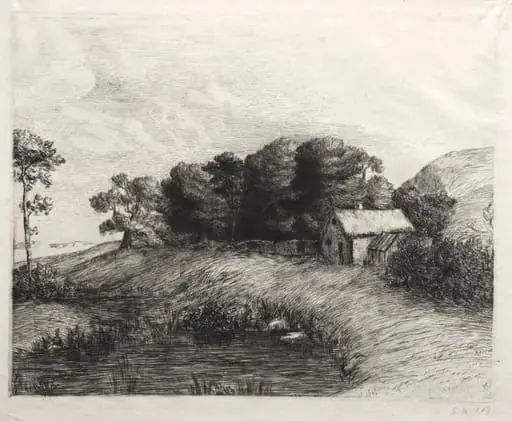
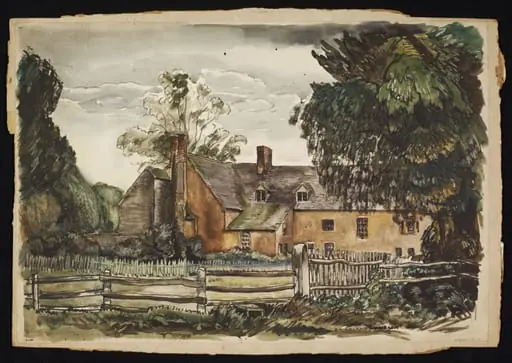
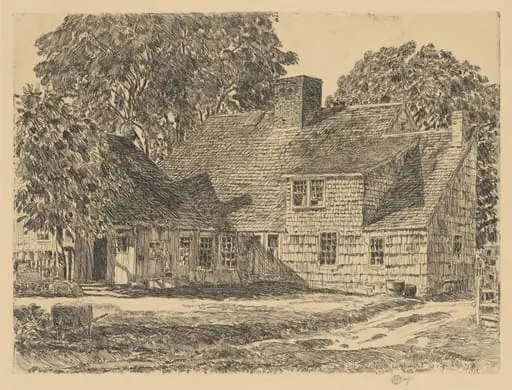
Created in 1893, this pen and ink drawing by M. E. Cole captures a quiet riverside landscape near Woodchester. The work is signed with the artist’s monogram and labeled with its title and date. Rendered in loose, spontaneous strokes, it avoids polished finish in favor of immediate observation, reflecting a personal, unidealized view of the rural environment.
Subject & Meaning
The scene depicts two modest structures beside a stream: a larger, windowed building and a smaller, domed outbuilding near the water’s edge. A low fence follows the bank, while trees rise along a distant slope. These elements suggest daily rural life rather than grand architecture, emphasizing quiet utility and the subtle presence of human activity within nature.
Technique & Style
Cole employed rapid pen lines and controlled cross-hatching to suggest form and shadow without fine detail. The sketchy quality conveys movement and observation in real time, with varying line weight defining texture and depth. The absence of polish reinforces the drawing’s function as a direct record of sight, not a finished composition.
History & Provenance
The drawing remains in private hands since its creation, with no documented public exhibition history. Its survival as a single sheet, intact and inscribed, suggests it was preserved by the artist or a close associate. No records indicate it was part of a larger series or intended for reproduction.
Context
In late 19th-century Britain, amateur artists often documented local landscapes as personal exercises. Cole’s work aligns with this tradition, valuing authenticity over grandeur. Unlike professional illustrators, she focused on unremarkable sites, reflecting a growing interest in the ordinary as worthy of artistic attention.
Legacy
Though not widely known, the drawing contributes to a quiet archive of regional sketches by non-professional artists of the period. Its value lies in its unembellished record of a specific place and moment, offering insight into how ordinary landscapes were perceived and recorded outside academic or commercial frameworks.
Artist & collection
Artist
This artist drew the same water-powered mill near Stroud, England, for decades—empty at dawn, humming at dusk, always changing with the light.