Artwork
The last days of Napoleon 1st
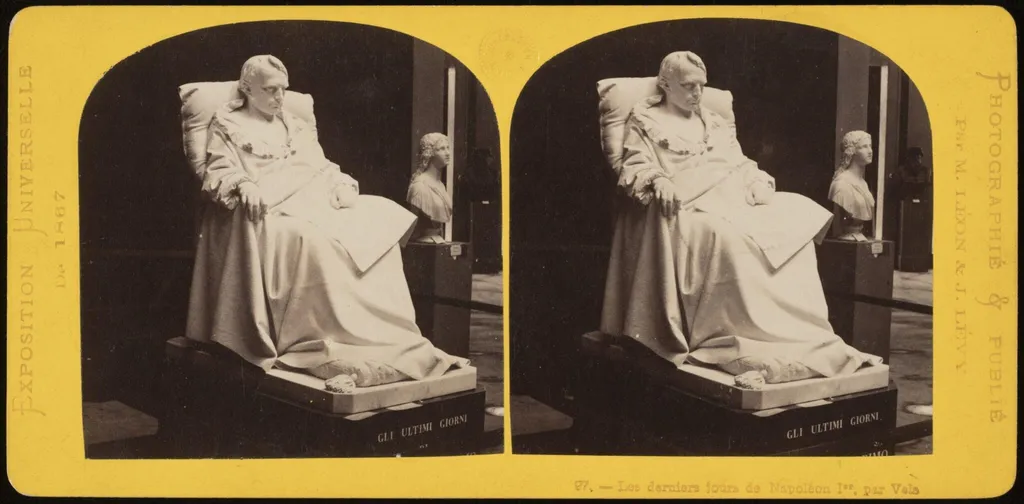
The last days of Napoleon 1st is a photographic photography by the Impressionist artist M. Leon and J. Levy. It dates from 1867 and is held in the collection of the Victoria and Albert Museum.
About this work
Overview
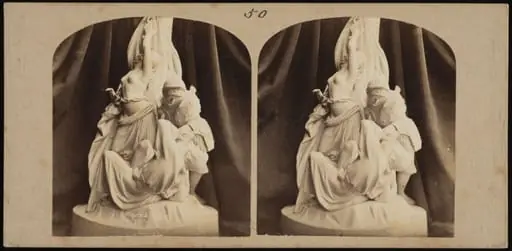
The image captures the statue in situ, framed by two indistinct neighboring works, emphasizing its central placement.
This 1867 stereoscopic photograph documents Vincenzo Vela’s sculpture *The Last Days of Napoleon I*, exhibited at the Paris International Exhibition under inventory number 97. The image captures the statue in situ, framed by two indistinct neighboring works, emphasizing its central placement. The photograph was produced by M. Léon and J. Lévy, known for their precise documentation of sculptures and public art. Its stereoscopic format reflects contemporary efforts to enhance visual immersion in exhibition contexts.
Subject & Meaning
The sculpture depicts Napoleon Bonaparte in his final, diminished state on Saint Helena, seated in repose with a pillow supporting his head and draped in a long robe. The title, inscribed on the pedestal as 'GLI ULTIMI GIORNI,' underscores a moment of quiet solitude rather than grandeur. Vela chose to portray the former emperor not as a conqueror but as a weary, mortal figure, aligning with 19th-century tendencies to humanize historical icons through introspective realism.
Technique & Style
Vela rendered the figure with restrained naturalism, avoiding theatrical gestures in favor of subtle anatomical detail and soft drapery folds. The seated posture and reclining head convey physical decline without melodrama. The photograph, in turn, captures the sculpture’s texture and spatial presence with clarity, leveraging stereoscopy to enhance depth perception. This interplay between sculptural subtlety and photographic precision reflects mid-century artistic documentation practices.
History & Provenance
Created for the 1867 Paris Exposition, the sculpture earned Vela a prize and increased his reputation in France. Though Swiss by birth and primarily active in northern Italy, Vela gained recognition abroad for works engaging European historical themes. The photograph’s existence confirms the sculpture’s public display and its role in shaping Vela’s international profile. No record indicates the sculpture’s current location, but its exhibition history is well-documented in French archival sources.
Context
The 1867 Paris Exposition showcased national achievements in art and industry, with historical sculpture serving as a vehicle for political and cultural reflection. Vela’s depiction of Napoleon aligned with post-revolutionary Europe’s evolving attitudes toward its past leaders—emphasizing vulnerability over heroism. The work emerged alongside other public memorials addressing collective memory, including Vela’s later tribute to laborers killed during the Gotthard Tunnel construction.
Legacy
While Vela’s later works focused on commemorative portraiture and civic memorials, this sculpture marked a turning point in his career, demonstrating his ability to engage complex historical narratives with emotional restraint. The photograph preserves a moment when European audiences encountered Napoleon not as myth but as a solitary figure, reflecting broader cultural shifts toward psychological depth in historical representation.
Artist & collection
Artist
M. Leon and J. Levy were photographers who lugged their heavy glass plates into battle zones to catch history in the act. They made Napoleon’s final exile feel like a front-row seat, not a history-book blur. You’ll find…

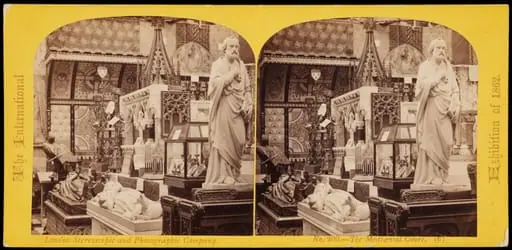 The International Exhibition of 1862, No. 209, the Mediaeval Court.
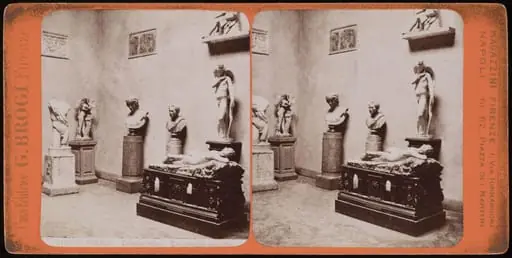 Firenze - Galleria Uffizi - Ermafrodito Giacente
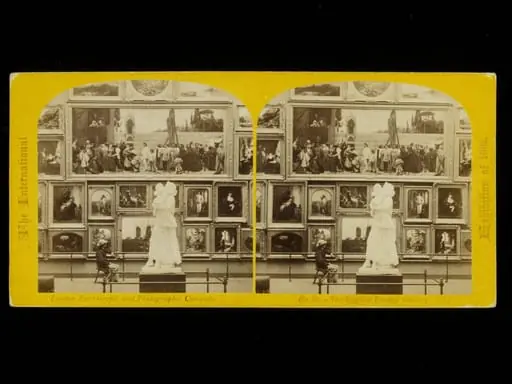 The International Exhibition of 1862: No. 27 - The English Picture Gallery (1)
 Britomartis Releasing Amoret
 Stereoscopic photograph of the 1862 International Exhibition
 Untitled
 Crystal Palace: View in the Renasissance Court
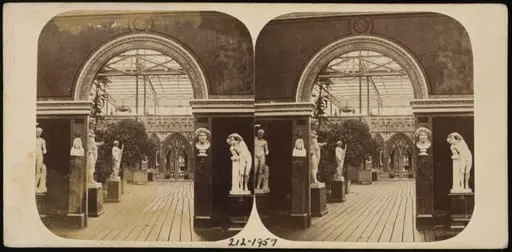 Crystal Palace: View from the Roman Court'
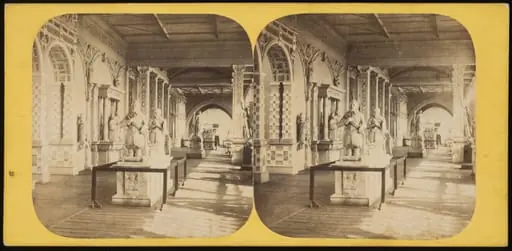 Crystal Palace: the Garden Gallery
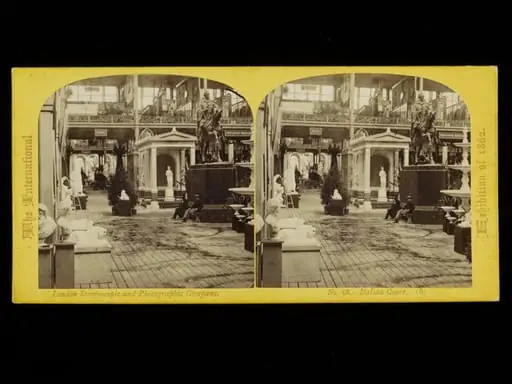 The International Exhibition of 1862: No. 42 - Italian Court (3)
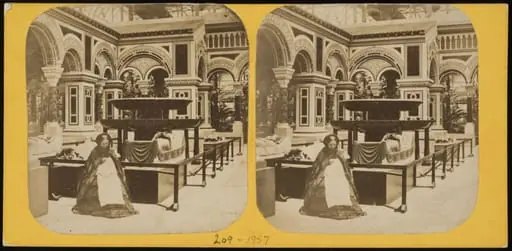 Crystal Palace: the Byzantine Court
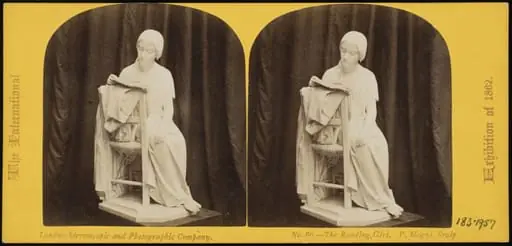 'The Reading Girl', a statue by Pietro Magni at Crystal Palace