Artwork
'The Reading Girl', a statue by Pietro Magni at Crystal Palace
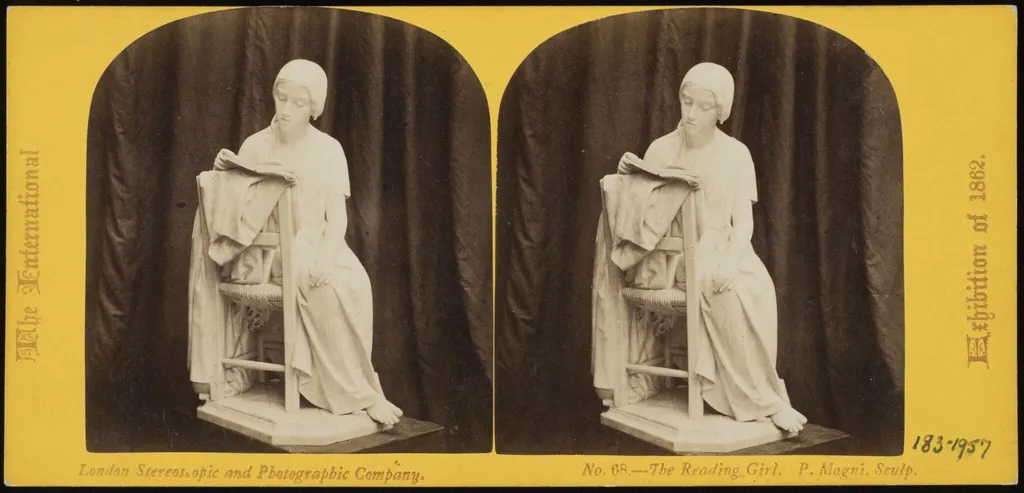
'The Reading Girl', a statue by Pietro Magni at Crystal Palace is a photographic photography by the Impressionist artist William England. It dates from 1862 and is held in the collection of the Victoria and Albert Museum.
About this work
Overview
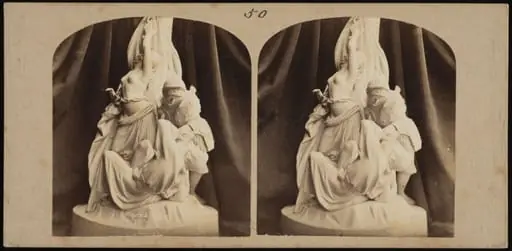
A stereoscopic photograph from the 1862 International Exhibition captures Pietro Magni’s marble statue, *The Reading Girl*, exhibited in the Crystal Palace.
A stereoscopic photograph from the 1862 International Exhibition captures Pietro Magni’s marble statue, *The Reading Girl*, exhibited in the Crystal Palace. The image presents two nearly identical perspectives, designed to create a three-dimensional effect when viewed through a stereoscope. The statue, cataloged as item 68, is framed by dark drapery and set against a plain background, emphasizing its form without distraction.
Subject & Meaning
The sculpture depicts a young girl seated on a simple stool, absorbed in reading a book held open in her lap. Her posture is still and contemplative, conveying quiet concentration rather than narrative action. The absence of elaborate props or symbolic elements focuses attention on the act of reading itself, suggesting an idealized moment of private intellectual engagement.
Technique & Style
Carved from white marble, the figure exhibits smooth, flowing contours with minimal surface detail. Drapery falls in soft, unadorned folds, while only the face, hands, and book are rendered with clarity. The restrained modeling reflects a Neoclassical preference for purity of form, avoiding ornamentation to highlight the figure’s serene presence and naturalistic poise.
History & Provenance
Created by Italian sculptor Pietro Magni, the statue was exhibited at the 1862 International Exhibition in London, where it was displayed within the Crystal Palace’s vast gallery of decorative arts. The photograph, likely produced for commercial distribution, served to extend the statue’s visibility beyond the exhibition grounds, documenting its presence in a major international showcase.
Context
During the mid-19th century, sculptures of quiet, domestic female figures were popular in European exhibitions, reflecting contemporary ideals of feminine virtue and intellectual modesty. Magni’s work aligned with this trend, offering a non-dramatic, introspective subject that resonated with Victorian sensibilities toward education and moral refinement.
Legacy
Though the original statue remains in public collection, the stereograph preserves its appearance as seen by 19th-century audiences. The photograph’s existence underscores the role of new visual technologies in shaping public engagement with sculpture, transforming static art into accessible, repeatable experiences for domestic viewers across Britain and beyond.
Artist & collection
Artist
William England liked to take pictures of things that were already beautiful, like sculptures and fancy buildings.

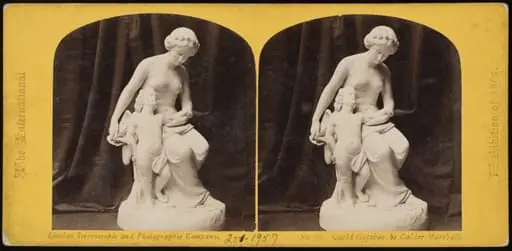 Stereograph of 'Cupid Captive', a sculpture by Calder Marshall
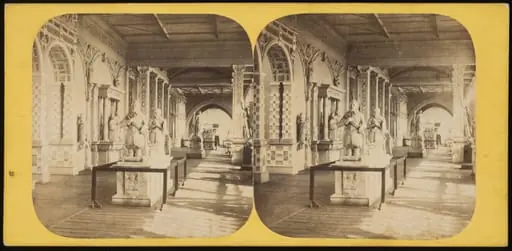 Crystal Palace: the Garden Gallery
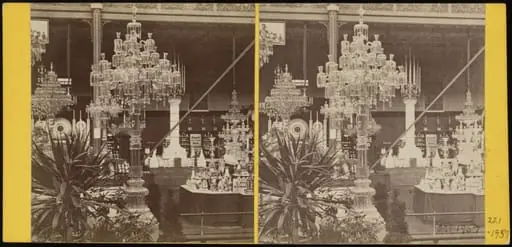 Untitled
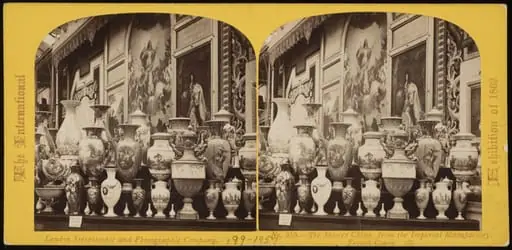 The Sevres China, from the Imperial Manufactory in the French Court
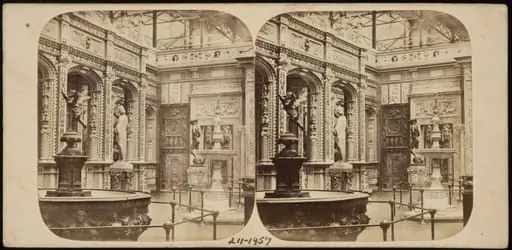 Crystal Palace: View in the Renasissance Court
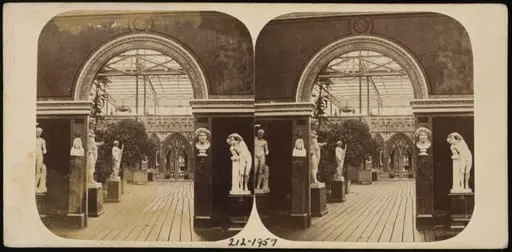 Crystal Palace: View from the Roman Court'
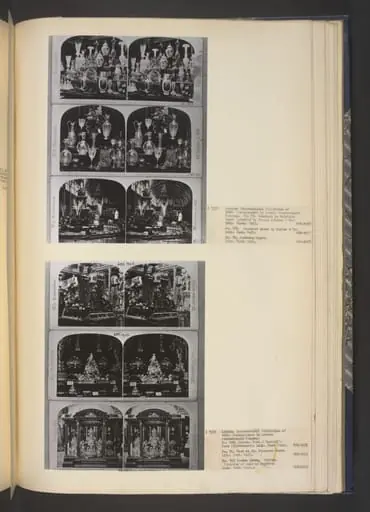 Stereoscopic photograph (No. 70) of the Austrian Court at the International Exhibition of 1862
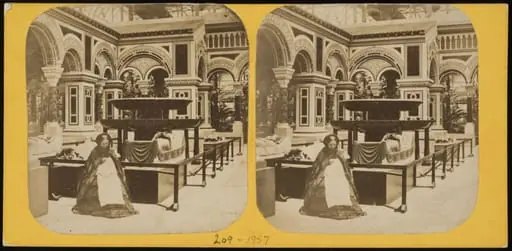 Crystal Palace: the Byzantine Court