Artwork
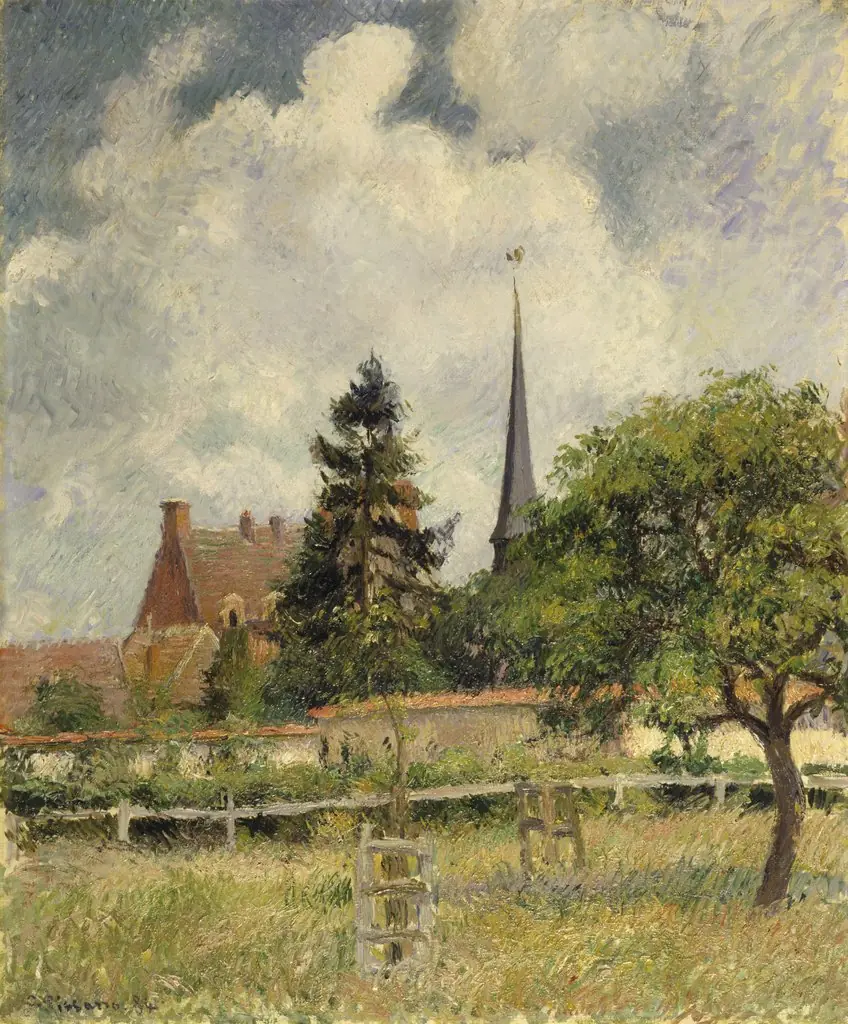
Biserica din Giverny
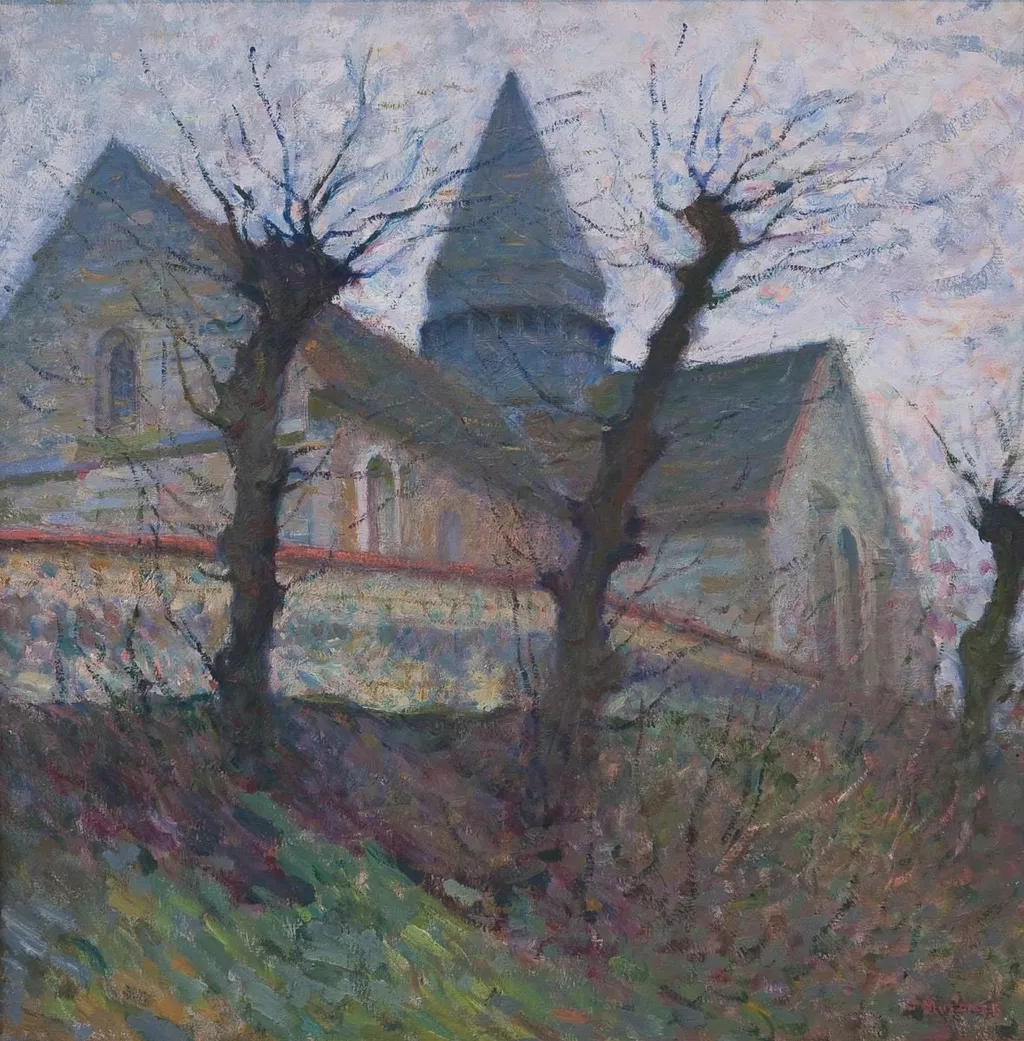
Biserica din Giverny is a print by Samuel Mützner. It dates from 1908 and is held in the collection of the National Museum of Art of Romania.
About this work
Overview
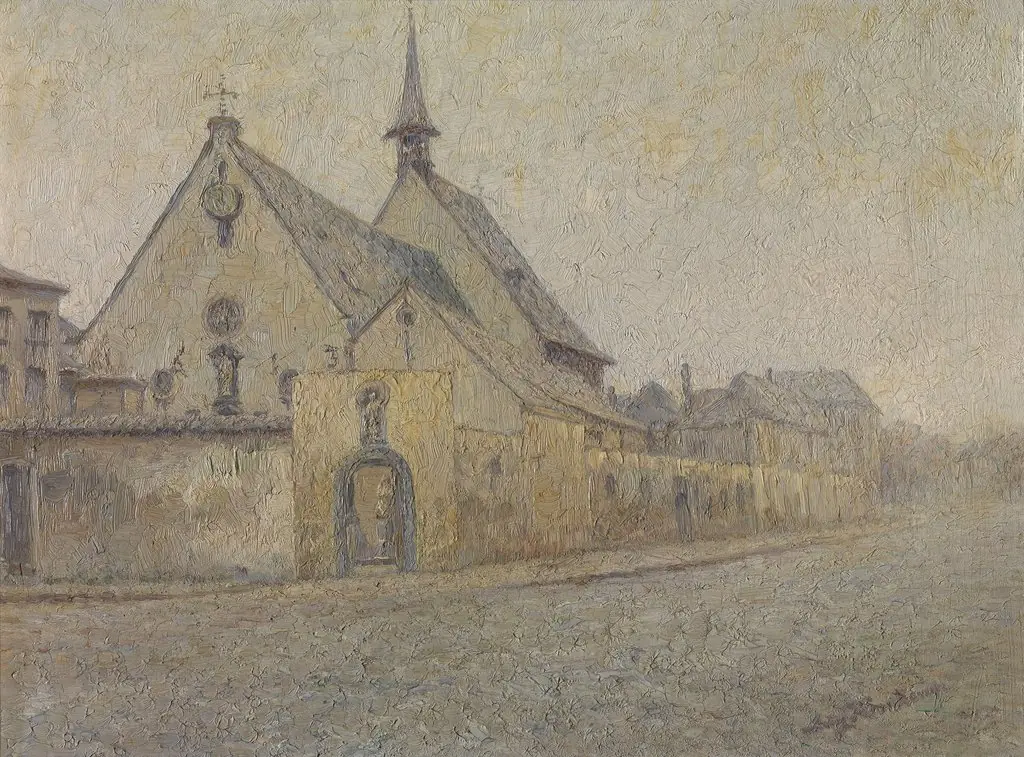
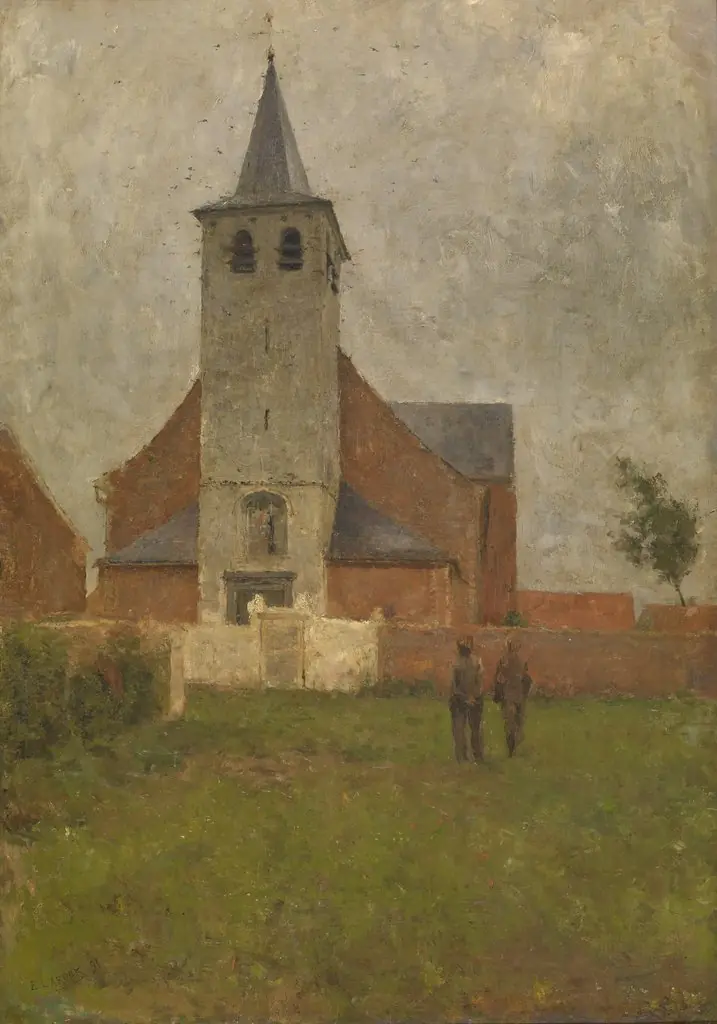
Painted in 1908 by Samuel Mützner, this work depicts the church in Giverny, France. The composition centers on the building’s twin spires, framed by leafless trees. The scene is rendered with a tactile surface, where paint is applied thickly to create a sense of physical depth and atmospheric weight. The overall tone is subdued, emphasizing the quiet stillness of the winter landscape.
Subject & Meaning
The church stands as a solitary structure amid bare trees, suggesting a quiet, wintry solitude. The absence of foliage and human presence amplifies a sense of isolation and timelessness. The building, neither idealized nor diminished, is presented as a quiet fixture within the natural world, its form enduring against the seasonal decay surrounding it.
Technique & Style
Mützner employs impasto to build texture, layering paint in broad, uneven strokes that catch light differently across the surface. Colors—muted greens, earthy browns, and cool blues—are blended loosely, avoiding sharp definition. The brushwork is deliberate yet unrefined, emphasizing materiality over precision, and reinforcing the tactile quality of the winter air.
History & Provenance
Created during Mützner’s time in France, the painting reflects his engagement with rural French landscapes. While little is documented about its early ownership, it remains tied to the artist’s broader body of work from this period, which often focused on ecclesiastical architecture in quiet, seasonal settings. Its survival suggests it was retained within private or regional collections.
Context
Painted at the height of post-impressionist experimentation, the work aligns with artists who valued emotional tone over photographic realism. Mützner’s approach echoes contemporaries who used texture and color to convey mood rather than detail. The church, a recurring motif in regional art, here becomes a symbol of permanence amid nature’s cycles.
Legacy
Its use of impasto and subdued palette influenced regional artists interested in emotional resonance through texture rather than narrative.
Though not widely exhibited, the painting contributes to a lesser-known strand of early 20th-century European landscape painting that prioritized materiality and atmosphere. Its use of impasto and subdued palette influenced regional artists interested in emotional resonance through texture rather than narrative. It remains a quiet example of how architecture and nature were interwoven in personal, non-monumental terms.
Artist & collection