Artwork
Vedere din Giverny (dimineața)
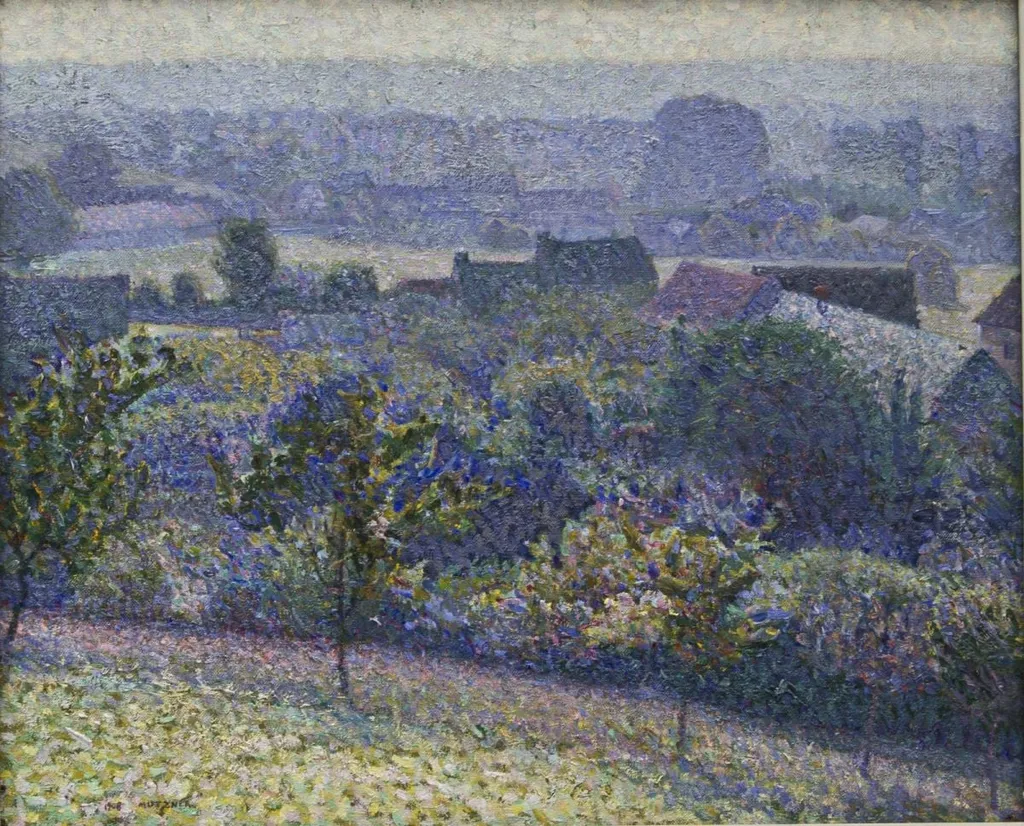
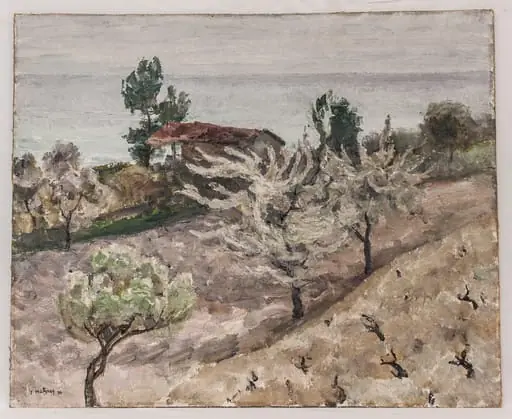
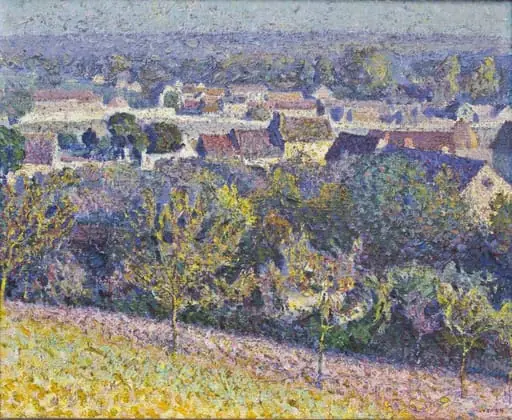
Vedere din Giverny (dimineața) is a print by Samuel Mützner. It dates from 1908 and is held in the collection of the National Museum of Art of Romania.
About this work
Overview
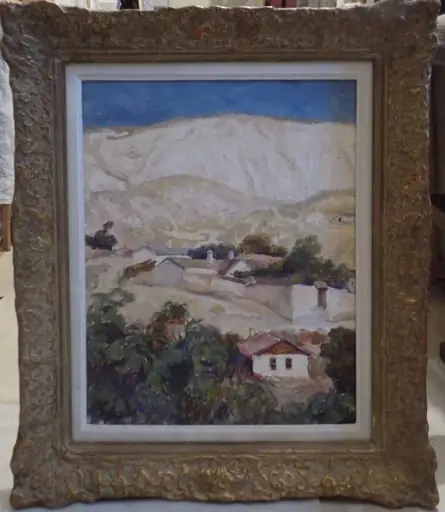
The composition centers on a gently rolling field dotted with trees, receding toward a cluster of modest dwellings with red-tiled roofs.
Painted in 1908 by Samuel Mützner, this landscape captures a quiet morning scene in Giverny. The composition centers on a gently rolling field dotted with trees, receding toward a cluster of modest dwellings with red-tiled roofs. The atmosphere is subdued, rendered through soft transitions of color and a low-angle sunlight that stretches shadows across the earth, suggesting early hour and stillness.
Subject & Meaning
The painting presents an unembellished view of rural life in Giverny, focusing on the harmony between cultivated land and domestic architecture. There is no human presence, emphasizing solitude and the quiet rhythm of nature. The arrangement invites contemplation rather than narrative, reflecting a sensitivity to place and time over dramatic event.
Technique & Style
Mützner employs a restrained palette of greens and browns, avoiding vivid contrasts in favor of tonal nuance. Brushwork is deliberate but not overly detailed, allowing forms to emerge through shifts in light and texture. The handling of sunlight—long, diagonal shadows across the field—suggests an interest in atmospheric effects, aligning with broader late-19th-century landscape traditions.
History & Provenance
The painting’s early history is not widely documented, and its ownership trail remains obscure after its creation in 1908. It has not been featured in major exhibitions or published catalogs, suggesting it remained in private hands or regional collections. Its survival as a single known work by the artist underscores its rarity.
Context
Created during a period when French Impressionism influenced artists across Europe, Mützner’s approach diverges from its vibrant hues and broken brushwork. Instead, his muted tones and quiet composition reflect a more introspective, Central European sensibility, possibly shaped by regional traditions and a preference for understated realism over optical experimentation.
Legacy
Samuel Mützner’s body of work is limited in scope and visibility, with few known paintings surviving. This piece stands as one of the few documented examples of his landscape practice. While not widely studied, it offers insight into lesser-known regional responses to the broader European landscape tradition of the early 20th century.
Artist & collection

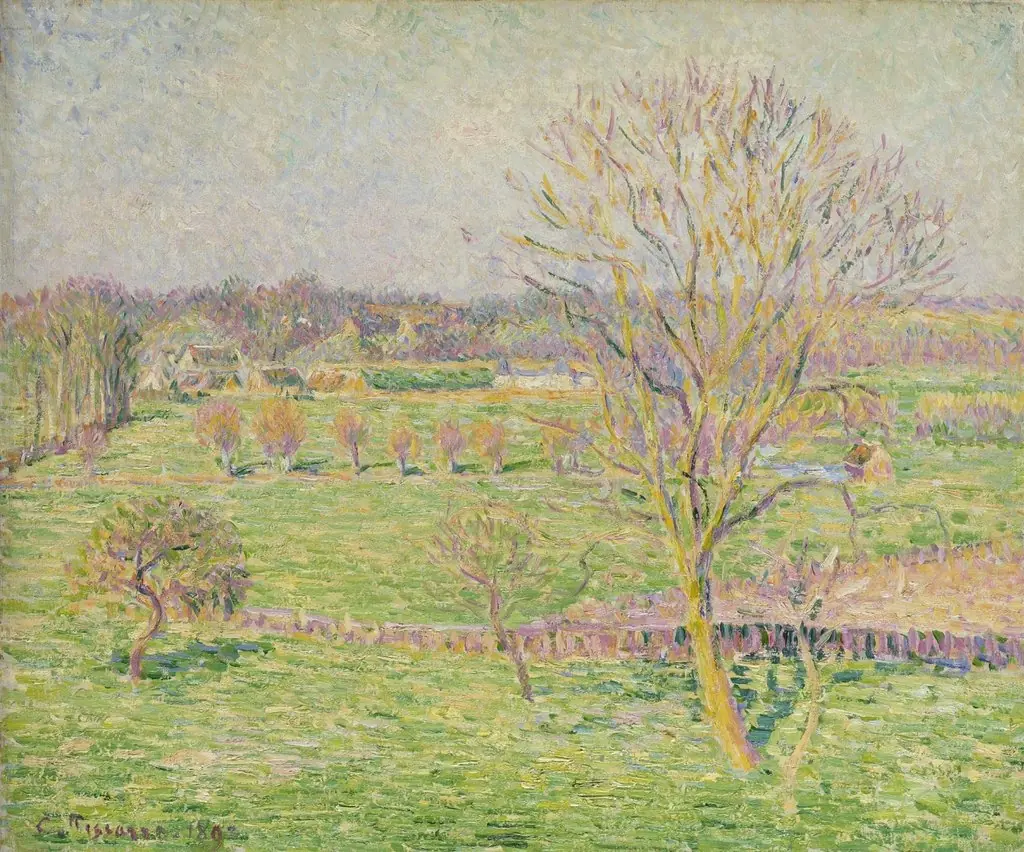 Le pré et le grand noyer, printemps, Eragny
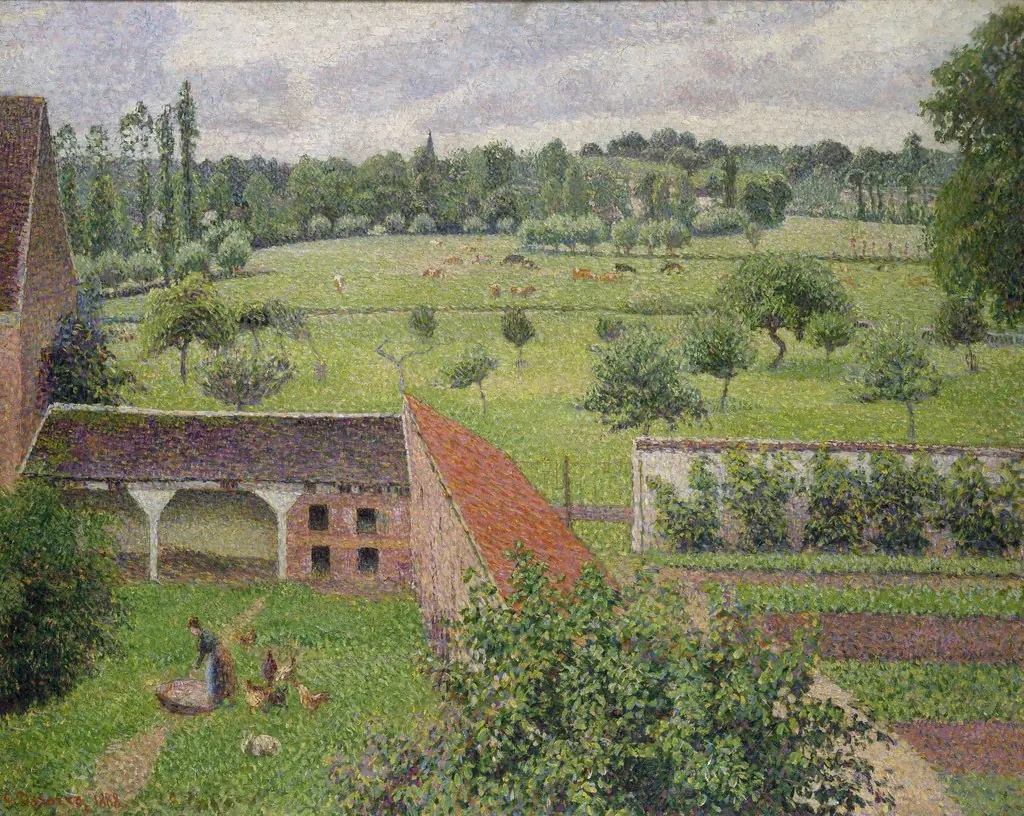 View from my Window
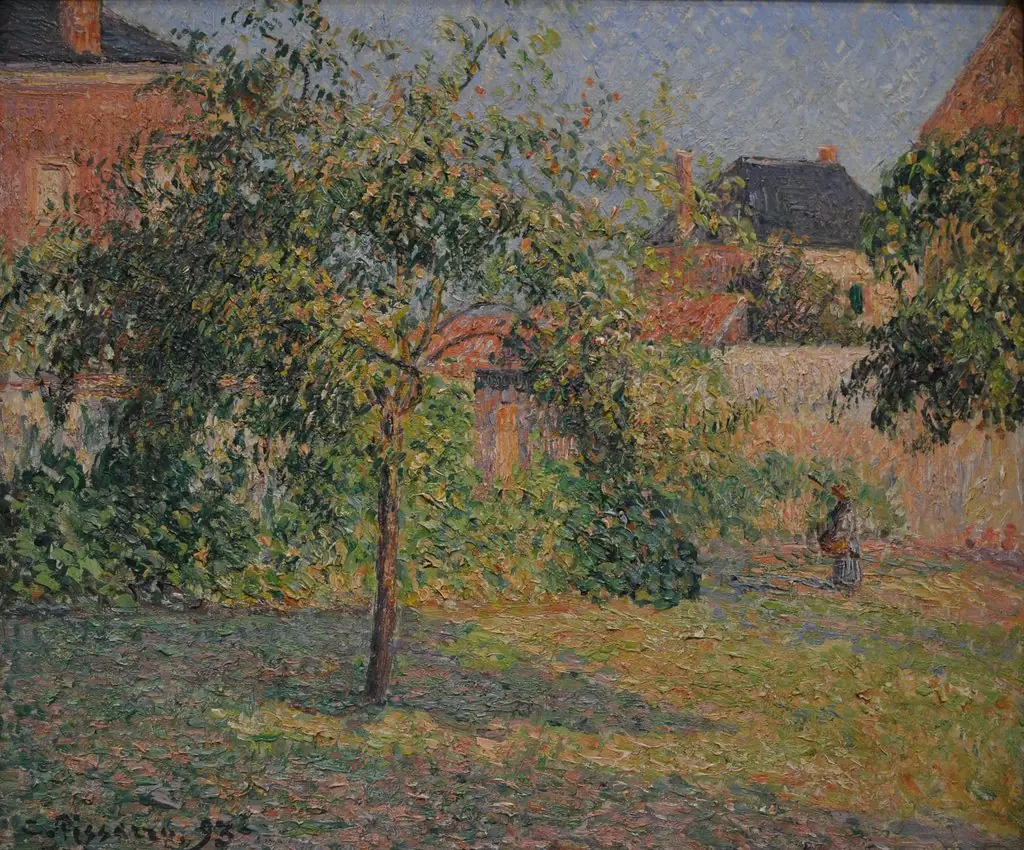 Apple Tree in the Meadow, Eragny
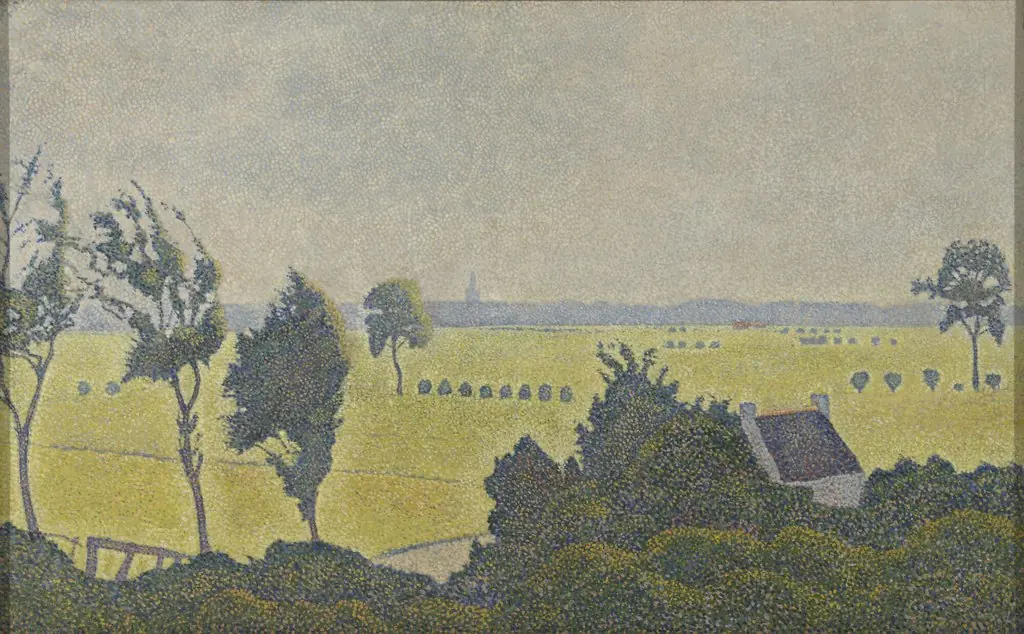 Landscape in Seneffe
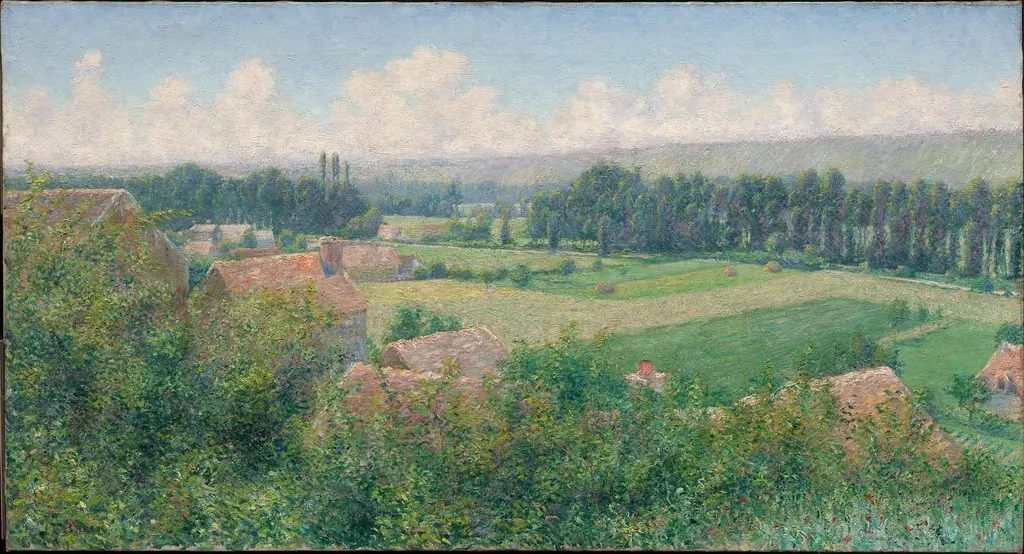 In the Valley of the Seine
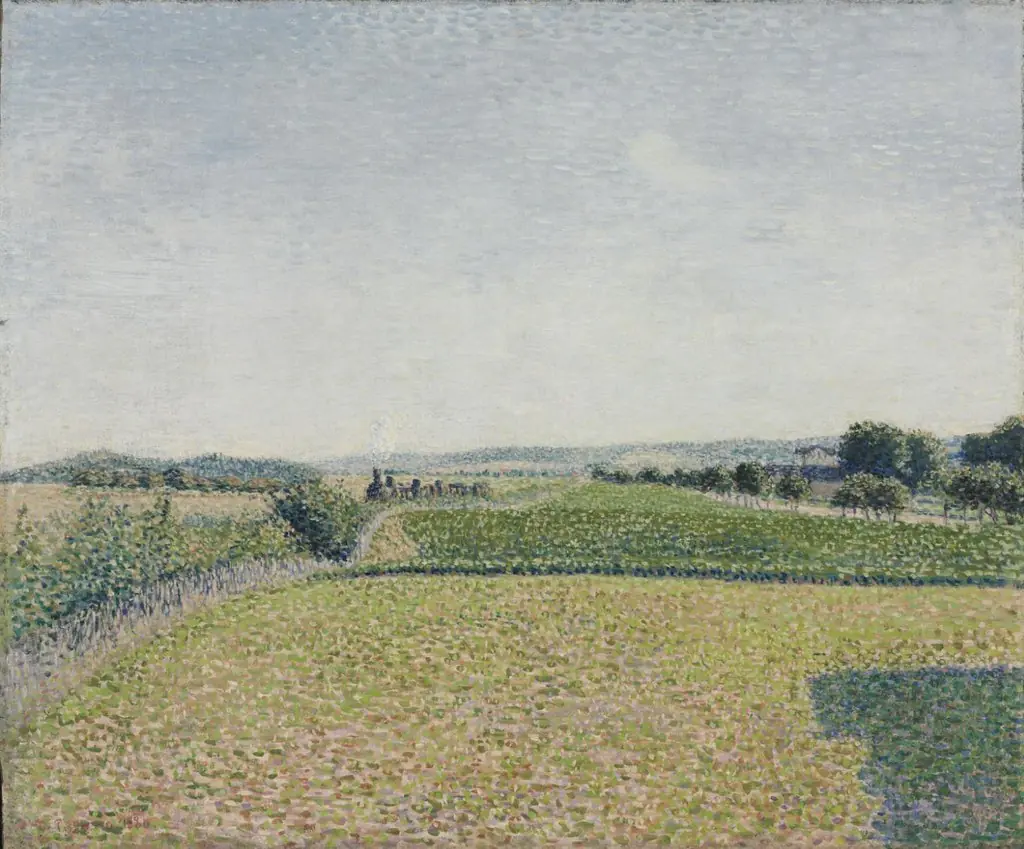 Railroad to Dieppe
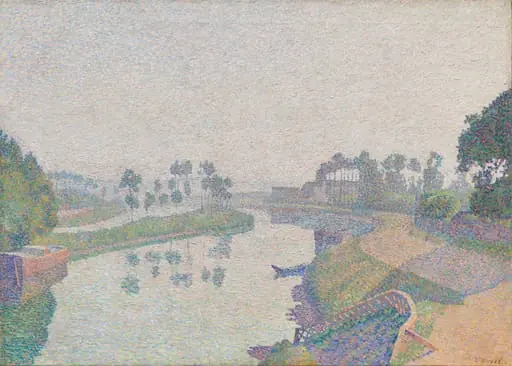 Banks of the Oise at Dawn
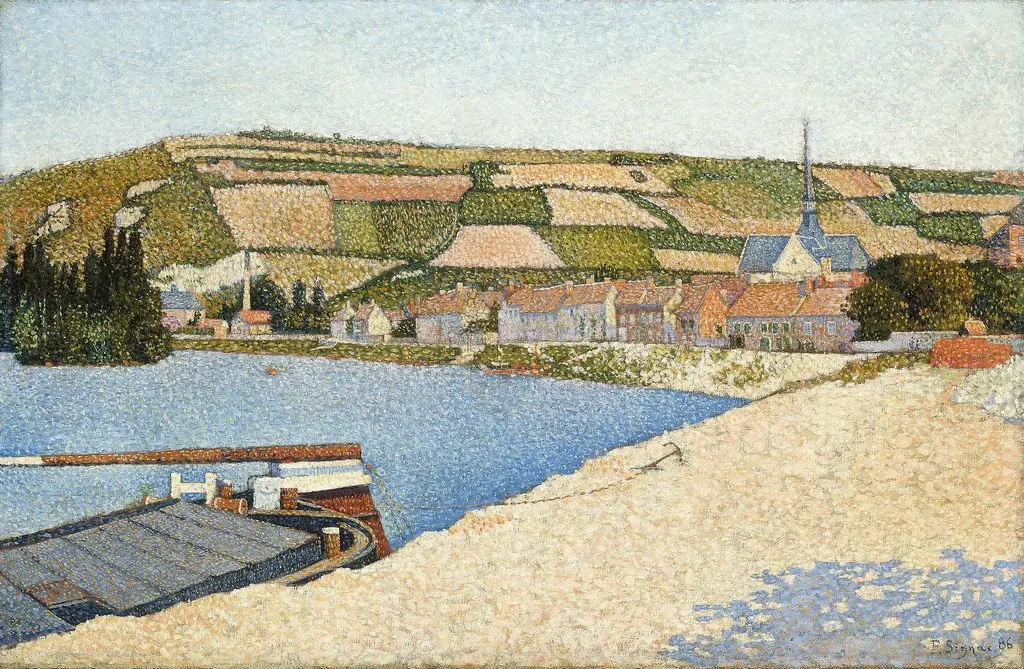 Les Andelys, Côte d'Aval
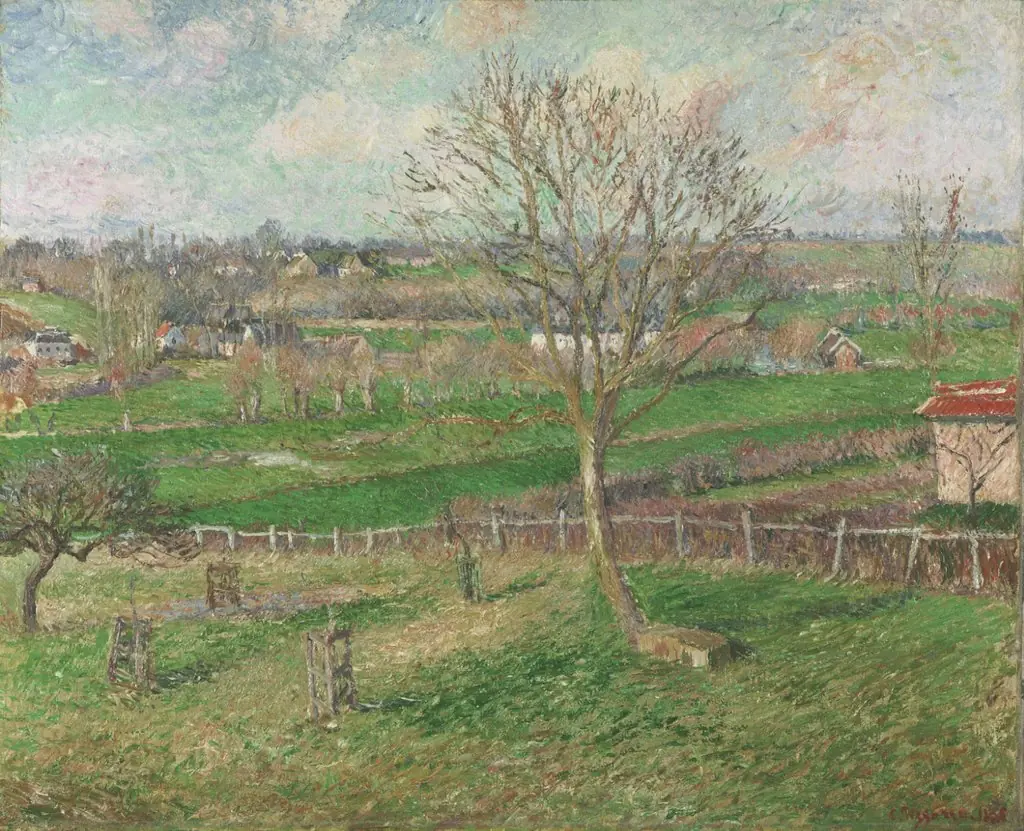 The Field and the Great Walnut Tree in Winter, Eragny
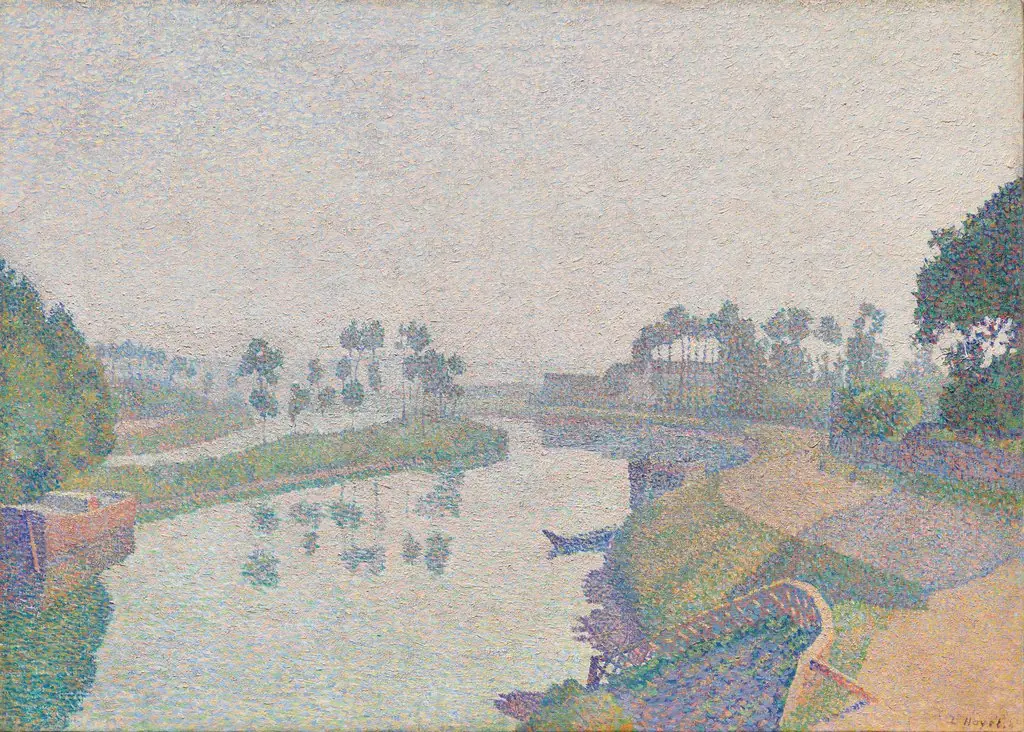 Banks of the Oise at Dawn
 Vedere din Giverny (seara)
 Vedere din Târnovo