Artwork
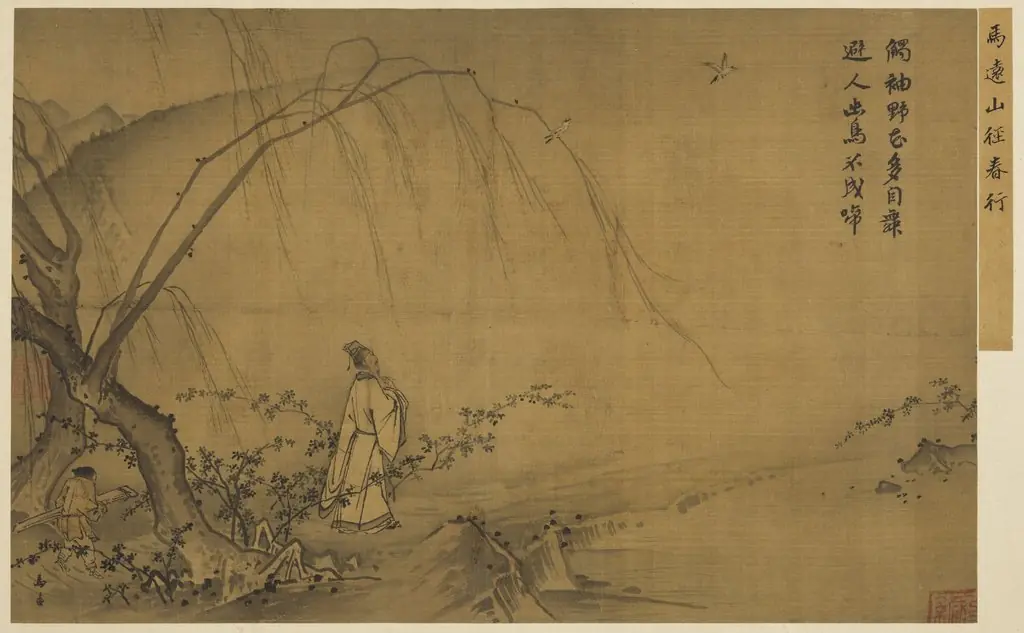
名繪集珍 冊 宋馬遠山徑春行
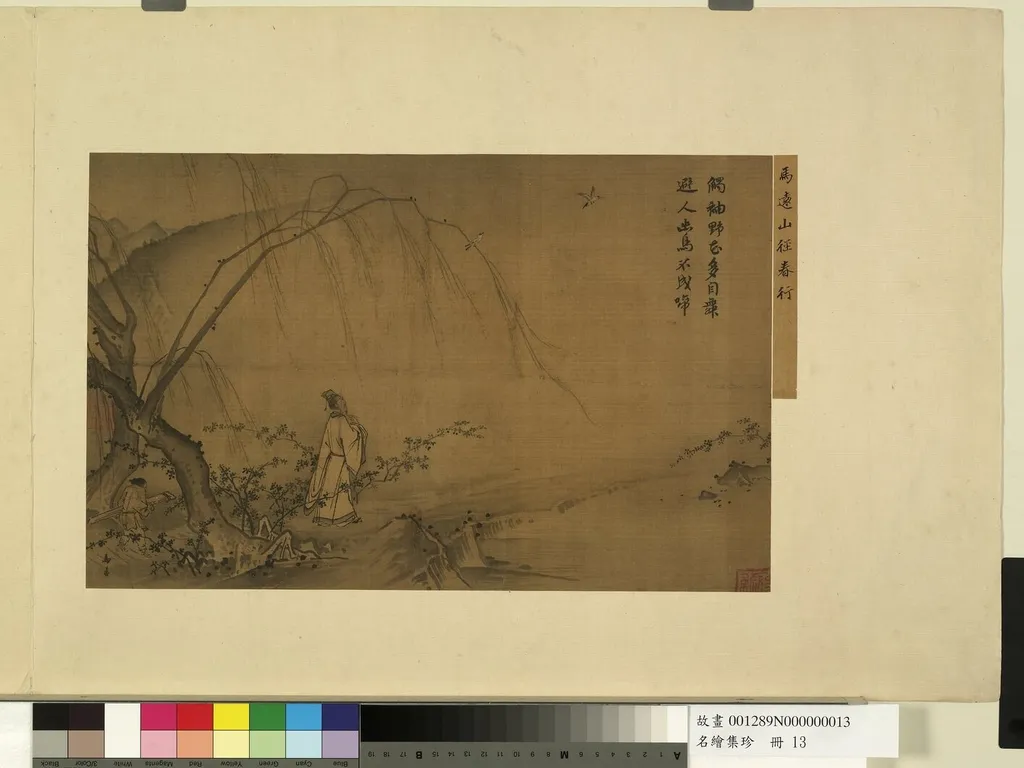
名繪集珍 冊 宋馬遠山徑春行 is an unspecified painting by the Song dynasty landscape artist Ma Yuan. It dates from 1196 and is held in the collection of the National Palace Museum.
About this work
Overview
Its current location is the National Palace Museum in Taipei, where it is preserved as part of a broader collection of imperial Chinese art.
This silk painting, dated 1196, is attributed to Ma Yuan, a leading painter of the Southern Song court. It belongs to a series of album leaves known for their intimate scale and poetic atmosphere. The work exemplifies the Southern Song preference for restrained, contemplative landscapes, rendered with precision on fine silk. Its current location is the National Palace Museum in Taipei, where it is preserved as part of a broader collection of imperial Chinese art.
Subject & Meaning
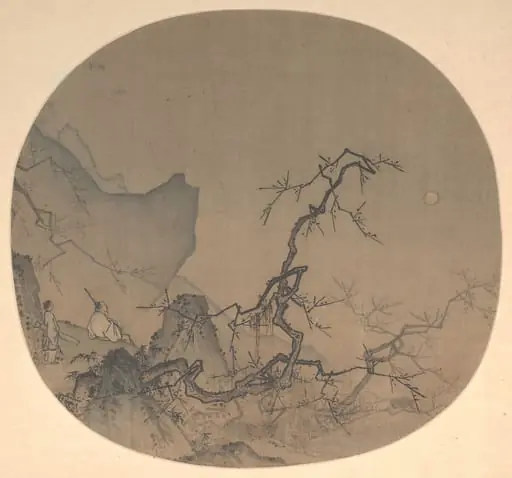
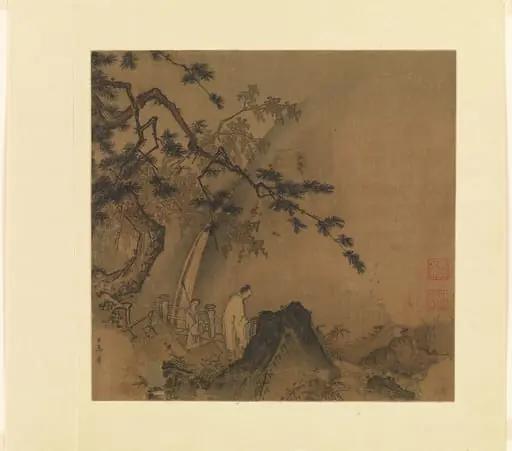
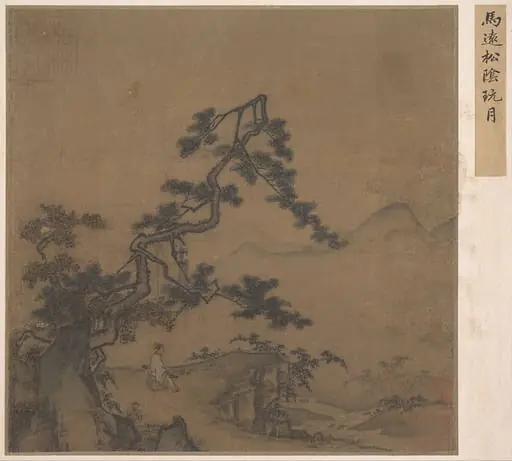
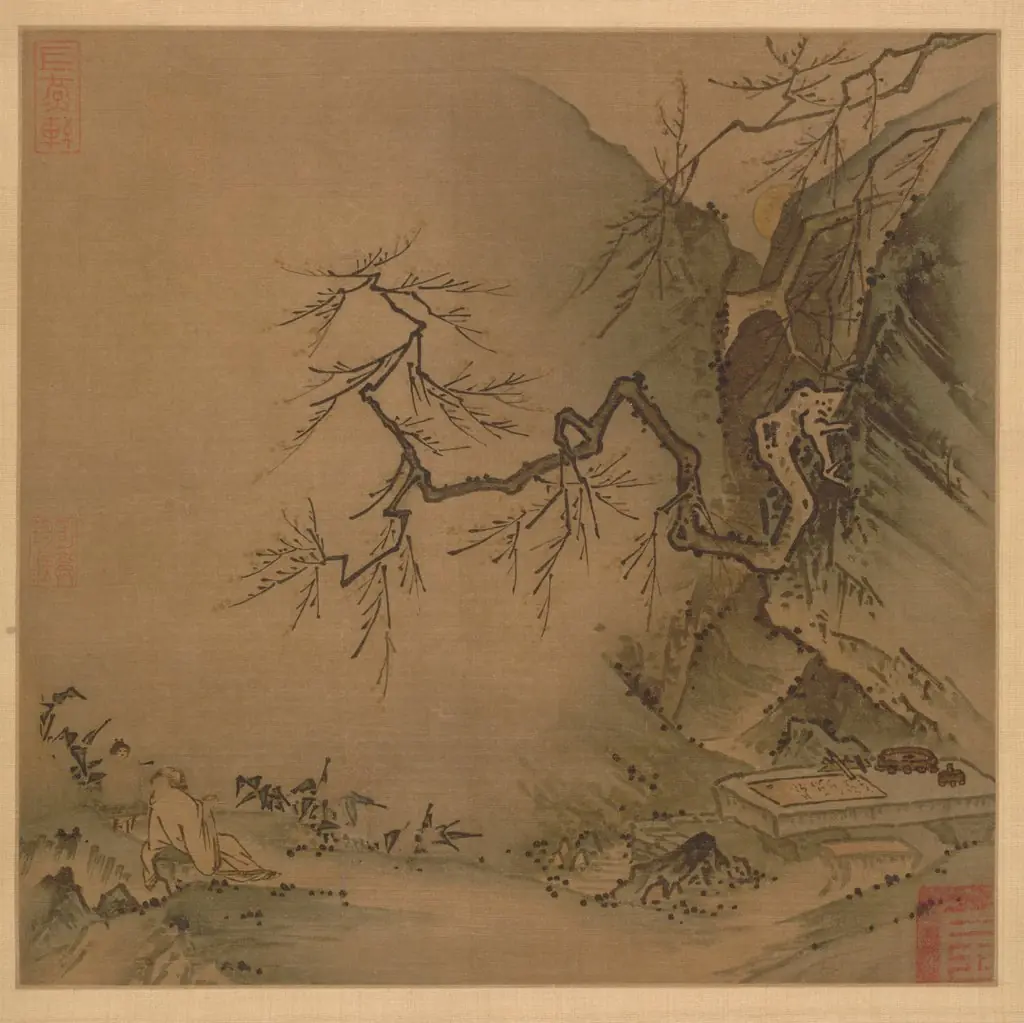
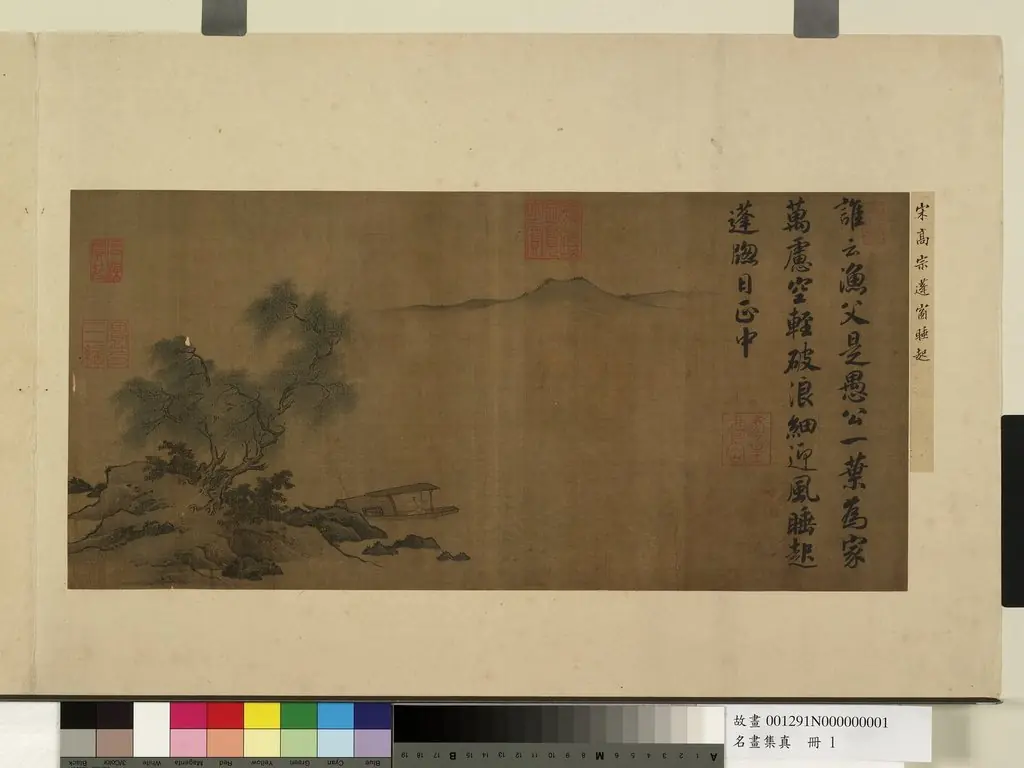
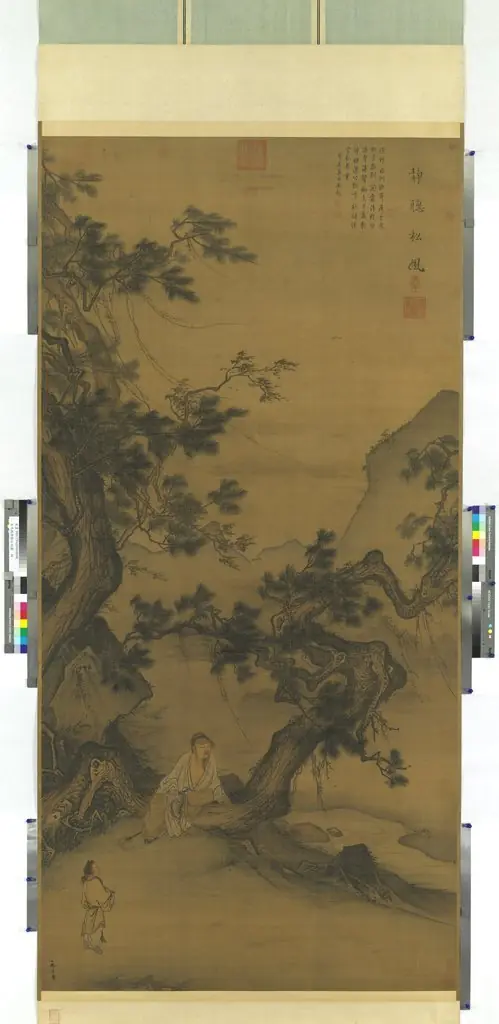
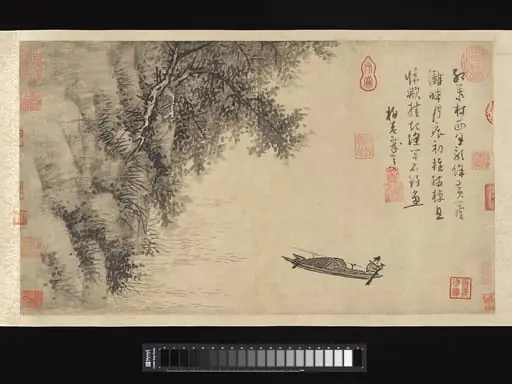
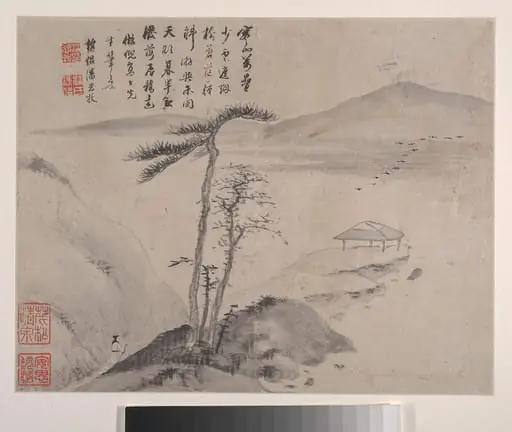
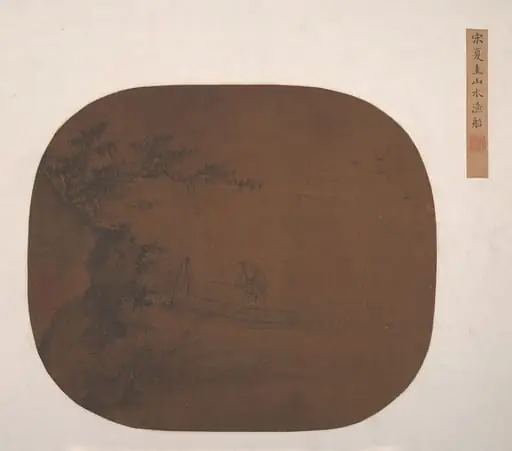
A solitary figure in white robes stands on a rocky outcrop, gazing across a quiet expanse of water. The figure, neither engaged in action nor clearly identified, invites quiet reflection rather than narrative. Surrounding trees and sparse vegetation frame the scene without overwhelming it. The composition suggests a moment of stillness, aligning with Daoist and Chan Buddhist ideals of harmony between human presence and the natural world.
Technique & Style
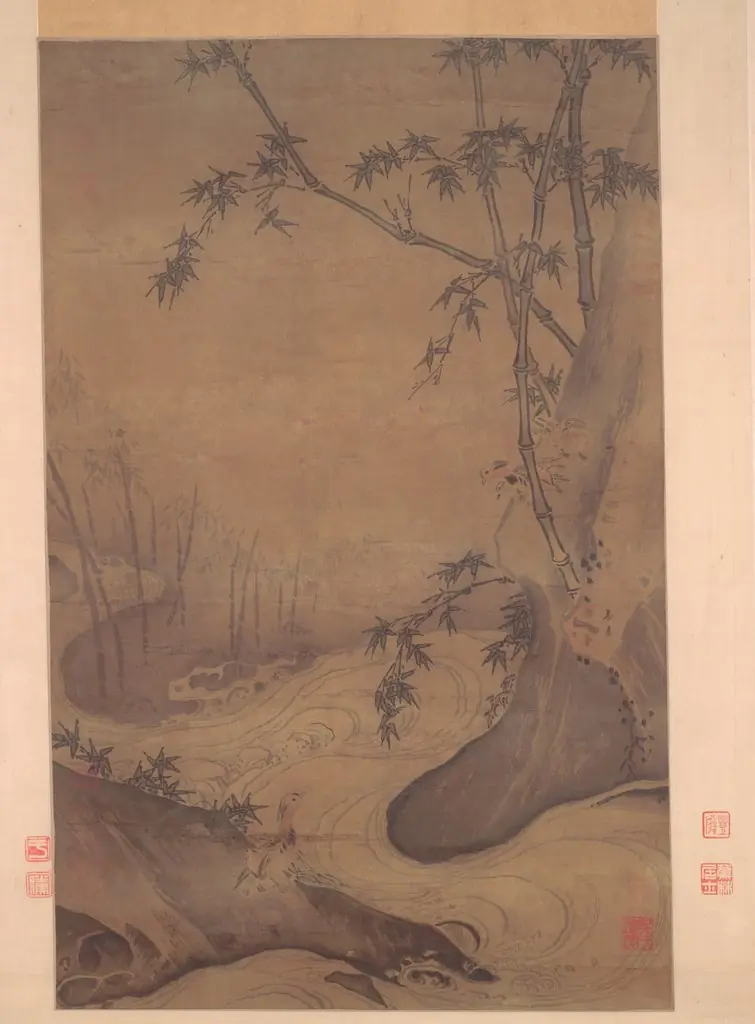
Ma Yuan employed fine, controlled brushstrokes to suggest texture in rocks, foliage, and water, using minimal ink tones and subtle washes. The silk support allows for delicate layering, enhancing the muted palette of greys, browns, and pale greens. Negative space dominates the lower half, emphasizing the vastness of the landscape and the figure’s isolation. This asymmetrical balance, with the figure centered yet surrounded by emptiness, is characteristic of Ma Yuan’s approach to spatial economy.
History & Provenance
Created during the Southern Song period, the painting was likely produced for imperial or scholarly patrons who valued poetic landscapes. It was later incorporated into the Qing imperial collection and remained in the Forbidden City until the mid-20th century. Following the relocation of the National Palace Museum’s holdings from Beijing to Taipei in 1949, the work became part of its permanent collection, where it has been studied and displayed as a key example of Song painting.
Context
Ma Yuan worked alongside Xia Gui at the Imperial Painting Academy, where landscape painting shifted from grand, monumental compositions to smaller, introspective scenes. This change reflected broader cultural trends favoring personal contemplation over public display. Album leaves like this one were meant to be viewed privately, often held in the hand and studied slowly, reinforcing their meditative quality and connection to literary and philosophical traditions.
Legacy
Ma Yuan’s style influenced generations of East Asian artists, particularly in Japan and Korea, where his use of space and suggestion became models for ink painting. His approach to landscape as an emotional rather than topographical record helped define the aesthetic of literati art. Though his name faded from popular memory in later centuries, scholarly interest revived his significance in the 20th century as a pivotal figure in the evolution of Chinese painting.
Artist & collection

Artist
Ma Yuan (Chinese: 馬遠; pinyin: Mǎ Yuǎn; Wade–Giles: Ma Yüan; c. 1160–65 – 1225) was a Chinese painter of the Song dynasty. His works, together with that of Xia Gui, formed the basis of the so-called Ma-Xia (馬夏) school of…