Artwork
Fântână veche la Cassis
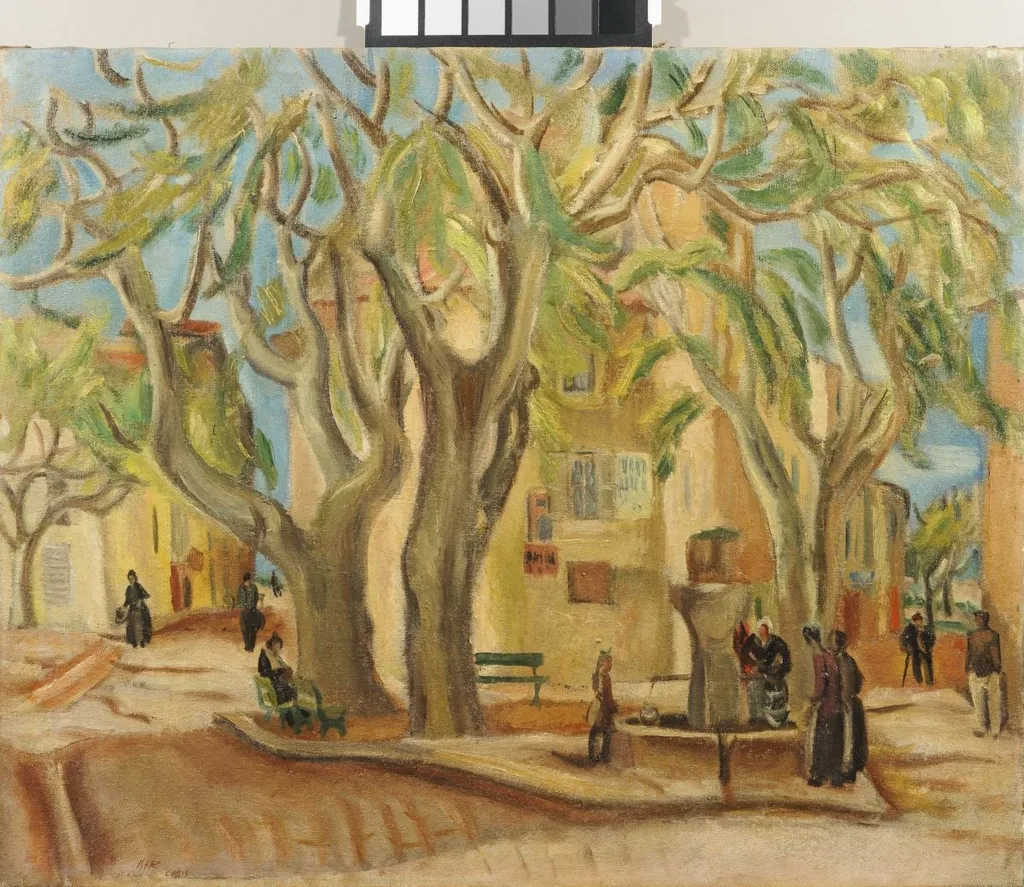
Fântână veche la Cassis is an unspecified painting by Iosif Iser. It dates from 1922 and is held in the collection of the National Museum of Art of Romania.
About this work
Overview
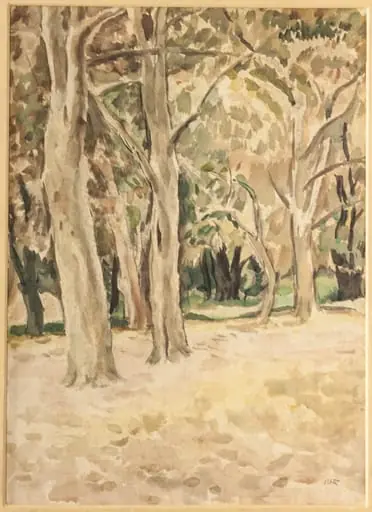
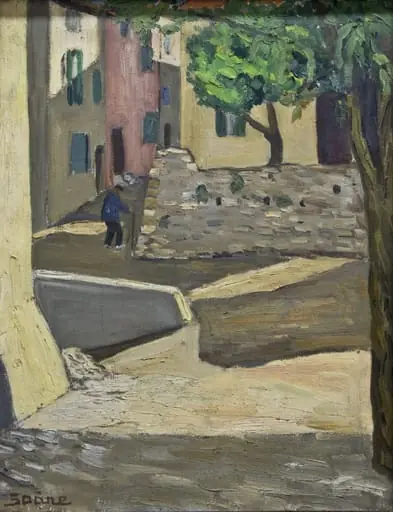
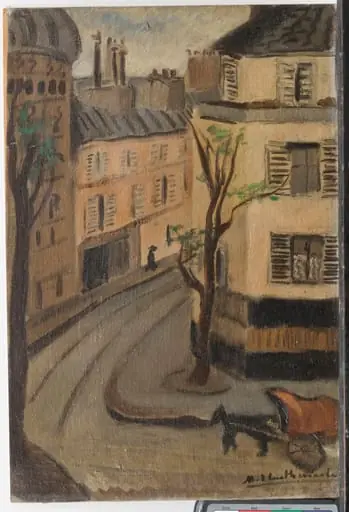
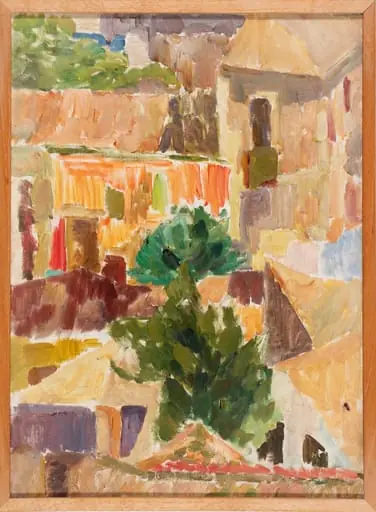
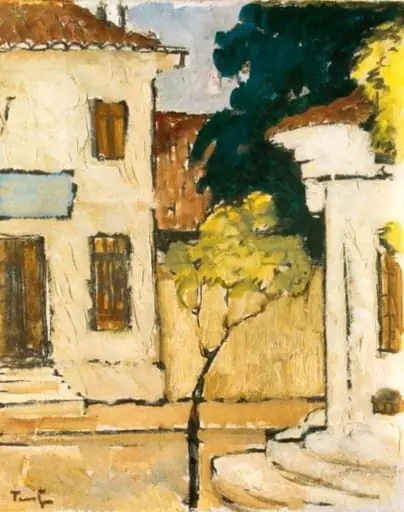
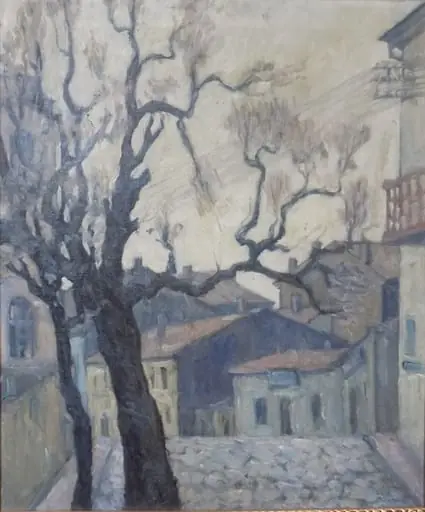
The scene centers on a narrow street lined with trees and stone buildings, rendered with a focus on atmospheric light rather than narrative detail.
Painted in 1922 by Iosif Iser, Fântână veche la Cassis captures a quiet moment in the Provençal town of Cassis. The scene centers on a narrow street lined with trees and stone buildings, rendered with a focus on atmospheric light rather than narrative detail. Figures are present but sparse, their forms subdued against the dominant play of sun and shade. The work reflects Iser’s interest in everyday urban environments and the subtle rhythms of daily life.
Subject & Meaning
The painting depicts a tranquil corner of Cassis, where a weathered fountain may once have stood, now implied rather than emphasized. Passersby move quietly along the sidewalk, their dark clothing contrasting with the sunlit walls. There is no dramatic event—only the stillness of afternoon. The absence of focal points invites contemplation of time, place, and the quiet persistence of ordinary spaces.
Technique & Style
Iser employs thick, tactile brushwork, particularly in the rendering of foliage, creating a textured surface that catches and holds light. Warm ochres, muted greens, and earthy browns dominate the palette, while shadows are rendered in deep, cool tones. The impasto technique enhances the sense of physical presence in the trees and walls, grounding the scene in material reality without sacrificing its atmospheric mood.
History & Provenance
Created during Iser’s period of travel in southern France, the painting reflects his engagement with Mediterranean light and architecture after his earlier work in Romania. It was likely painted en plein air, consistent with his practice of observing scenes directly. The work remained in private collections for much of the 20th century, with limited public exposure until later scholarly interest in Romanian modernists revived attention to his French-period works.
Context
Iser painted this during a time when many Eastern European artists were exploring French post-impressionist and Fauvist influences. While not aligned with radical avant-garde movements, his work shares an interest in color and light seen in artists like Cézanne and Signac. Fântână veche la Cassis represents a quiet, personal response to the region’s visual culture, distinct from the more theatrical styles of his contemporaries.
Legacy
Though not widely exhibited during his lifetime, this painting contributes to a growing recognition of Iser’s role in bridging Romanian modernism with French landscape traditions. Its restrained composition and sensitivity to natural light have influenced later generations of Romanian painters interested in tonal harmony and everyday subject matter. The work remains a quiet testament to his observational rigor.
Artist & collection
Artist
Iosif Iser painted everyday life with a focus on people and places. His 1933 work *Paris. Strada Mouffetard* shows a lively street scene in Paris, while *Nud pe fotoliu* depicts a seated nude figure. His brushwork…