Artwork
Akbar
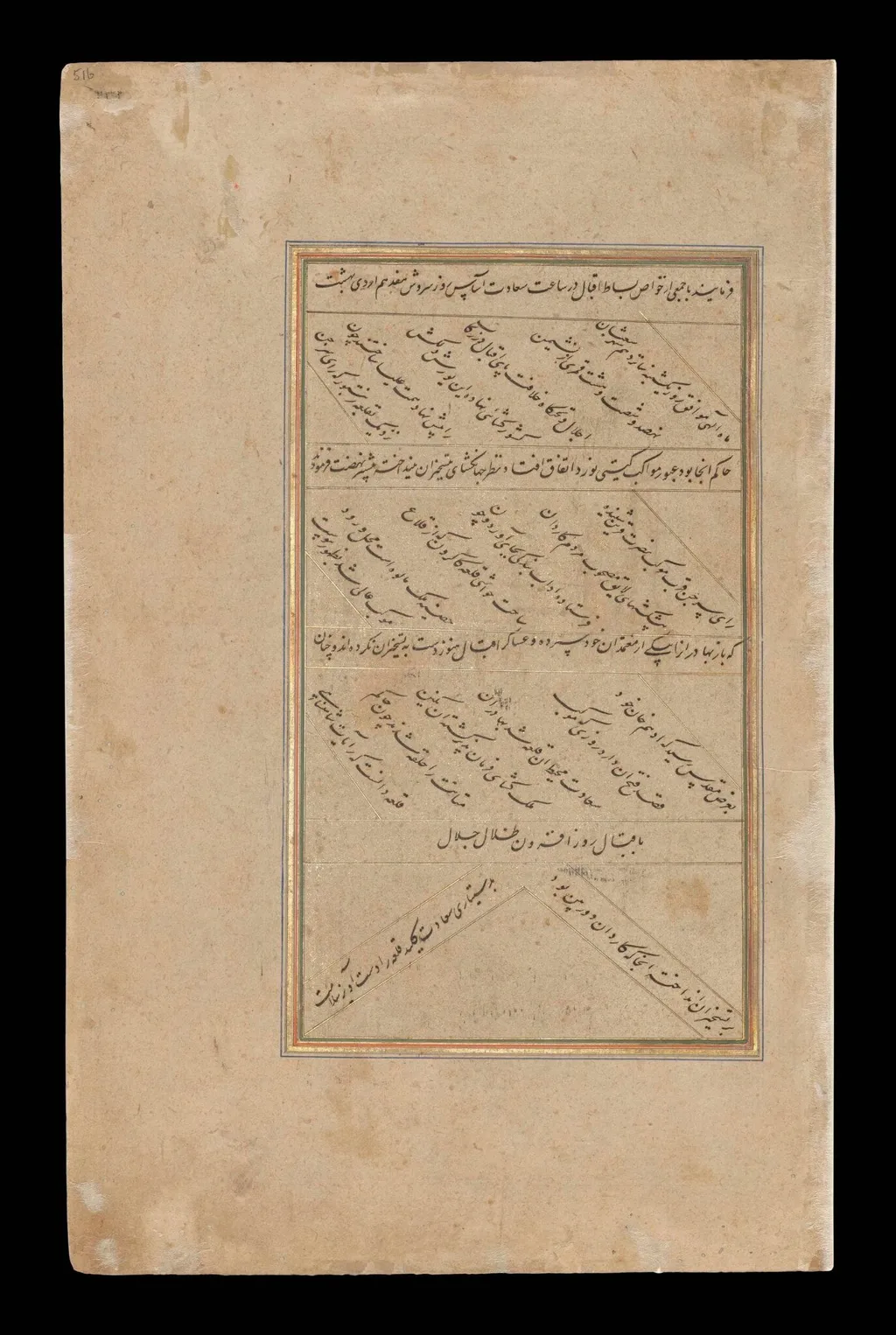
Akbar is a paint painting by the Mughal Painting artist Madhav Kalan. It dates from 1592 and is held in the collection of the Victoria and Albert Museum.
About this work
Overview
Executed by the court artist Madhav Kalan, the image records the 1561 surrender of the Gagraun fort in Rajasthan, when its governor handed the keys to Akbar.
The work is a miniature painting that forms part of an illustrated copy of the Akbarnama, the official chronicle of Mughal emperor Akbar’s reign. Executed by the court artist Madhav Kalan, the image records the 1561 surrender of the Gagraun fort in Rajasthan, when its governor handed the keys to Akbar. The painting is included in a V&A manuscript dated to the early 1590s, one of the earliest illustrated editions of the text.
Subject & Meaning
The scene depicts the governor of Gagraun presenting the fort’s keys to Akbar, symbolising the swift submission of a strategically important stronghold. The narrative emphasizes Akbar’s expanding authority, suggesting that his mere presence could compel enemy-held territories to capitulate without resistance.
Technique & Style
Rendered in the Mughal miniature tradition, the painting combines precise line work with delicate washes of colour. The artist employed fine brushstrokes to delineate costumes and architecture, while the composition balances narrative clarity with ornamental detail, characteristic of royal workshop productions of the late 16th century.
History & Provenance
The manuscript was commissioned by Akbar and written in Persian by his court historian Abu’l‑Fazl between 1590 and 1596. After Akbar’s death the volume passed to his son Jahangir and later to Shah Jahan. In the 19th century it entered the collection of Major General John Clarke in India, and was acquired by the Victoria and Albert Museum in 1896 from his widow, Frances Clarke.
Context
The Akbarnama served both as a historical record and a political instrument, reinforcing the emperor’s legitimacy. Illustrations such as this were produced by a select group of royal artists listed in Abu’l‑Fazl’s A’in‑i Akbari, underscoring the importance of visual propaganda in Mughal court culture.
Artist & collection
Artist
Madhav Kalan’s surviving works feel like someone quietly slipped a few loose pages from Akbar’s court chronicles into the palace library.

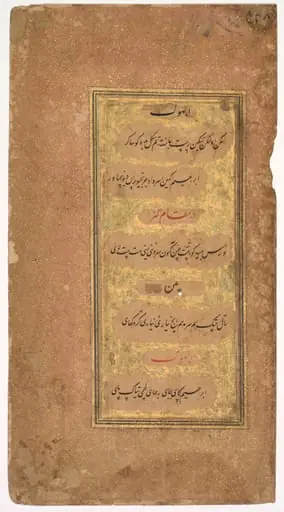 From Dohras (Songs) 40 and 42 from the Kitab-i Nauras (Book of Nine Essences) of Sultan Ibrahim Adil Shah II of Bijapur (r. 1580–1627); verso: From Dohras (Songs) 40 and 36 from the Kitab-i Nauras of Sultan Ibrahim Adil Shah II
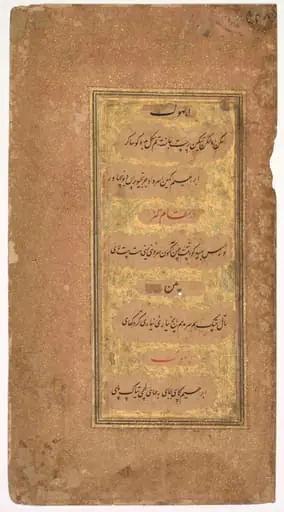 From Dohras (Songs) 40 and 42 from the Kitab-i Nauras (Book of Nine Essences) of Sultan Ibrahim Adil Shah II of Bijapur (r. 1580–1627) (recto)
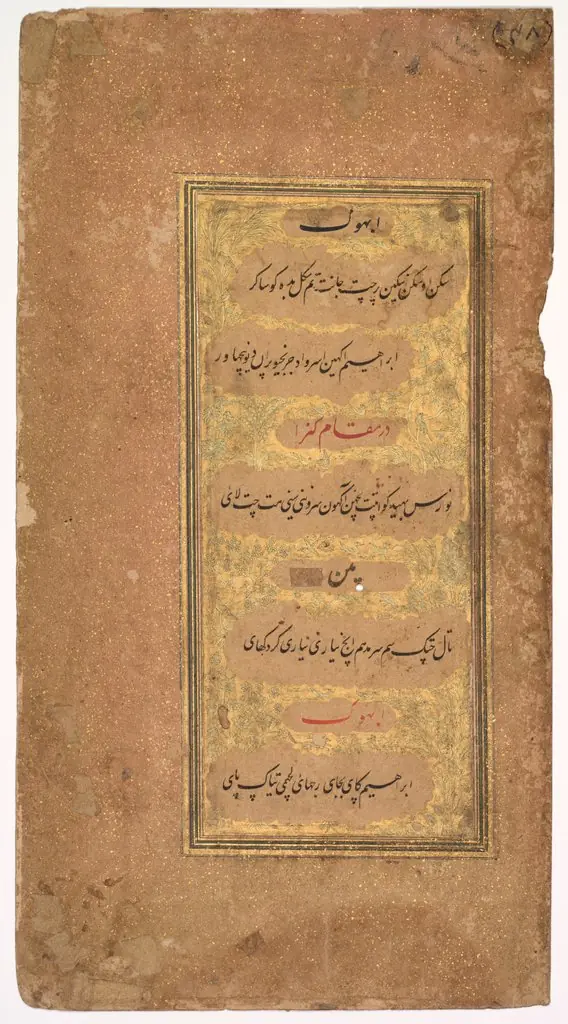 From Dohras (Songs) 40 and 42 from the Kitab-i Nauras (Book of Nine Essences) of Sultan Ibrahim Adil Shah II of Bijapur (r. 1580–1627) (recto)
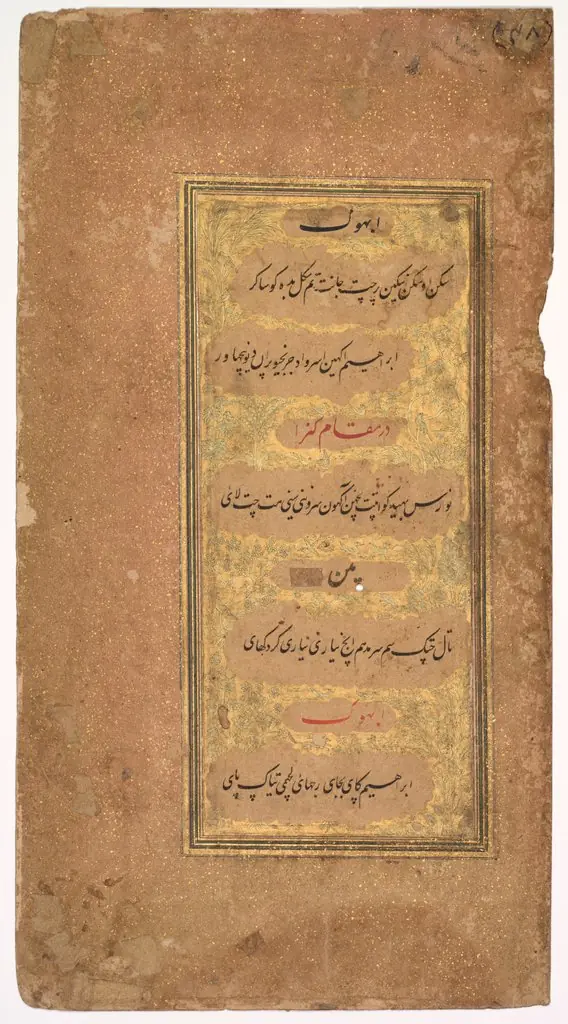 From Dohras (Songs) 40 and 42 from the Kitab-i Nauras (Book of Nine Essences) of Sultan Ibrahim Adil Shah II of Bijapur (r. 1580–1627); verso: From Dohras (Songs) 40 and 36 from the Kitab-i Nauras of Sultan Ibrahim Adil Shah II
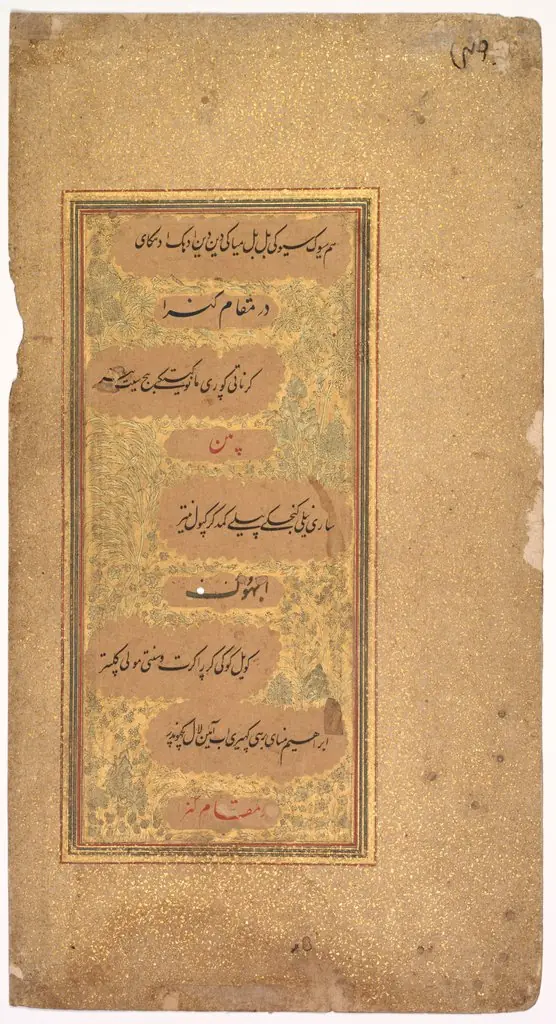 From Dohras (Songs) 40 and 36 from the Kitab-i Nauras of Sultan Ibrahim Adil Shah II (verso)
 From Dohras (Songs) 40 and 36 from the Kitab-i Nauras of Sultan Ibrahim Adil Shah II (verso)
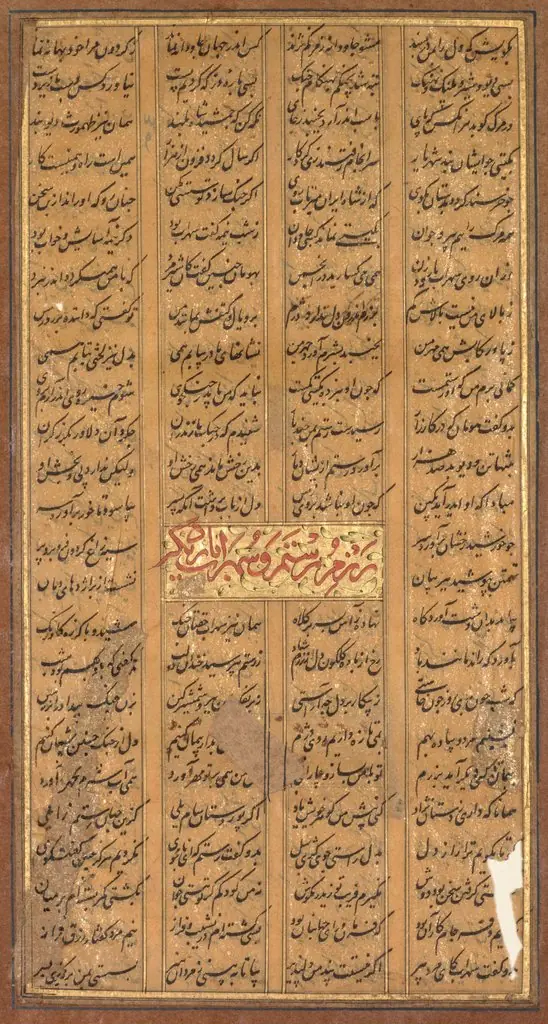 Text of Rustam and Suhrab, from the Shah-nama of Firdausi (Persian, c. 934–1020) (verso)
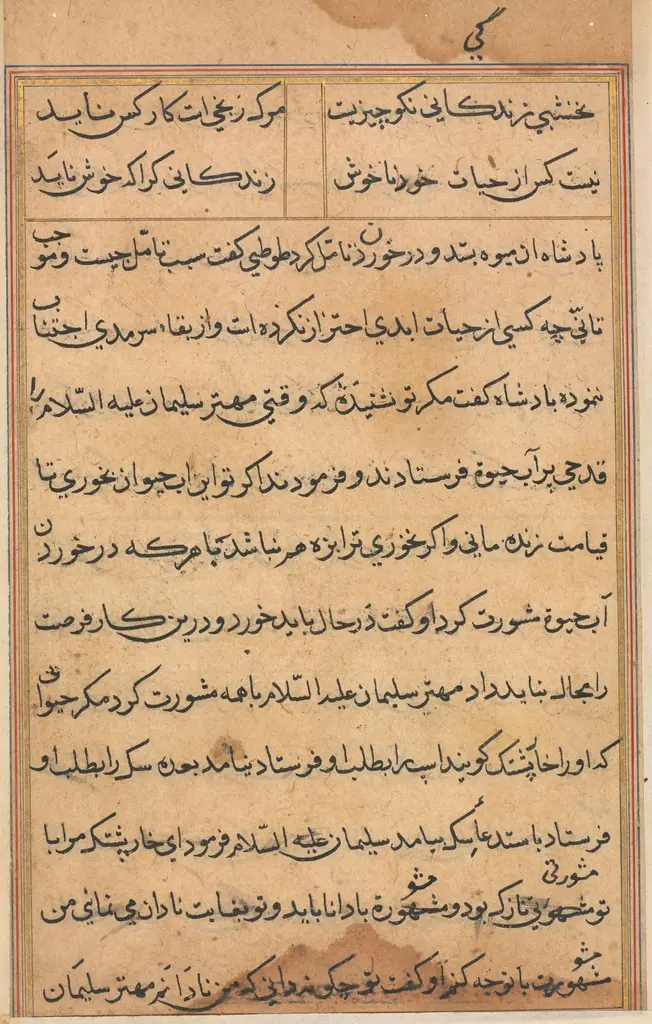 Page from Tales of a Parrot (Tuti-nama): text page
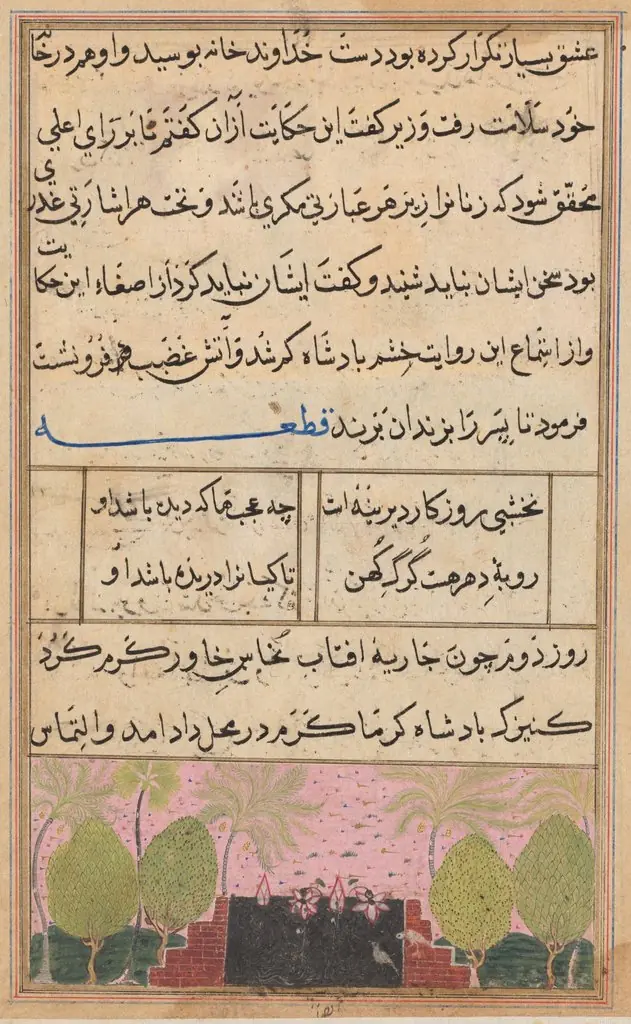 Landscape with a lotus pool, from a Tuti-nama (Tales of a Parrot), Eighth Night
 Baz Bahadur