Artwork
Δωμάτιο στο χρώμα της κανέλας
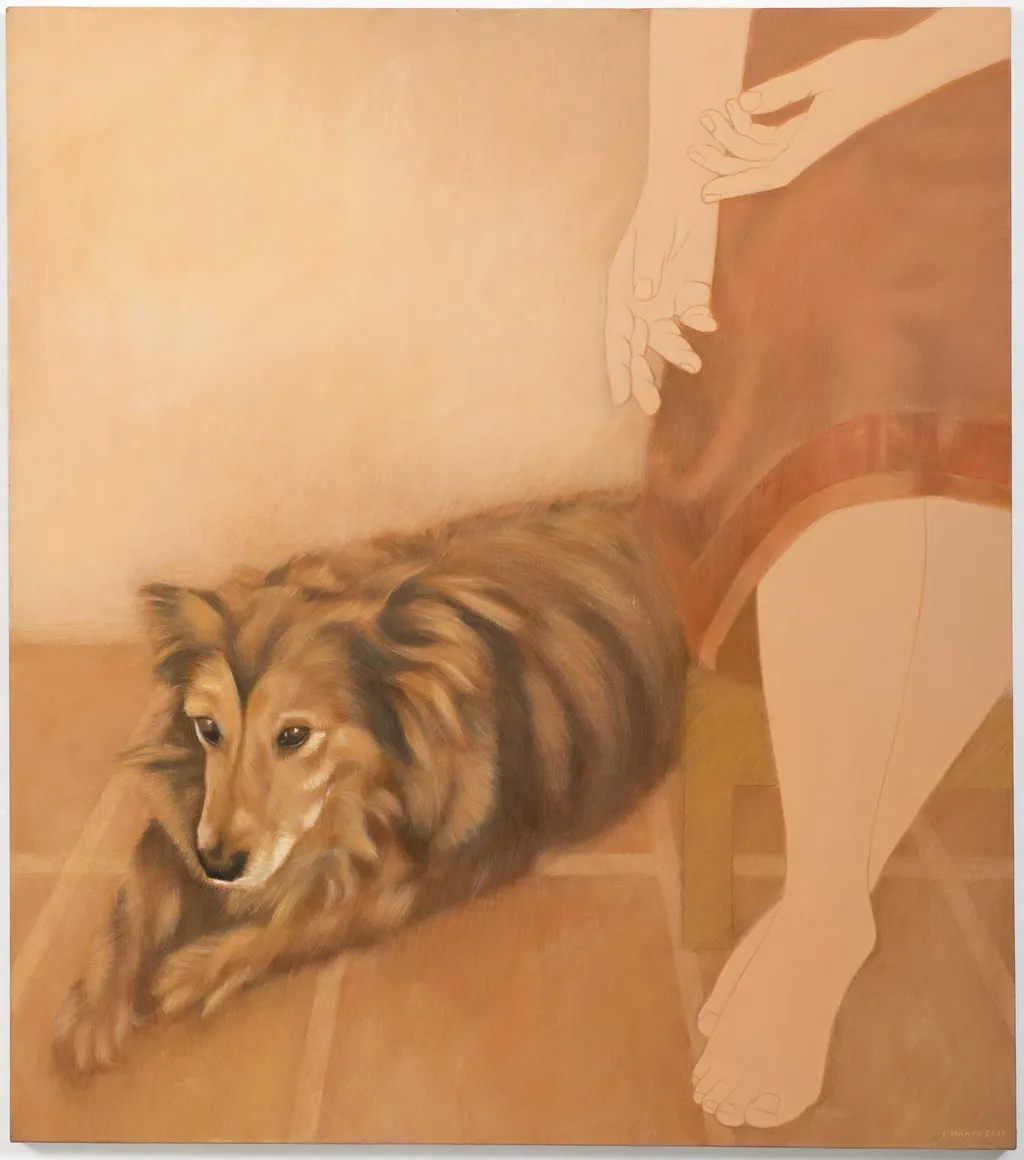
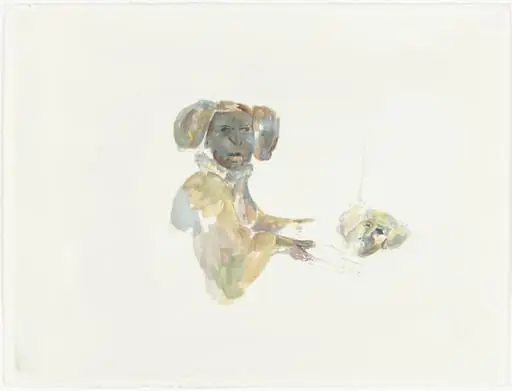
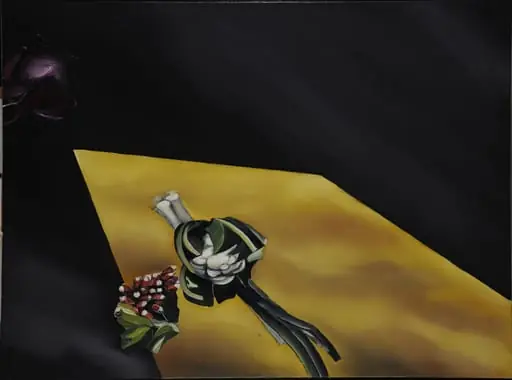
Δωμάτιο στο χρώμα της κανέλας is a drawing by Teta Makri. It dates from 1995 and is held in the collection of the Metropolitan Organisation of Museums of Visual Arts of Thessaloniki – MOMus.
About this work
Overview
The painting depicts a quiet interior with cinnamon-toned walls and a wooden floor, illuminated by soft light falling on a small table near a window.
The painting depicts a quiet interior with cinnamon-toned walls and a wooden floor, illuminated by soft light falling on a small table near a window. Though rendered with photographic detail, the image avoids clinical precision, instead introducing subtle distortions—elongated shadows, blurred edges—that disrupt realism. This approach reflects the artist’s broader interest in how memory and perception reshape visual experience, blurring the line between observed reality and imagined atmosphere.
Subject & Meaning
The room, stripped of figures and narrative, becomes a vessel for contemplation rather than documentation. Its simplicity invites reflection on the quietude of domestic space, while the slightly unnatural lighting suggests an emotional resonance beyond the physical. The scene evokes a sense of absence, as if the space holds the lingering trace of someone who has just left, aligning with the artist’s broader theme of memory as a soft, imperfect recorder of the present.
Technique & Style
Makri employs a painterly realism that mimics photographic clarity but deliberately softens focus and distorts perspective. Edges dissolve slightly, shadows stretch beyond natural logic, and color tones are muted yet warm. These choices distance the image from objective representation, creating a psychological space where the viewer senses not just what is seen, but how it is remembered—rendering the familiar strangely intimate and elusive.
History & Provenance
This work belongs to Makri’s late 1980s period, when she turned from referencing art historical imagery to capturing everyday moments that resembled accidental snapshots. The painting emerged during a time when she was critically examining how mass media reshaped visual perception. Though not part of a named series, it aligns with her exploration of the mundane as a site of cultural and emotional weight, distinct from her earlier, more overtly ironic interventions.
Context
In the 1980s, Makri responded to the saturation of photographic and televised imagery in daily life. Her interiors, like this one, reflect a shift from satire to stillness, mirroring a society conditioned to consume images passively. The quietness of the scene contrasts with the noise of media culture, suggesting a yearning for moments unmediated by spectacle—where perception, not information, becomes the subject.
Legacy
This painting exemplifies Makri’s evolution toward contemplative realism, influencing later Greek artists who sought to reconcile photographic influence with emotional nuance. Her ability to infuse ordinary spaces with psychological depth without overt symbolism established a quiet but enduring mode of painting—one that values silence, ambiguity, and the lingering presence of memory over narrative clarity.
Artist & collection
Artist
Greek artist Teta Makri blends photography and drawing in a quiet, cerebral style.
Museum
Metropolitan Organisation of Museums of Visual Arts of Thessaloniki – MOMus
Continue through works from the same source collection.