Artwork
Case sub deal
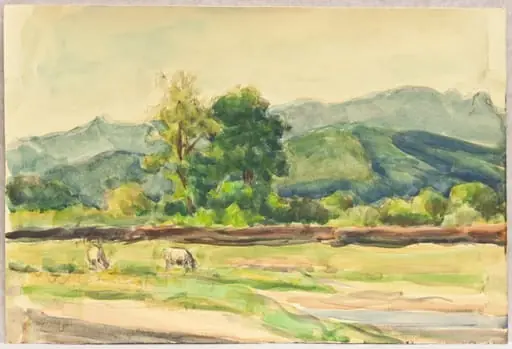
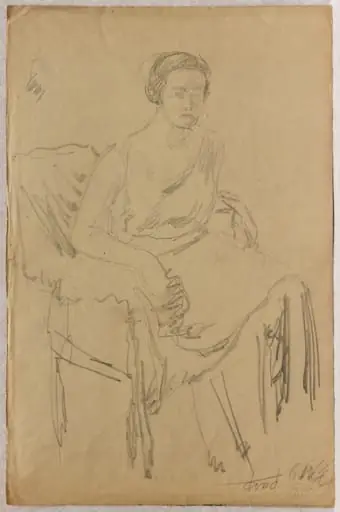
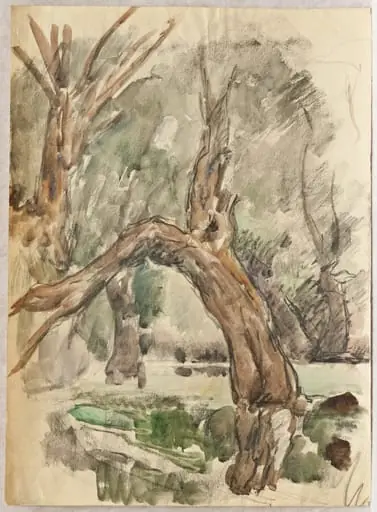
Case sub deal is a print by Rodica Maniu. It dates from 1950 and is held in the collection of the Gavrila Simion Eco-Museum Research Institute Tulcea.
About this work
Overview
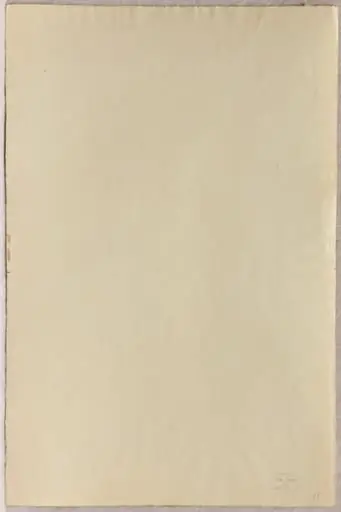
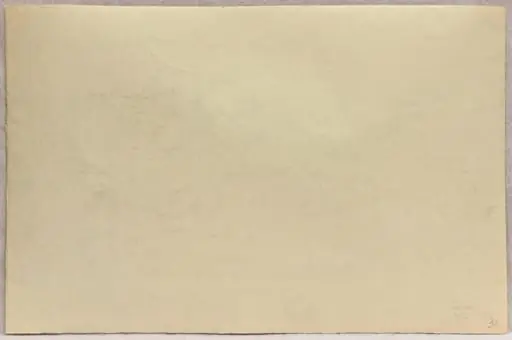
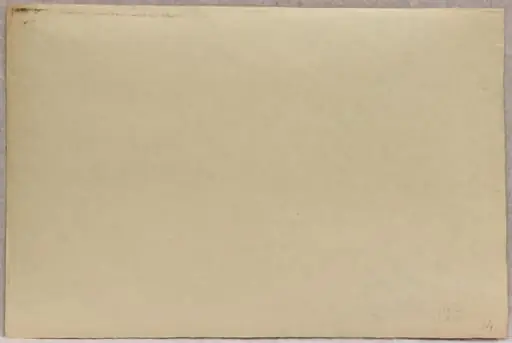
Created around 1950 by Rodica Maniu, this small paper fragment is part of the Museum of Ethnography’s collection. Its modest scale and worn condition suggest it was not intended as a formal artwork but rather as a utilitarian or personal item. The surface bears signs of age—fading, irregular edges, and scattered brown marks—indicating years of handling or storage under non-ideal conditions.
Subject & Meaning
The work’s content is not legible or clearly defined, and no symbolic imagery is present. The faint handwritten number and stamp in the lower right may have served as an identifier or catalog mark, hinting at administrative or archival use. Its meaning remains ambiguous, possibly tied to personal record-keeping or institutional documentation rather than artistic expression.
Technique & Style
The piece is executed on a thin, yellowed sheet with a coarse, uneven texture. The marks across its surface appear accidental or incidental—likely ink stains, dirt, or aging residues—rather than deliberate artistic gestures. The hand-cut edges and lack of uniformity suggest informal production, consistent with everyday paper use rather than curated art-making.
History & Provenance
The object entered the Museum of Ethnography’s holdings without detailed documentation of its origin or prior ownership. Its creation date is estimated based on material analysis and stylistic context. The presence of a stamp and number implies it may have been part of a larger, now-lost collection, possibly related to domestic or regional administrative practices in mid-20th century Romania.
Context
In postwar Romania, paper was often reused or repurposed due to scarcity. Objects like this, with minimal visual content and signs of wear, reflect the material constraints and practical habits of the era. While not created as art, such items now offer insight into the textures of daily life, where utility and memory intersected in unassuming ways.
Legacy
Today, the fragment is preserved not for its aesthetic qualities but as a material witness to ordinary life. It contributes to broader scholarly efforts to document non-artistic artifacts that reveal social habits, economic conditions, and the quiet persistence of personal and institutional record-keeping in mid-century Eastern Europe.
Artist & collection
Museum
Gavrila Simion Eco-Museum Research Institute Tulcea
Continue through works from the same source collection.