Artwork
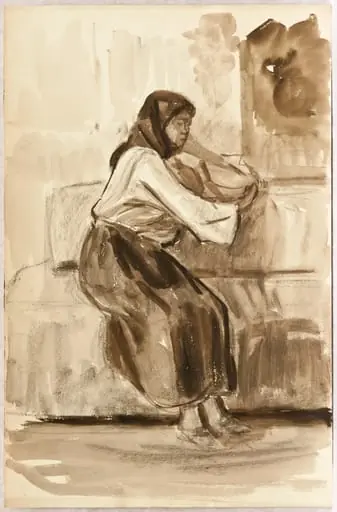
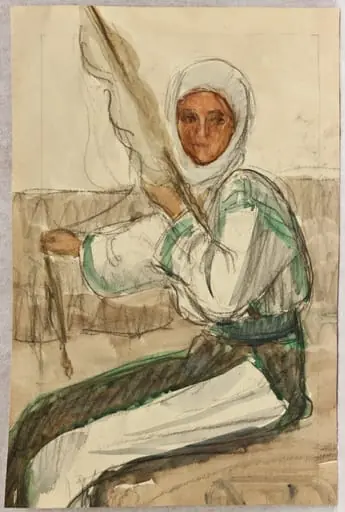
Tătăroaică odihnindu-se
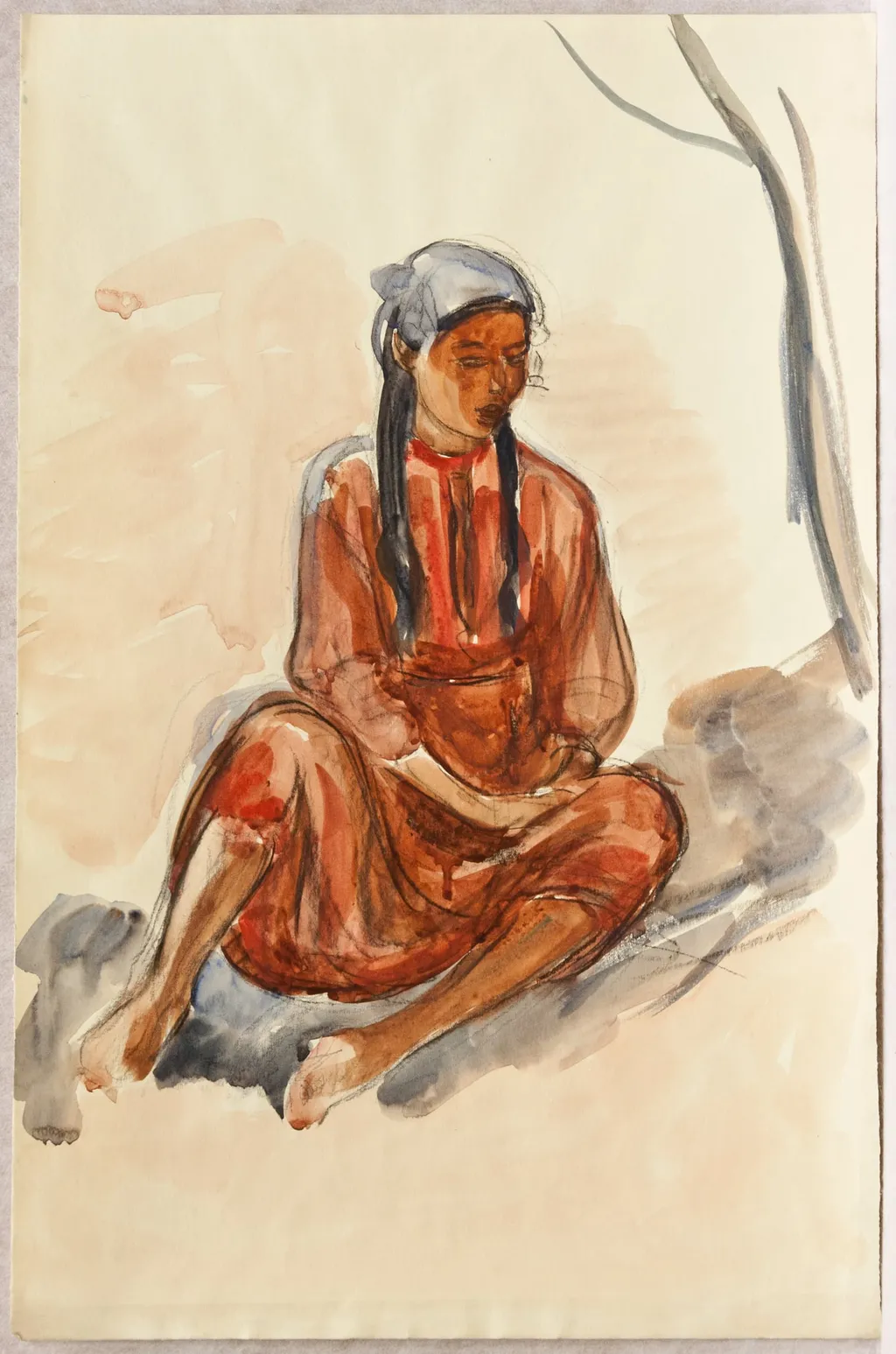
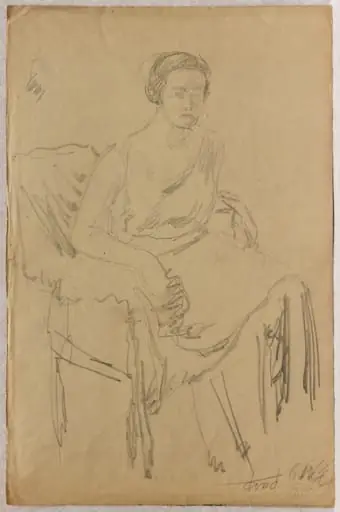
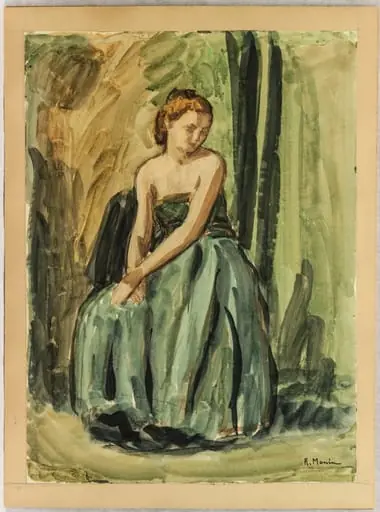
Tătăroaică odihnindu-se is a print by Rodica Maniu. It dates from 1950 and is held in the collection of the Gavrila Simion Eco-Museum Research Institute Tulcea.
About this work
Overview
The composition is restrained, focusing entirely on the figure against a neutral background, reinforcing its meditative tone.
Tătăroaică odihnindu-se, painted around 1950 by Rodica Maniu, is a quiet portrait of a woman at rest. Executed in oil or tempera, the work is part of the Museum of Ethnography’s collection. It captures a moment of stillness, emphasizing the dignity of everyday life in rural Romania. The composition is restrained, focusing entirely on the figure against a neutral background, reinforcing its meditative tone.
Subject & Meaning
The subject is a woman of likely Roma origin, identified by traditional dress and hairstyle. Her downward gaze and clasped hands suggest introspection rather than sorrow. The absence of narrative context invites contemplation of inner life, not external circumstance. Maniu presents her not as a type, but as an individual in a private moment, honoring stillness as a form of presence.
Technique & Style
Maniu employs soft, muted tones with a limited palette dominated by red, white, and beige. The brushwork is deliberate but unobtrusive, avoiding dramatic contrast or texture. Shadows are subtle, defining form without harshness. The figure is centered, framed by negative space, which enhances the sense of solitude. The style leans toward realism with lyrical restraint, avoiding sentimentality.
History & Provenance
Created circa 1950, the painting entered the Museum of Ethnography’s holdings during a period when Romanian institutions were actively documenting folk life. Its acquisition reflects postwar efforts to preserve cultural identity through visual records. No earlier ownership records are publicly documented, suggesting it was likely acquired directly from the artist or through state-sponsored cultural initiatives of the time.
Context
In early 1950s Romania, state-supported art often emphasized socialist realism, yet Maniu’s work diverges by focusing on quiet, non-ideological moments. This painting aligns with regional ethnographic studies that sought to record traditional dress and daily rituals. Its intimacy contrasts with the grandeur of official art, offering a quieter, more personal vision of rural life during a politically charged era.
Legacy
Tătăroaică odihnindu-se remains a quiet reference in Romanian art for its empathetic portrayal of marginalized communities. It is not widely reproduced, but within academic and museum circles, it is recognized for its restraint and emotional sincerity. Maniu’s approach influenced later artists interested in ethnographic portraiture that avoids exoticism, favoring dignity over spectacle.
Artist & collection
Museum
Gavrila Simion Eco-Museum Research Institute Tulcea
Continue through works from the same source collection.