Artwork
Mirza Ghazi
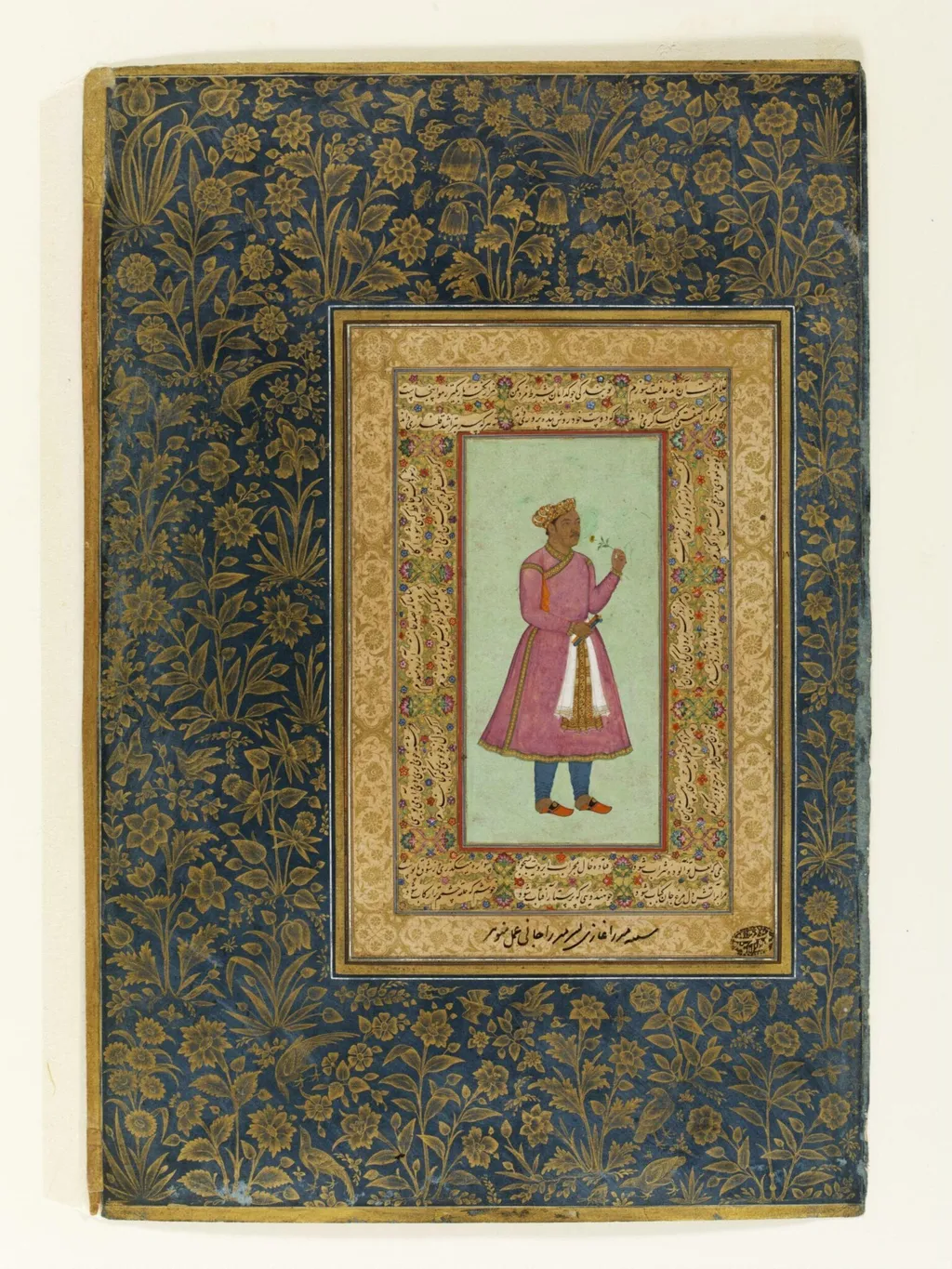
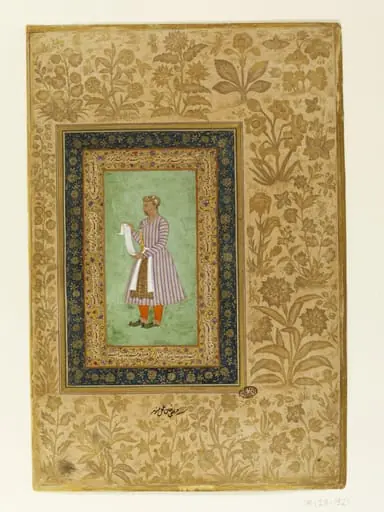
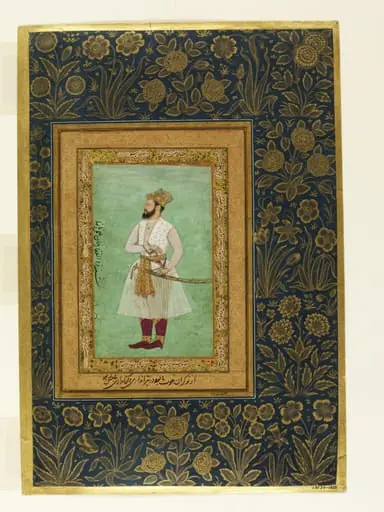
Mirza Ghazi is a paint painting by the Baroque artist Manohar. It dates from 1610 and is held in the collection of the Victoria and Albert Museum.
About this work
Overview
The painting serves as both a personal likeness and a record of political allegiance within the imperial hierarchy.
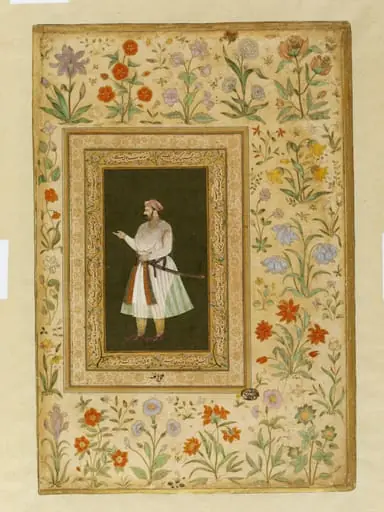
This portrait depicts Mirza Ghazi, a prominent noble in the Mughal court during Emperor Jahangir’s reign. Painted by Manohar, an imperial artist with a long-standing career under both Akbar and Jahangir, the work includes a Persian inscription identifying the sitter, his lineage, and the artist. The painting serves as both a personal likeness and a record of political allegiance within the imperial hierarchy.
Subject & Meaning
Mirza Ghazi, son of Mirza Jani, was a member of the Tarkhan dynasty of Sindh who pledged loyalty to the Mughals after his father’s submission to Akbar. He rose to military leadership under Jahangir, commanding key campaigns in the early 1610s. A noted Persian poet, his verses were favored by the emperor. The portrait underscores his dual identity as a warrior and cultured courtier, reinforcing his status through visual formality and refined attire.
Technique & Style
Manohar rendered Mirza Ghazi with precise brushwork and muted, elegant tones, emphasizing texture in fabric and the structured form of the turban. The composition is frontal and static, focusing attention on the sitter’s dignified expression and ornate dress. The inscription, carefully placed along the upper edge, integrates text and image as a unified document of identity, reflecting the imperial atelier’s tradition of combining portraiture with biographical detail.
History & Provenance
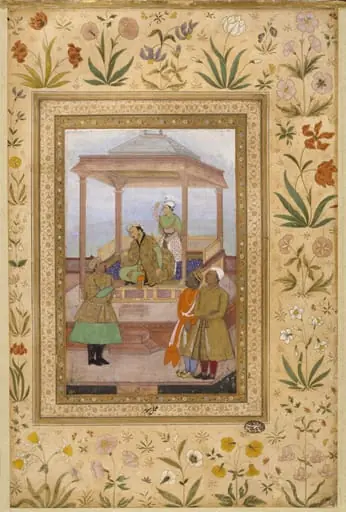
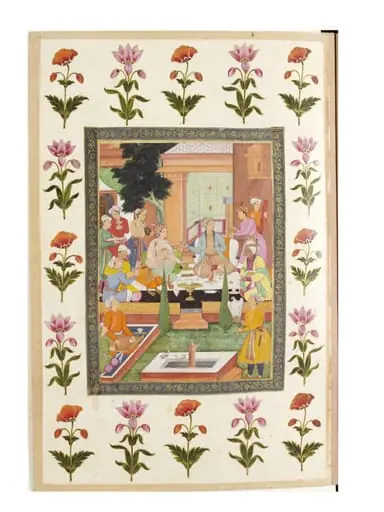
The painting was created around 1610, shortly before Mirza Ghazi’s death in 1612. It was later used as a model for a larger court scene in the Victoria and Albert Museum, where his figure appears identically reproduced among Jahangir’s retinue. This reuse confirms its role as an authoritative visual reference within the imperial workshop, likely commissioned to document key figures in the emperor’s inner circle.
Context
Mirza Ghazi’s prominence reflects the Mughal strategy of incorporating regional elites into imperial service. His family’s transition from rulers of Sindh to loyal courtiers illustrates how the Mughals consolidated power through diplomacy and patronage. Artistic representation of such figures reinforced their legitimacy and visibility within the court’s visual culture, blending political utility with aesthetic refinement.
Legacy
Manohar’s portrait of Mirza Ghazi exemplifies the maturity of Mughal portraiture under Jahangir, where individual identity and imperial loyalty were rendered with psychological nuance. Its replication in a larger court scene demonstrates how such images functioned as standardized icons within official visual narratives. The work remains a key example of how portraiture served administrative and symbolic purposes in Mughal governance.
Artist & collection