Artwork
Murtaza Khan
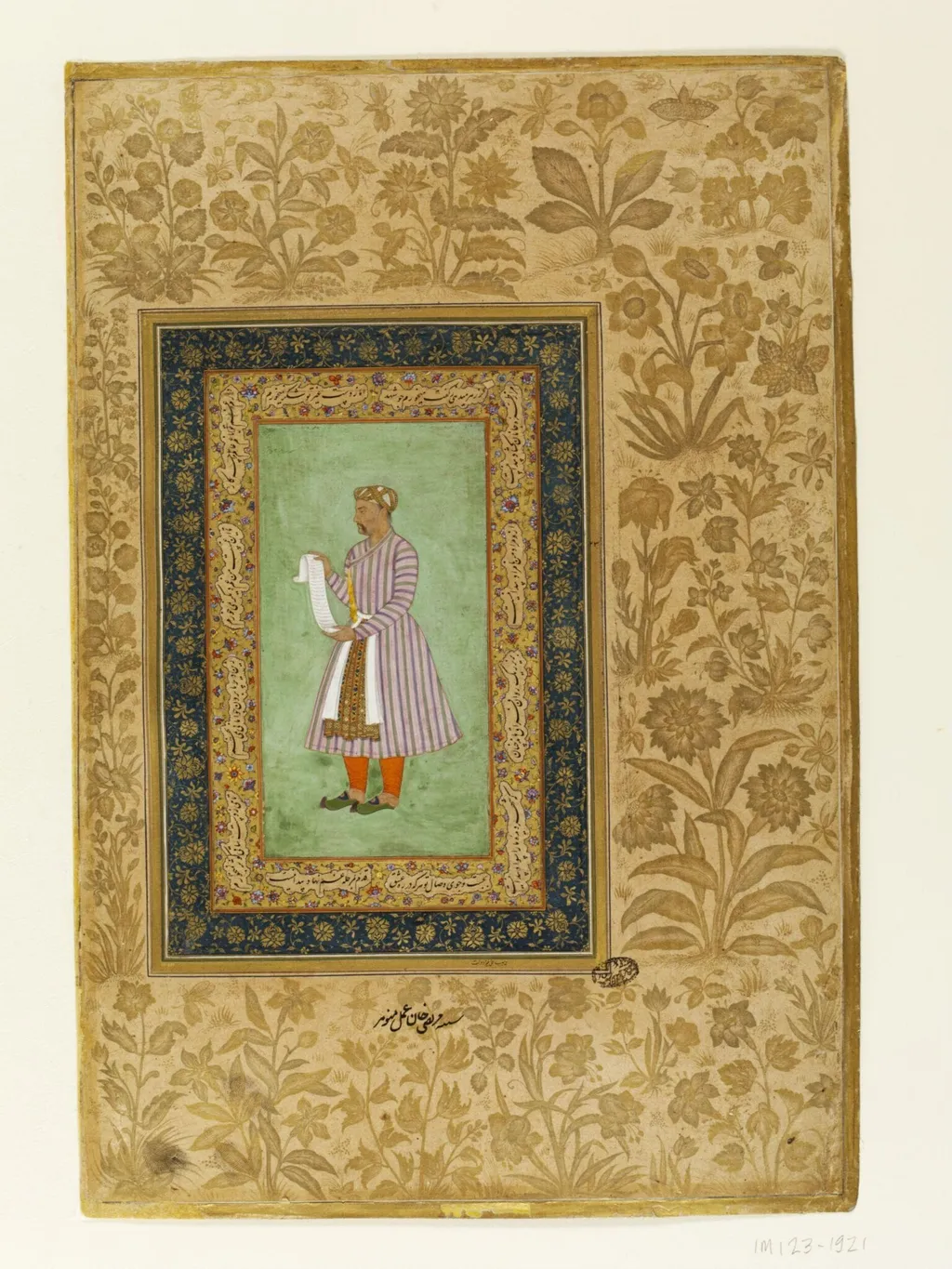
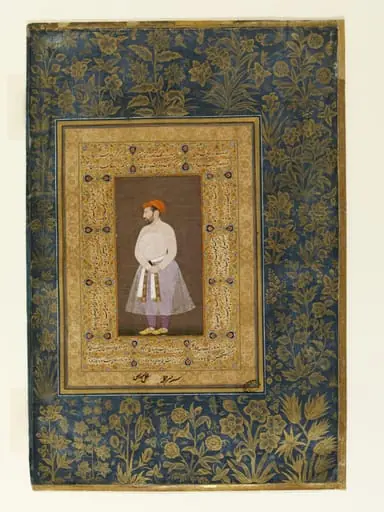
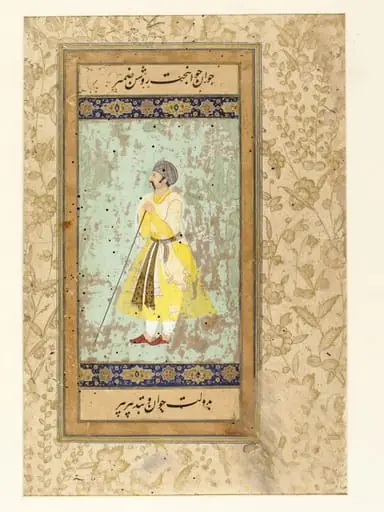
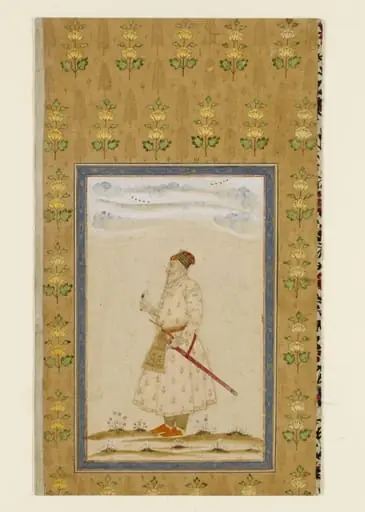
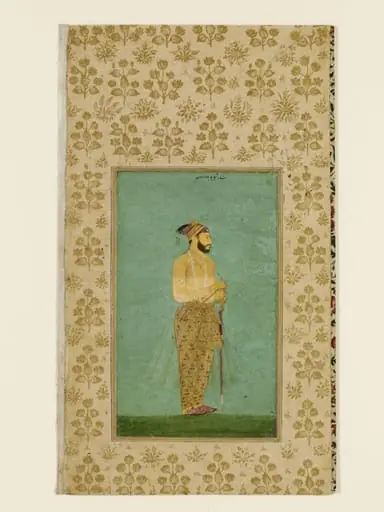
Murtaza Khan is a paint painting by the Baroque artist Manohar. It dates from 1610 and is held in the collection of the Victoria and Albert Museum.
About this work
Overview
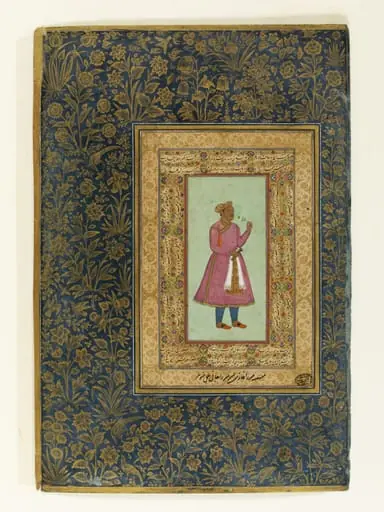
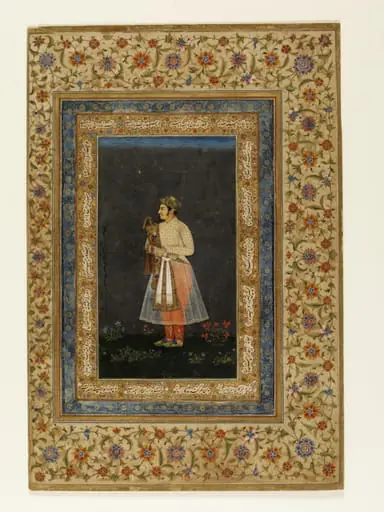
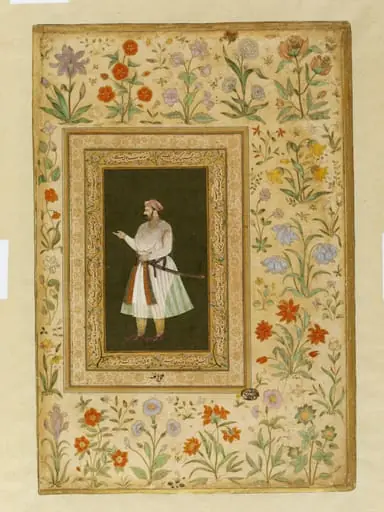
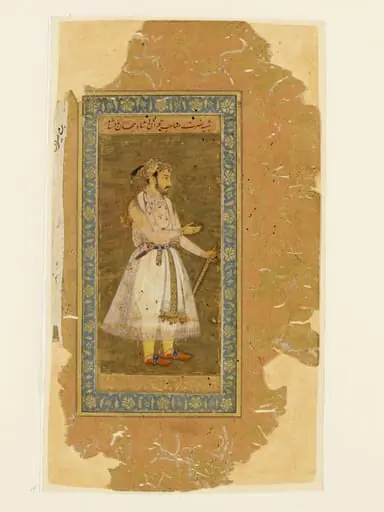
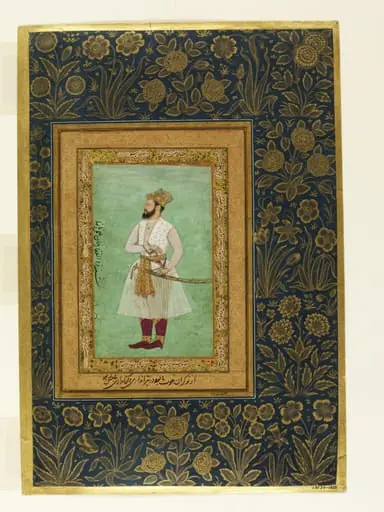
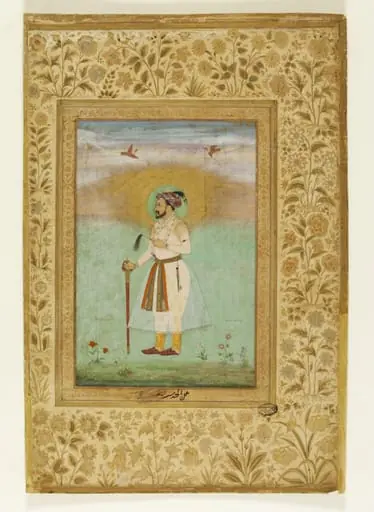
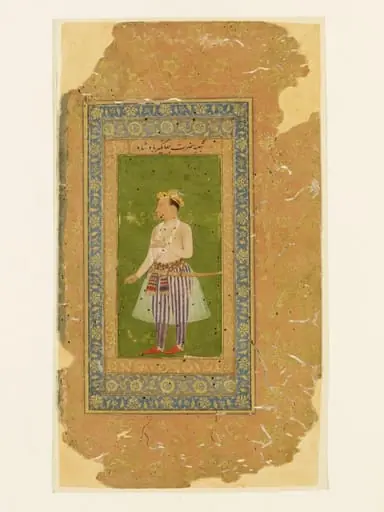
The work is a portrait of Murtaza Khan executed in opaque watercolour and gold on paper, dating to around 1610. It presents the sitter standing in a green landscape, dressed in a striped tunic and trousers, with a white cloth draped over his left arm and a turban on his head. He holds a sheet of paper in his right hand, and the image is surrounded by an elaborate decorative border.
Subject & Meaning
Murtaza Khan is depicted in a dignified pose, his attire and the inclusion of a written document suggesting a status of authority or scholarly activity. The surrounding floral motifs and Arabic inscription reinforce a cultural context rooted in Mughal artistic conventions, where portraiture often combined personal representation with symbolic ornamentation.
Technique & Style
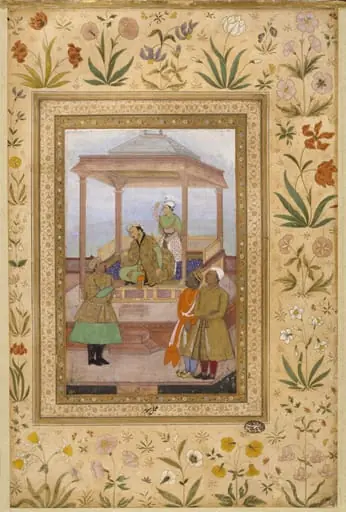
The painting employs opaque watercolour combined with gold leaf, a technique typical of early 17th‑century Indian court painting. The figures are rendered with fine brushwork, while the border—added later by the artist Daulat—features layered floral designs and calligraphic Arabic, creating a three‑tiered visual frame that balances color and metallic sheen.
History & Provenance
Originally created by the painter Manohar, the portrait later received its ornate border from Daulat. In the early 20th century it entered the collection of Harriet Sarah, Baroness Wantage, and was bequeathed to the public upon her death in 1920, ensuring its preservation within a museum context.
Context
The piece reflects the artistic milieu of the Mughal empire, where court painters like Manohar blended Persian influences with indigenous Indian motifs. The use of gold and intricate borders aligns with the period’s aesthetic preferences for luxurious, highly detailed portraiture that conveyed both personal identity and imperial grandeur.
Artist & collection