Artwork
Untitled
Untitled is a paint painting by the Baroque artist Unknown. It dates from 1615 and is held in the collection of the Victoria and Albert Museum.
About this work
Overview
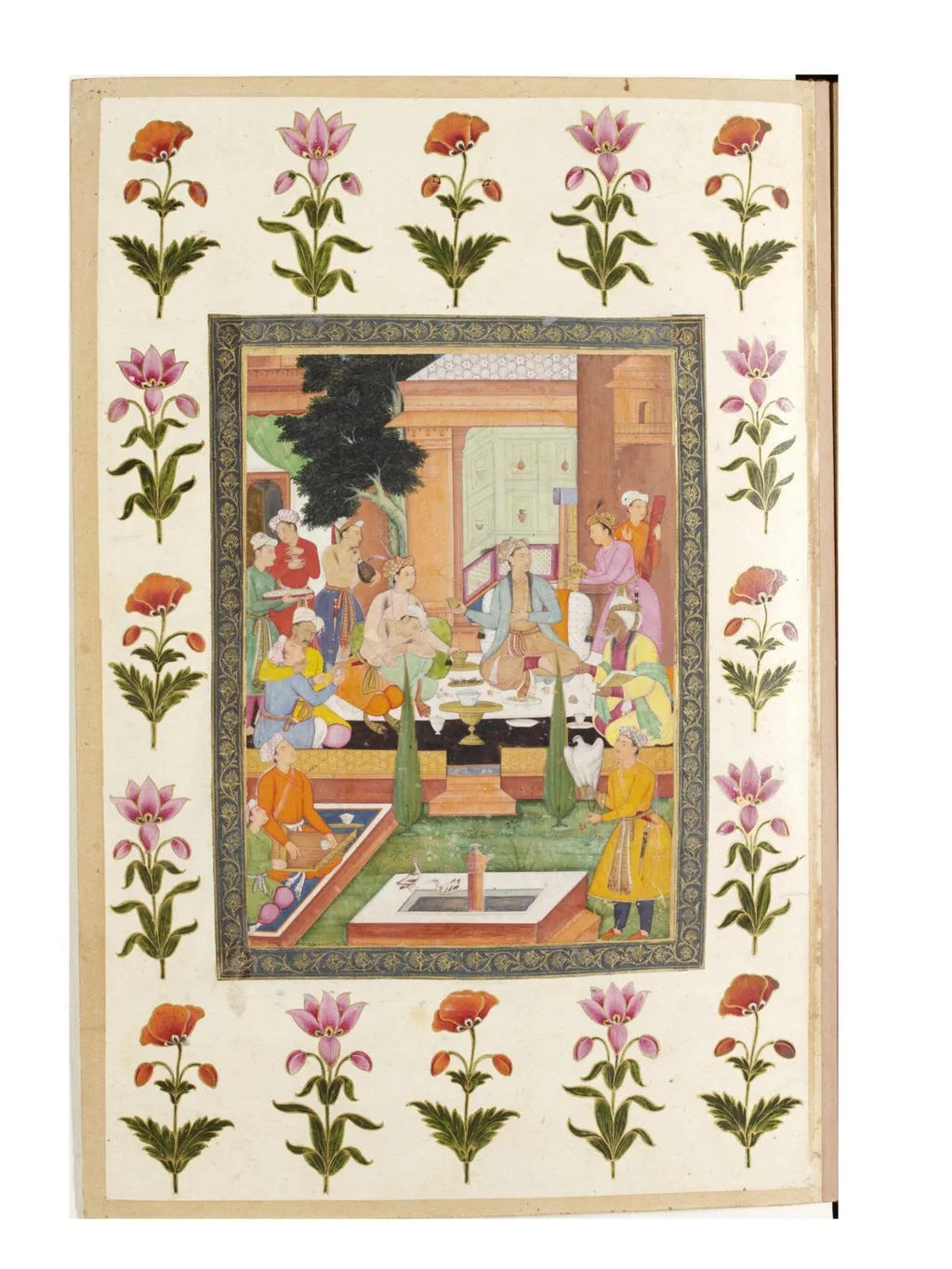
Created between 1615 and 1620 during Emperor Jahangir’s reign, this Mughal painting originated in a royal atelier known for refined detail and subtle color.
Created between 1615 and 1620 during Emperor Jahangir’s reign, this Mughal painting originated in a royal atelier known for refined detail and subtle color. It was later incorporated into the Small Clive Album in the mid-18th century, where it received new ornamental borders. The work reflects the courtly aesthetic of its time, blending naturalism with symbolic elements to convey ideals of refined power and cultivated leisure.
Subject & Meaning
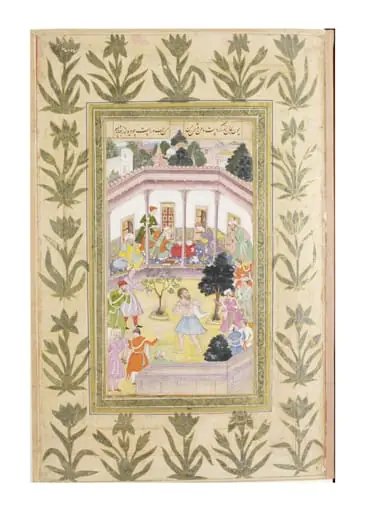
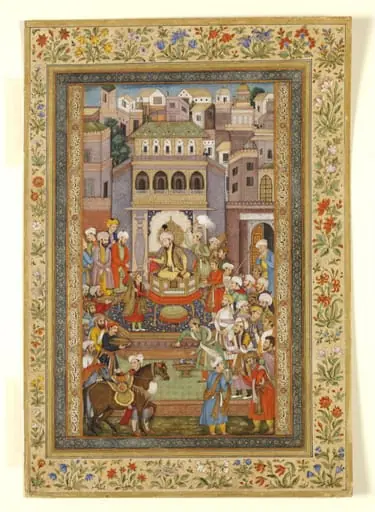
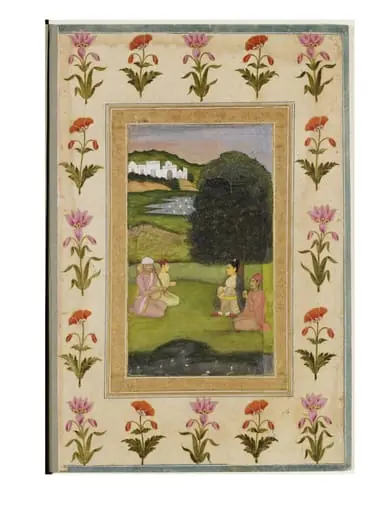
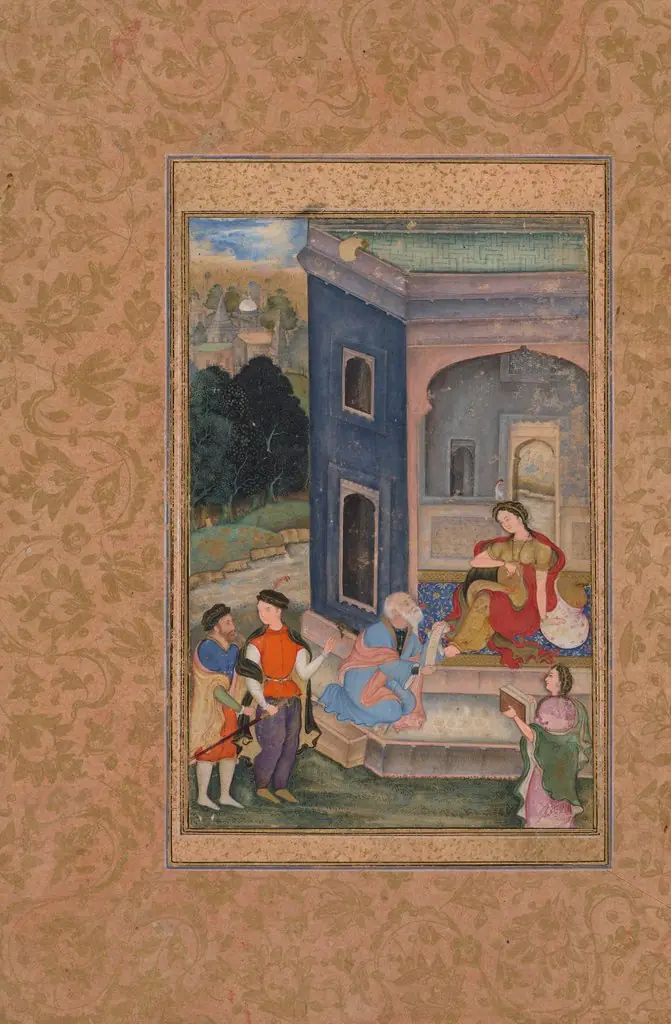
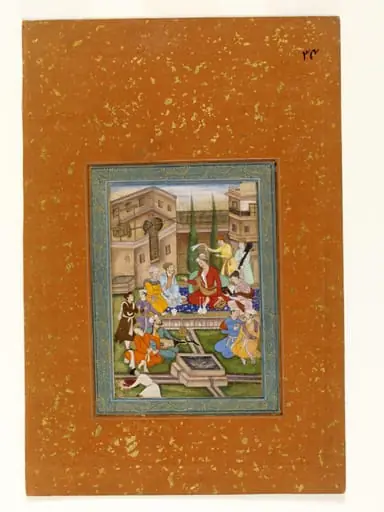
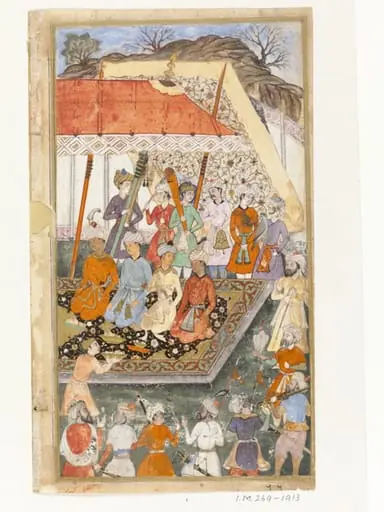
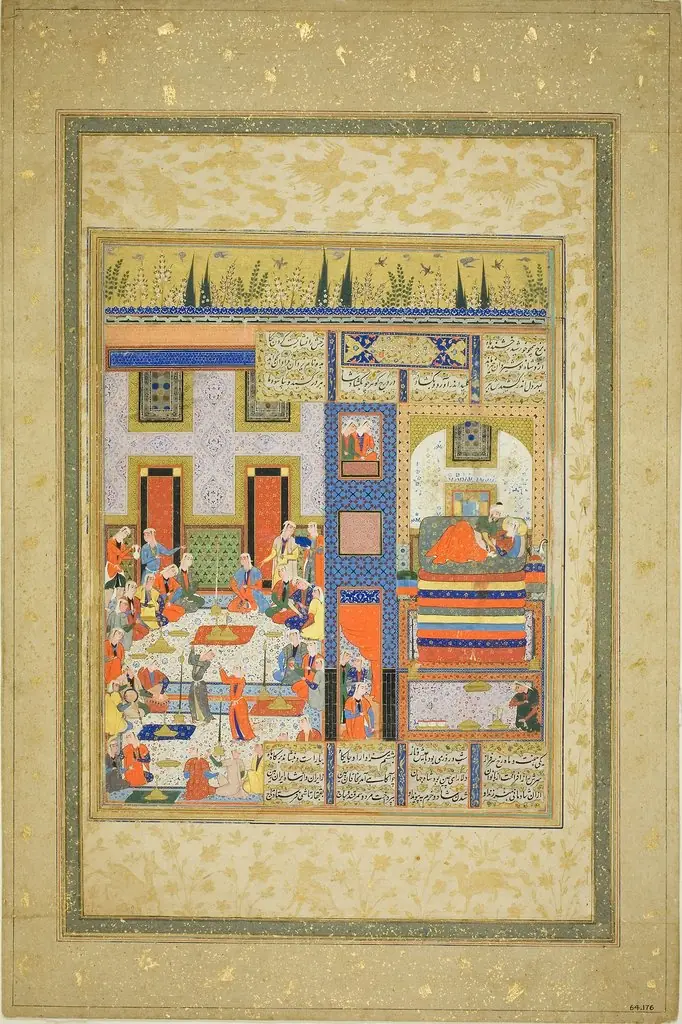
The scene depicts a mehfil, a gathering where a nobleman engages in refined pastimes to affirm his status. To the left, music, wine, and companionship suggest sensual and intellectual pleasure; to the right, a sword wrapped in cloth, a Sufi reciting poetry, and a falcon ready for hunt symbolize restraint, spiritual reflection, and martial readiness. Together, these elements portray the balanced virtues expected of a ruler: pleasure tempered by discipline.
Technique & Style
Executed with fine brushwork and delicate outlines, the painting employs soft, muted tones and precise detail characteristic of early 17th-century Mughal miniatures. Gold accents frame figures and architecture, signaling royal patronage. The composition is intimate and layered, with figures arranged across a garden setting that blends real and idealized space, reflecting the court’s emphasis on harmony and cultivated beauty.
History & Provenance
The painting was likely produced in the imperial workshop before being bound into the Small Clive Album during the 1700s, a collection associated with Robert Clive. Its inclusion in this album suggests its value as a cultural artifact, later dispersed through colonial networks. The album’s reconfiguration altered its original context, adding decorative borders that reflect 18th-century tastes rather than Mughal conventions.
Context
Under Jahangir, Mughal painting flourished with a focus on naturalism and personal expression. Courtly gatherings like the mehfil were documented not merely as social events but as performances of sovereignty. The inclusion of Persian and Indian musical instruments, Sufi poetry, and falconry reflects the cosmopolitan culture of the court, where Persianate traditions merged with local customs to define elite identity.
Legacy
This work remains a key example of Mughal album painting, illustrating how art served both aesthetic and ideological functions. Its survival in a colonial-era album highlights the complex journey of Indian artworks into Western collections. Scholars continue to analyze its iconography to understand how power, pleasure, and spirituality were visually negotiated in early modern South Asia.
Artist & collection

 Domestic Scene
 Giacomo and Cardinal Marco, investing Andrea, Abbot of San Zeno, with his Benefice
 The Nymph of Fontainebleau
 Portrait of a Woman
 Madonna and Child with Saints in the Enclosed Garden
 Venus and Minerva
 Family Group of Four on Sofa
 Wall painting from Room H of the Villa of P. Fannius Synistor at Boscoreale