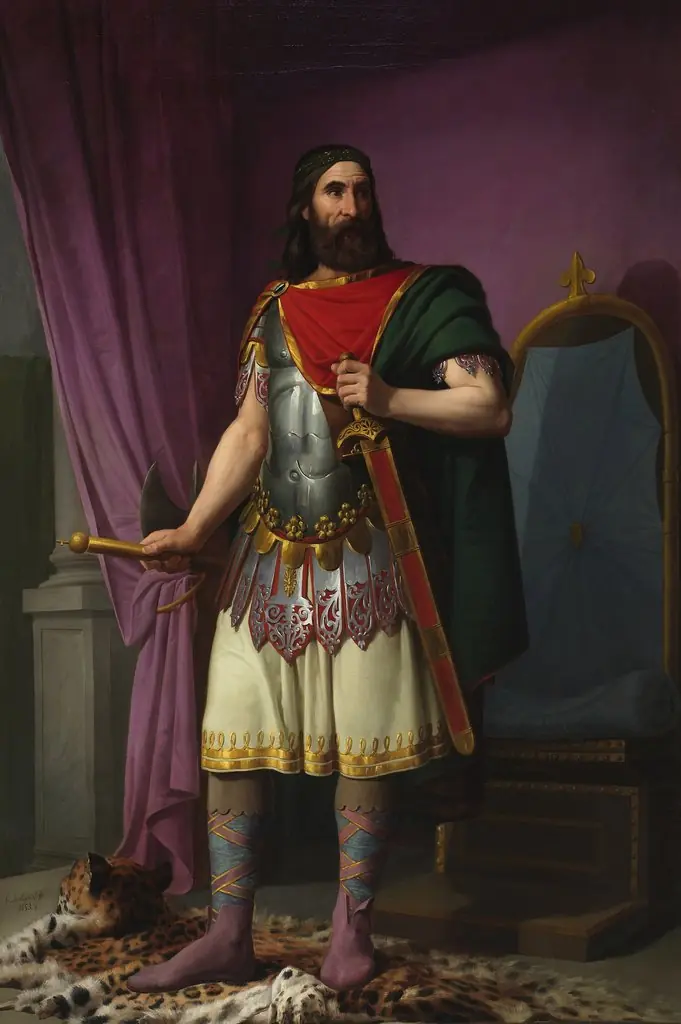
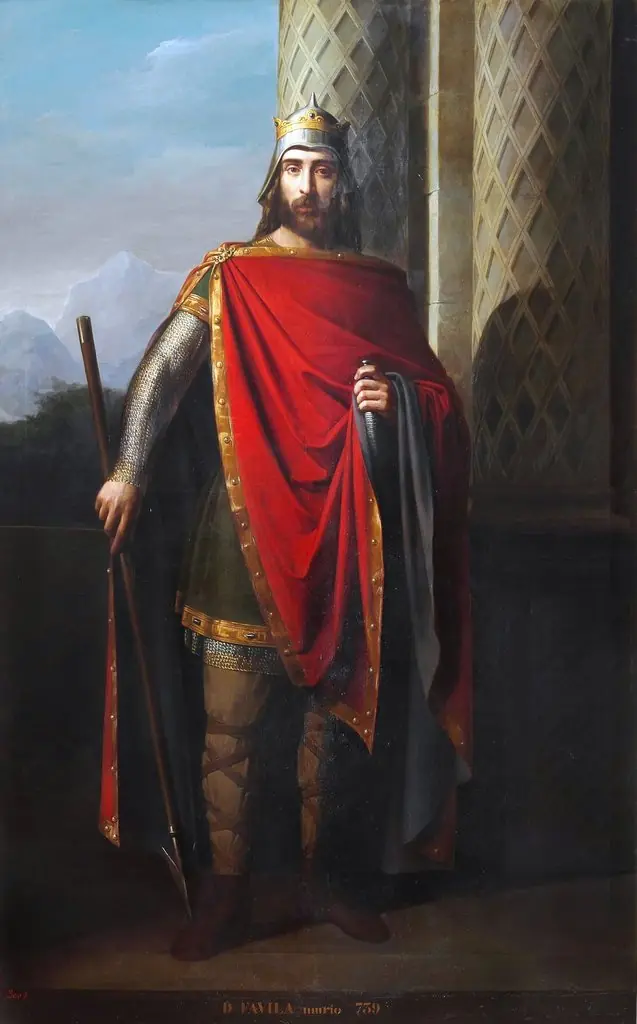
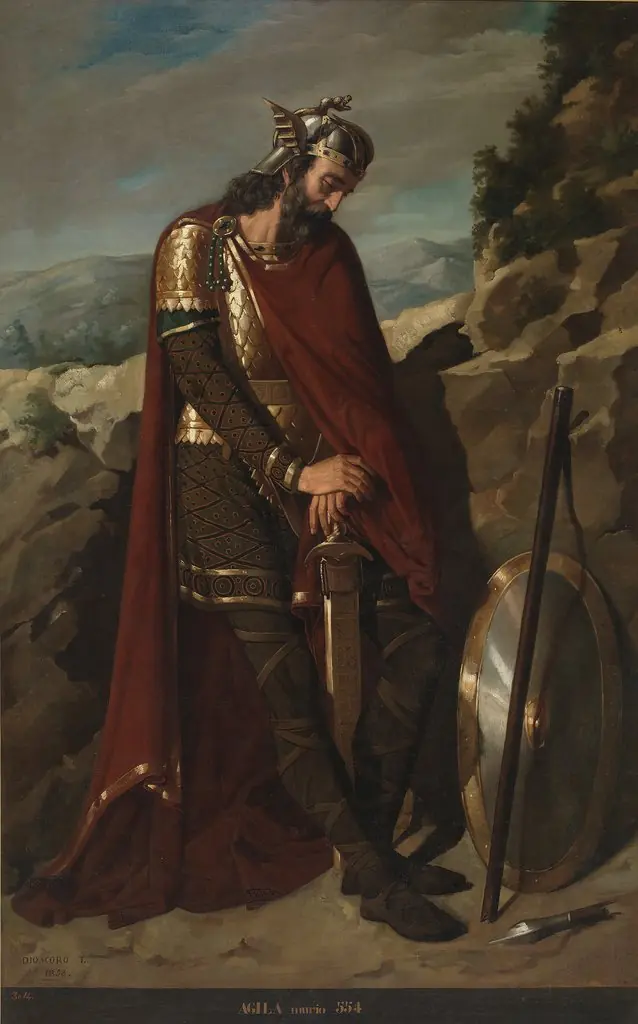
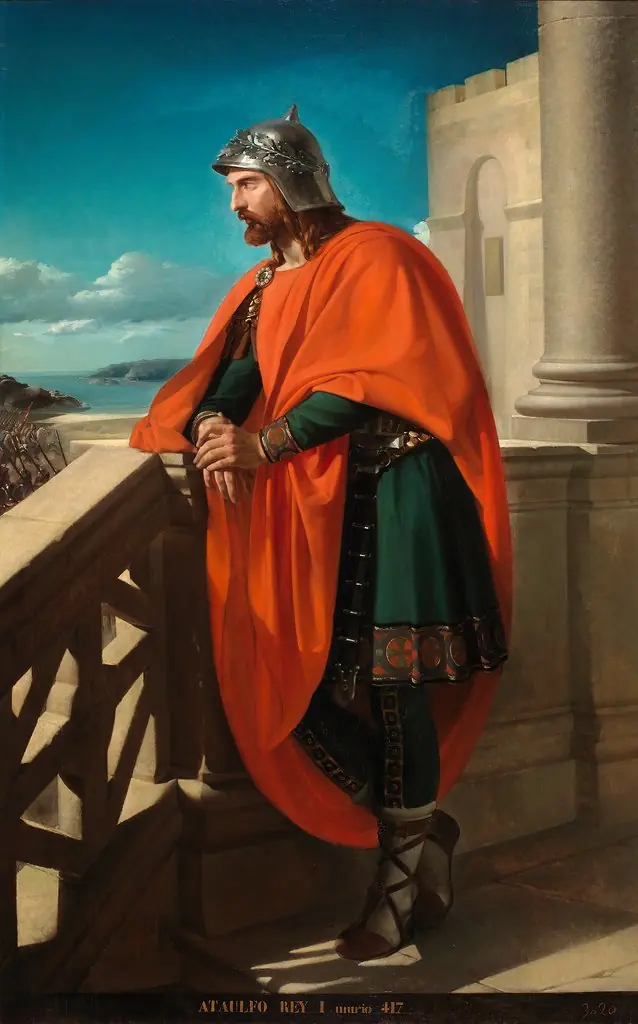
Artwork
Wittiza, visigothic's king
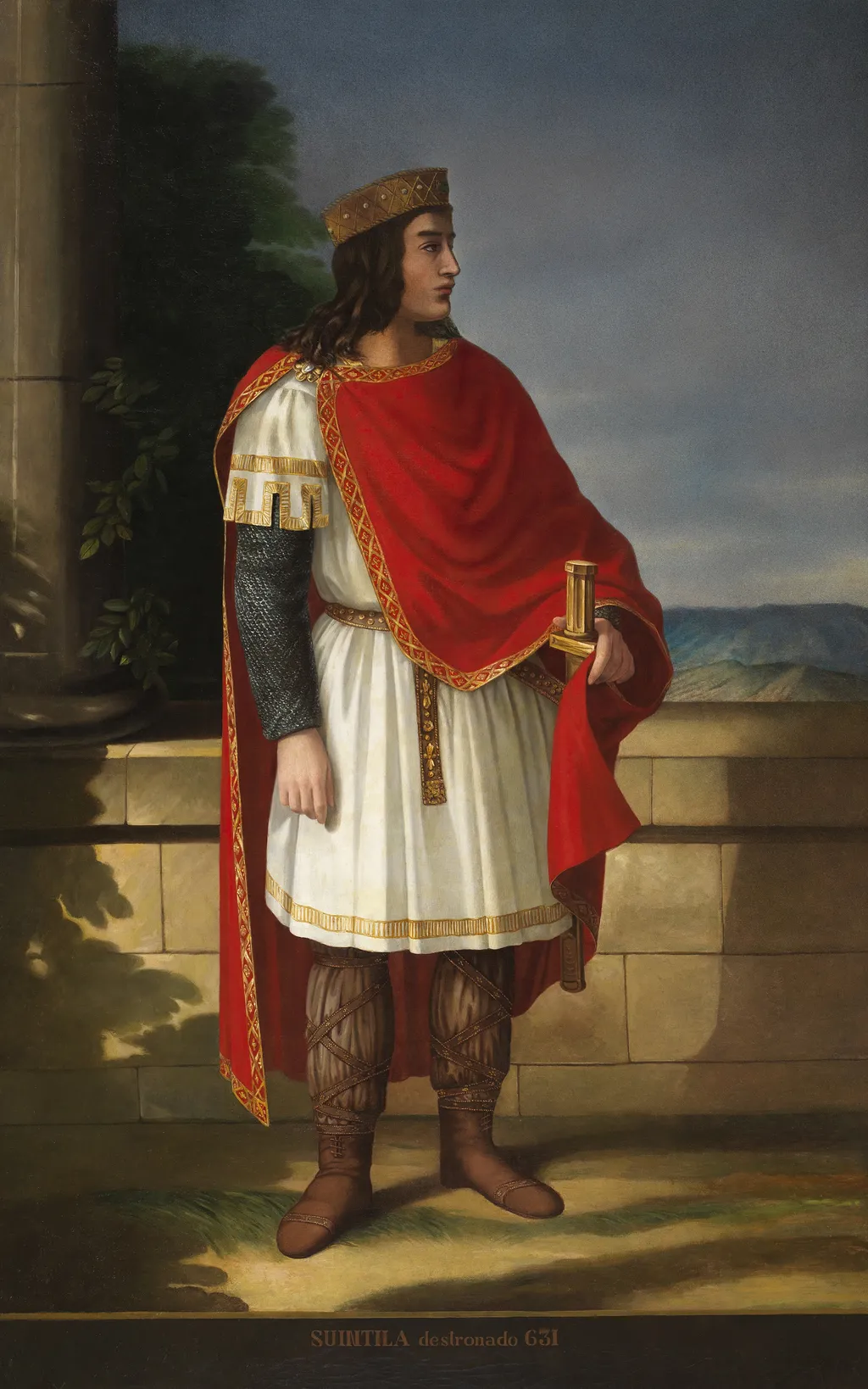
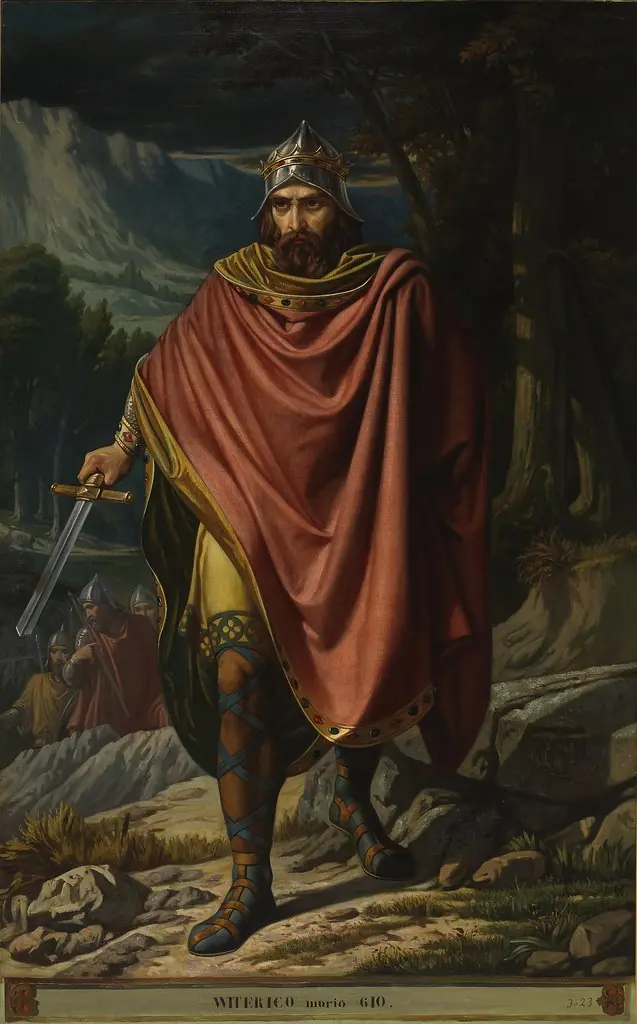
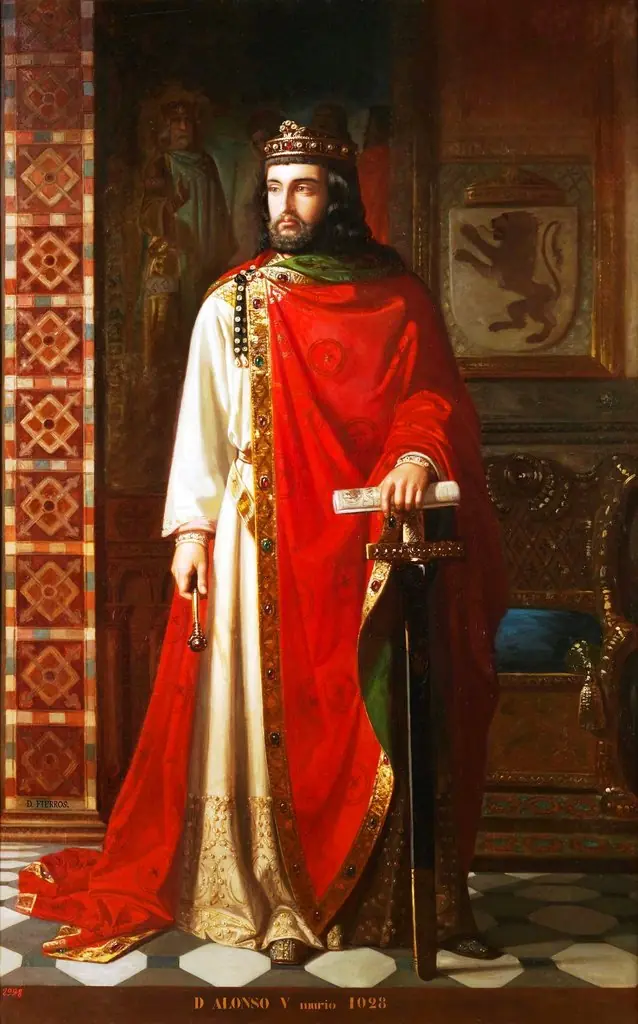
Wittiza, visigothic's king is an oil painting by Manuel Iglesias y Domínguez. It dates from 1853 and is held in the collection of the Museo del Prado.
About this work
Overview
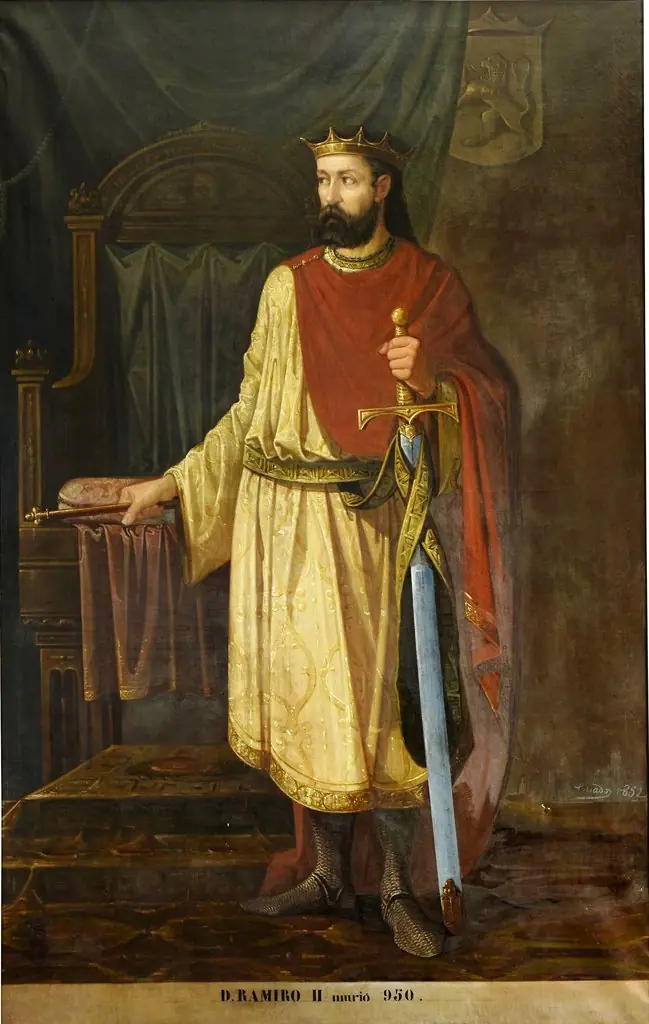
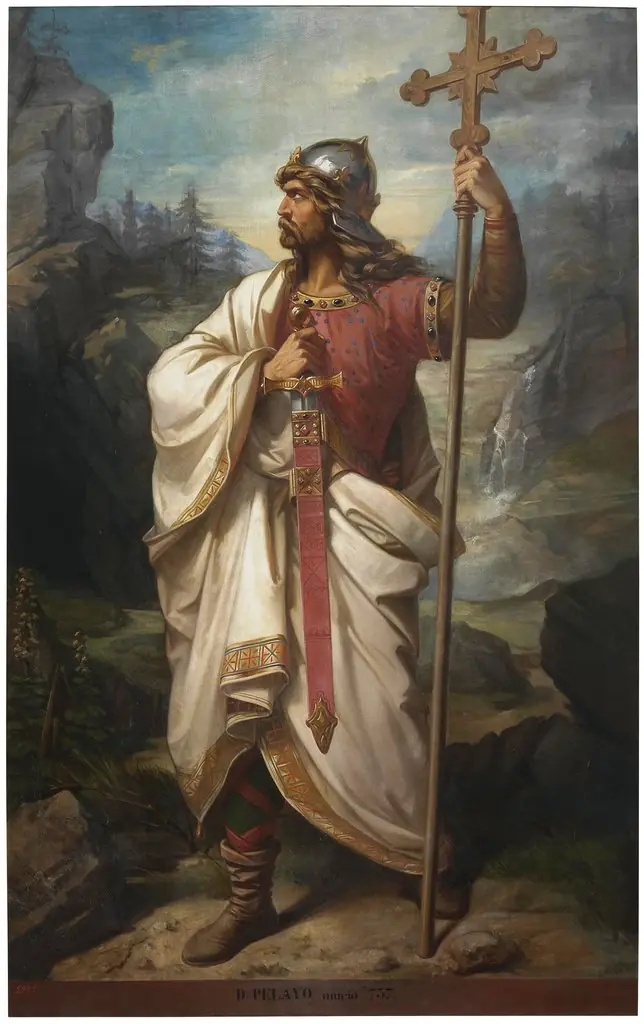
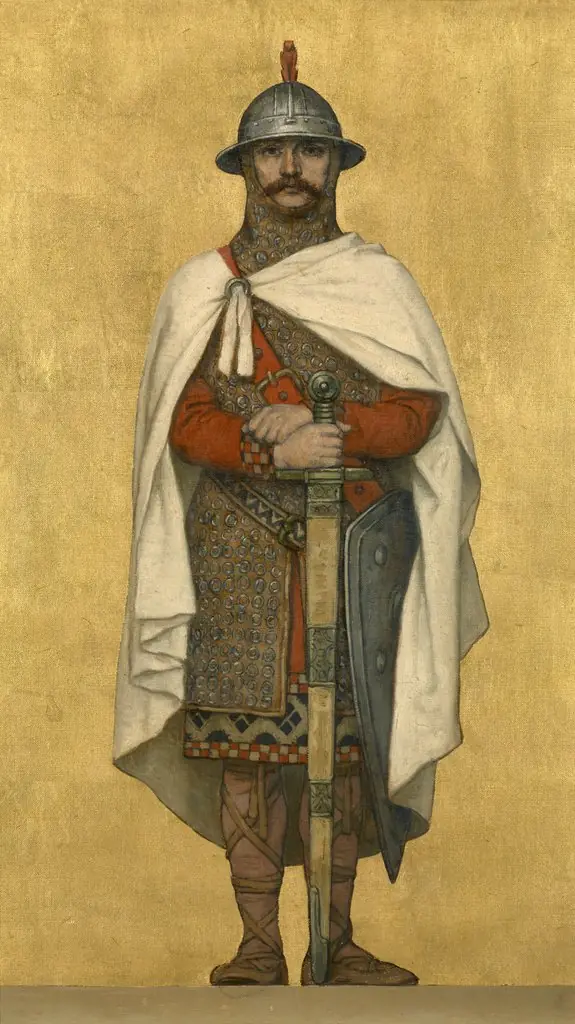
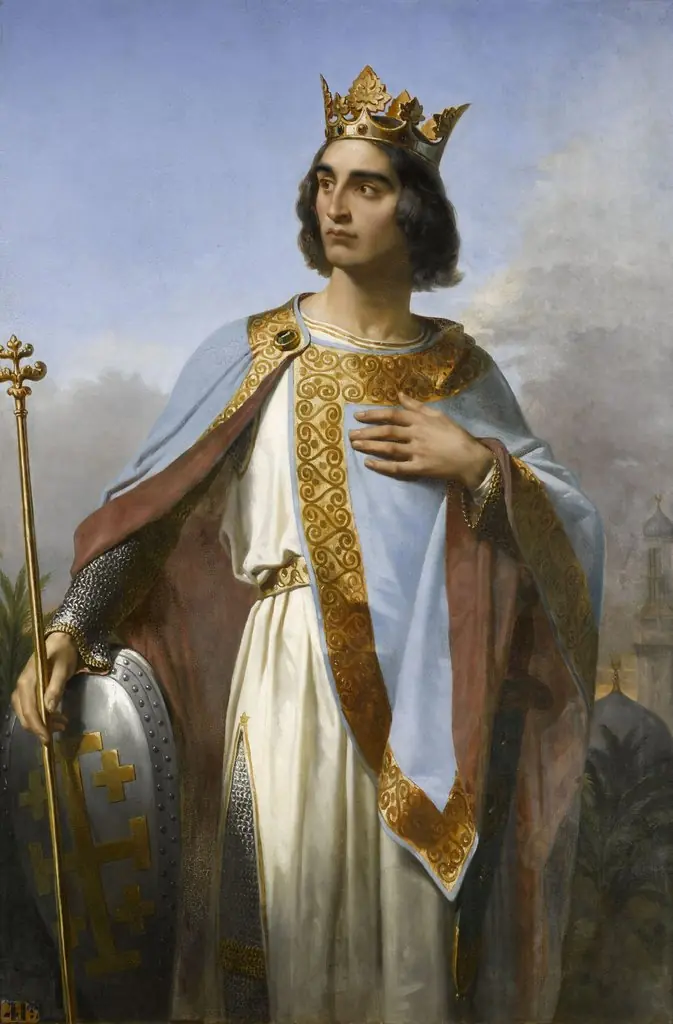
Manuel Iglesias y Domínguez painted Wittiza, Visigothic king in 1853 using oil on canvas. The work is part of the collection at the Museo del Prado and presents a solitary figure against a stone wall, with a column and foliage to the left.
Subject & Meaning
The central figure is a man in a white tunic trimmed in gold, wearing a crown and a red cape, and holding a sword. The attire and regalia suggest the depiction of Wittiza, a Visigothic monarch, emphasizing authority and lineage.
Technique & Style
The artist employs a clear, balanced composition, with the figure illuminated against a muted background. Light falls on the crown and sword, creating a subtle contrast that highlights the royal symbols while the surrounding landscape recedes in softer tones.
Context
Created in the mid‑19th century, the painting reflects the period’s interest in historic and national subjects, aligning with Romantic historicism that sought to revive Spain’s early medieval past.
Provenance
Since its completion, the canvas has remained in Spain’s principal art institution, the Museo del Prado, where it is displayed among works that document the nation’s historical narrative.
Own this work as a print
Artist & collection
Artist
Manuel Iglesias y Domínguez painted scenes from Spain’s past in the mid-1800s. He worked in oils, often showing figures from medieval history. One of his works here, *Wittiza, visigothic's king*, shows that Visigoth…