Artwork
Eurico
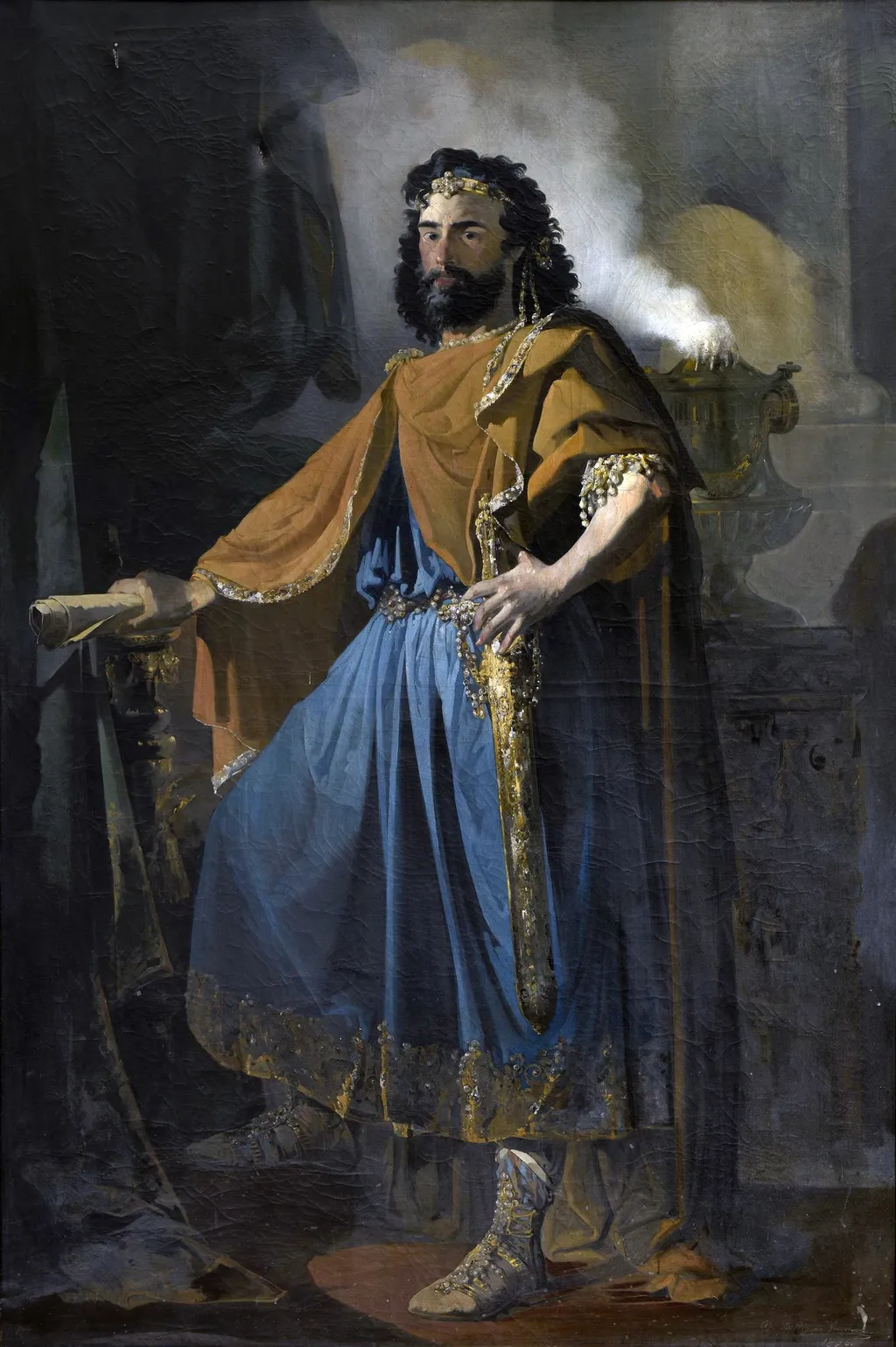
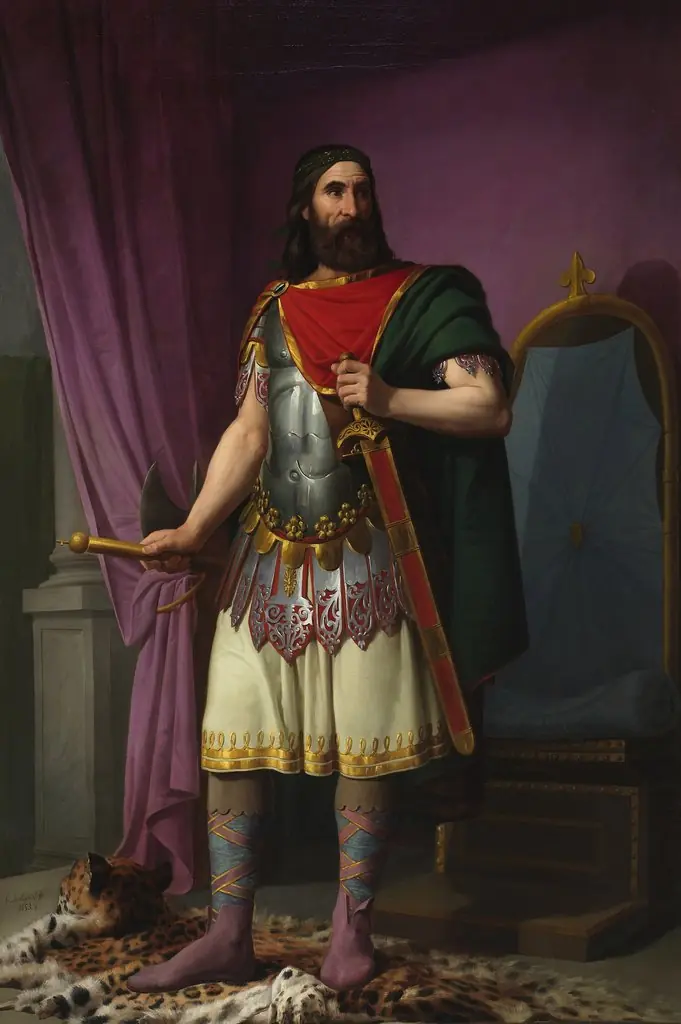
Eurico is an oil painting by Manuel Rodríguez de Guzmán. It dates from 1856 and is held in the collection of the Museo del Prado.
About this work
Overview
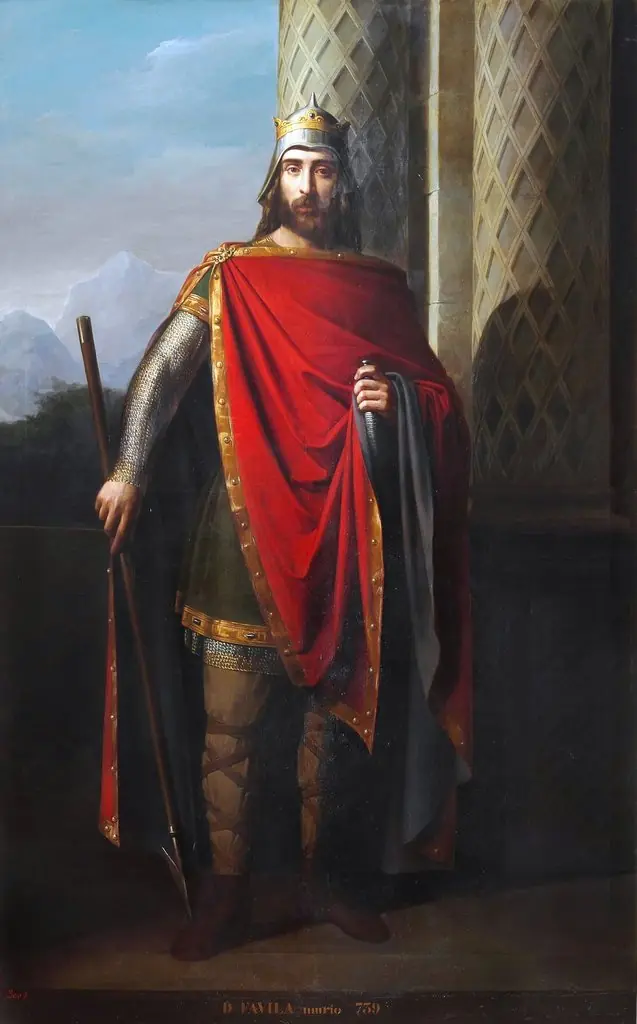
Painted in 1856 by Manuel Rodríguez de Guzmán, this oil work portrays a regal figure in a dramatic, shadowed setting. The painting is part of the Museo del Prado’s collection and is identified by the title Eurico. It presents a solitary male figure adorned in elaborate attire, suggesting historical or mythological royalty, rendered with a focus on texture and luminous contrast.
Subject & Meaning
The figure, identified as Eurico, is depicted as a king of the Visigoths, clad in ornate gold and blue garments, a crown, and a flowing cape. He holds a ceremonial staff and a sword, symbols of temporal authority. The dark, rocky backdrop and directional light evoke a sense of solemnity and isolation, possibly reflecting themes of power, legacy, or the weight of leadership in a fading era.
Technique & Style
Brushwork is deliberate, emphasizing texture over detail, creating a tactile presence that draws attention to the figure’s material richness.
Rodríguez de Guzmán employed impasto to render the metallic elements of the costume, building thick layers of oil paint to simulate the reflective quality of gold and jewels. The contrast between the illuminated figure and the deep, shadowed background enhances three-dimensionality. Brushwork is deliberate, emphasizing texture over detail, creating a tactile presence that draws attention to the figure’s material richness.
History & Provenance
Completed in 1856, the painting entered the Museo del Prado’s collection shortly after its creation. It remains in the museum’s permanent holdings, with no documented changes in ownership. Its acquisition reflects 19th-century Spanish interest in historical and national narratives, particularly those tied to early medieval Iberian kingdoms and their rulers.
Context
Created during a period of renewed interest in Spain’s pre-Christian past, the painting aligns with Romantic-era tendencies to idealize ancient rulers and heroic figures. Eurico, a historical Visigothic king, was a symbol of early Spanish identity. The work contributes to a broader artistic movement that sought to define national character through historical reimagining, often blending fact with dramatic interpretation.
Legacy
Though not widely exhibited outside Spain, the painting remains a notable example of 19th-century Spanish historical portraiture. Its use of light and texture influenced later artists exploring the interplay of material and mood. Eurico endures as a quiet study in authority, preserved as a testament to the era’s fascination with the visual language of kingship.
Own this work as a print
Artist & collection
Artist
Manuel Rodríguez de Guzmán (1818–1867) was an artist, born in Seville.