Artwork
Studies for an Annunciation [recto]
![Studies for an Annunciation [recto], by Jacopo Palma il Giovane, ink, 1588](https://artifactworldgallery.com/img/jacopo-palma-il-giovane--studies-for-an-annunciation-recto--a15d0411b7678b1e-w1024.webp)
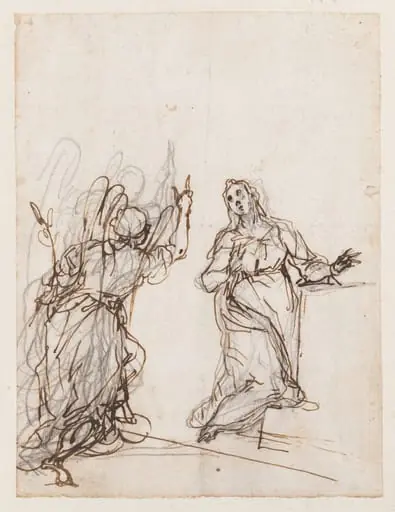
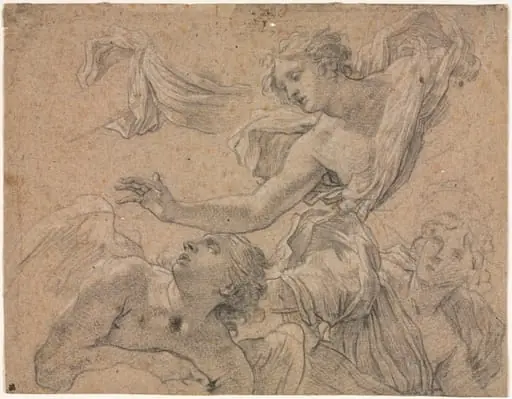
Studies for an Annunciation [recto] is an ink drawing by the Renaissance artist Jacopo Palma il Giovane. It dates from 1588 and is held in the collection of the National Gallery of Art.
About this work
Overview
This pen-and-ink drawing on laid paper, dated 1588, is attributed to Jacopo Palma il Giovane. Executed in rapid, fluid strokes, it presents four figures arranged in a dynamic composition. The sketch appears exploratory, capturing gestures and spatial relationships rather than refined details, suggesting preparatory work for a larger religious narrative.
Subject & Meaning
The scene depicts variations on the Annunciation, a biblical episode in which the angel Gabriel announces to the Virgin Mary that she will bear Christ.
The scene depicts variations on the Annunciation, a biblical episode in which the angel Gabriel announces to the Virgin Mary that she will bear Christ. Two airborne figures—one pointing heavenward, the other with outstretched arms—embody divine messengers, while the kneeling figures represent Mary in differing postures of reception or reverence. The study explores emotional and physical responses to the sacred event.
Technique & Style
Palma il Giovane employs loose, economical lines in brown ink, favoring immediacy over precision. Shading is minimal, achieved through sparse hatching rather than dense cross-hatching, allowing form to emerge from suggestion rather than definition. The style reflects the Venetian drawing tradition of the late 16th century, where fluidity and movement take precedence over meticulous finish.
History & Provenance
Created in 1588, the drawing’s early history remains unrecorded. Its survival as a standalone sheet suggests it may have been retained in the artist’s studio or passed among collectors of preparatory works. The paper’s laid texture indicates a Northern European origin, though its precise path to current ownership is undocumented.
Context
During the late Renaissance, artists frequently produced compositional studies to resolve figural arrangements and emotional expressions before executing final works. This sheet aligns with Palma il Giovane’s engagement with Counter-Reformation themes, which emphasized clarity and dramatic impact in religious imagery. Such studies also served as teaching tools or studio references.
Artist & collection


![Nude Man Seen from Behind [verso], by Jacopo Palma il Giovane](https://artifactworldgallery.com/img/jacopo-palma-il-giovane--nude-man-seen-from-behind-verso--2de266ff199c839b-w320.webp)
 The Annunciation
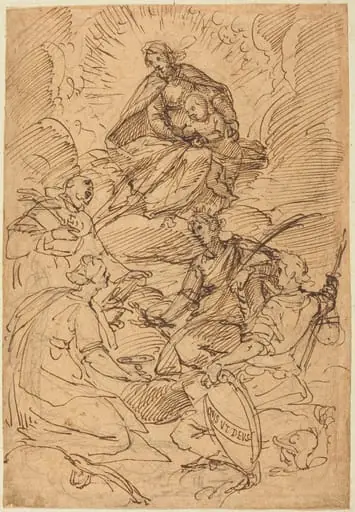 The Madonna and Child in Glory Adored by Saints
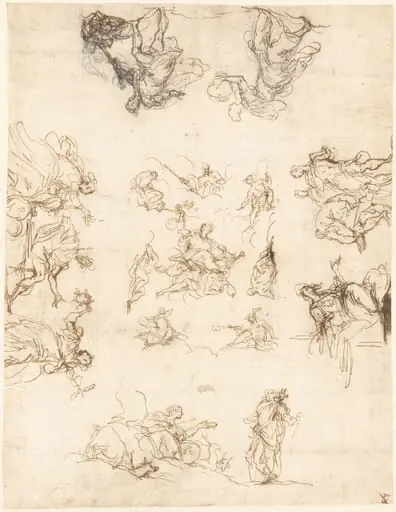 A Compartmented Ceiling with Allegories and Myths
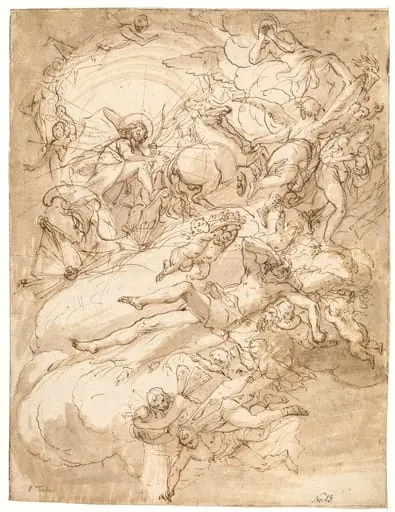 Apollo in his chariot, design for a ceiling painting
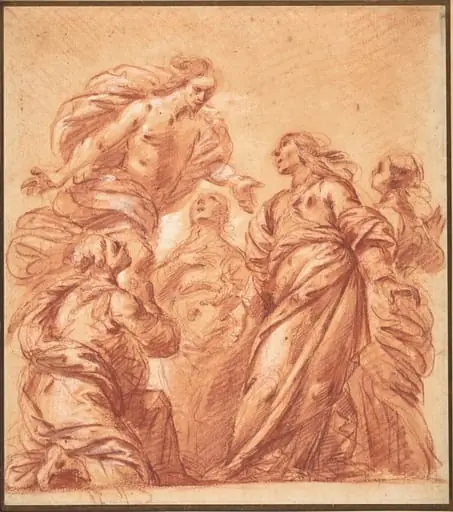 The Women at the Sepulchre with Christ of the Noli me Tangere
![The Ecstasy of Saint Francis [recto], by Sebastiano Ricci](https://artifactworldgallery.com/img/sebastiano-ricci--the-ecstasy-of-saint-francis-recto--5f53f9b59775e5dd-w320.webp) The Ecstasy of Saint Francis [recto]
The Ecstasy of Saint Francis [recto]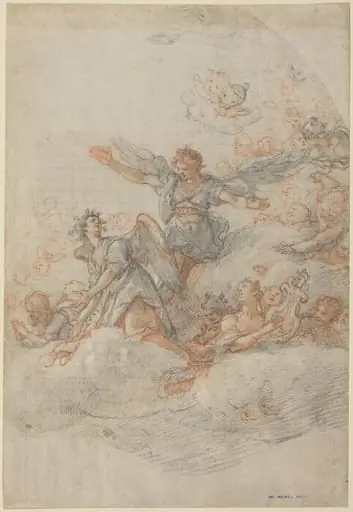 Angels and Putti in the Clouds
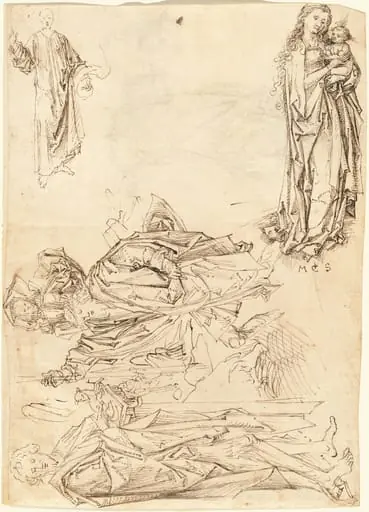 Saint Christopher, Saint John the Baptist, the Virgin and Child, and Christ Blessing (recto)
![Female Saint Carrying a Banner [recto], by Baldassare Franceschini](https://artifactworldgallery.com/img/baldassare-franceschini--female-saint-carrying-a-banner-recto--7b0a38585a5ad76d-w320.webp) Female Saint Carrying a Banner [recto]
Female Saint Carrying a Banner [recto]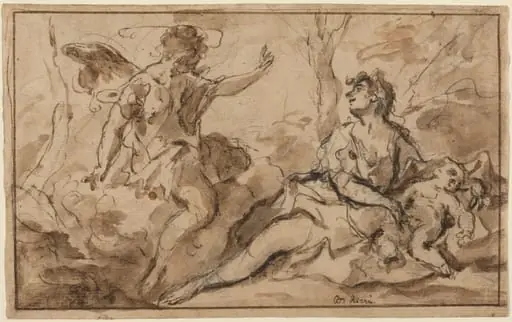 The Angel Appearing to Hagar and Ishmael
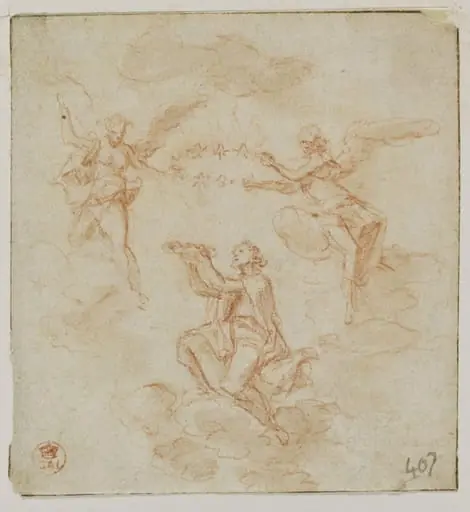 A coronation
 Studies of Angels (recto)