Artwork
Untitled
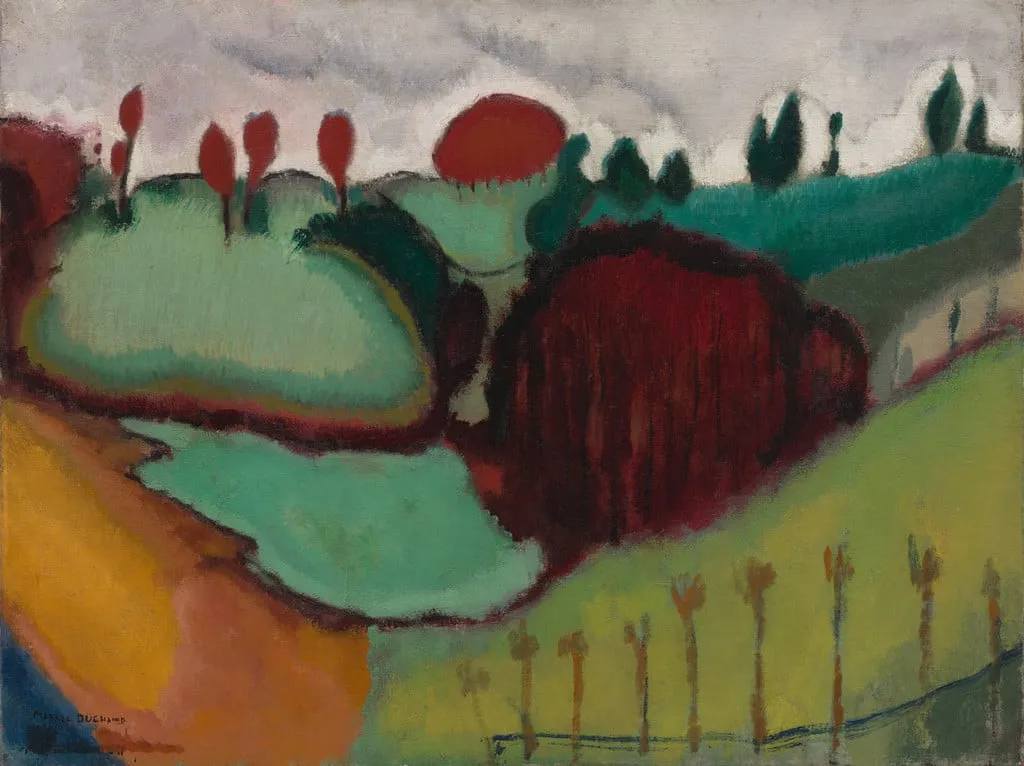
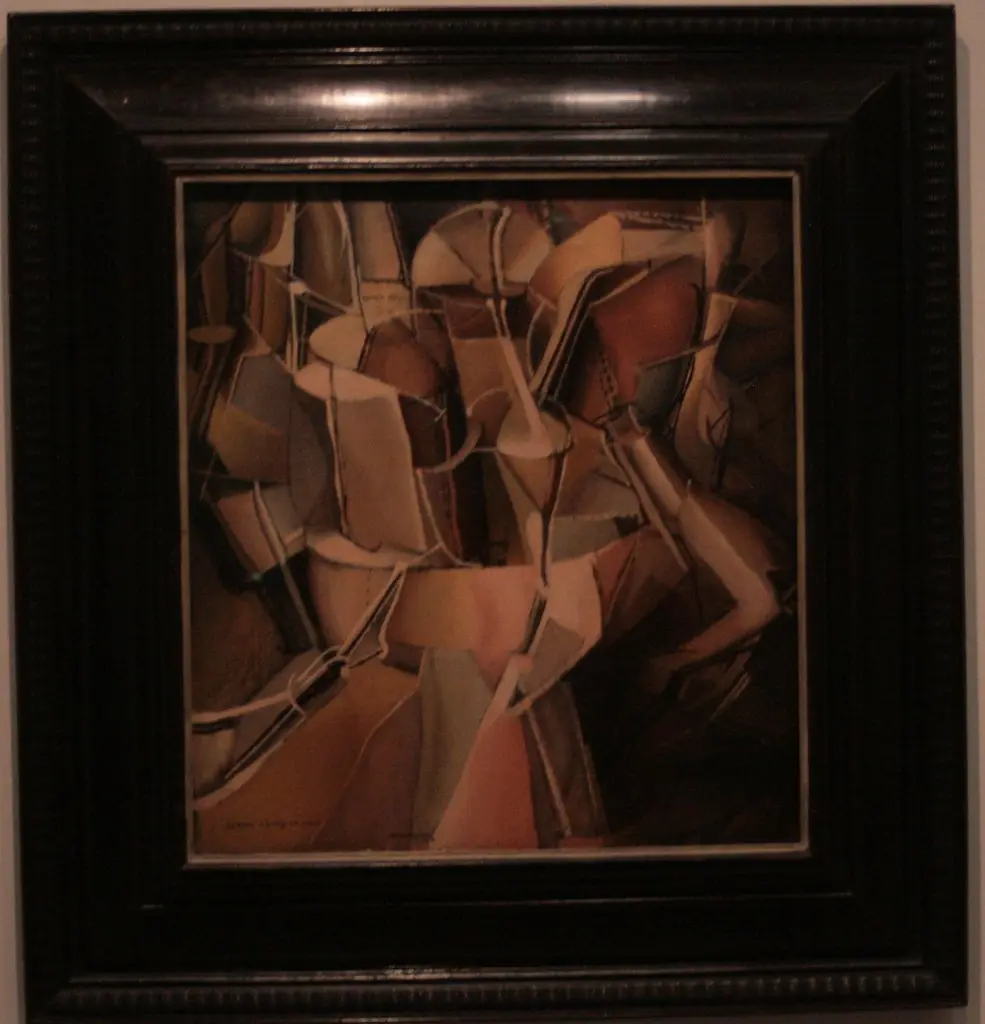
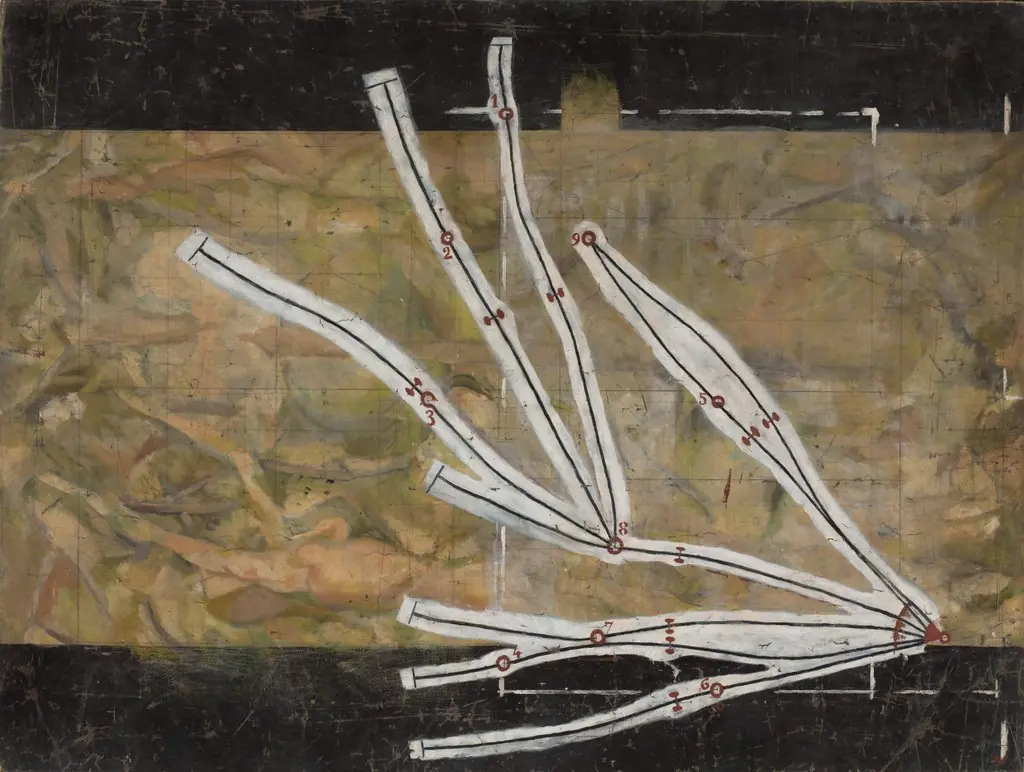
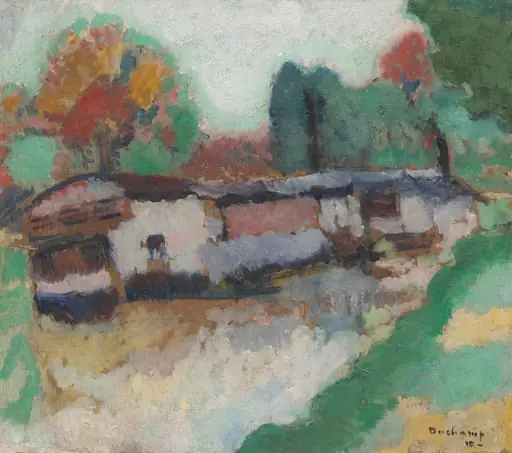
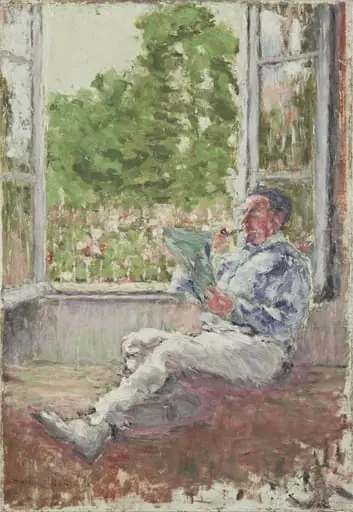
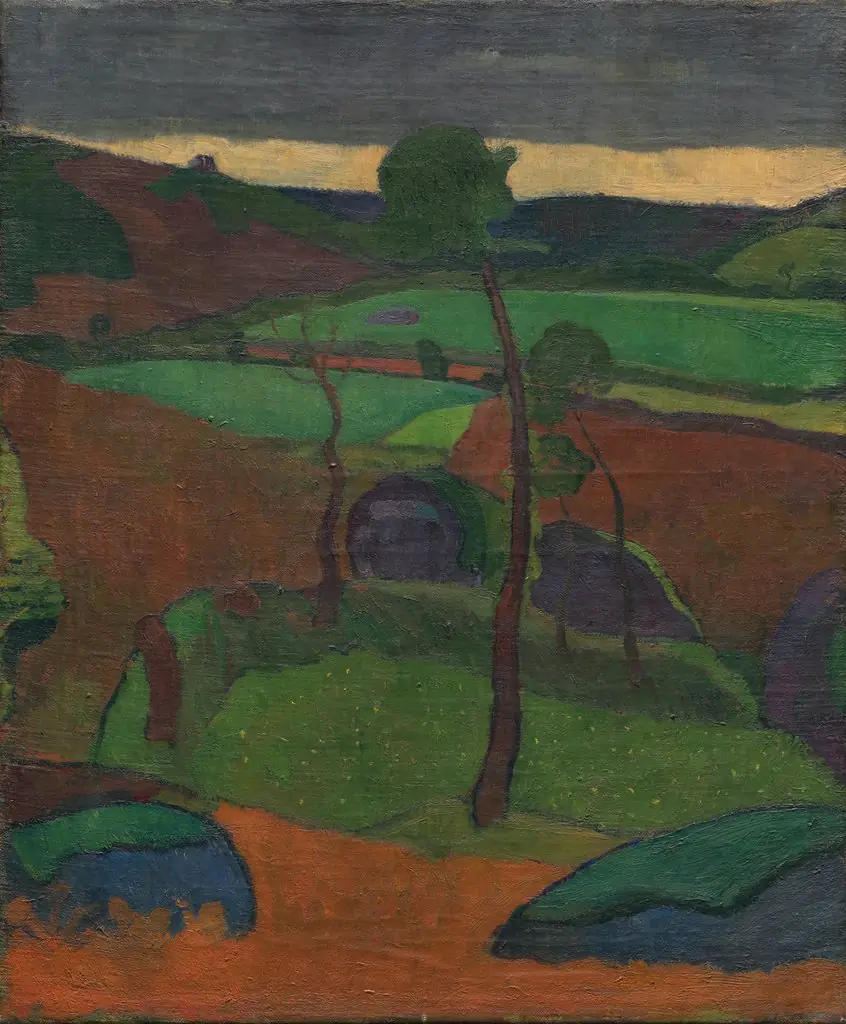
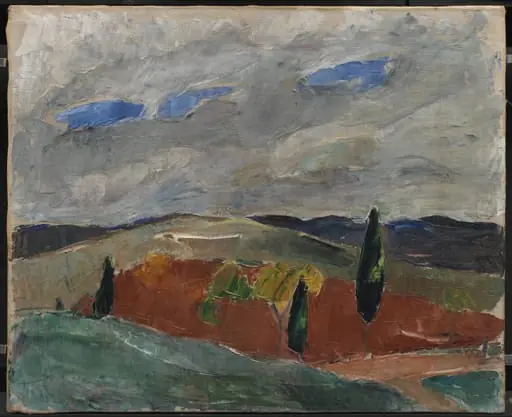
Untitled is an oil painting by the American Folk Art artist Marcel Duchamp. It dates from 1911 and is held in the collection of the Museum of Modern Art.
About this work
Overview
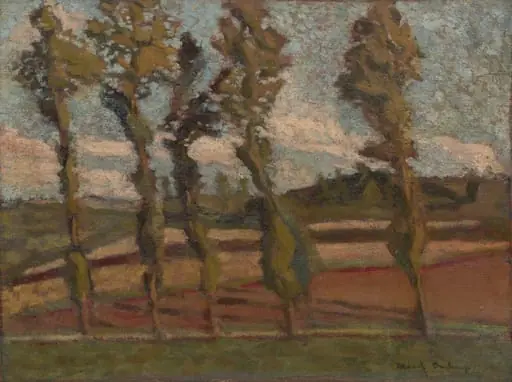
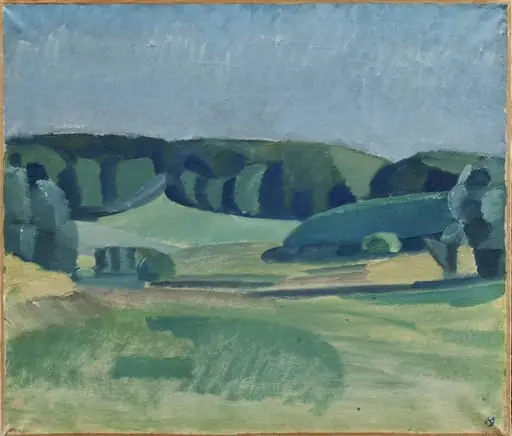
The painting’s subdued palette and loose brushwork suggest an interest in natural forms, distinct from the geometric abstraction he would later pursue.
Painted in 1911, this oil on canvas landscape is among Marcel Duchamp’s earliest known works, created while he was still based in France. It predates his radical conceptual turn and reflects a period of experimentation with traditional subjects. The painting’s subdued palette and loose brushwork suggest an interest in natural forms, distinct from the geometric abstraction he would later pursue. It remains part of The Museum of Modern Art’s permanent collection.
Subject & Meaning
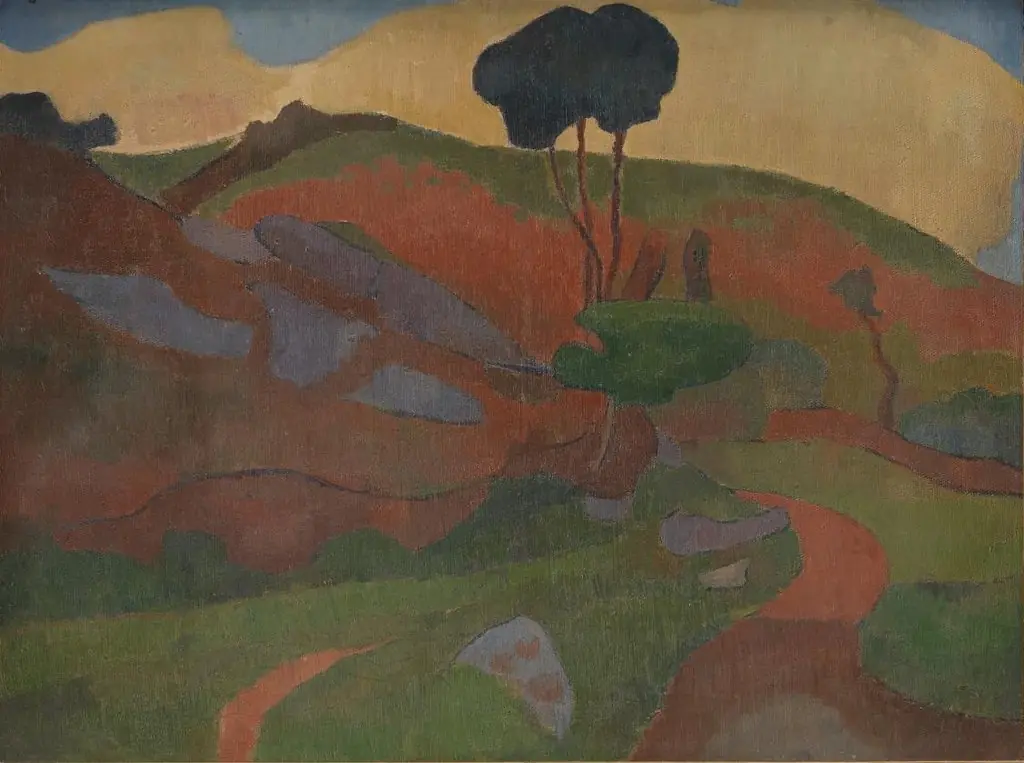
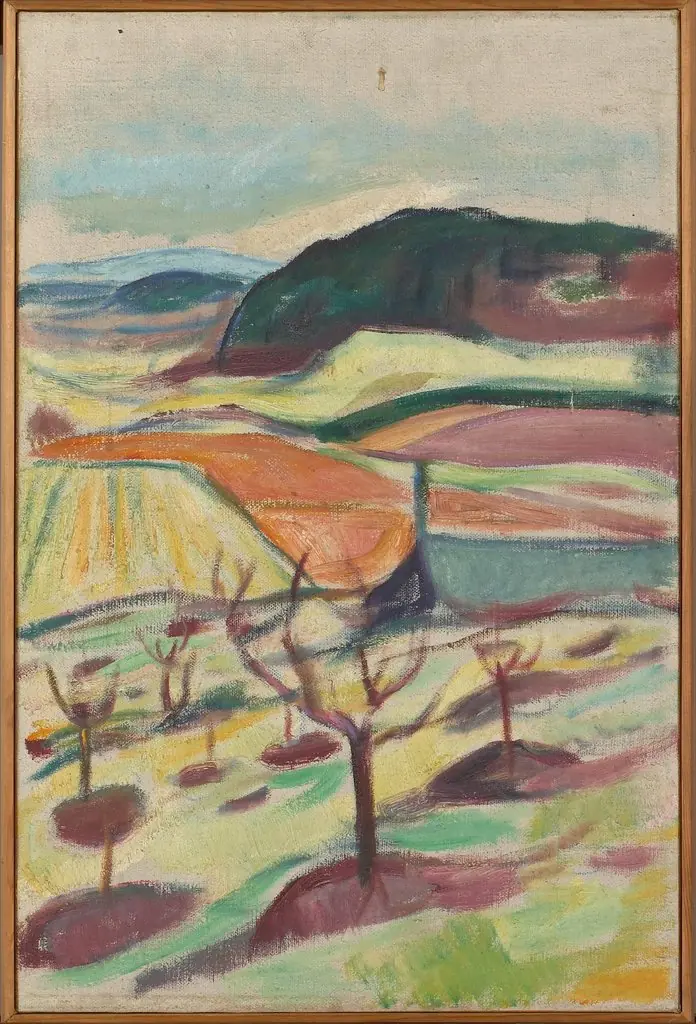
The scene depicts a quiet rural landscape with rolling hills, scattered trees, and a overcast sky. Tall, leafless trees in the foreground stand as silent sentinels, their forms rendered with minimal detail. Unlike later works that challenged artistic conventions, this piece offers no overt symbolism or irony. It functions as a quiet observation of nature, possibly influenced by regional French or American folk aesthetics, though without clear narrative or commentary.
Technique & Style
Duchamp applied oil paint with a loose, expressive hand, favoring broad strokes over precise detail. The colors—muted greens, browns, and grays—create a somber, atmospheric tone. Forms are simplified, with trees and hills suggested rather than rendered realistically. The brushwork is energetic yet restrained, showing an artist still learning to balance observation with personal expression, before embracing the fragmentation of Cubism.
History & Provenance
Created in 1911 during Duchamp’s time in France, the painting was made before his move to New York and his involvement with Dada and conceptual art. It remained in private hands until acquired by The Museum of Modern Art, where it has been held since the mid-20th century. Its inclusion in the collection underscores its value as a document of the artist’s formative years, offering insight into his evolution from traditional painter to radical innovator.
Context
In 1911, Duchamp was immersed in the Parisian art scene, engaging with Post-Impressionism and early Cubism. This landscape reflects a broader trend among young artists to revisit natural subjects before deconstructing them. Though he would soon abandon such modes, this work reveals his grounding in observable reality—a foundation upon which his later conceptual experiments were built, even as they rejected them.
Legacy
Though overshadowed by Duchamp’s later works, this painting serves as a critical reference point in understanding his artistic trajectory. It demonstrates that his radical innovations did not emerge in a vacuum but evolved from a period of technical exploration and engagement with established genres. Its presence in MoMA’s collection affirms its role in tracing the origins of modern art’s conceptual shift.
Artist & collection
Artist
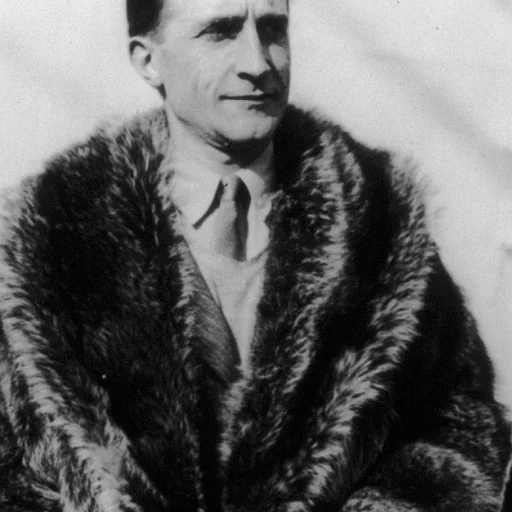
Henri-Robert-Marcel Duchamp (UK: , US: ; French: ; 28 July 1887 – 2 October 1968) was a French American artist, chess player, and inventor who played a key role in the development of the avant-garde in the United States…