Artwork
Untitled
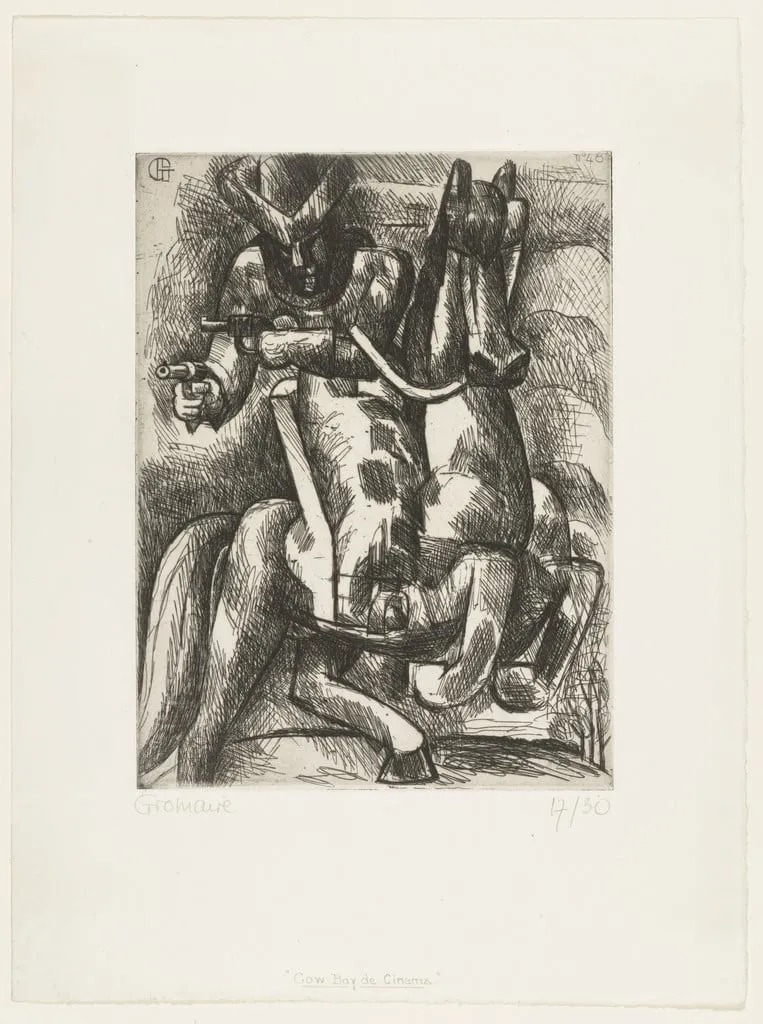
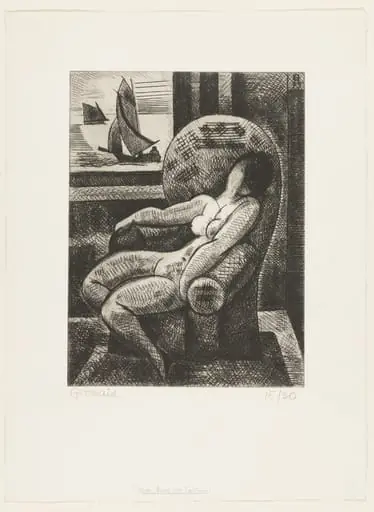
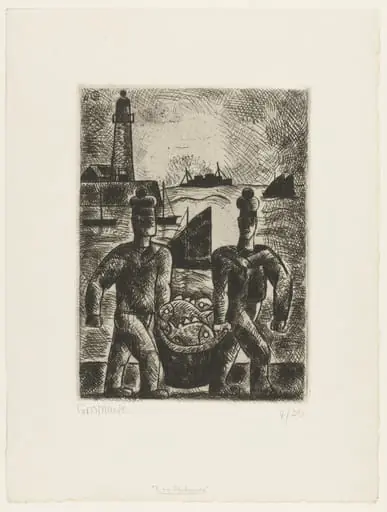
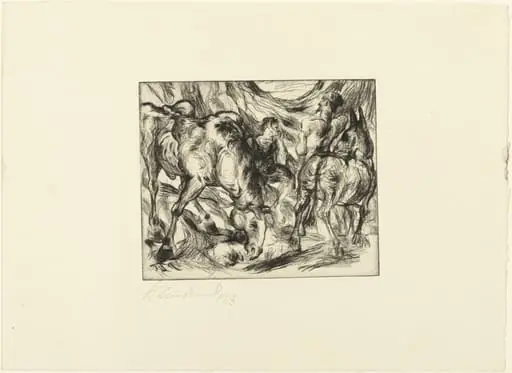
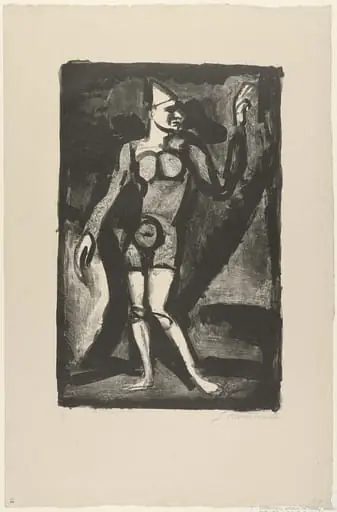
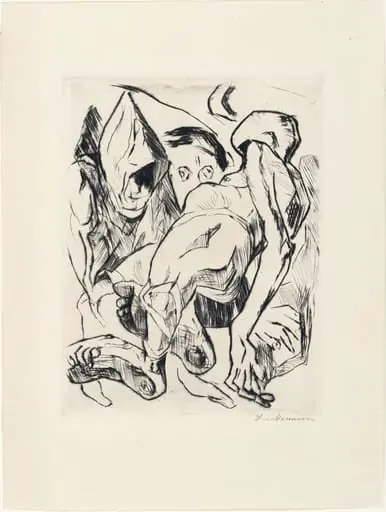
Untitled is an ink print by Marcel Gromaire. It dates from 1924 and is held in the collection of the Museum of Modern Art.
About this work
Overview
Marcel Gromaire produced this etching in 1924, part of his broader exploration of everyday human conditions through printmaking.
Marcel Gromaire produced this etching in 1924, part of his broader exploration of everyday human conditions through printmaking. Though associated with Social Realism, he avoided alignment with any formal movement, favoring a personal visual language. The work is unsigned in title but bears his signature, emphasizing the artist’s focus on process over nomenclature. Its immediacy suggests a spontaneous response to social tension rather than a polished composition.
Subject & Meaning
The figure, hunched and isolated in a shadowed space, holds a firearm while bracing against a chair, suggesting fatigue, threat, or resignation. The blurred face obscures identity, shifting focus from the individual to a generalized state of distress. The chaotic background implies an unstable environment, reinforcing themes of alienation and unease. Gromaire avoids narrative clarity, instead evoking emotional weight through posture and atmosphere.
Technique & Style
Gromaire employed sharp, irregular lines typical of etching, using aggressive incisions to convey texture and motion. The jagged contours and dense hatching create a sense of urgency, as if the image was drawn under pressure. The rough, unfinished quality of the background contrasts with the more defined figure, heightening its isolation. The medium’s capacity for tonal contrast enhances the somber mood without relying on shading or tone alone.
History & Provenance
Created during a period of political instability in post-war France, the etching reflects Gromaire’s consistent interest in marginalized lives. It was likely made for private circulation or as part of a series of works addressing labor and social strain. No documented exhibition history exists for this specific piece, but it aligns with his broader output from the early 1920s, which was often circulated among avant-garde circles in Paris.
Context
In the mid-1920s, French artists increasingly turned to printmaking as a means of direct social commentary, bypassing academic institutions. Gromaire’s work emerged alongside broader European currents of expressionist printmaking, yet retained a restrained, almost austere tone. His choice of etching—demanding precision yet allowing spontaneity—mirrored his interest in capturing fleeting human moments amid industrial and urban upheaval.
Legacy
Though less widely known than his contemporaries, Gromaire’s prints influenced later generations of socially engaged printmakers in France. His rejection of stylistic dogma and emphasis on emotional authenticity paved the way for more personal approaches within political art. This etching exemplifies his quiet but persistent contribution to 20th-century printmaking, valued for its unadorned honesty rather than formal innovation.
Artist & collection
Artist
Marcel Gromaire (French pronunciation: ; 24 July 1892 – 11 April 1971) was a French painter.