Artwork
Untitled
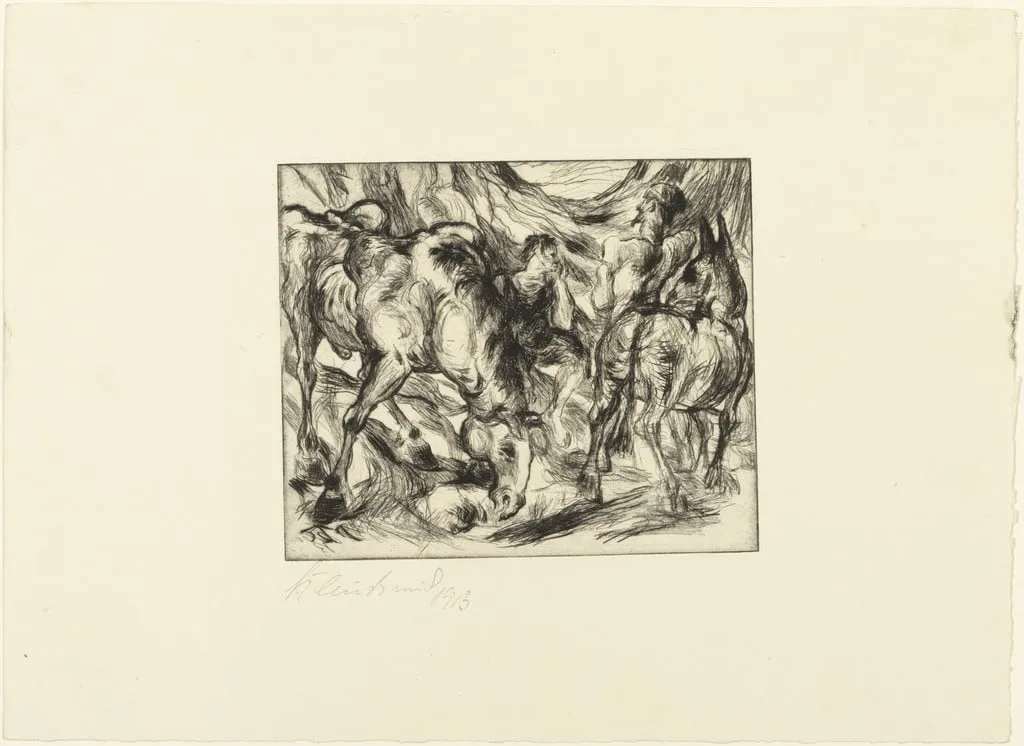
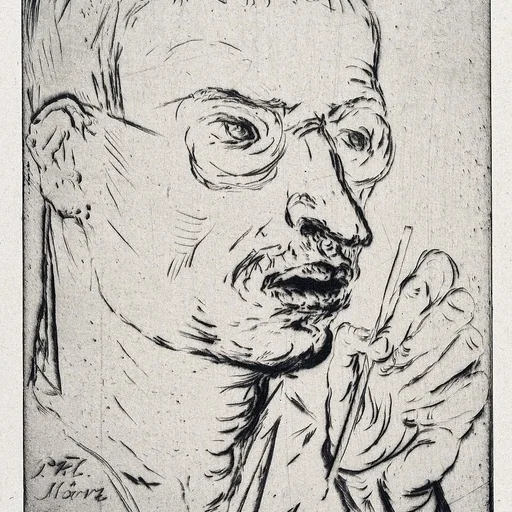
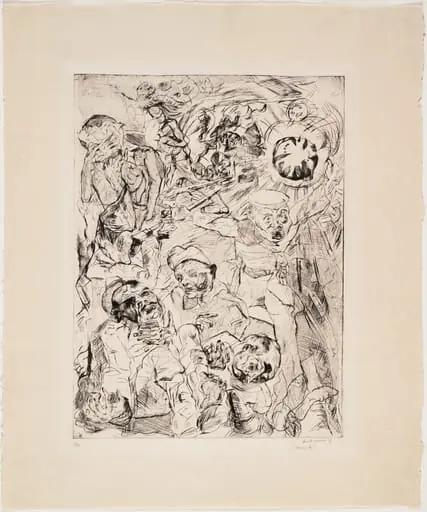
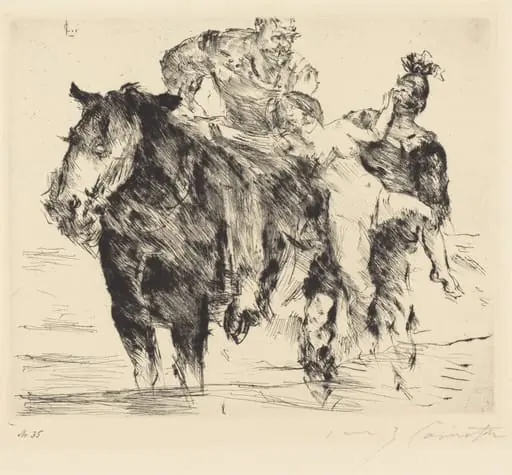
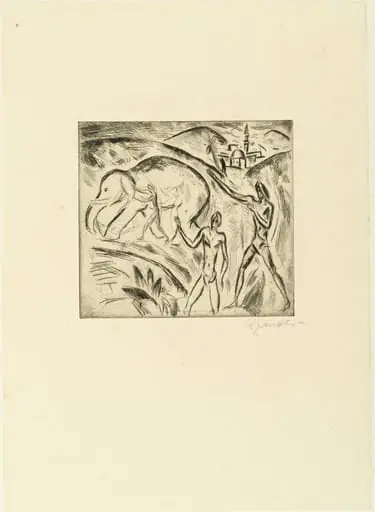
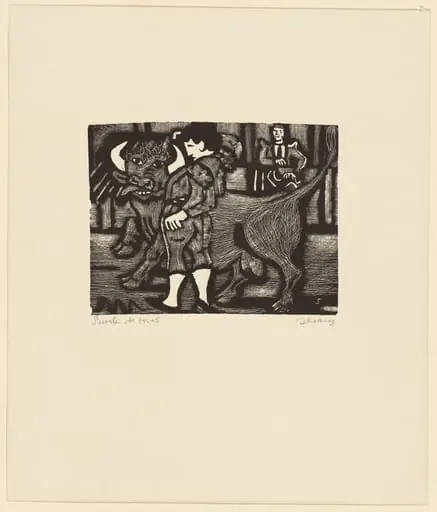
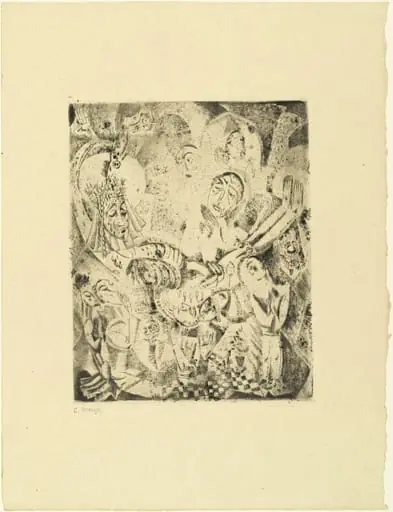
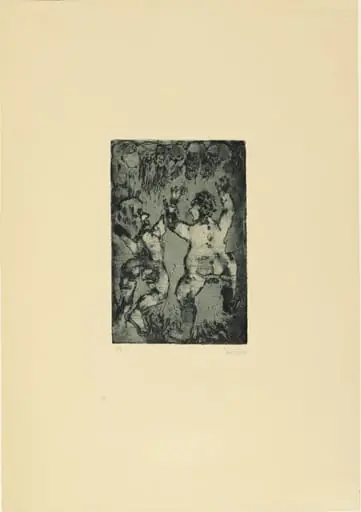
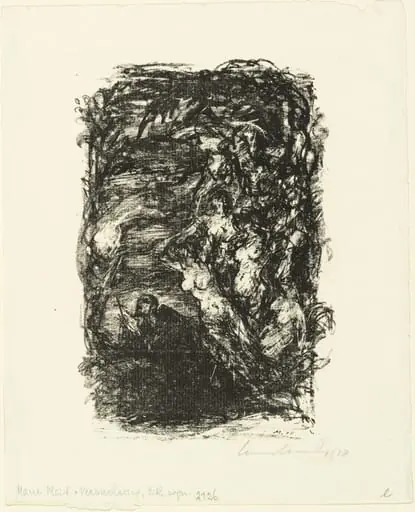
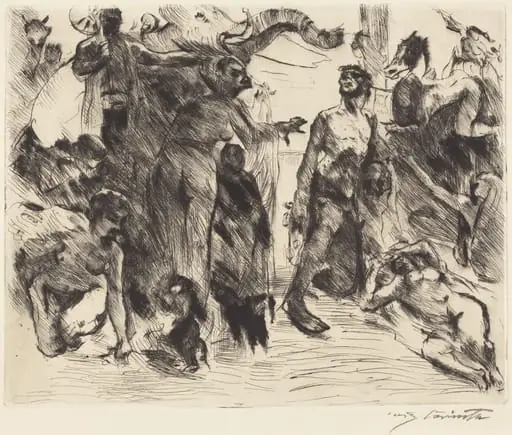
Untitled is an ink print by Paul Kleinschmidt. It dates from 1913 and is held in the collection of the Museum of Modern Art.
About this work
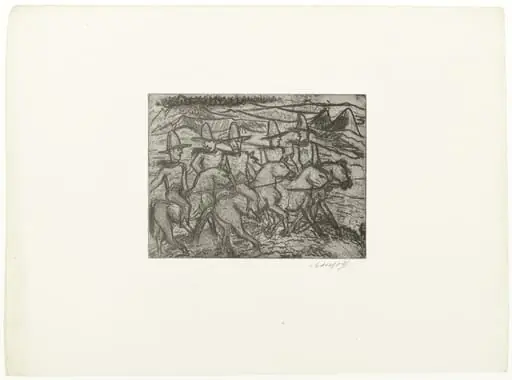
The title calls the man Don Quixote, but he doesn’t look like the usual dreamy knight—just a tired guy in a hat.
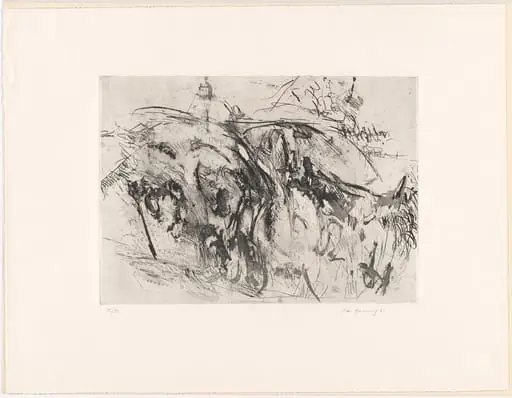
You see a man in a tall hat and long coat, leaning forward as if talking to someone just out of frame. His face is a quick scribble of lines—no detail, just energy.
This is a drypoint print, where the artist scratches directly into a metal plate. The lines look raw, almost like a sketch on paper, but they’re printed. Kleinschmidt made it in 1913, when artists were breaking from old rules. The title calls the man Don Quixote, but he doesn’t look like the usual dreamy knight—just a tired guy in a hat.
Look up more drypoint prints at The Museum of Modern Art.
Overview
Paul Kleinschmidt created this drypoint print in 1913. The work is held in the collection of The Museum of Modern Art. Unlike traditional etchings, drypoint involves scratching lines directly into a metal plate with a sharp tool, producing a distinctive, grainy texture when printed. The image captures a solitary figure in motion, rendered with urgent, unrefined strokes that emphasize gesture over detail.
Subject & Meaning
The figure is identified as Don Quixote, yet he departs from romanticized depictions of the literary character. Instead of a noble idealist, he appears weary and unremarkable—dressed in a long coat and tall hat, leaning forward as if engaged in a private, unrecorded exchange. The absence of context and the minimal facial rendering suggest a focus on psychological presence rather than narrative.
Technique & Style
Kleinschmidt employed drypoint, a printmaking method where lines are incised directly into a metal plate. The resulting print retains the rough, spontaneous quality of a drawn sketch, with burrs along the grooves creating soft, blurred edges. This technique rejects polished finish in favor of immediacy, aligning with early 20th-century interests in expressive, unmediated mark-making.
History & Provenance
The print was made in 1913 during a period of artistic experimentation in Europe. It entered The Museum of Modern Art’s collection in the decades following its creation, likely through early acquisitions focused on modern printmaking. Its preservation reflects institutional interest in works that challenged conventional representation, even if they were not widely exhibited at the time.
Context
Created amid the rise of Expressionism and avant-garde movements, the work reflects a broader shift away from academic realism. Artists like Kleinschmidt turned to intimate, personal subjects and raw techniques to convey inner states. The reimagining of Don Quixote as an ordinary, exhausted man mirrors contemporary critiques of outdated ideals and the search for authenticity in modern life.
Legacy
Though not widely known, the print exemplifies early modernist printmaking’s embrace of simplicity and emotional directness. Its presence in MoMA’s collection situates it within a lineage of works that prioritized process and psychological depth over technical polish. It remains a quiet example of how traditional literary figures were reinterpreted through the lens of modern experience.
Artist & collection