Artwork
Augustus and the Tiburtine Sibyl
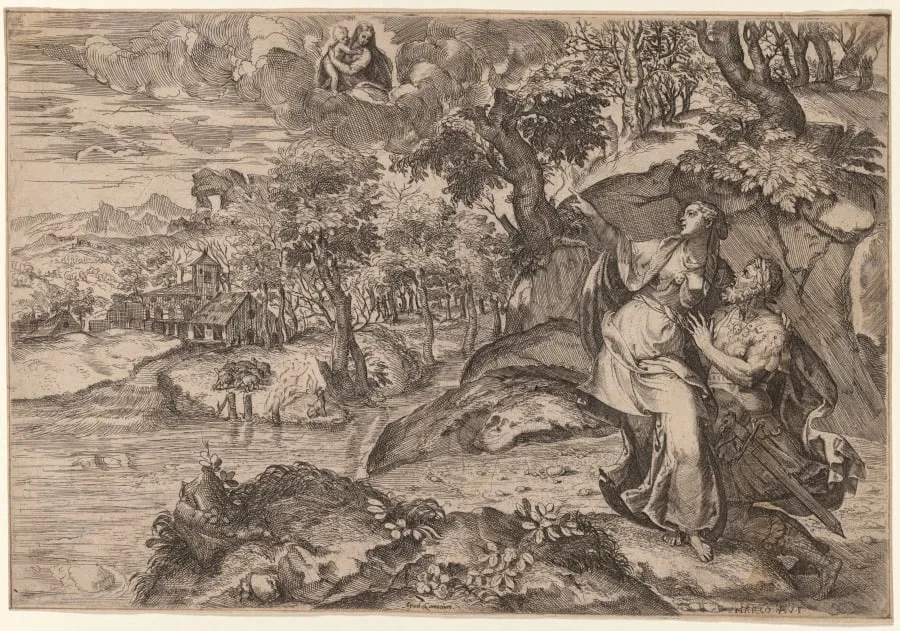
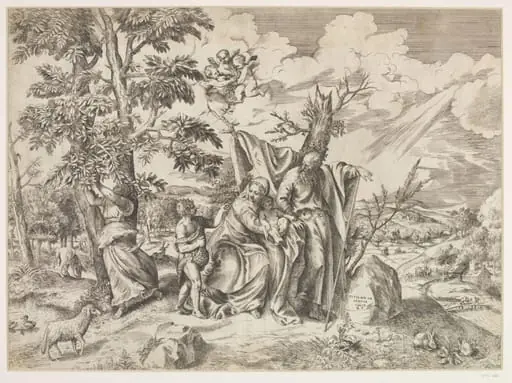
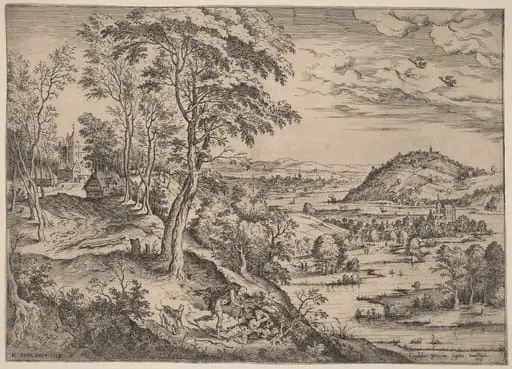
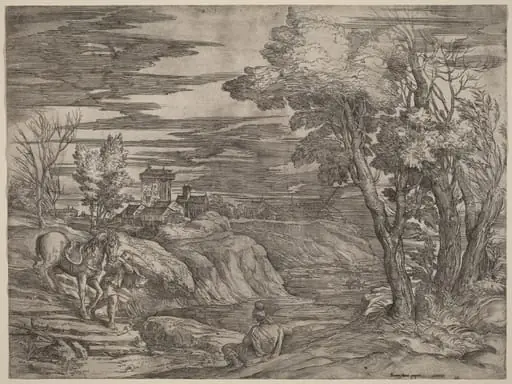
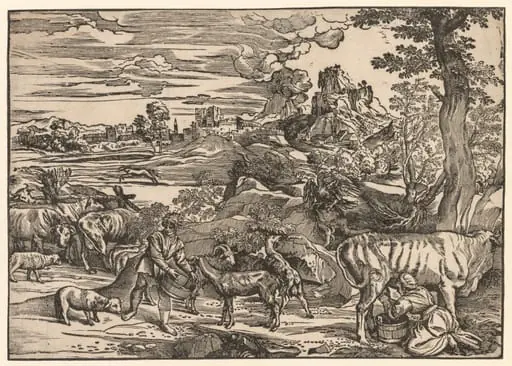
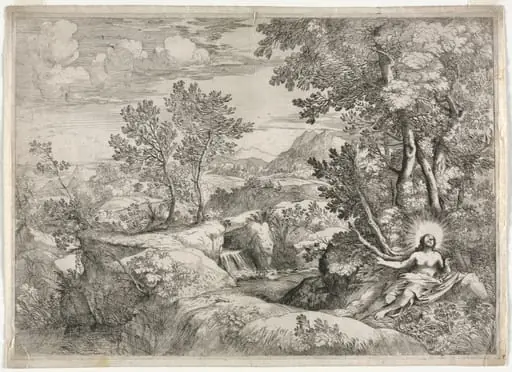
Augustus and the Tiburtine Sibyl is a print by the Renaissance artist Marco Angolo del Moro. It dates from 1574 and is held in the collection of the Cleveland Museum of Art.
About this work
This painting shows a story from the 1100s: the emperor asks the prophetess if he should be worshipped as a god.
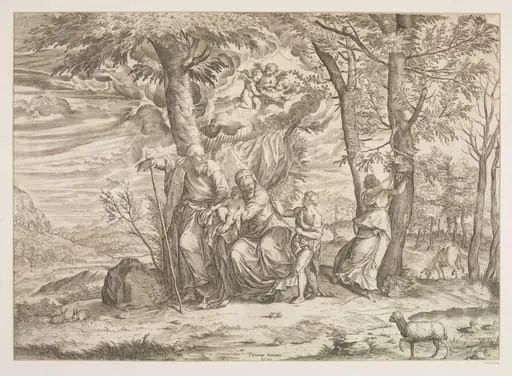
A Roman emperor and a prophetess stand close in a leafy valley. Above them, a small cloud holds the Virgin Mary and baby Jesus.
This painting shows a story from the 1100s: the emperor asks the prophetess if he should be worshipped as a god. She shows him the Christian holy family instead. The artist mixes the tale with a calm landscape, a style common near Venice at the time.
To see more paintings like this, look up *Italy, 16th century*.
Overview
Augustus and the Tiburtine Sibyl is a print depicting a legendary encounter between the Roman Emperor Augustus and a prophetess. The scene is set in a lush landscape with a vision of the Virgin and Child appearing above.
Subject & Meaning
The print illustrates a 12th-century legend in which Augustus consults the Tiburtine Sibyl about his potential deification after death. The Sibyl's vision of the Virgin and Child is said to have influenced Augustus away from pagan beliefs.
Technique & Style
The artist, Del Moro, seamlessly integrates narrative and landscape elements, a characteristic style of artists from the region around Venice. The composition balances the figures of Augustus and the Sibyl with a serene natural setting.
Artist & collection
Artist
Marco Angolo del Moro, (commonly called Angeli), the son and pupil and assistant of Battista, flourished in the latter half of the 16th century at Venice and Verona.