Artwork
Untitled
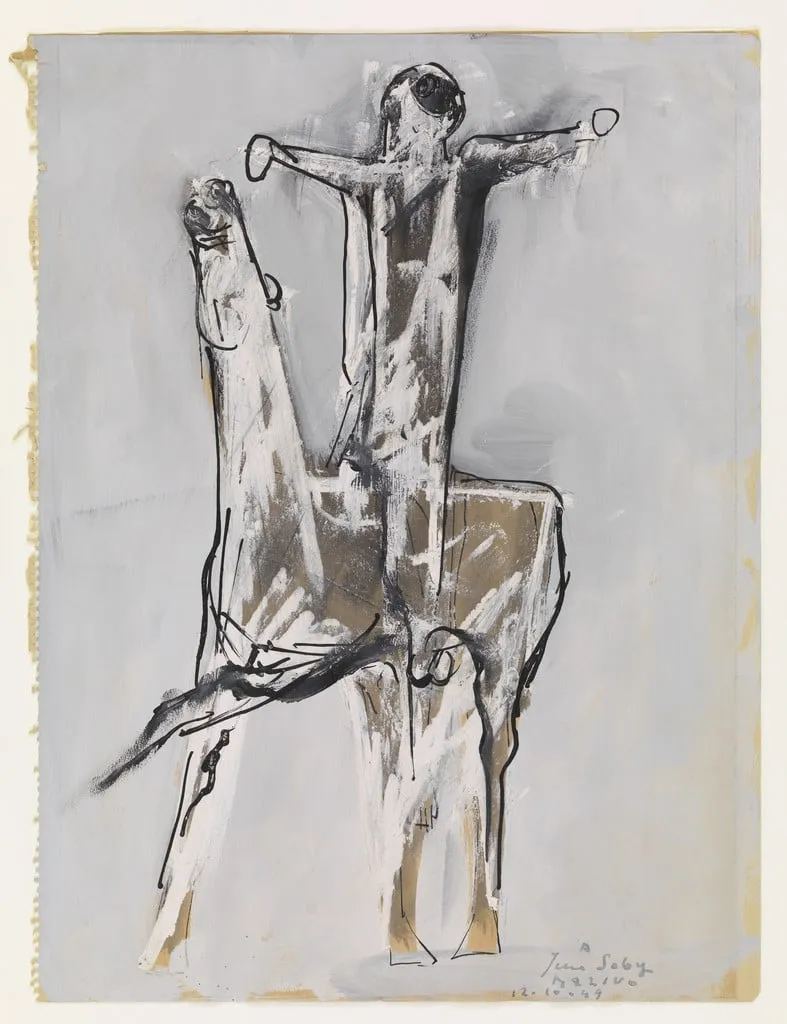
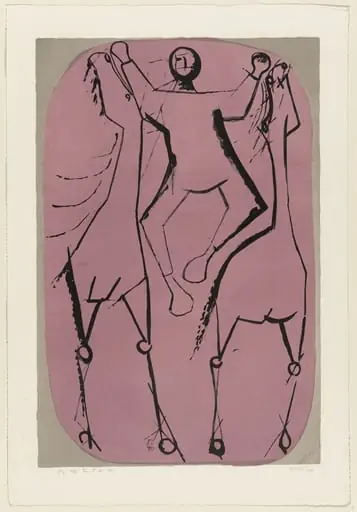
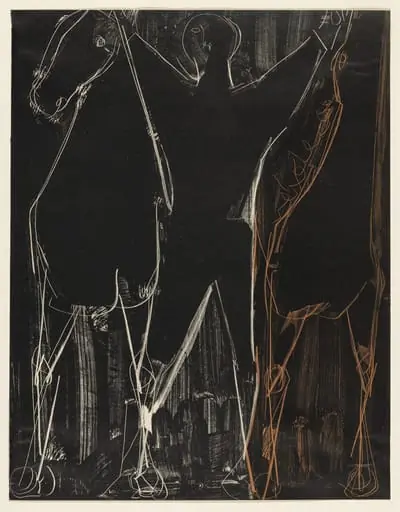
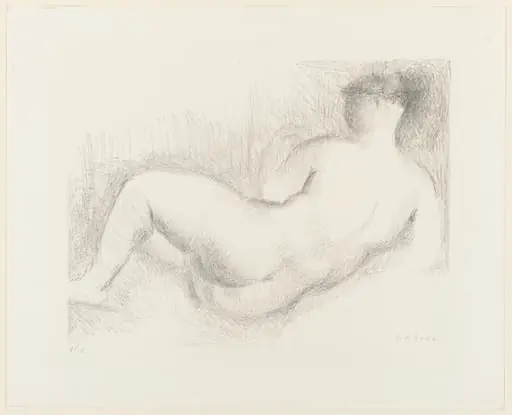
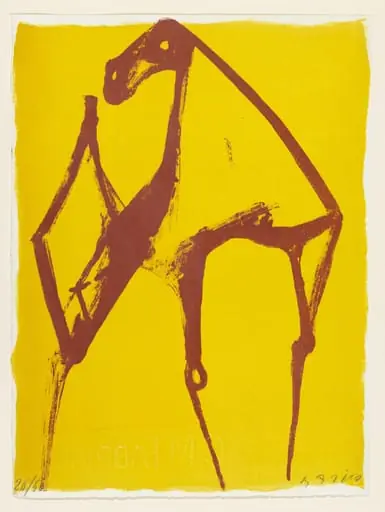
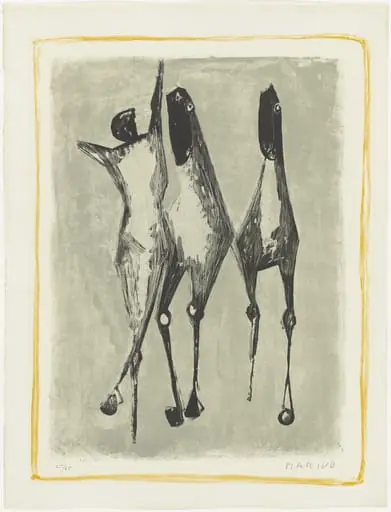
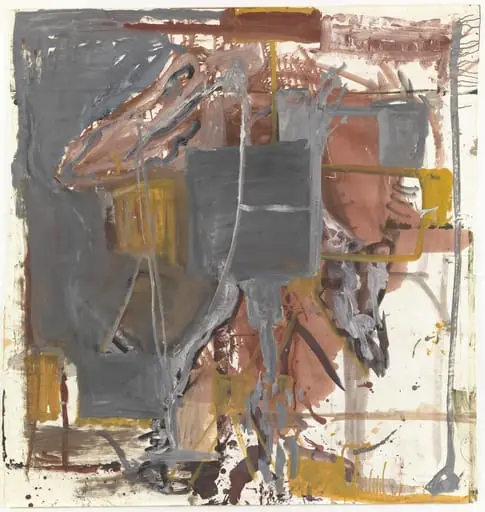
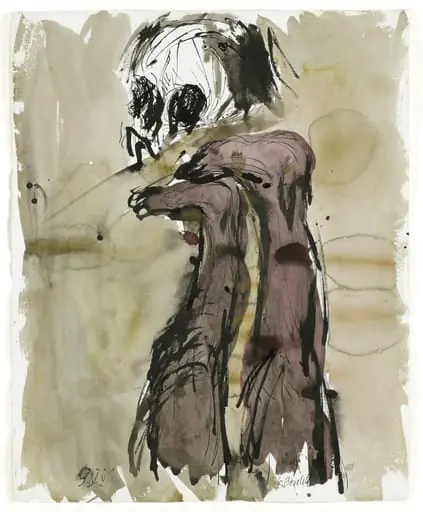
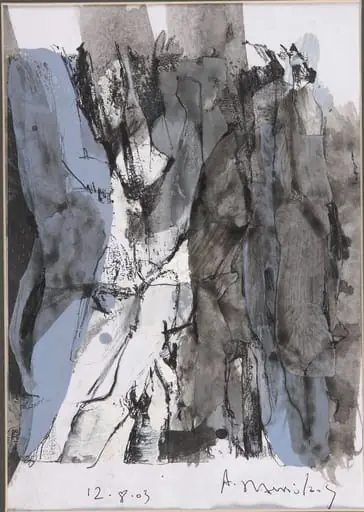
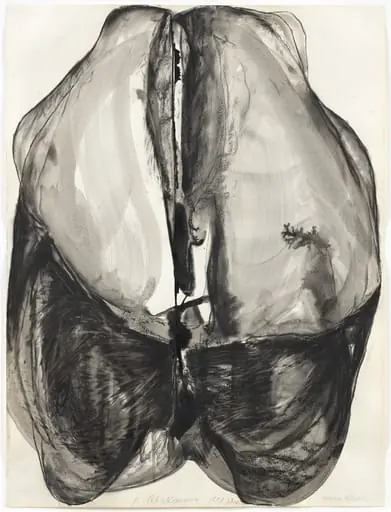
Untitled is an oil drawing by Marino Marini. It dates from 1949 and is held in the collection of the Museum of Modern Art.
About this work
Overview
This ink and oil drawing on paper, dated 1949, is attributed to Marino Marini and resides in The Museum of Modern Art’s collection.
This ink and oil drawing on paper, dated 1949, is attributed to Marino Marini and resides in The Museum of Modern Art’s collection. It presents a singular, elongated human form rendered in loose, gestural strokes. The composition lacks a detailed setting, focusing entirely on the figure’s precarious posture. The muted palette of gray, brown, and faint yellow enhances the sense of fragility and motion.
Subject & Meaning
The figure appears caught in a moment of imbalance—arms outstretched, one leg bent unnaturally behind, torso twisted. Its form suggests vulnerability or collapse, evoking themes of physical strain or existential disorientation. Marini often explored the human body under stress, and this drawing reflects his interest in movement, instability, and the tension between control and surrender.
Technique & Style
The work employs a combination of ink and oil, applied with rapid, uneven strokes that emphasize spontaneity over precision. Lines are sketchy and layered, revealing revisions and hesitations. The absence of shading or defined contours creates a flattened, almost abstract silhouette. The medium’s fluidity allows for a raw, immediate quality, aligning with expressive drawing traditions of the mid-20th century.
History & Provenance
Created in 1949, the drawing entered The Museum of Modern Art’s collection shortly after its completion. It is part of a broader series of works by Marini from this period, in which he increasingly turned to drawing as a means of exploring form and motion outside the constraints of sculpture. Its preservation in a major institution underscores its significance within his graphic oeuvre.
Context
In postwar Europe, many artists turned to expressive, fragmented forms to convey psychological and physical dislocation. Marini, though known for equestrian sculptures, used drawing to investigate similar themes with greater immediacy. This work reflects broader artistic concerns of the time—existential unease, the body in crisis, and the search for meaning amid fragmentation.
Legacy
This drawing contributes to Marini’s reputation as an artist who bridged sculpture and graphic work, using minimal means to convey complex emotional states. Its presence in MoMA’s collection situates it within a lineage of modernist drawings that prioritize gesture over finish. It continues to inform discussions on how the human form can express inner turmoil through simplified, dynamic lines.
Artist & collection