Artwork
Title Page for D. De Aedo y Gallert, El...Viaje del Infante Cardenal...
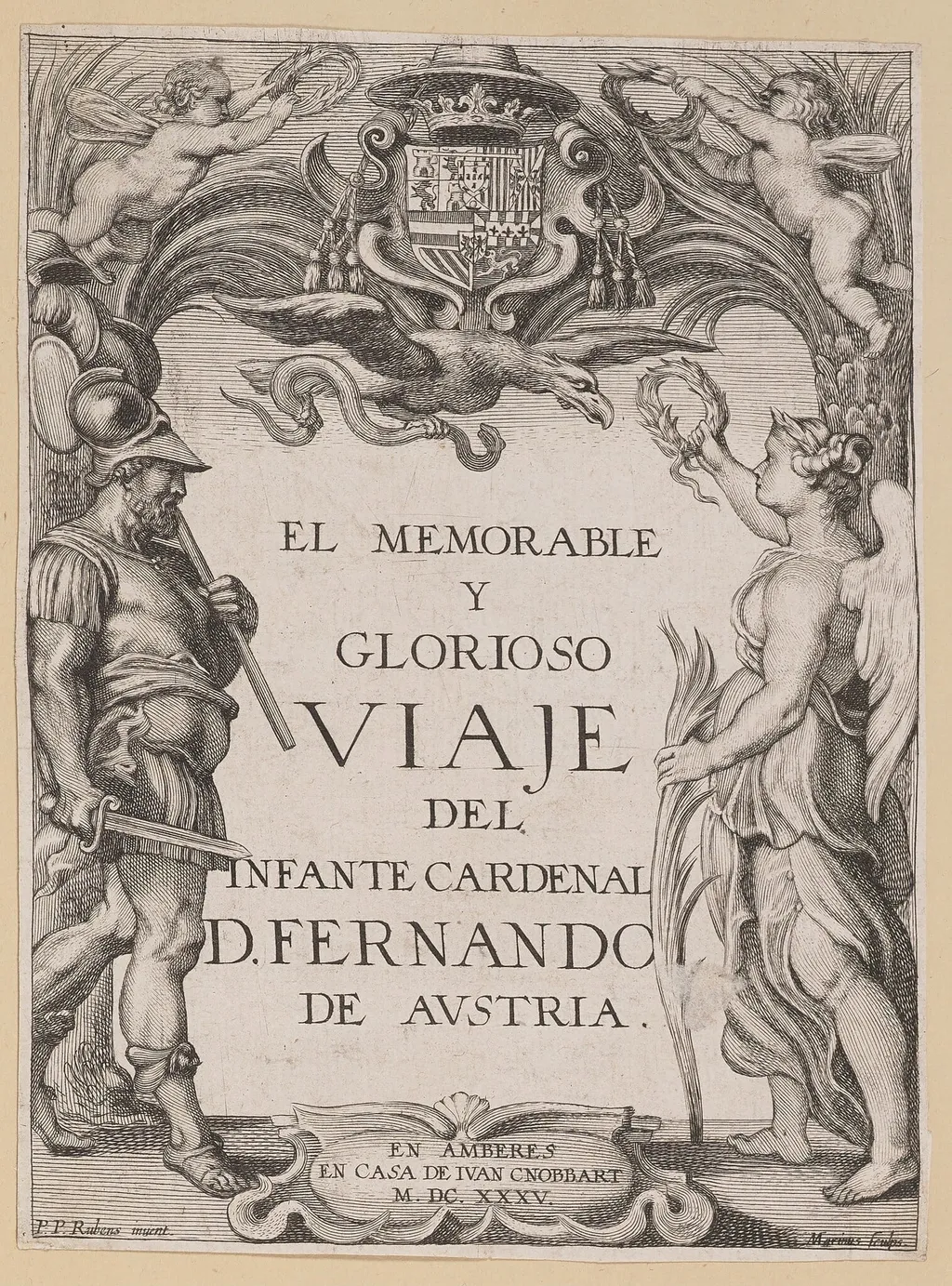
Title Page for D. De Aedo y Gallert, El...Viaje del Infante Cardenal... is an ink print by the Baroque artist Ignatius Cornelis Marinus. It dates from 1635 and is held in the collection of the National Gallery of Art. The title page for D.
About this work
Overview
The title page for D. De Aedo y Gallert’s *El Memorable y Glorioso Viaje del Infante Cardenal D. Fernando de Austria* is an engraving executed on laid paper in 1635 by Ignatius Cornelis Marinus. It serves as the frontispiece for the travel narrative, presenting the work’s subject in a formal, decorative format typical of early‑modern printed books.
Subject & Meaning
The central inscription announces the celebrated journey of the Infante Cardinal Fernando of Austria, a member of the Habsburg dynasty. By foregrounding his title and the notion of a "memorable and glorious" expedition, the image reinforces the political and religious prestige of the royal traveler, aligning his voyage with notions of honor and divine favor.
Technique & Style
The composition is framed by elaborate scrollwork, and two allegorical figures—clad in armor and ceremonial robes—support a banner bearing the title.
Marinus employed a fine‑line engraving technique, incising intricate details into a copper plate before transferring the image to paper. The composition is framed by elaborate scrollwork, and two allegorical figures—clad in armor and ceremonial robes—support a banner bearing the title. Above, a heraldic shield displays a crown and an architectural motif, all rendered with the dramatic chiaroscuro and ornamental richness characteristic of the Baroque period.
History & Provenance
Created in the mid‑seventeenth century, the print was originally bound to the first edition of De Aedo y Gallert’s travel account. Surviving copies are found in several European library collections, indicating the work’s distribution among scholarly and aristocratic circles. The engraving bears Marinus’s signature, confirming his role as the printmaker.
Context
Printed in the Dutch Republic, the frontispiece reflects the era’s cross‑cultural exchange between the Spanish Habsburg court and Northern European publishing houses. The use of allegorical figures and heraldic imagery aligns the work with contemporary practices of glorifying royal patrons through visual propaganda in printed media.
Artist & collection


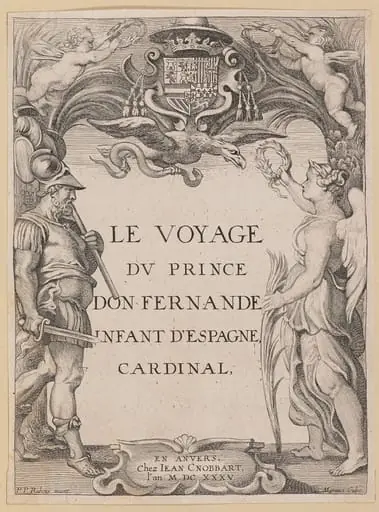
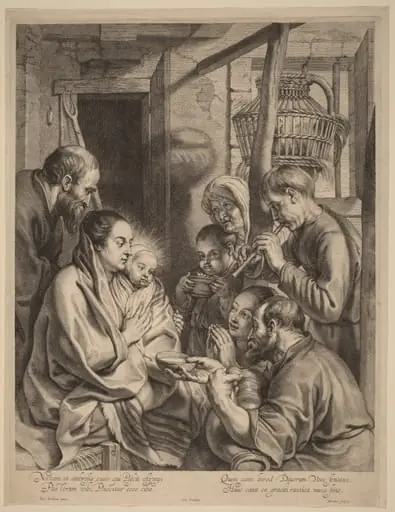
![Libro Appartenente al Architettura [Title Page], by Italian 16th Century](https://artifactworldgallery.com/img/italian-16th-century--libro-appartenente-al-architettura-title-page--88d56a9c67de978c-w320.webp) Libro Appartenente al Architettura [Title Page]
Libro Appartenente al Architettura [Title Page]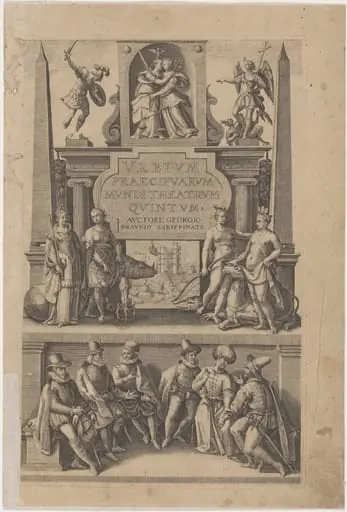 Title Page to Urbium Praecipuarum Mundi Theatrum Quintum
 Untitled
!["Always Have the Bedclothes Folded up" [fol. 41 recto], by French early 16th Century](https://artifactworldgallery.com/img/french-early-16th-century--always-have-the-bedclothes-folded-up-fol-41-recto--bad18c2c732bca78-w320.webp) "Always Have the Bedclothes Folded up" [fol. 41 recto]
"Always Have the Bedclothes Folded up" [fol. 41 recto]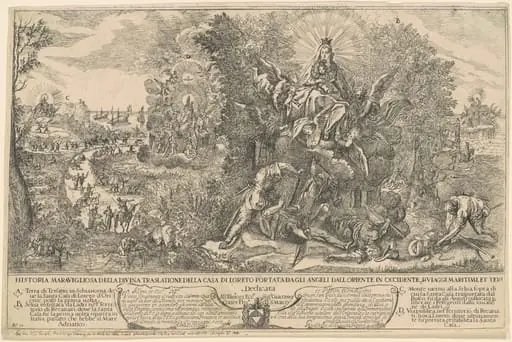 The Transport of the Holy House of Loreto
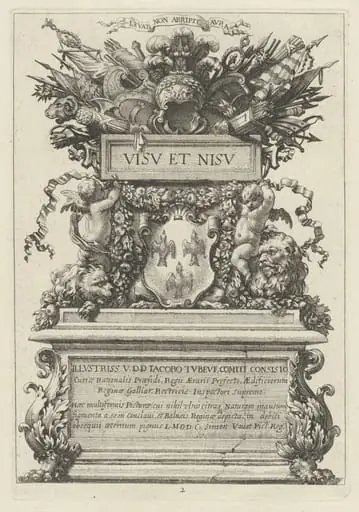 Frontispiece
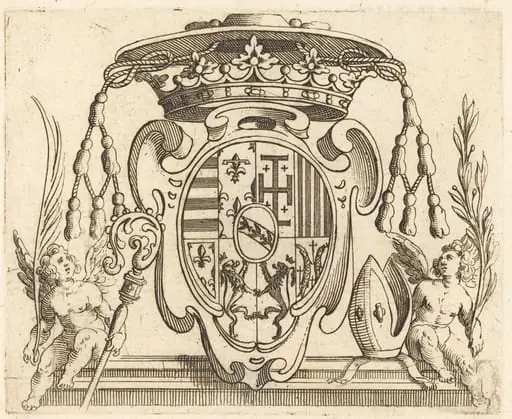 Coat of Arms of Nicolas Francis of Lorraine
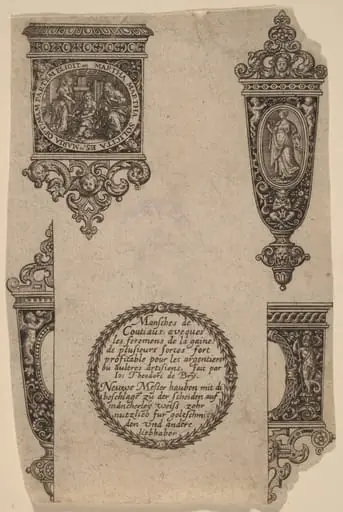 Ornament for Knife Handle
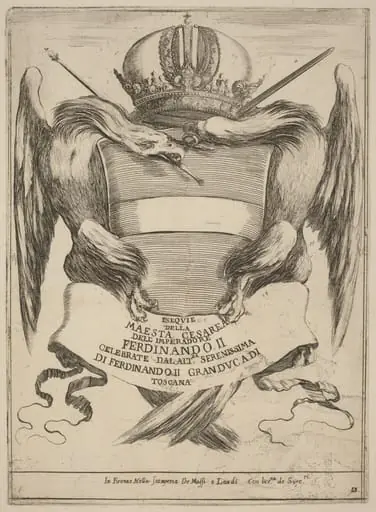 Arms with a Dedication to Grand Duke Ferdinand II
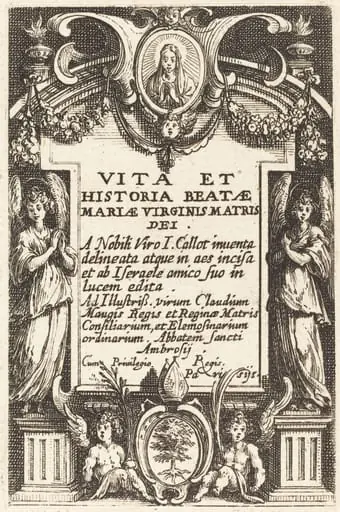 Frontispiece for "The Life of the Virgin"
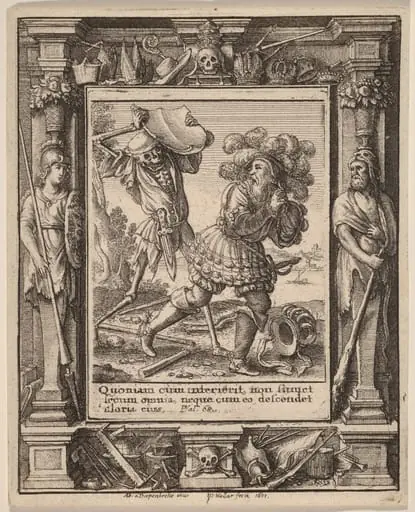 Count
Count