Artwork
Count
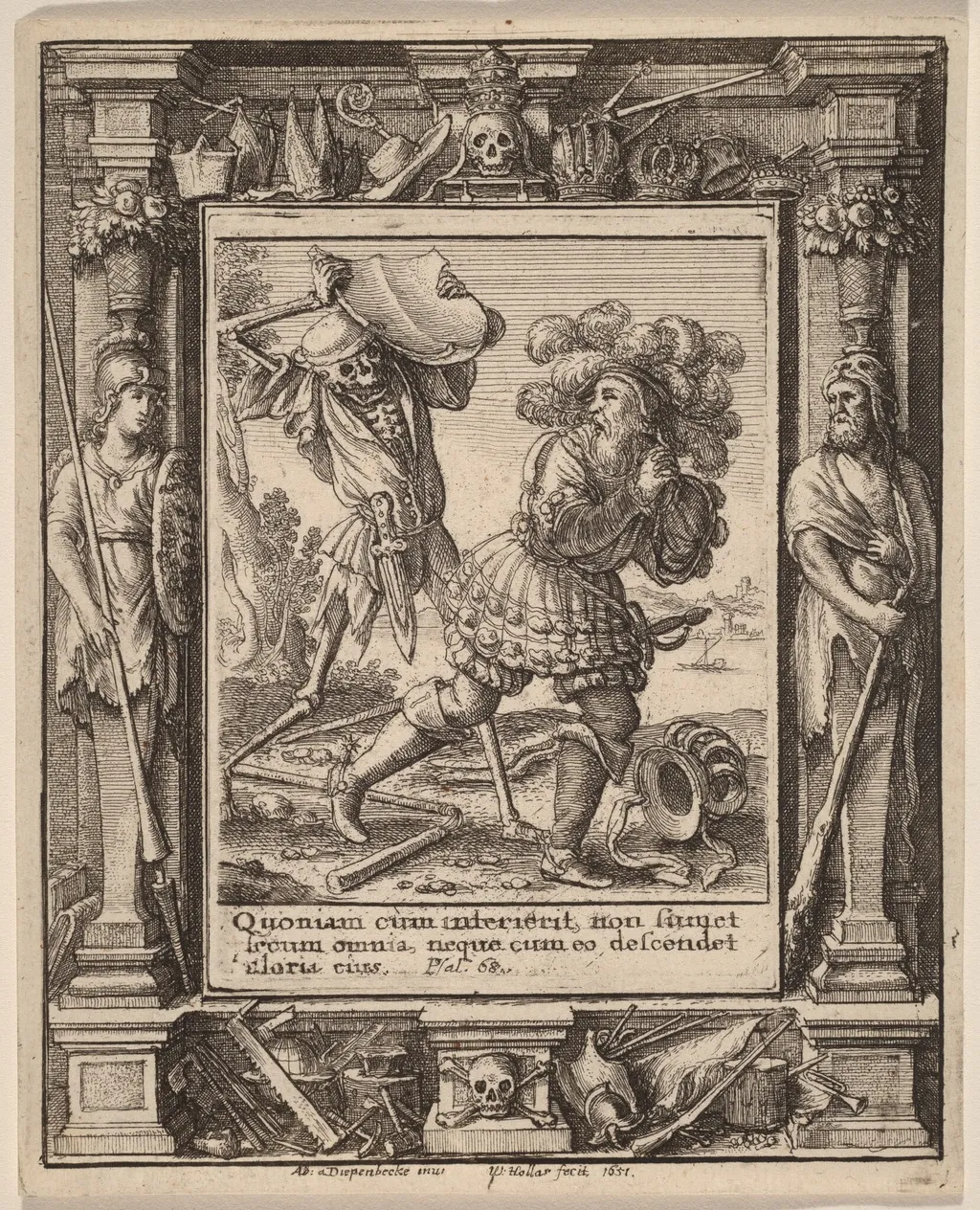
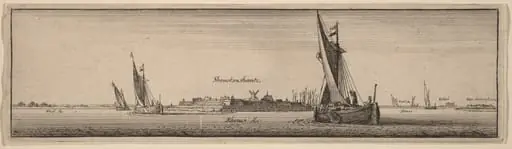
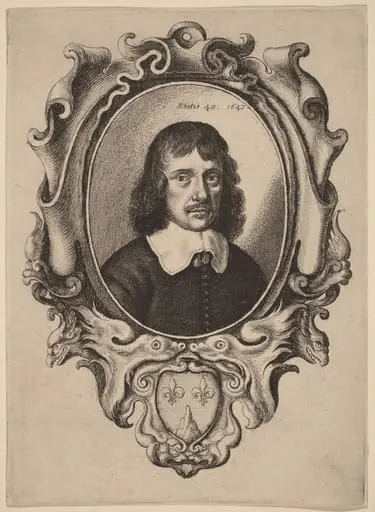
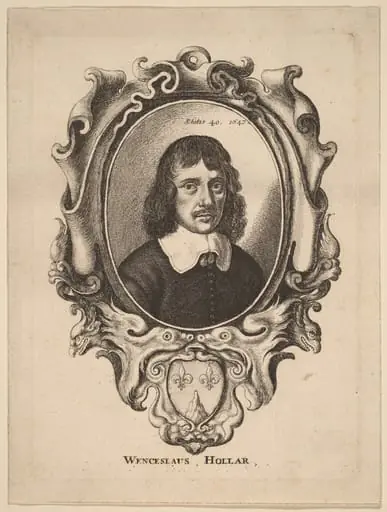
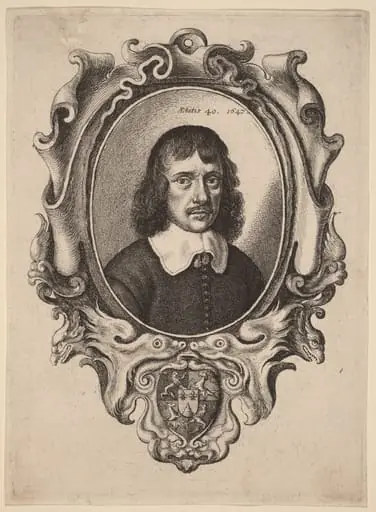
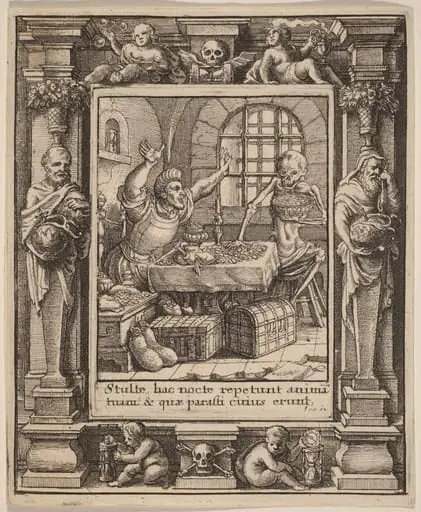
Count is an ink print by the Baroque artist Wenceslaus Hollar. It dates from 1651 and is held in the collection of the National Gallery of Art.
About this work
Overview
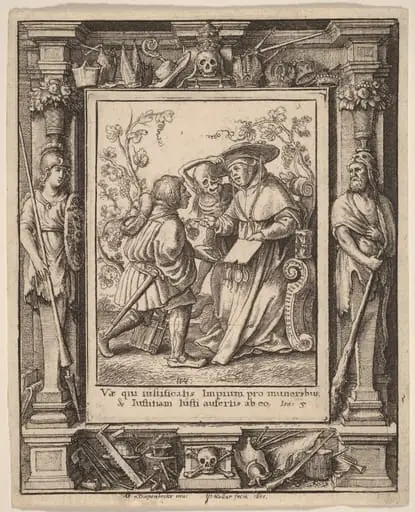
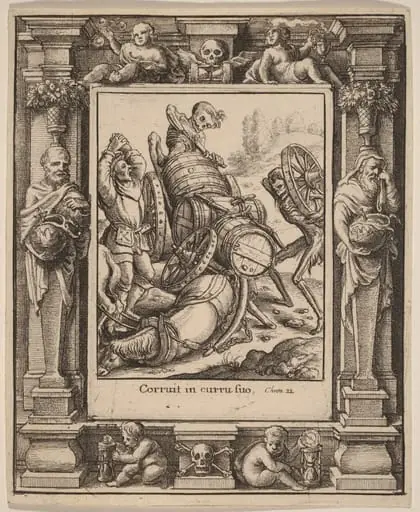
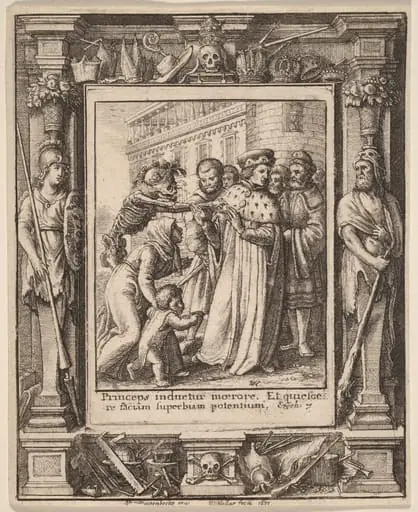
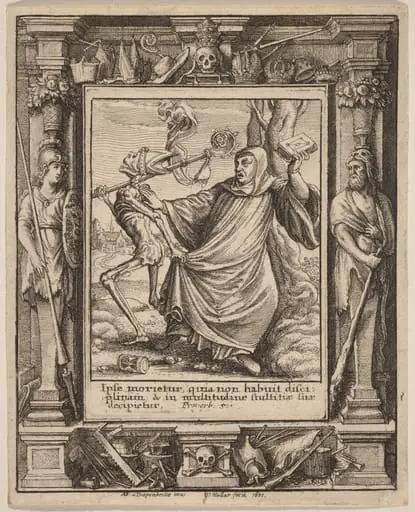
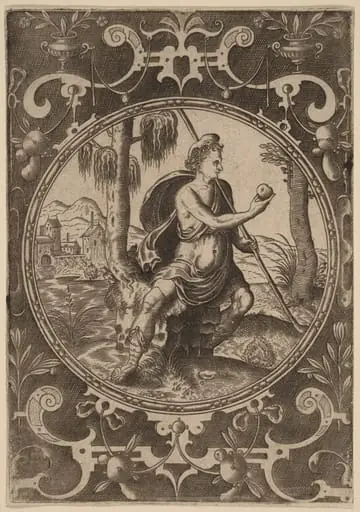
Count is a 1651 etching by Wenceslaus Hollar, featuring a central image framed by a decorative border titled 'Minerva and Hercules'. The work contrasts a chaotic scene with classical allegory.
Subject & Meaning
The etching depicts a somber, symbolic scene with two main figures: a gaunt, skull-holding figure and a bearded man clutching a scroll, surrounded by scattered tools, broken columns, and skulls. The border's classical motifs juxtapose with the central morbid themes, while the Latin text warns against pride and downfall.
Technique & Style
Hollar employed etching techniques to create sharp lines and dramatic contrasts, generating tension. The border's intricate design and the central image's detailed symbolism reflect Hollar's mastery of expressive line work.
History & Provenance
Created in 1651 by Wenceslaus Hollar, a Czech engraver and etcher primarily active in England, 'Count' (Pennington 233B) is part of his broader oeuvre, which more commonly featured cityscapes and landscapes.
Context
While Hollar was known for detailed, often serene landscapes and cityscapes, 'Count' stands out for its dark, allegorical themes, suggesting a departure or experimentation with moral and symbolic subjects during his English period.
Legacy
As a less typical work in Hollar's catalog, 'Count' offers insight into the artist's versatility and engagement with moral allegories, though its impact on his overall legacy remains defined by his more prolific landscape and cityscape productions.
Artist & collection
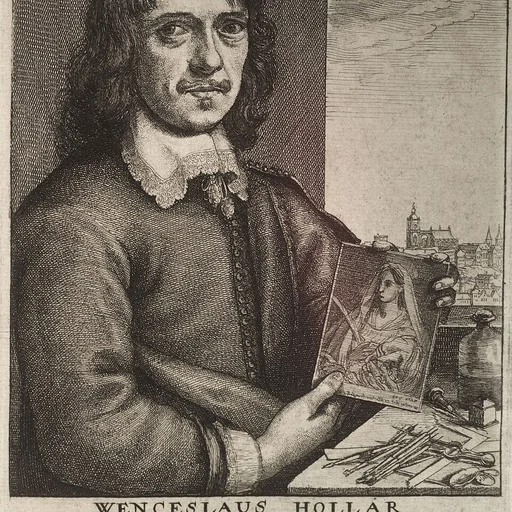
Artist
Wenceslaus Hollar (Czech: Václav Hollar (Czech pronunciation: ), German: Wenzel Hollar; 23 July 1607 – 25 March 1677) was a Czech engraver, etcher and painter.