Artwork
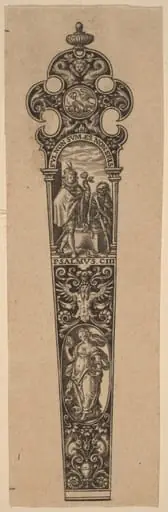
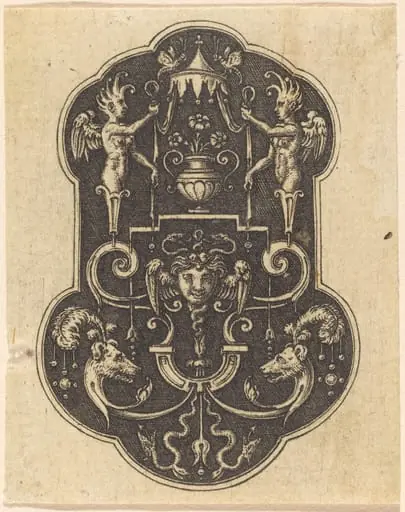
Ornament for Knife Handle
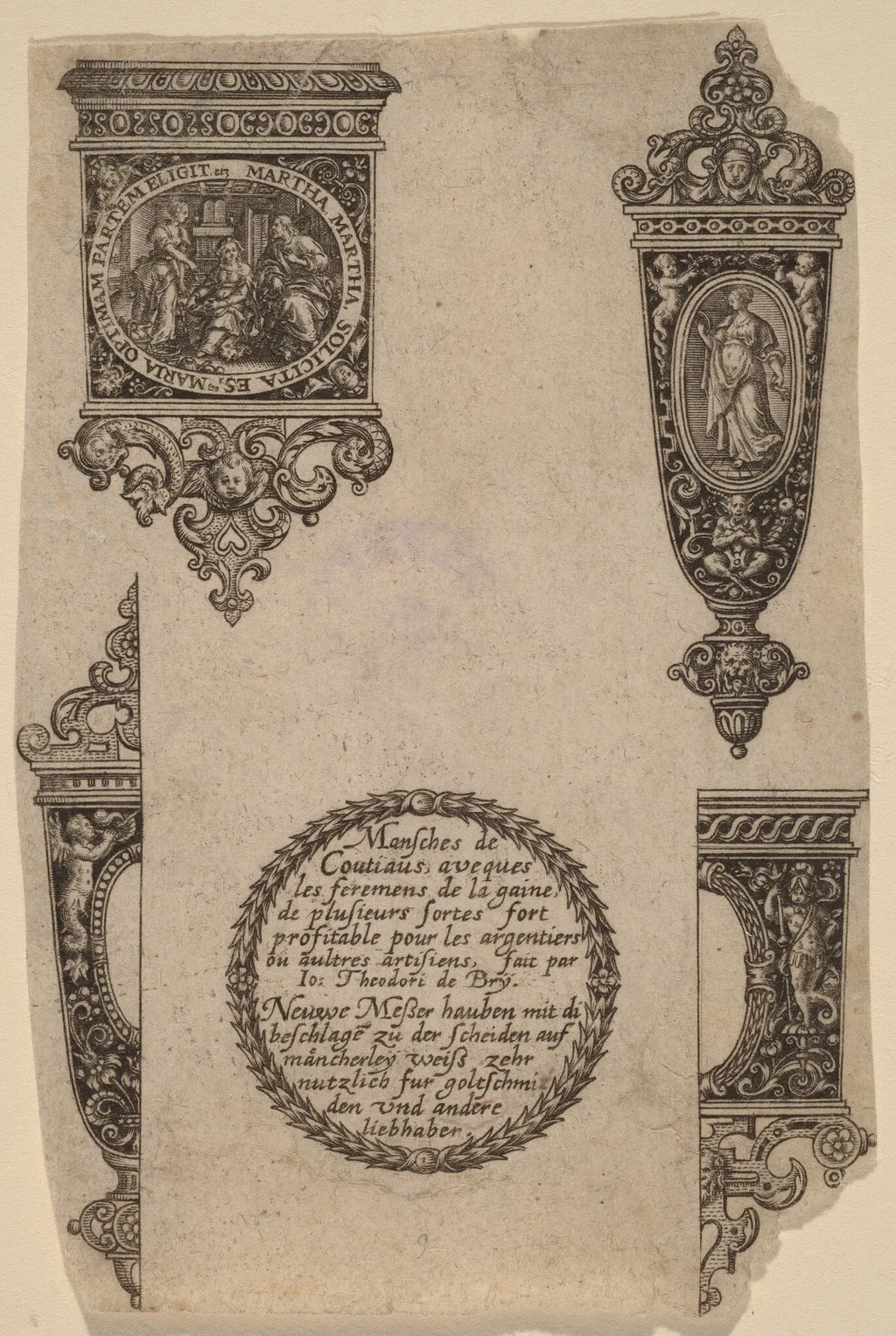
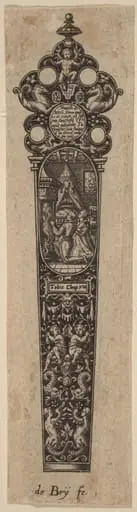
Ornament for Knife Handle is an ink print by the Renaissance artist Theodor de Bry. It dates from 1563 and is held in the collection of the National Gallery of Art.
About this work
Overview
As a Walloon artist trained in goldsmithing, de Bry applied meticulous engraving techniques to produce intricate ornamental designs.
Created in 1563 by Theodor de Bry, this engraving was designed as a decorative pattern for a knife handle. As a Walloon artist trained in goldsmithing, de Bry applied meticulous engraving techniques to produce intricate ornamental designs. The work reflects his broader practice of crafting detailed metalwork illustrations, many of which were intended for practical use in luxury objects rather than standalone display.
Subject & Meaning
The composition features two vertical, slender forms flanking a central circular motif, typical of Renaissance decorative schemes. The circle contains inscriptions, likely Latin mottos or maker’s marks, common in personalized metalwork. The surrounding text and stylized elements suggest a fusion of functional design and symbolic messaging, aligning with the era’s emphasis on craftsmanship and personal identity in everyday objects.
Technique & Style
Executed in fine-line engraving, the piece demonstrates de Bry’s precision with burin tools, producing crisp, interwoven lines and delicate textures. The style draws from Northern Renaissance traditions, emphasizing symmetry, repetition, and ornamental complexity. Unlike broad illustrative prints, this work prioritizes minute detail suited for replication on metal surfaces, reflecting its intended application in object decoration.
History & Provenance
De Bry, a Protestant exile from the Spanish Netherlands, produced this engraving during his time in Frankfurt, where he established a publishing workshop. While the specific provenance of this sheet is undocumented, it belongs to a series of decorative plates he issued for artisans and craftsmen. These designs circulated widely among metalworkers and engravers in 16th-century Europe, serving as templates for personal and commercial use.
Context
This engraving emerged during a period when ornamental prints were essential tools for artisans across Europe. De Bry’s designs were part of a broader market for pattern books that standardized decorative motifs. His work intersected with humanist ideals of craftsmanship and the growing demand for personalized, high-status items, placing functional art at the center of Renaissance material culture.
Legacy
Though lesser known than his American expedition illustrations, this piece exemplifies de Bry’s role in disseminating Renaissance decorative vocabulary. His engraved patterns influenced metalworkers and designers for decades, contributing to the visual language of personal adornment in early modern Europe. Such works remain valuable for understanding the intersection of art, craft, and commerce in the 16th century.
Artist & collection
Artist
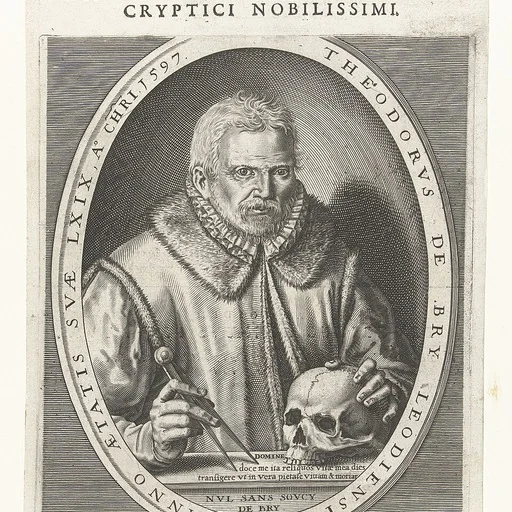
Theodor de Bry (also Theodorus de Bry; 1528 – 27 March 1598) was a Walloon engraver, goldsmith, editor and publisher, famous for his depictions of early European expeditions to the Americas.

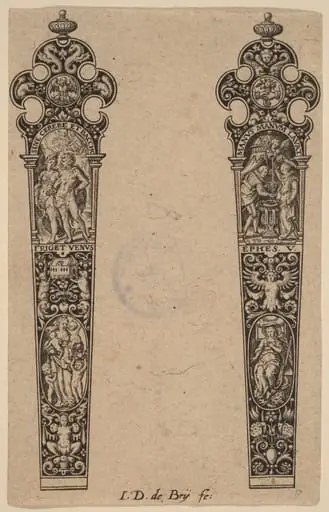
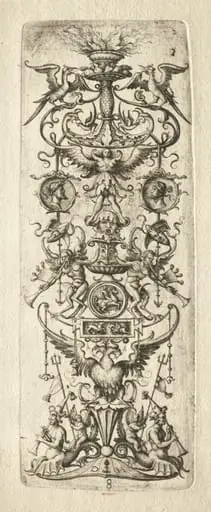 Ornament Fillet
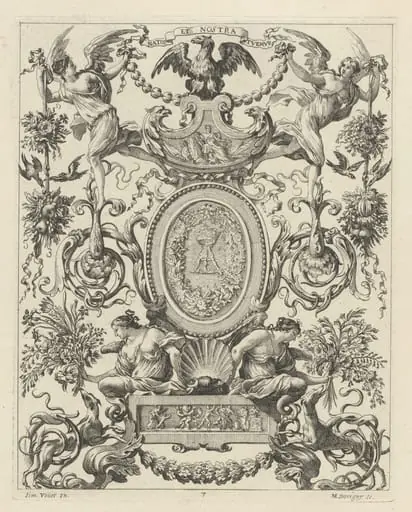 Ornamental Panel Surmounted by an Eagle and the Motto NATOS ET NOSTRA TUEMUR
 Head of Medusa
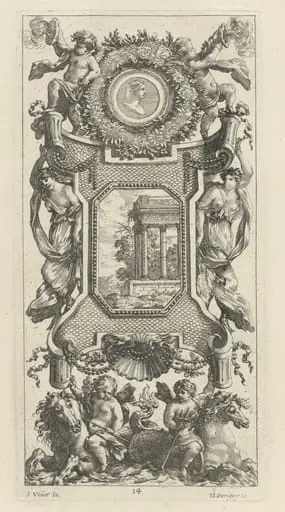 Ornamental Panel Surmounted by a Bust of a Woman and Two Putti with Flaming Trumpets
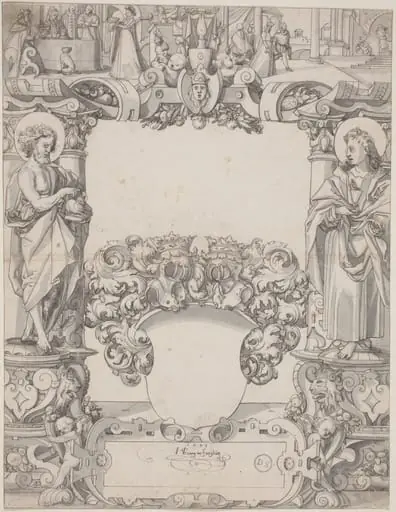 Glass Design with Saint John the Baptist and Saint John the Evangelist
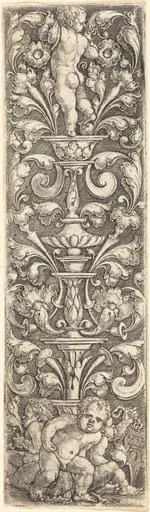 High Ornament
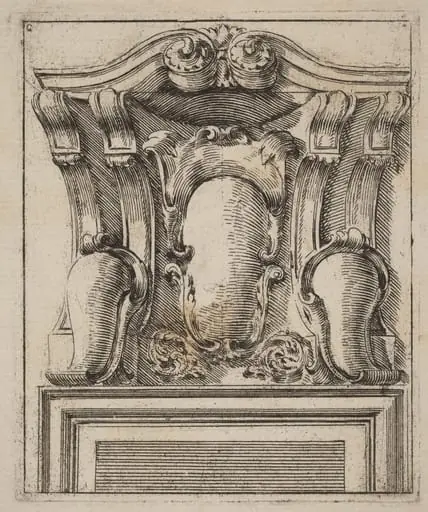 Architectural Motif with Three Shields
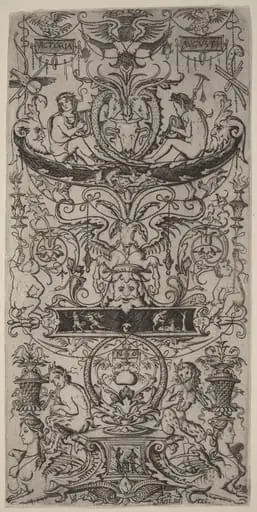 Ornament Panel: Victoria Augusta