Artwork
Untitled
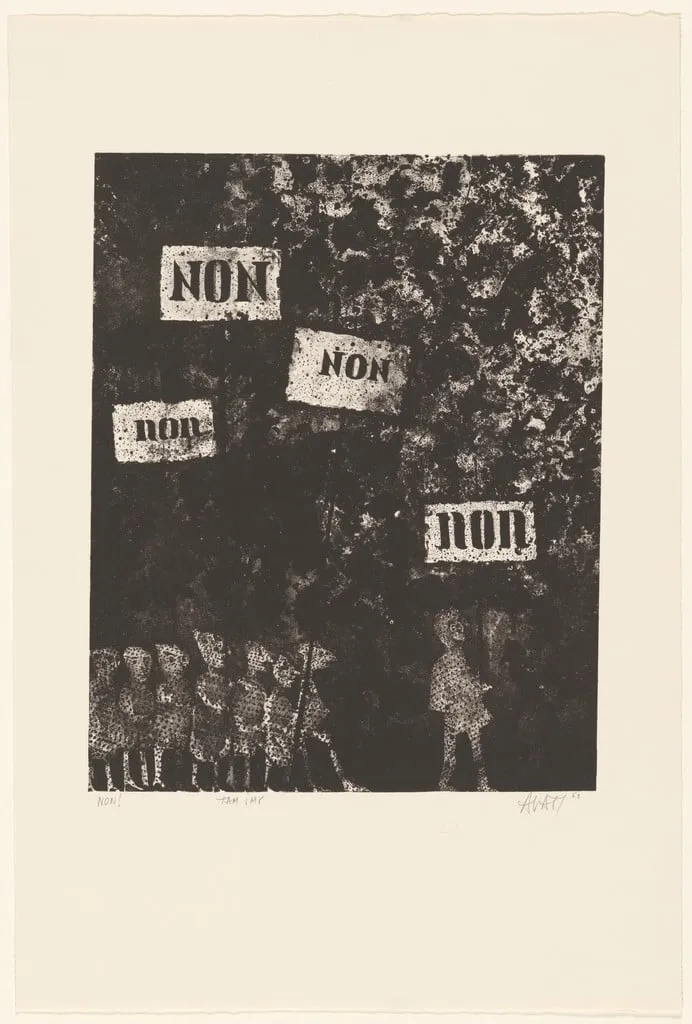
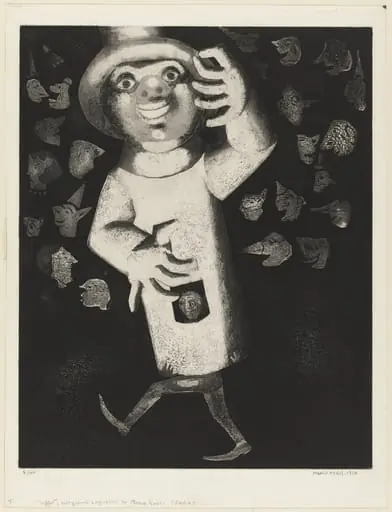
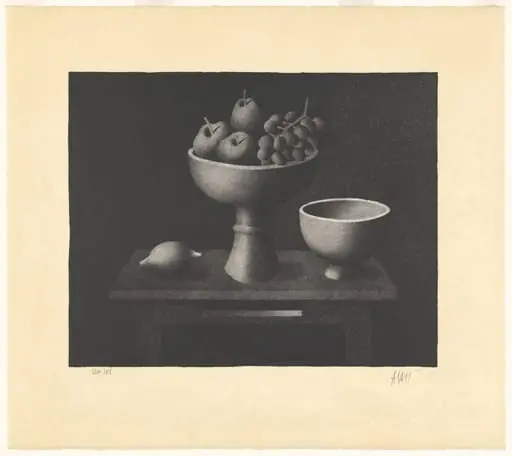
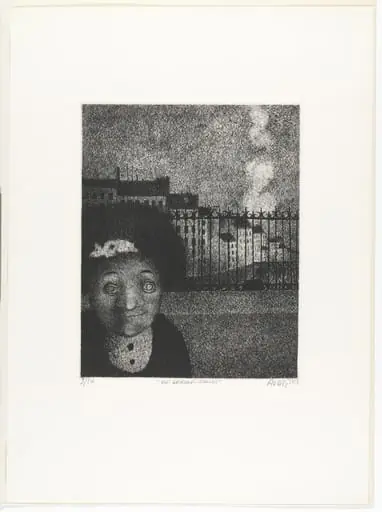
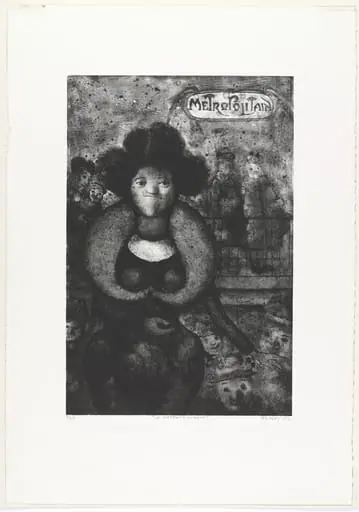
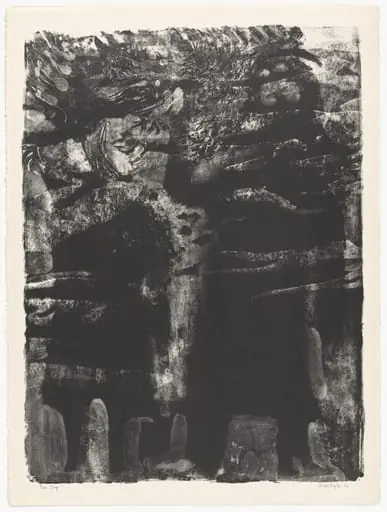
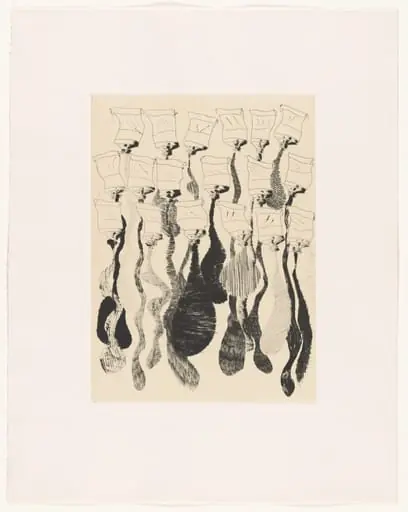
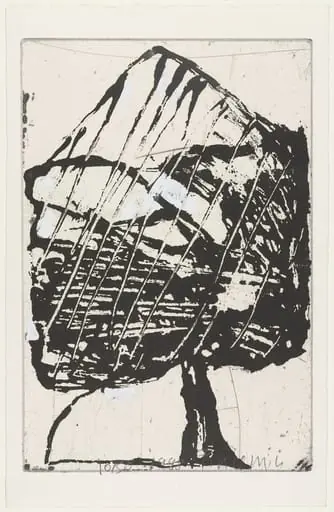
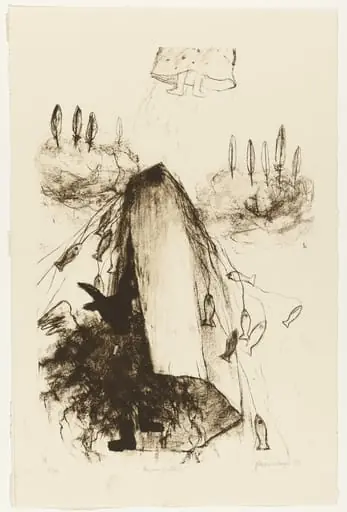
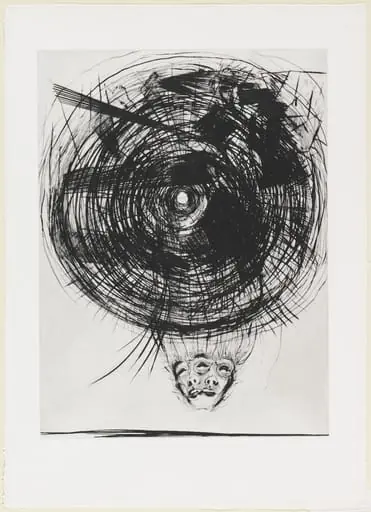
Untitled is an ink print by Mario Avati. It dates from 1963 and is held in the collection of the Museum of Modern Art.
About this work
Overview
Mario Avati created this lithograph in 1963, a black-and-white print characterized by its minimal composition and tactile surface. The work is part of The Museum of Modern Art’s collection and exemplifies Avati’s interest in language, absence, and the physicality of printmaking. Its stark visual economy invites quiet contemplation, resisting narrative clarity while emphasizing material presence.
Subject & Meaning
Four hand-cut white labels, each bearing the Italian word 'NON'—meaning 'no'—are dispersed across a dense black field. The repetition of this negation, combined with irregular shapes and uneven placement, evokes a sense of quiet resistance or erasure. The absence of context leaves the meaning open, suggesting silence, refusal, or the limits of communication without prescribing interpretation.
Technique & Style
Lithography allowed Avati to achieve a richly textured black ground, likely through granular ink application and deliberate surface manipulation.
Lithography allowed Avati to achieve a richly textured black ground, likely through granular ink application and deliberate surface manipulation. The white 'NON' elements were likely masked or drawn with precision, contrasting sharply against the rough background. The hand-cut quality of the labels introduces an artisanal, almost provisional feel, reinforcing the work’s restrained yet deliberate aesthetic.
History & Provenance
Created in 1963, the print entered The Museum of Modern Art’s collection shortly after its production. Avati, an Italian artist active in postwar Europe, was known for his experimental approach to printmaking, often blending poetic minimalism with linguistic play. This work reflects his engagement with European avant-garde traditions, though it remains unconnected to any known series or exhibition at the time of its making.
Context
In the early 1960s, European artists increasingly turned to language and abstraction to question meaning and representation. Avati’s use of a single word in Italian, set against a void-like field, aligns with broader postwar inquiries into silence, negation, and the instability of signs. The work avoids political or overtly conceptual gestures, instead offering a subtle meditation on absence and refusal.
Legacy
Though not widely reproduced, this lithograph contributes to Avati’s reputation for quiet, materially sensitive prints that challenge conventional composition. Its influence is seen in later artists who use linguistic fragments and monochrome fields to evoke ambiguity. The work endures as a quiet example of how minimal means can carry complex emotional and semantic weight.
Artist & collection