Artwork
Untitled
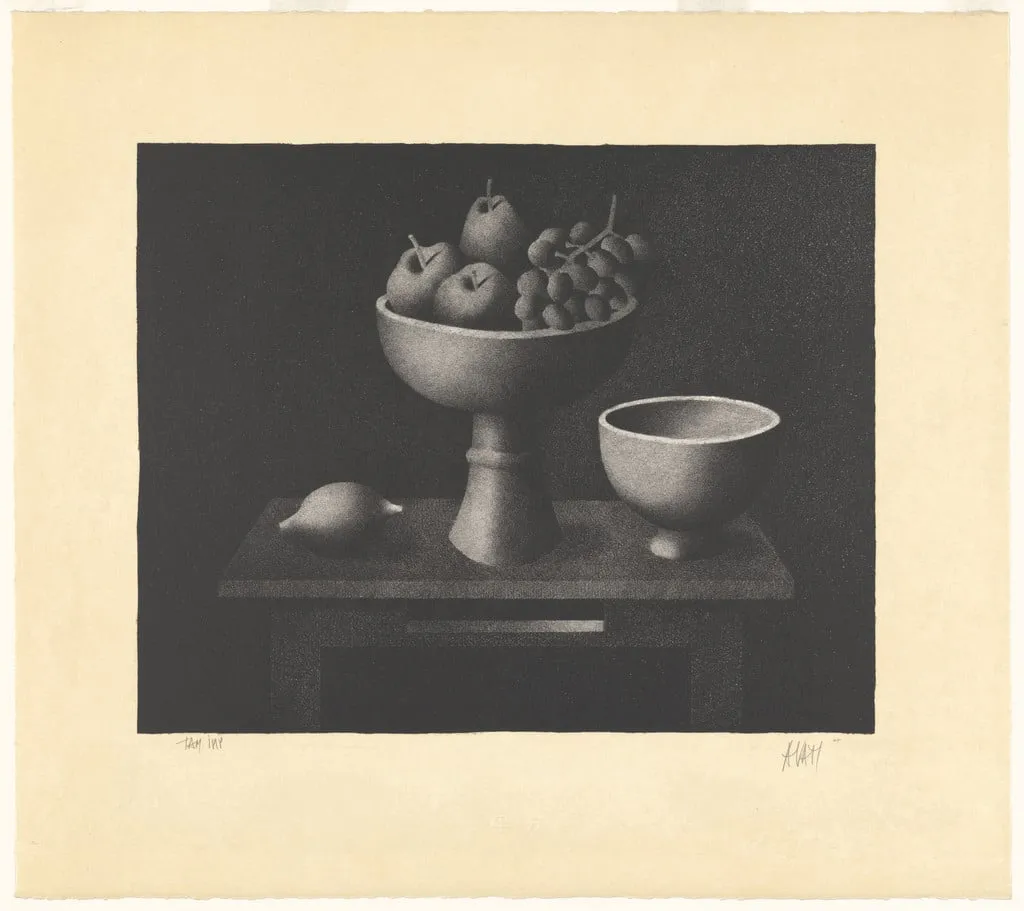
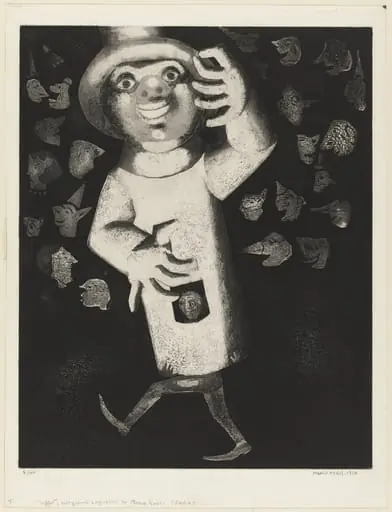
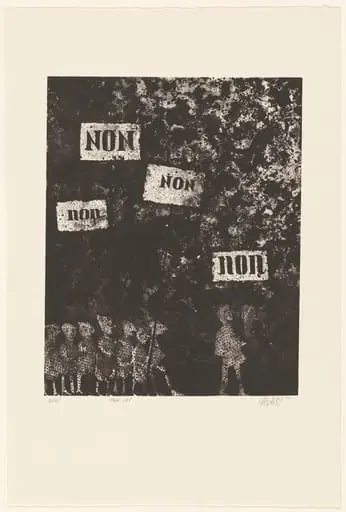
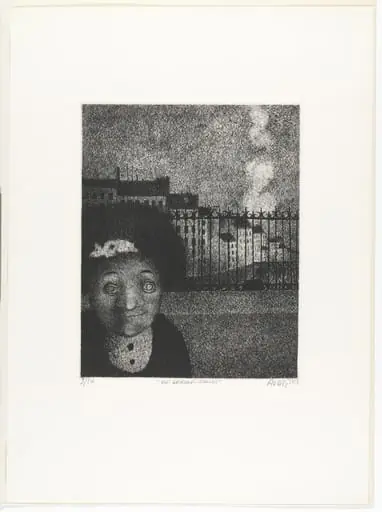
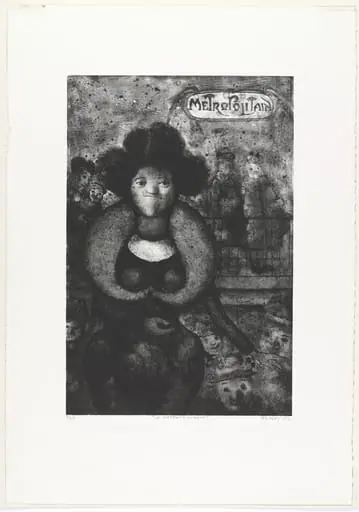
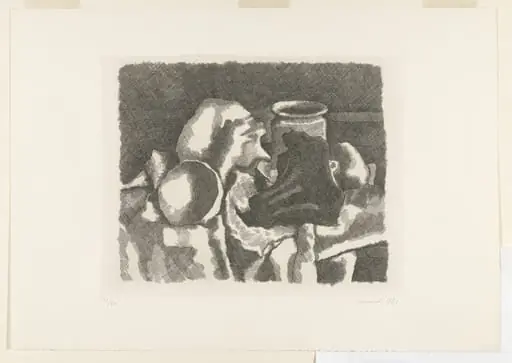
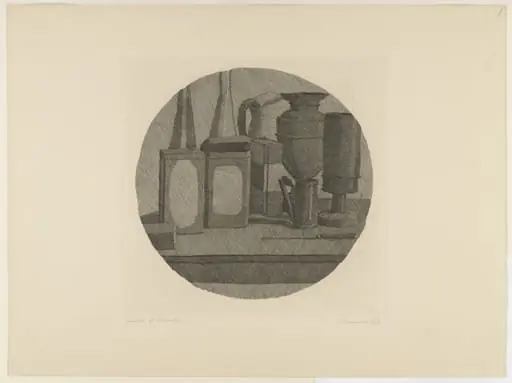
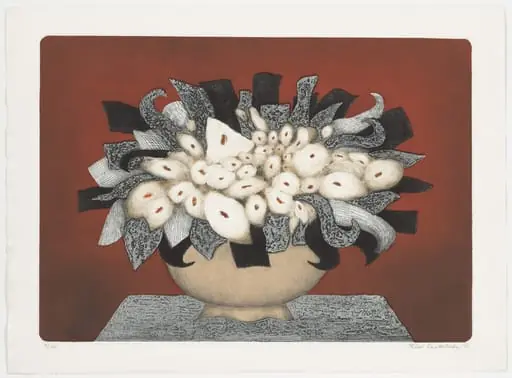
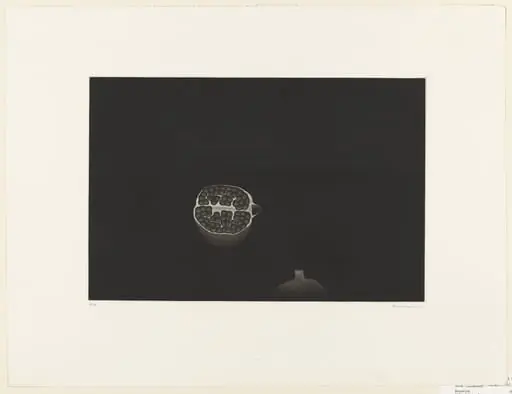
Untitled is an ink print by Mario Avati. It dates from 1967 and is held in the collection of the Museum of Modern Art.
About this work
Overview
The composition centers on a dark wooden table holding three objects: a single lemon, a bowl of fruit, and an empty shallow dish.
Mario Avati created this 1967 lithograph as a quiet still life, emphasizing simplicity and spatial clarity. The composition centers on a dark wooden table holding three objects: a single lemon, a bowl of fruit, and an empty shallow dish. Rendered with minimal color and strong tonal contrast, the image invites contemplation through restraint rather than detail. The work is part of The Museum of Modern Art’s print collection.
Subject & Meaning
The arrangement features everyday objects—lemon, apples, grapes, and an empty bowl—arranged with deliberate stillness. No narrative is implied; instead, the focus lies in the quiet presence of these items. The lone lemon and vacant dish suggest absence or completion, while the spilling fruit hints at natural abundance. The scene avoids symbolism, offering a meditative observation of ordinary things.
Technique & Style
Avati employed lithography to achieve smooth, even lines and subtle gradations of tone. The dark background enhances the luminosity of the fruit’s yellow and red hues, while sharp overhead lighting casts defined shadows that model form without texture. The technique favors clarity over detail, with each object rendered in clean, simplified contours, reflecting a modernist preference for essential shapes and controlled composition.
History & Provenance
Created in 1967, the lithograph entered The Museum of Modern Art’s collection shortly after its production. Avati, known for his printmaking and collaborations with artists like Picasso, often explored still-life subjects with a minimalist sensibility. This work reflects his engagement with postwar European print traditions, where quiet observation replaced overt expression. Its acquisition by MoMA underscores its significance within mid-century graphic art.
Context
In the 1960s, many printmakers turned to understated subjects as a counterpoint to the dominant trends of abstraction and Pop Art. Avati’s work aligns with this quiet resurgence of still life, influenced by European traditions and Japanese aesthetics. The emphasis on light, shadow, and sparse arrangement reflects a broader interest in material presence and spatial harmony, distinct from the noise of contemporary movements.
Legacy
This lithograph remains a quiet example of Avati’s contribution to 20th-century printmaking. It exemplifies how lithography could convey stillness and presence through technical precision and compositional restraint. While not widely reproduced, it continues to be studied for its balance of form and light, offering a reference point for artists exploring minimalism in graphic media.
Artist & collection