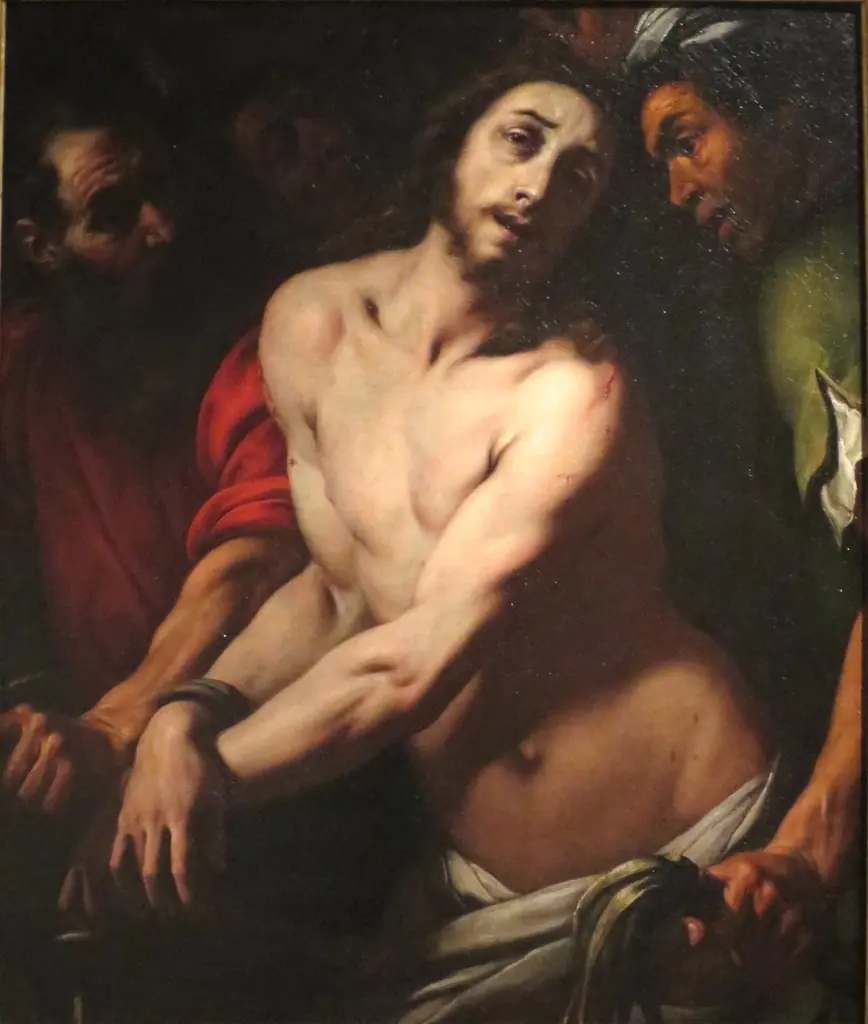
Artwork
Ecce Homo
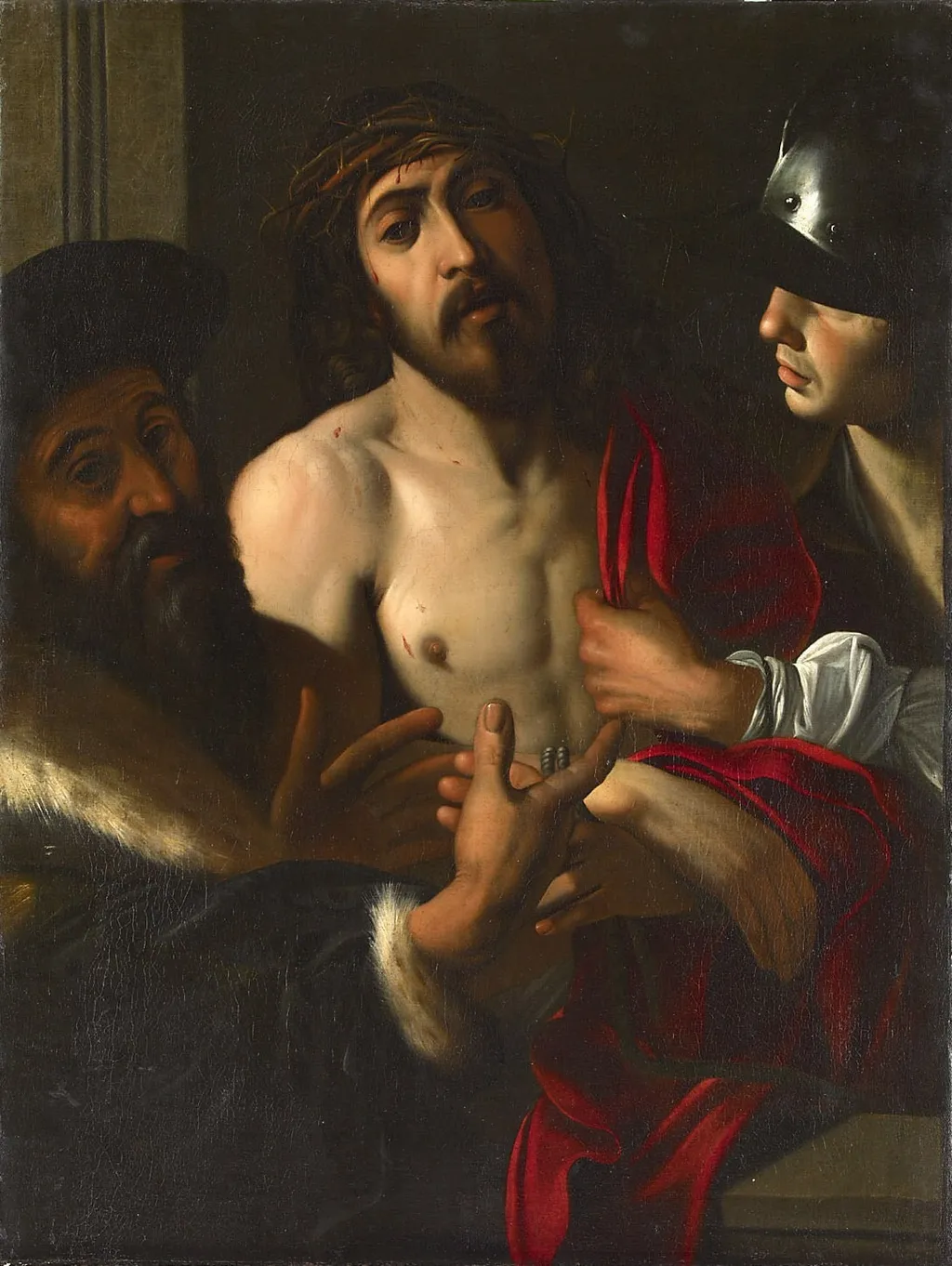
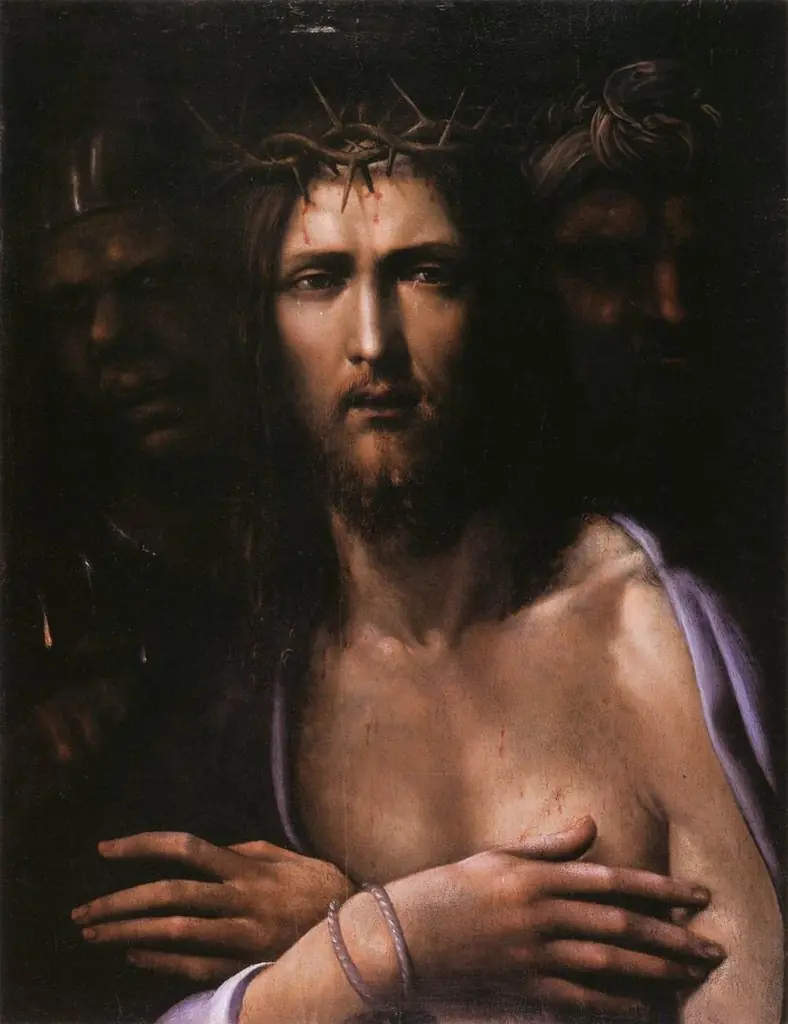
Ecce Homo is an unspecified painting by the Early Baroque Italian artist Mario Minniti. It dates from 1615 and is held in the collection of the Kunsthistorisches Museum.
About this work
Overview
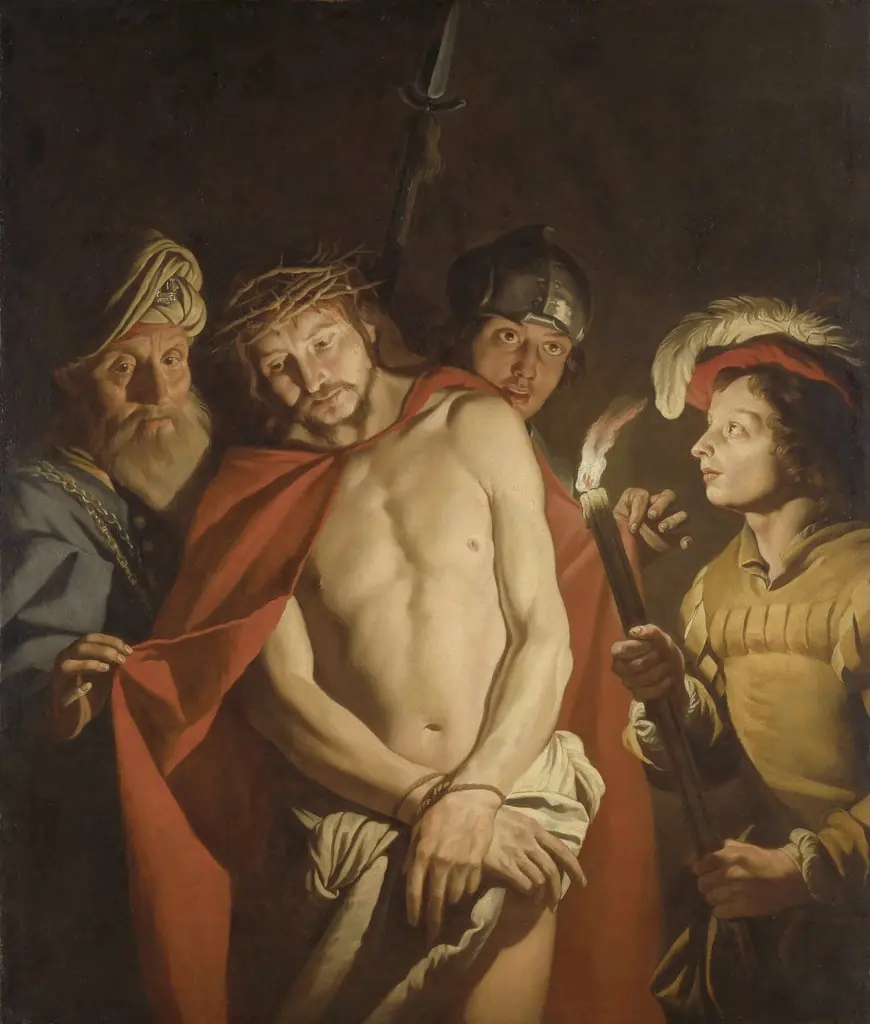
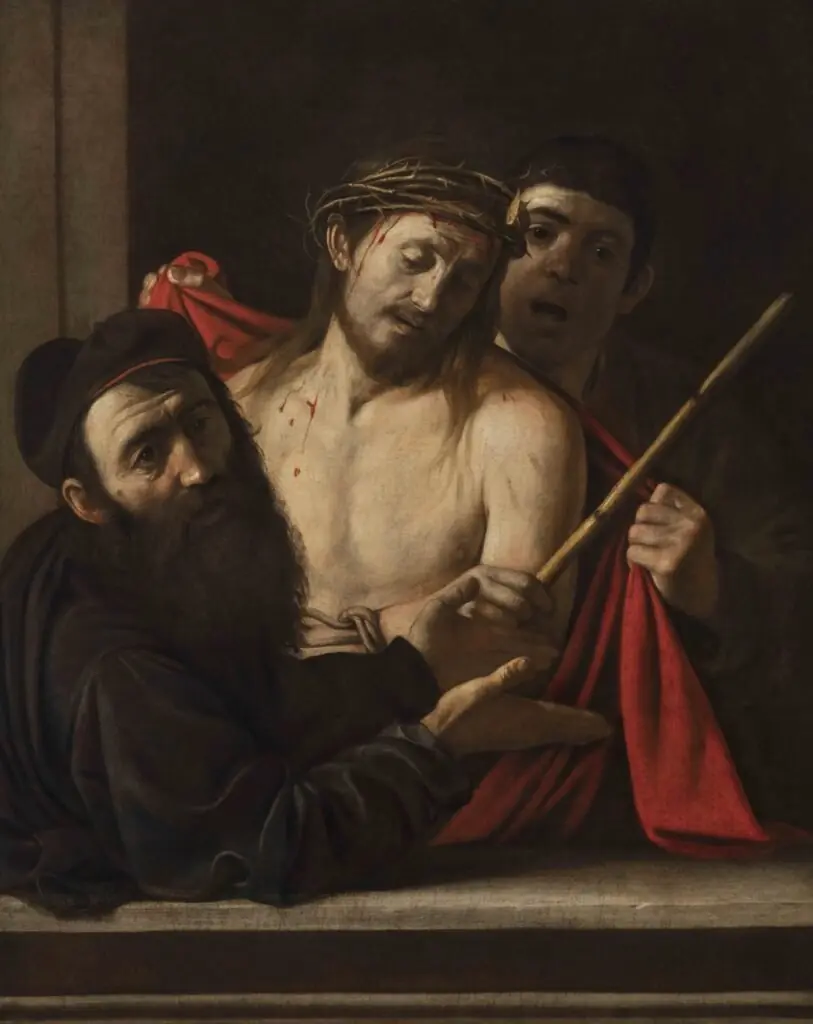
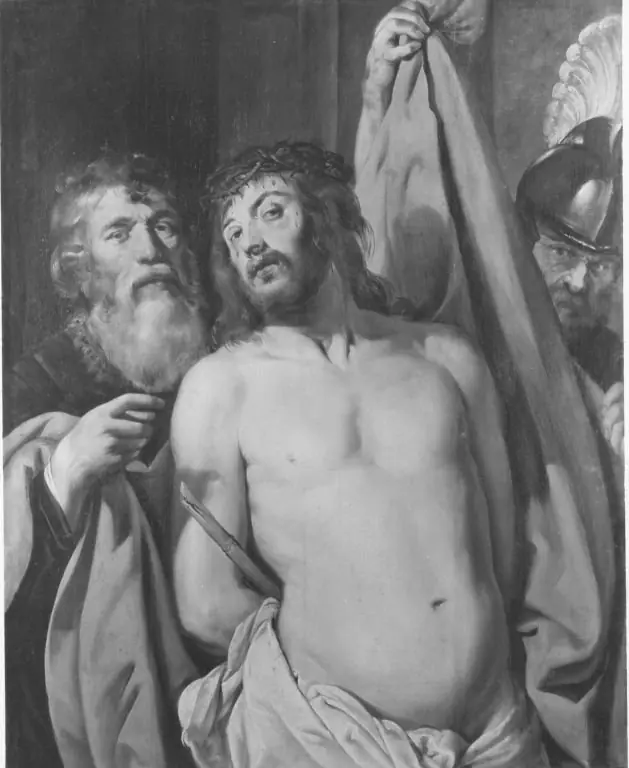
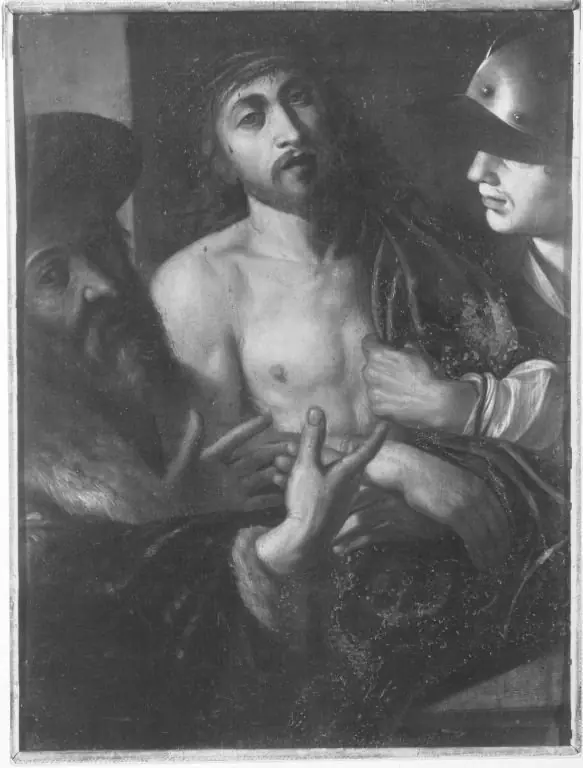
Mario Minniti’s 1615 oil on canvas, titled Ecce Homo, presents the moment when Christ is presented to the crowd after his scourging. The central figure, bare‑chested and crowned with thorns, is flanked by two men who support him on either side. A darkened backdrop is pierced by a faint left‑hand light, emphasizing the sorrowful expression on Christ’s face.
Subject & Meaning
The work illustrates the biblical episode known as Ecce Homo, in which Pontius Pilate exposes a bruised Jesus to the public. Minniti’s composition underscores the physical and emotional torment of the scene: the central figure’s anguished gaze and the tight grip of his attendants convey both humiliation and compassion, inviting contemplation of suffering and redemption.
Technique & Style
Executed in the early Baroque period, the painting employs chiaroscuro to model the figures against a tenebrous background. Minniti’s handling of flesh tones and the stark contrast between the dark garments of the attendants and the illuminated torso of Christ reveal a careful study of light and shadow, while the loose brushwork in the drapery suggests movement.
History & Provenance
Created in 1615, the canvas entered the collection of the Kunsthistorisches Museum in Vienna, where it remains on display. Documentation traces its ownership from a private Sicilian patron to the imperial museum’s acquisitions in the 19th century, reflecting the work’s enduring presence in European collections.
Context
Minniti, a contemporary of Caravaggio and a former assistant in his workshop, absorbed the dramatic realism characteristic of Caravaggisti painters. The Ecce Homo theme was popular among Counter‑Reformation artists, who used vivid emotional content to reinforce devotional messages about Christ’s passion.
Artist & collection