Artwork
Strawberry Hill, Twickenham, formerly the residence of Horace Walpole
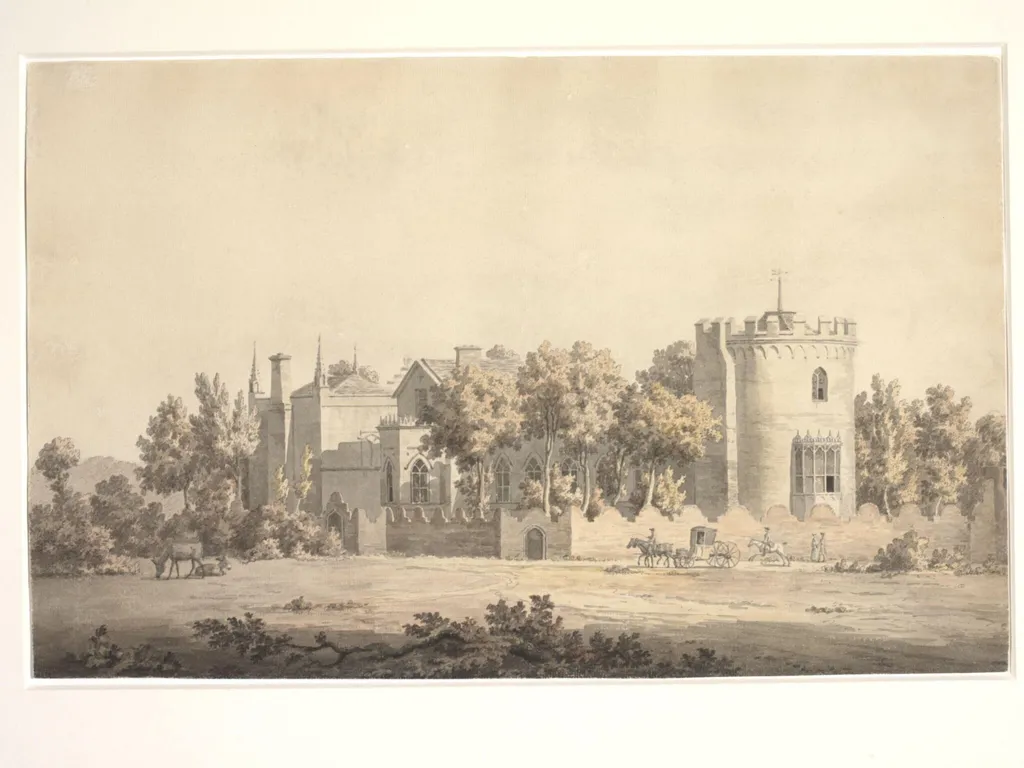
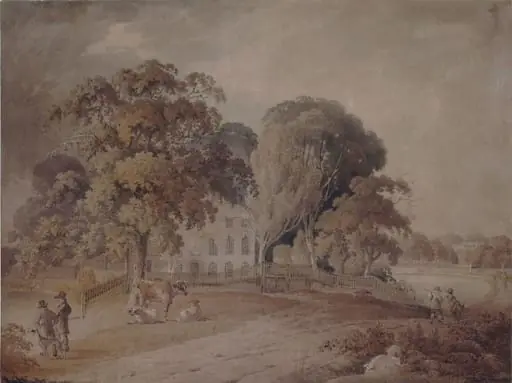
Strawberry Hill, Twickenham, formerly the residence of Horace Walpole is a watercolor work on paper by the Rococo painting artist William Marlow. It dates from 1750 and is held in the collection of the Victoria and Albert Museum.
About this work
Overview
Strawberry Hill, Twickenham, a watercolour by William Marlow (1750), captures the residence of Horace Walpole, showcasing its distinctive castle-like architecture amidst a serene landscape.
Subject & Meaning
The painting focuses on Strawberry Hill, emphasizing its ornate, Gothic details such as towers, turrets, arches, and pointed roofs, set within a tranquil, wooded environment. Figures, horses, and a departing carriage add a sense of everyday life.
Technique & Style
Executed in soft, muted watercolours, the work conveys a gentle, dreamy atmosphere. Marlow's approach blends architectural precision with a soothing, naturalistic backdrop.
History & Provenance
Originally part of Horace Walpole's collection at Strawberry Hill, the watercolour was sold at a pictures sale, accompanied by a commissioned drawing of the Gallery. Previously misattributed to Paul Sandby, it was later featured in Neville Lytton's *Water-Colour* (1911) as Plate 2.
Context
Created during the 18th century's resurgence of interest in Gothic architecture, the painting reflects the era's aesthetic tastes, as embodied by Walpole's innovative, neo-Gothic residence.
Artist & collection

![View of the Plunket's [sic] Castle, near St. Margaret's, 5 1/2 miles from Dublin [...], by Gabriel, ca.1729-1817 Beranger](https://artifactworldgallery.com/img/gabriel-ca-1729-1817-beranger--view-of-the-plunket-s-sic-castle-near-st-margaret-s-5-1-2-mi--aaf2a207a5920843-w320.webp) View of the Plunket's [sic] Castle, near St. Margaret's, 5 1/2 miles from Dublin [...]
View of the Plunket's [sic] Castle, near St. Margaret's, 5 1/2 miles from Dublin [...] Untitled
 Windsor Castle from the Great Park, near the End of the Long Walk
 Interior view of the ruins of Cowling (or Cooling) Castle, Kent
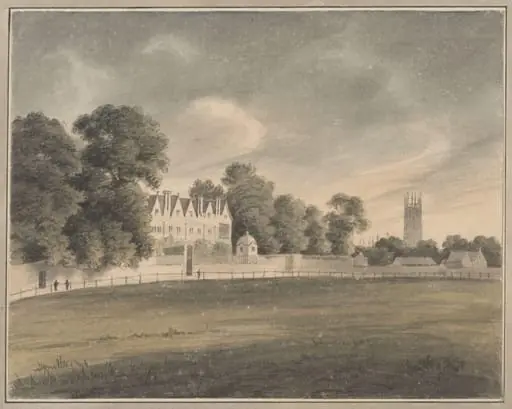 Merton College, Oxford
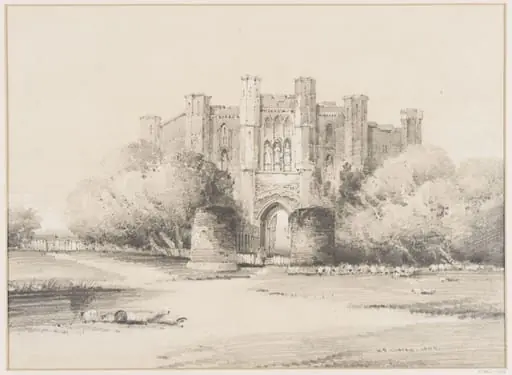 A fortified gateway
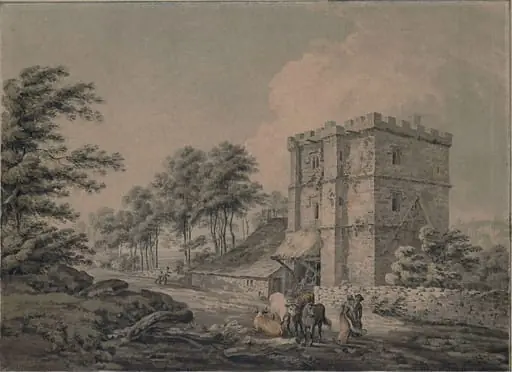 Wetheral Priory, Cumberland, with figures and cattle
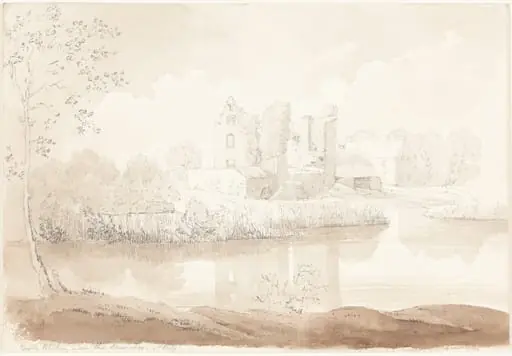 Castle Rheban on the River Barrow, Athy
 Lake House, Epping
 Landscape with church and cottages