Artwork
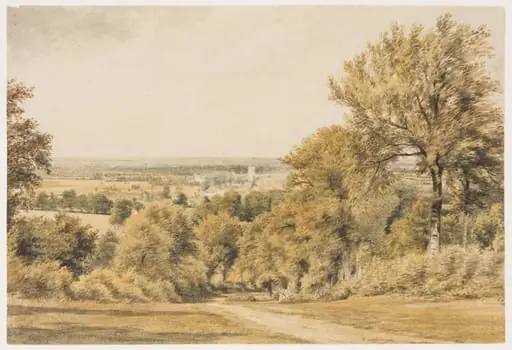
Windsor Castle from the Great Park, near the End of the Long Walk
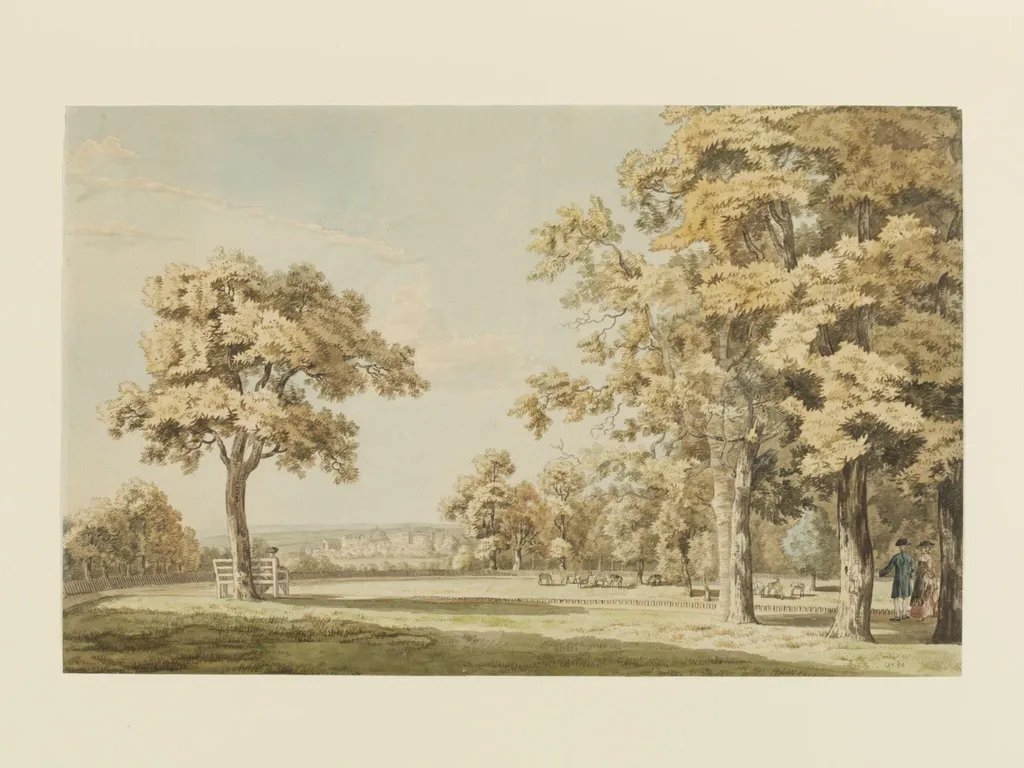
Windsor Castle from the Great Park, near the End of the Long Walk is a watercolor work on paper by the Baroque artist Paul Sandby. It dates from 1740 and is held in the collection of the Victoria and Albert Museum.
About this work
Overview
Executed around 1740, the work captures the royal residence through a precise yet lyrical lens, blending topographical accuracy with subtle atmospheric effects.
Paul Sandby’s watercolour depicts Windsor Castle as seen from the Great Park, near the terminus of the Long Walk. Executed around 1740, the work captures the royal residence through a precise yet lyrical lens, blending topographical accuracy with subtle atmospheric effects. Sandby’s training as a military surveyor informs the composition’s clarity, while the medium’s transparency lends a quiet, diffused light to the scene.
Subject & Meaning
The painting presents the castle not as a symbol of power, but as an integrated element within a cultivated landscape. Figures strolling in the foreground suggest leisurely royal patronage, grounding the scene in everyday observation rather than grandeur. The composition invites contemplation of the relationship between nature and architecture, reflecting an emerging English sensibility toward the picturesque.
Technique & Style
Sandby employs watercolour with restrained washes and delicate linework, avoiding heavy detail in favour of tonal gradations that suggest depth and air. The soft edges of trees and distant towers create a hazy, luminous atmosphere. His method prioritizes observational fidelity over dramatic effect, aligning with emerging British traditions that valued naturalism over theatricality.
History & Provenance
Painted during Sandby’s early career, this work predates his role as a founding member of the Royal Academy. It reflects his formative years as a draughtsman for the Board of Ordnance, where he honed his skill in recording landscapes with precision. The piece likely remained in private hands until entering institutional collections, though its early provenance remains partially undocumented.
Context
Created in the mid-18th century, the painting emerges during a period when British artists began turning from continental Baroque conventions toward native subjects and techniques. Sandby’s focus on the English countryside, rendered with scientific care and poetic restraint, helped shift landscape painting from mere backdrop to a subject worthy of independent study.
Legacy
Sandby’s approach influenced later generations of British watercolourists by demonstrating how topographical precision could coexist with emotional resonance. His work laid groundwork for the watercolour revival of the late 18th and early 19th centuries, establishing the medium as legitimate for serious artistic expression beyond mere sketching or illustration.
Artist & collection
Artist
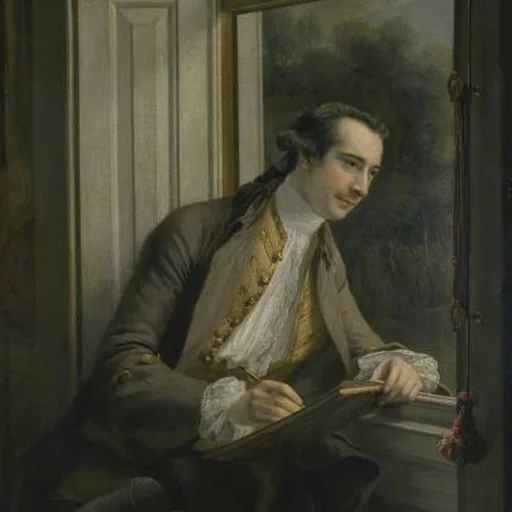
Paul Sandby, (1731 – 7 November 1809) was an English mapmaker and painter who specialised in landscape art. Along with his older brother Thomas Sandby, he was one of the founding members of the Royal Academy in 1768.

 Untitled
 Edgware
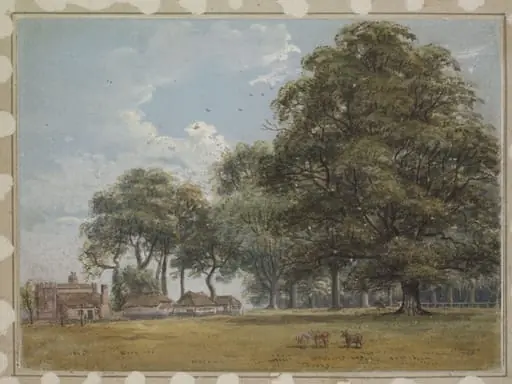 Easton Park
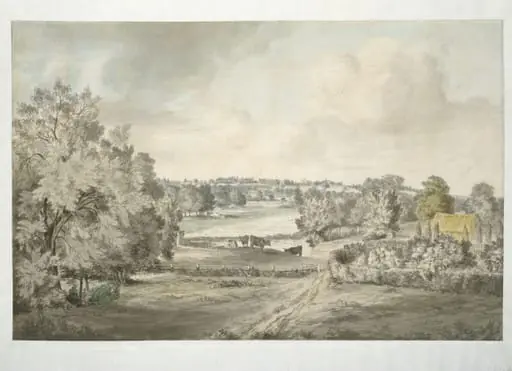 The valley of the Stour, looking towards East Bergholt
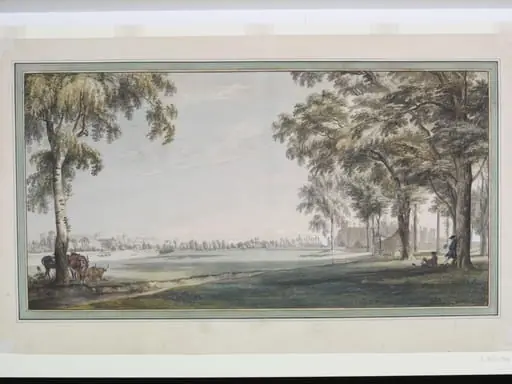 Eton College and Windsor from the Playing Fields
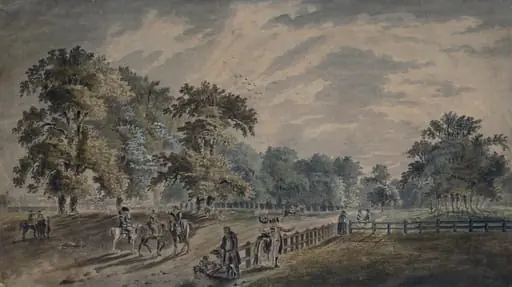 St. James's Park
 Salisbury Cathedral with trees
 Stowe: a church in the distance, seen amid trees
 Landscape
 The Mayor's Walk on the Banks of the Ouse, Yorkshire
 East Bergholt
 Greenwich Park